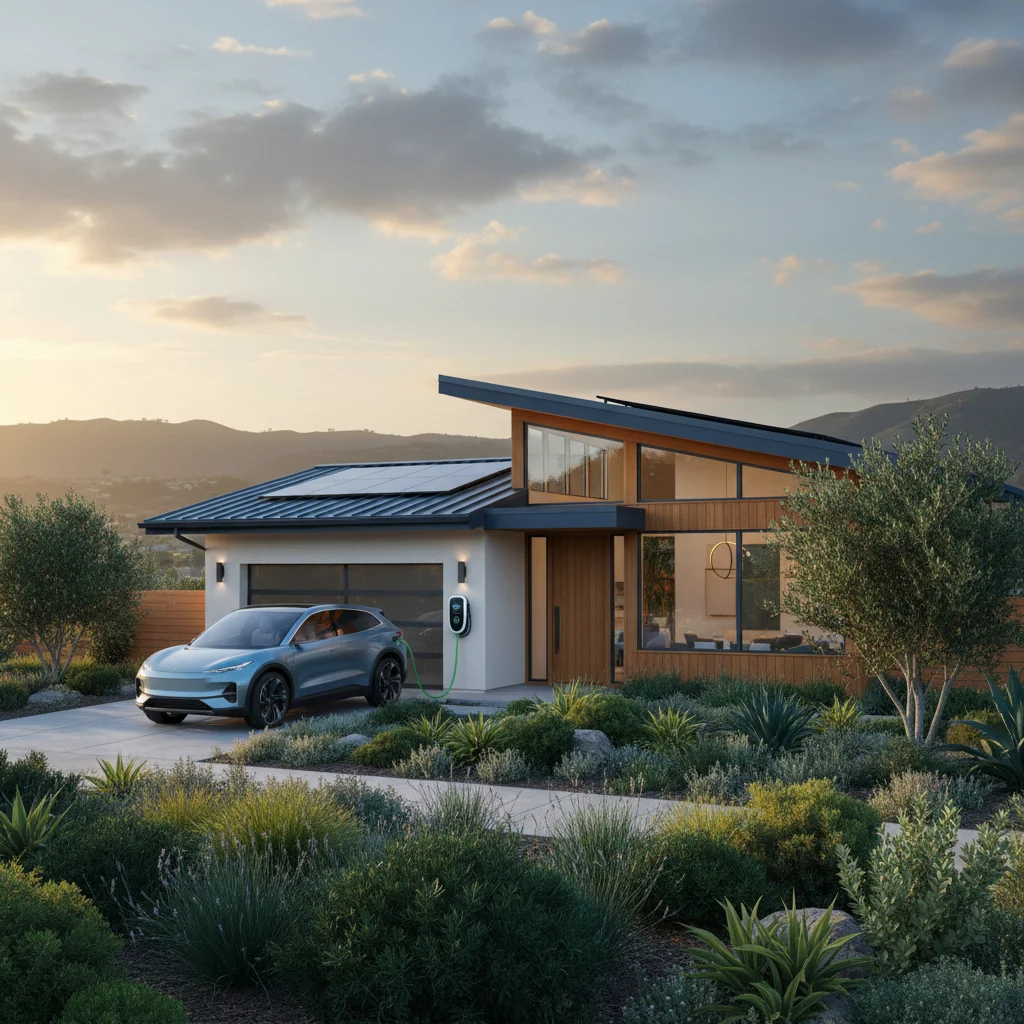
Inland Empire homeowners installing Level 2 EV chargers in 2026 can stack up to $2,950 in federal, state, and utility rebates—but most never claim the full amount because they miss application deadlines or submit incomplete documentation. Southern California Edison offers $1,000 instant rebates for residential charger installations, and the federal Alternative Fuel Vehicle Refueling Property Credit covers 30% of equipment and installation costs up to $1,000. But these programs expire or hit funding caps faster than most residents realize.
What EV Charger Rebates Are Currently Available in the Inland Empire in 2026?
Inland Empire residents in 2026 access three rebate tiers: federal Alternative Fuel Vehicle Refueling Property Credit ($1,000 maximum), California Clean Fuel Reward ($750 average), and Southern California Edison's Charge Ready rebate ($1,000 for Level 2 residential installations). San Bernardino and Riverside County utility districts also offer $500-$800 local incentives for qualifying installations completed before September 30, 2026.
The federal 30C charger credit ended for chargers placed in service after June 30, 2026 (IRS FS-2025-05). Federal tax credits for this work have ended, but state, local and utility rebates may still apply; check what is available at your address with the DuloCore rebate calculator. And California's Clean Fuel Reward program provides instant rebates at point of sale through participating dealerships and installer networks. Southern California Edison customers qualify for additional incentives when they enroll in time-of-use electricity rates that shift charging to off-peak hours.
So homeowners who coordinate federal tax credits, state rebates, and utility incentives save $2,200-$2,950 on typical Level 2 charger installations that cost $1,200-$3,500. But timing matters—California Clean Fuel Reward funds deplete by mid-year in high-demand regions like the Inland Empire, and SCE rebates operate on a first-come allocation system that exhausts funding 4-6 months into each program year.
For detailed savings estimates, use our free rebate calculator to model your specific installation costs and available incentives.
How Much Money Can You Actually Save With EV Charger Rebates?
Level 2 charger installations in the Inland Empire cost $1,800-$3,200 after combining the federal $1,000 tax credit, California $750 Clean Fuel Reward, and SCE $1,000 utility rebate—bringing net costs down to $350-$650 for qualifying households. Installation expenses vary based on electrical panel capacity, distance from the main panel to the garage, and whether homeowners need 240-volt circuit upgrades.
The federal credit reduces total installation costs by 30% up to $1,000, which covers most Level 2 charger hardware priced at $400-$700. And the California Clean Fuel Reward applies instantly at purchase, eliminating upfront cost barriers for drivers buying through participating dealers or installers. SCE's Charge Ready program adds another $1,000 for residential installations that include smart charging capabilities and enrollment in time-of-use rate plans.
Inland Empire households charging 12,000 miles annually save $960-$1,200 per year compared to gasoline vehicles averaging 28 MPG at California's 2026 average gas price of $4.85 per gallon. So the combined rebate coverage of $2,750 creates payback periods of 4-8 months on typical installations, not including ongoing fuel savings. But homeowners who skip the utility rebate by missing enrollment deadlines or failing to install qualifying smart chargers extend payback to 12-15 months.
Three-year total cost of ownership drops $3,500-$4,200 for EV drivers in the Inland Empire who maximize rebates compared to gasoline vehicle operating costs.
What Documentation Do You Need to Qualify for Inland Empire EV Charger Rebates?
The federal 30C charger credit ended for chargers placed in service after June 30, 2026 (IRS FS-2025-05). California Clean Fuel Reward needs vehicle registration showing California address, proof of purchase or lease agreement dated within 18 months of charger installation, and installer certification number from California Electric Vehicle Infrastructure Project directory.
Southern California Edison's Charge Ready rebate demands SCE account number, completed enrollment form submitted within 90 days of installation, licensed electrician C-10 contractor certification, photos of installed charger and electrical panel upgrades, and signed agreement for time-of-use rate plan participation. And local Riverside or San Bernardino County programs require property tax records confirming single-family residence status, building permit approval showing electrical code compliance, and proof of primary residence through utility bills or mortgage statements.
Homeowners who organize documentation before installation avoid 30-45 day delays in rebate processing caused by missing permits or incomplete invoices. So creating a dedicated folder with building permits, electrical inspections, installer certifications, and payment records ensures smooth application submission across all three rebate tiers. But residents who install chargers without securing permits first forfeit utility rebates entirely since SCE and local programs require electrical inspection approval.
For more information on related home energy incentives, see our guide on heat pump rebates that stack with EV charger programs.
What's the Step-by-Step Process to Apply for and Claim Your EV Charger Rebate?
First, verify SCE account eligibility and pre-enroll in the Charge Ready program through the utility's online portal 30-60 days before installation. Second, obtain electrical permit from city or county building department, which costs $75-$150 and requires site inspection after charger installation. Third, hire California-licensed C-10 electrician to install UL-listed Level 2 charger and complete electrical upgrades if existing panel lacks 240-volt capacity. Fourth, schedule electrical inspection within 10 business days of installation to secure permit approval and signed-off inspection report.
The federal 30C charger credit ended for chargers placed in service after June 30, 2026 (IRS FS-2025-05). And sixth, complete SCE rebate application within 90 days of installation through the utility's online portal, uploading inspection report, installer certification, and photos of installed equipment. California Clean Fuel Reward applies automatically at point of sale through participating dealers, eliminating separate application requirements for most buyers.
Local Riverside and San Bernardino County programs require mailed applications with original receipts and permit copies submitted within 120 days of installation. So homeowners who complete installations in June 2026 face September 2026 deadlines for local rebates but have until April 2027 to claim federal tax credits on their 2026 return. But missing any single deadline forfeits that specific rebate tier—federal and state programs don't allow retroactive claims for prior tax years.
The entire process from permit application to final rebate payment takes 90-120 days for residents who submit complete documentation without errors or missing forms.
Are There Income Limits or Other Eligibility Requirements for Inland Empire Residents?
The federal 30C charger credit ended for chargers placed in service after June 30, 2026 (IRS FS-2025-05). California Clean Fuel Reward includes no income restrictions for standard $750 rebates but offers enhanced $1,500 payments to households earning below 400% federal poverty level ($120,000 for family of four in 2026). And Southern California Edison's Charge Ready program requires primary residence status with active SCE electric service but sets no income caps for standard residential rebates.
Low-income residents in San Bernardino and Riverside Counties qualify for additional $800-$1,200 incentives through California's Disadvantaged Communities Single-Family Solar Homes program when pairing EV charger installations with rooftop solar. So households earning below 80% area median income ($72,000 for Inland Empire in 2026) access up to $4,150 in combined rebates versus $2,750 for higher-income residents. But enhanced incentives require approval through California Self-Generation Incentive Program applications submitted 45-60 days before installation begins.
Property eligibility restrictions limit rebates to single-family homes, townhouses with individual electrical meters, and condominiums where owners control parking spaces with dedicated circuit access. And renters need written landlord permission for permanent electrical installations to qualify for any rebate tier. Multifamily properties with shared parking structures qualify for separate commercial-tier incentives that don't apply to individual residents.
Learn more about residential energy upgrade requirements in our energy tax credits overview covering solar, storage, and EV infrastructure programs.
When Are the Deadlines for EV Charger Rebate Applications?
The federal 30C charger credit ended for chargers placed in service after June 30, 2026 (IRS FS-2025-05). California Clean Fuel Reward operates on annual budget allocations that typically exhaust by August or September in high-demand regions like the Inland Empire, forcing late-year buyers to wait for next year's funding release. And Southern California Edison's Charge Ready program accepts applications year-round but freezes enrollment when annual budget caps hit, usually 6-8 months into each program year.
Local Riverside County rebates require applications within 120 days of installation completion with funds allocated on rolling basis until $2.4 million annual budget depletes. San Bernardino County's program sets September 30, 2026 hard deadline for installations completed between January 1 and September 30, with no extensions for late submissions. So homeowners who install chargers in August 2026 face 30-day application windows to capture local incentives before funding expires.
Residents who miss California Clean Fuel Reward deadlines lose $750 instant rebates permanently since the program doesn't allow retroactive claims for prior-year installations. But federal tax credits remain claimable through amended returns filed within three years of original return date, giving homeowners until April 2030 to claim 2026 installation credits. SCE rebates expire if not submitted within 90 days of installation, with no exceptions for documentation delays or missed deadlines.
Smart homeowners submit pre-enrollment applications to SCE in January-February to lock in rebate reservations before mid-year funding depletion hits.
Official Sources
- IRS Alternative Fuel Vehicle Refueling Property Credit — Federal tax credit details, income limits, and filing requirements for EV charging equipment (note: the federal 25C and 25D credits ended for projects completed after December 31, 2025)
- Database of State Incentives for Renewables & Efficiency — Comprehensive California and utility-specific rebate programs with updated funding status
- U.S. Department of Energy Alternative Fuels Data Center — Federal guidance on EV infrastructure incentives and installation best practices
Related Reading: Learn more about Ev Charger Solar Panel Combo Incentives and Ev Charger Tax Credit.
Frequently Asked Questions
Are EV charger rebates available in the Inland Empire?
Yes. Inland Empire residents in Southern California Edison territory access three rebate tiers in 2026: federal Alternative Fuel Vehicle Refueling Property Credit ($1,000 maximum), California Clean Fuel Reward ($750 standard), and SCE Charge Ready residential program ($1,000). Local Riverside and San Bernardino County utilities offer additional $500-$800 incentives. Combined savings reach $2,750-$2,950 for qualifying households installing Level 2 chargers before program funding depletes, typically by August-September each year.
How much can I save with an EV charger rebate in Inland Empire?
Level 2 charger installations cost $1,800-$3,200 after stacking federal, state, and utility rebates that total $2,750 for most Inland Empire homeowners. Net installation costs drop to $350-$650 for qualifying households. And annual fuel savings of $960-$1,200 compared to gasoline vehicles create 4-8 month payback periods on remaining costs. Three-year total ownership savings reach $3,500-$4,200 including rebates and reduced fuel expenses for drivers charging 12,000 miles annually.
What are the eligibility requirements for EV charger rebates?
California Clean Fuel Reward has no income limit for standard $750 rebates. Southern California Edison's program requires active SCE residential account and primary residence status. And all tiers need UL-listed Level 2 charging equipment, licensed C-10 electrician installation, city or county electrical permit approval, and single-family or individually metered townhouse/condo properties with dedicated parking access.
How long does it take to receive an EV charger rebate in Inland Empire?
California Clean Fuel Reward applies instantly at point of sale through participating dealers. Southern California Edison processes rebate payments 45-60 days after receiving complete applications with electrical inspection reports and installer certifications. The federal 30C charger credit ended for chargers placed in service after June 30, 2026 (IRS FS-2025-05). And local county programs mail checks 60-90 days after application approval. Total timeline from installation to final payment spans 90-120 days for residents claiming all three rebate tiers.
What's the difference between federal and state EV charger rebates?
Federal Alternative Fuel Vehicle Refueling Property Credit provides 30% tax credit (this federal credit ended for chargers placed in service after June 30, 2026) up to $1,000 claimed on annual tax returns, reducing tax liability rather than providing direct payment. California Clean Fuel Reward delivers instant $750 rebate at purchase through participating dealers, lowering upfront costs immediately. And utility programs like Southern California Edison's Charge Ready offer $1,000 direct payments 45-60 days after installation. Federal credits apply nationwide with income limits, while California rebates serve state residents only with no income caps for standard tiers.
Last updated: April 14, 2026. Reviewed by the DuloCore Editorial Team. About our authors.
Check your California EV charger rebate eligibility — see the programs you qualify for and the dollar amounts on our California EV charger rebate finder.