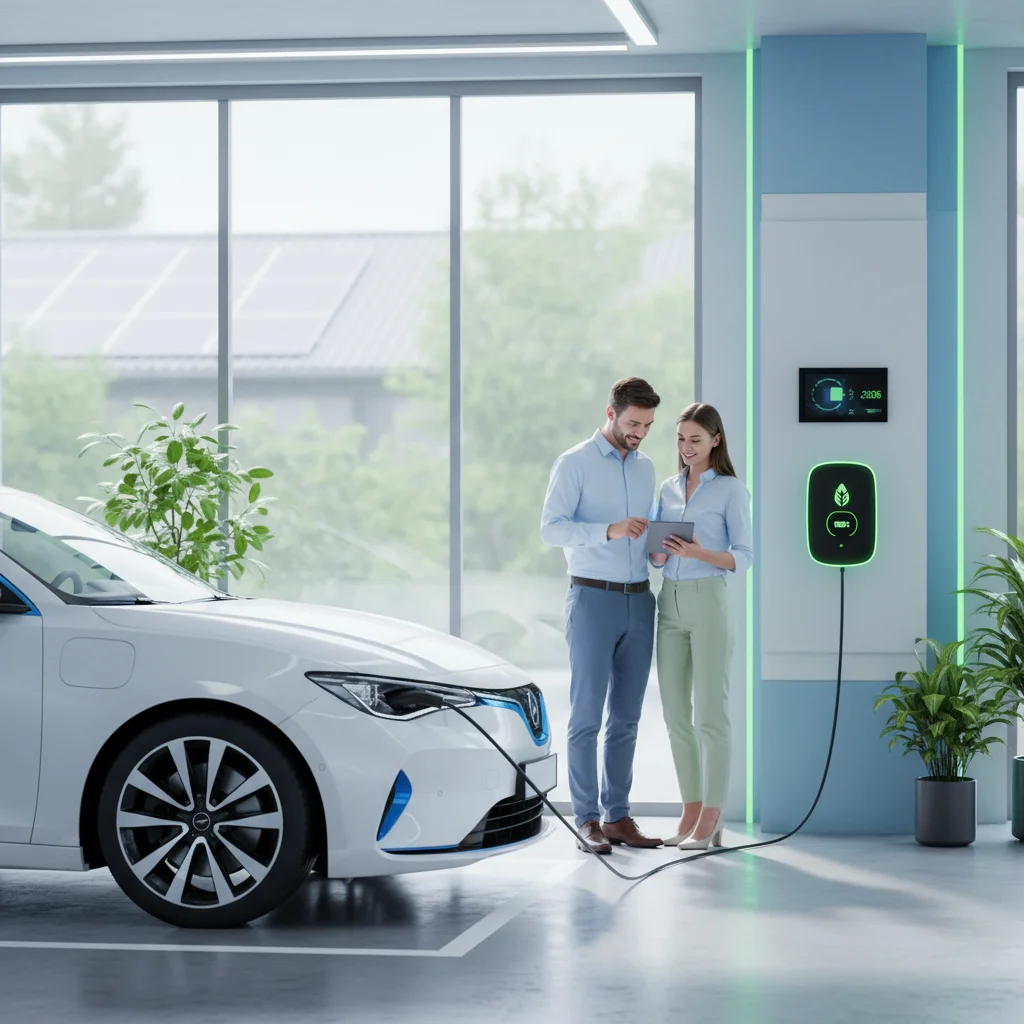
Nearly 44 million Americans live in rental housing, and 78% of them don't have access to overnight EV charging. But 2026 brings the first wave of renter-specific rebate programs, with 14 states offering direct incentives for tenant-installed chargers and portable Level 2 units. California's Clean Vehicle Rebate Project now covers up to $2,000 for renters who install chargers in multi-unit dwellings, and Colorado's program reimburses 80% of installation costs up to $9,000—even if you don't own the property.
Do Renters Qualify for Federal EV Charger Tax Credits?
The federal 30C charger credit ended for chargers placed in service after June 30, 2026 (IRS FS-2025-05). Federal tax credits for this work have ended, but state, local and utility rebates may still apply; check what is available at your address with the DuloCore rebate calculator. But renters face a critical limitation: you can only claim the credit if you own the charger and pay for installation. And the property owner must approve the installation in writing.
So renters who buy portable Level 2 chargers—like the Grizzl-E or ChargePoint Home Flex—can claim the credit without permanent installation. The IRS allows claims for "qualified EV charging equipment" purchased and installed in your primary residence, even if you don't own the building. The federal 30C charger credit ended for chargers placed in service after June 30, 2026 (IRS FS-2025-05).
According to the IRS Alternative Fuel Infrastructure Tax Credit guidance, "the credit applies to equipment placed in service at a taxpayer's main home." Or renters can split costs with landlords who claim the commercial version—worth 30% of costs up to $100,000 per site.
Which State Programs Offer EV Charger Rebates to Renters?
Fourteen states offer renter-specific EV charger rebates in 2026, with Colorado and California leading at $9,000 and $2,000 respectively. Colorado's Charge Ahead program reimburses 80% of installation costs for income-qualified renters, while California's Clean Vehicle Rebate Project covers both portable and hardwired chargers in multi-unit dwellings. Maryland's EVSE Rebate Program provides $700 for Level 2 chargers regardless of property ownership, and Massachusetts offers $1,500 for apartment installations through MOR-EV.
But eligibility varies dramatically by income and property type. California restricts rebates to households earning below 400% of federal poverty level ($120,000 for a family of four), while Colorado requires landlord participation agreements. And Oregon's program prioritizes low-income renters in designated communities, offering up to $2,500 for shared charging infrastructure.
So renters should check state EVSE incentive databases before purchasing chargers. New York's Charge Ready program launches in July 2026 with $1,200 rebates for apartment dwellers, and Vermont's EV Charger Incentive covers 50% of costs up to $1,500 for renters who obtain landlord consent.
| State | Rebate Amount | Income Limit | Landlord Approval Required | Program Link |
|---|---|---|---|---|
| Colorado | Up to $9,000 (80% of costs) | <80% AMI | Yes—participation agreement | Charge Ahead Colorado |
| California | Up to $2,000 | <400% FPL ($120,000/year) | Yes—written consent | Clean Vehicle Rebate Project |
| Maryland | $700 flat rebate | None | No | EVSE Rebate Program |
| Massachusetts | $1,500 | None | Yes—installation approval | MOR-EV |
| Oregon | Up to $2,500 | <80% AMI | Yes—shared infrastructure | Oregon Clean Vehicle Rebate |
What Are the Best Portable EV Charger Options for Apartments?
Portable Level 2 chargers solve the renter dilemma—no permanent installation, no landlord approval headaches, and full eligibility for federal tax credits and state rebates. The Grizzl-E Classic costs $399, delivers 40 amps (9.6 kW), and plugs into NEMA 14-50 outlets found in many apartment garages. ChargePoint Home Flex runs $699, offers Wi-Fi connectivity for utility time-of-use optimization, and adjusts from 16 to 50 amps based on your circuit capacity.
But portable chargers require existing 240V outlets or landlord permission to install one. NEMA 14-50 outlets cost $300-$800 to install professionally, while NEMA 6-50 (welder outlets) run $200-$500. And many 2026 rebate programs—including California's CVRP and Maryland's EVSE—cover outlet installation costs when bundled with charger purchases.
So renters should verify outlet compatibility before buying. The Emporia Level 2 charger ($449) works with both NEMA 14-50 and 6-50 plugs, while the ClipperCreek HCS-40P ($565) includes a 25-foot cable for awkward parking spaces. Or consider the Lectron V-Box, which costs $329 and charges Tesla and non-Tesla EVs at 32 amps (7.7 kW)—fast enough to add 30 miles of range per hour.
How Do Landlords and Tenants Split Installation Costs?
Cost-splitting arrangements typically follow three models in 2026: landlord pays installation and claims commercial tax credits, tenant pays for charger hardware and claims residential credits, or both share costs proportionally. The federal 30C charger credit ended for chargers placed in service after June 30, 2026 (IRS FS-2025-05). And 11 states—including California, Colorado, and New York—require landlords to allow tenant-paid installations under Right-to-Charge laws.
But successful cost splits depend on lease addendums. Maryland's standard EV Charger Installation Agreement template specifies that landlords cover electrical panel upgrades ($800-$3,000), while tenants pay for charger units and labor ($500-$1,500). So tenants claim the 30% residential credit on their $2,000 investment ($600 back), while landlords claim 30% on their $2,500 panel work ($750 back).
Or landlords can install chargers and bill tenants separately—a model growing in popularity. Boston's multi-unit building owners install Level 2 chargers for $1,800 per unit, claim the $540 commercial credit, then charge tenants $45/month for unlimited charging. Over a 3-year lease, tenants pay $1,620 total—less than buying and installing their own chargers.
What Are Right-to-Charge Laws and Which States Have Them?
Right-to-Charge laws prohibit landlords from unreasonably denying tenant requests to install EV chargers—and 11 states enforce them in 2026. California's Assembly Bill 2565 requires landlords to approve charger installations within 30 days unless safety or structural concerns exist, while Colorado's HB 22-1238 mandates that property owners allow installations at tenant expense. And Oregon's SB 1044 permits renters to install chargers in assigned parking spaces, with landlords unable to charge fees exceeding $500 for application review.
But "reasonable" restrictions still apply. Landlords can require licensed electricians, proof of insurance, and restoration bonds covering removal costs. So California landlords can demand $1,000-$2,500 bonds to cover charger removal and parking space repair when tenants move. Or they can require specific charger models that match building electrical systems—common in high-rises with load-sharing requirements.
And eight more states introduced Right-to-Charge legislation in early 2026. New York's pending A7880 would require landlords to permit installations unless total building electrical capacity falls below 80% of peak load. Florida's SB 1094 allows HOAs to restrict charger types but prohibits outright bans on EV charging infrastructure.
For current Right-to-Charge laws by state, see the Department of Energy's EV charging infrastructure database. Or check local tenant rights organizations—many cities like San Francisco and Seattle enforce stricter protections than state minimums.
How to Convince Your Landlord to Install an EV Charger
Start with financial incentives—landlords who install chargers in 2026 claim 30% federal tax credits plus state rebates averaging $4,000-$9,000. Present Colorado's Charge Ahead program, which reimburses property owners $9,000 per charger and covers 80% of installation costs for multi-unit dwellings. Or highlight California's CALeVIP program, offering $2,500-$7,000 per port for apartment and condo installations. And emphasize property value increases—2026 appraisal data from Zillow shows rental properties with EV chargers command 5-8% rent premiums.
But frame the request around shared benefit. Offer to pay for the charger hardware ($400-$700) while the landlord covers electrical work ($800-$1,500), allowing you both to claim separate tax credits. Or propose shared-use installations where multiple tenants split charging costs, reducing landlord liability and maximizing rebate eligibility.
So prepare a one-page proposal including: current federal and state incentive amounts, licensed electrician quotes for installation, proof of renter's insurance covering charger liability, and comparable rental listings showing EV charging as an amenity. According to Energy.gov's Home Energy Rebate Programs, "landlords who install qualified infrastructure in low-income buildings can access additional rebates totaling $14,000 per unit when combined with electrical panel upgrades."
Or join tenant coalitions requesting building-wide charging infrastructure. Chicago's Tenant EV Alliance secured 45 Level 2 chargers across six apartment complexes in 2025 by presenting landlords with group rebate applications exceeding $180,000 in combined federal and state incentives.
Official Sources
- Department of Energy Home Energy Rebate Programs — Federal EV charging incentive guidance and state program directory
- IRS Alternative Fuel Vehicle Refueling Property Credit — Federal tax credit eligibility and claiming instructions (note: the federal 25C and 25D credits ended for projects completed after December 31, 2025)
- ENERGY STAR Federal Tax Credits — Qualified EV charging equipment database and credit calculators
Related Reading: Learn more about Ev Charger Tax Credit 2026 Status.
Frequently Asked Questions
How much can I save with ev charger rebates for renters 2026?
Renters can save $1,500-$10,000 combining federal tax credits and state rebates in 2026. The federal 30C charger credit ended for chargers placed in service after June 30, 2026 (IRS FS-2025-05). State programs add $500-$9,000. Colorado offers the highest savings at $9,000 (80% of costs), California provides $2,000, and Maryland adds $700. So a renter installing a $2,500 charger in Colorado receives $9,000 in state rebates plus $750 in federal credits, totaling $9,750 in incentives.
What are the eligibility requirements for ev charger rebates for renters 2026?
Federal credits require renters to own the charger, pay for installation, and obtain landlord written approval. State rebates vary—California restricts eligibility to households earning below $120,000/year (400% FPL), while Colorado requires income below 80% area median income and landlord participation agreements. And Maryland has no income limits but requires licensed electrician installation. Most programs mandate Level 2 chargers (240V, minimum 16 amps) and exclude basic Level 1 units that plug into standard outlets.
Can I combine ev charger rebates for renters 2026 with other incentives?
Yes—renters can stack federal tax credits, state rebates, and utility incentives in 2026. California renters combine the $1,000 federal credit with $2,000 CVRP rebates and $500 PG&E EV Charge Network credits, totaling $3,500. Colorado allows stacking the $9,000 Charge Ahead rebate with $750 federal credits and Xcel Energy's $1,300 installation rebates, reaching $11,050. But you can't claim both residential and commercial credits for the same installation—only the property owner or tenant can claim federal credits, not both.
Do portable EV chargers qualify for renter rebates in 2026?
Yes—portable Level 2 chargers qualify for both federal tax credits and most state rebate programs in 2026. The IRS defines "qualified EV charging equipment" as any Level 2 or higher charger installed at your primary residence, including portable units plugged into existing 240V outlets. California's CVRP explicitly covers portable chargers priced up to $1,000, and Maryland's EVSE program provides $700 rebates for plug-in models. So renters who buy $400-$700 portable chargers avoid installation costs while maintaining full rebate eligibility.
What happens to my EV charger when I move out of my rental?
Renters who install portable chargers simply unplug and take them to their next residence—no removal costs or landlord disputes. But hardwired installations require landlord agreements specifying ownership. Most states allow renters to remove chargers and restore parking spaces at move-out, while some landlords require restoration bonds ($1,000-$2,500) covering electrical work removal. Or negotiate to leave the charger in exchange for security deposit credits—California landlords commonly credit $500-$1,200 for tenant-installed infrastructure that increases property value. Oregon law permits renters to remove chargers within 30 days of lease termination unless otherwise specified in writing.
Ready to see how much you can save on EV charger installation? Use our free rebate calculator to instantly find all federal, state, and utility incentives available for renters in your area—updated daily with 2026 program amounts and eligibility requirements.
Check your California EV charger rebate eligibility — see the programs you qualify for and the dollar amounts on our California EV charger rebate finder.