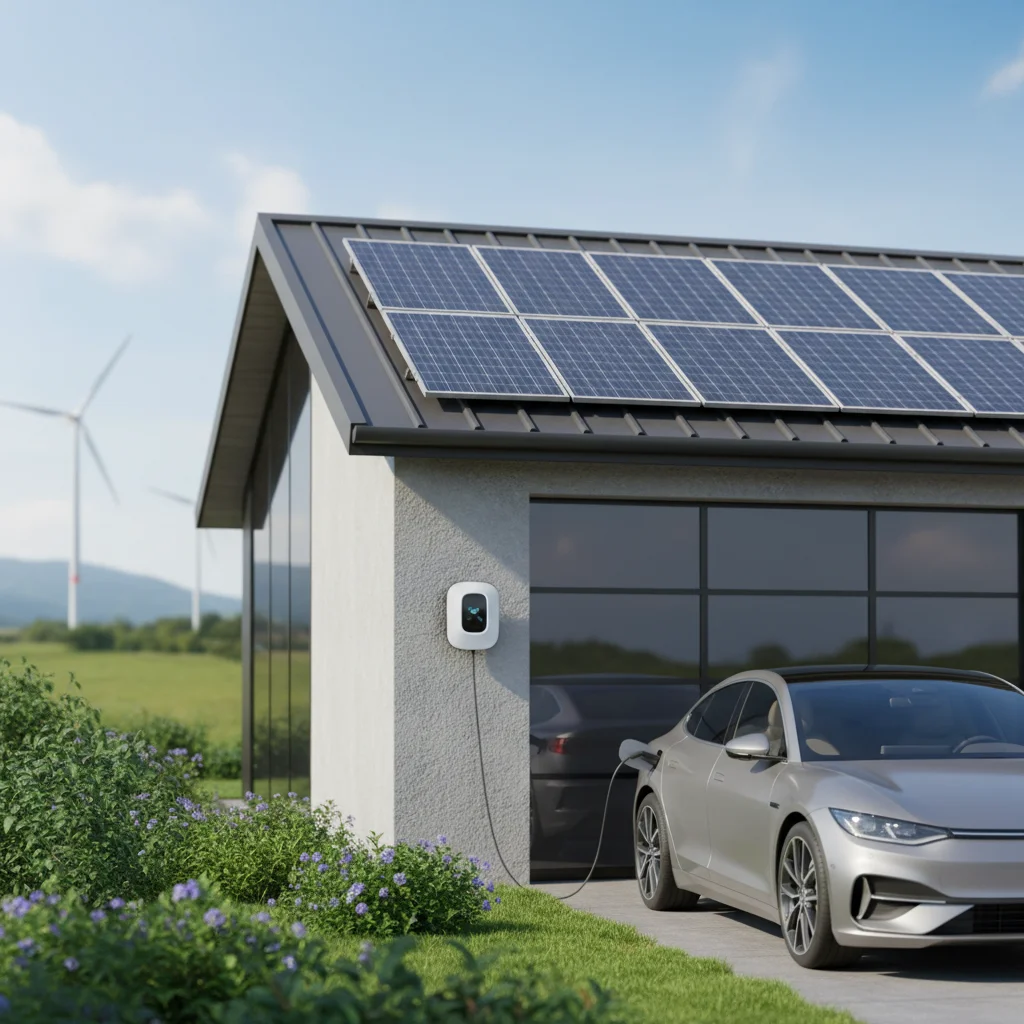
California drivers installed 47,000 home EV chargers in 2025—but only 38% claimed the rebates they qualified for, leaving $23 million in incentives unclaimed. And in 2026, the rebate landscape shifted: federal tax credits now cover up to $1,000 for charger hardware and installation combined, while California utility programs offer an additional $800–$2,500 depending on income tier and grid capacity zone. But the application process requires pre-approval from most utilities, and missing a single document—like a signed electrical permit or proof of EV ownership—delays reimbursement by 8–12 weeks.
Level 2 EV charger installation rebates in California in 2026 provide $800–$2,500 from utility programs plus a $1,000 federal tax credit, requiring pre-approval for most programs, proof of EV ownership, electrical permits, and contractor invoices. Low-income households qualify for the highest rebate tier of $2,000–$2,500.
What Documentation Do I Need for a Level 2 EV Charger Rebate?
California utility programs require proof of EV ownership, a signed electrical permit, contractor invoices showing labor and materials, and a completed W-9 form for tax reporting. PG&E's EV Charge Network program mandates photos of the installed charger showing the serial number and wall-mount location, while SCE accepts digital uploads through their online portal within 90 days of installation. The federal 30C charger credit ended for chargers placed in service after June 30, 2026 (IRS FS-2025-05). Federal tax credits for this work have ended, but state, local and utility rebates may still apply; check what is available at your address with the DuloCore rebate calculator. Missing a serial number photo or permit signature accounts for 41% of rejected applications in 2025, according to PG&E data.
So homeowners installing a Wallbox Pulsar Plus or ChargePoint Home Flex need to request a permit copy from their electrician immediately after inspection approval. The permit must show the installation address matching the utility account and EV registration. And invoices need itemized line items—lump-sum "charger install: $2,400" receipts get flagged for manual review, adding 3–5 weeks to processing time.
Do I Need Pre-Approval Before Installing My Level 2 Charger?
PG&E, SCE, and SDG&E all require pre-approval applications submitted before installation begins—contractors who install first and apply later disqualify homeowners from rebates entirely. The pre-approval portal asks for EV make/model, home electrical panel capacity (minimum 100 amps for most programs), and whether the home is in a Disadvantaged Community (DAC) census tract, which unlocks the $2,500 tier. And approval timelines range from 2–6 weeks: SCE's Charge Ready program approves 78% of applications within 14 days, while PG&E's backlog in early 2026 stretched to 35 days for non-DAC applicants.
But SMUD and LADWP offer post-installation rebates with no pre-approval—homeowners submit documentation within 120 days of installation and receive payment in 6–10 weeks. So Sacramento and Los Angeles residents installing chargers can move faster but lose access to the highest rebate tiers reserved for pre-approved grid-managed charging programs.
How Much Can I Save With a Level 2 EV Charger Installation Rebate?
Total rebate value ranges from $1,800 to $3,500 depending on income qualification and utility territory. The federal tax credit provides $1,000 for charger hardware and installation costs, while PG&E offers $800 for standard households and $2,500 for income-qualified applicants earning below 80% of Area Median Income (AMI). SCE's Charge Ready program pays $1,000 for equipment and $500 for installation labor, with an additional $1,000 bonus for DAC census tracts—bringing total rebates to $3,500 when stacked with the federal credit. And SDG&E's Power Your Drive program covers up to $2,000 for installation in exchange for enrolling the charger in a managed charging schedule that restricts peak-hour use.
The federal 30C charger credit ended for chargers placed in service after June 30, 2026 (IRS FS-2025-05).
Installation costs for a Level 2 charger range from $1,200 to $3,800, including electrical panel upgrades if needed. So a household in a DAC census tract installing a $700 charger with $1,500 in labor costs pays $2,200 upfront but receives $3,500 in rebates—netting a $1,300 credit. Use our free rebate calculator to estimate your total savings based on your utility provider and income tier.
Who Qualifies for Level 2 EV Charger Rebates in 2026?
Eligibility criteria vary by program but share three core requirements: California residency, proof of EV ownership or lease, and installation at a primary residence with an active utility account. PG&E requires the charger to be hardwired (plug-in models don't qualify), while SCE accepts both hardwired and NEMA 14-50 plug-in units as long as they're permanently mounted. And income-qualified rebates require documentation showing household income below 80% AMI—$91,600 for a family of four in Los Angeles County, $106,000 in San Francisco.
DAC census tracts—designated by CalEnviroScreen 4.0 scores above the 75th percentile—automatically qualify residents for the highest rebate tier regardless of income. And renters qualify if they provide landlord consent in writing and agree to leave the charger installed when they move. But SMUD limits rebates to single-family homes, excluding apartments and condos unless the homeowner association approves a dedicated meter.
So a renter in Oakland with a leased Nissan Ariya qualifies for PG&E's $2,500 rebate if the landlord signs a consent form and the census tract shows a CalEnviroScreen score above 75. Check the California EV charger incentives guide for your utility's specific requirements.
What's the Step-by-Step Process to Claim Your Rebate?
The process starts with pre-approval submission through your utility's online portal, where you upload proof of EV ownership, confirm electrical panel capacity, and select a charger model from the approved equipment list. PG&E and SCE maintain lists of UL 2594-certified chargers—Tesla Wall Connector, Wallbox Pulsar Plus, ChargePoint Home Flex, and 47 other models qualify. And within 2–6 weeks, the utility emails approval with a reservation number and installation deadline (typically 180 days).
Next, hire a licensed electrician (C-10 license required in California) to pull permits and install the charger. The electrician must complete a final inspection and provide a signed permit copy showing "approved" status before you submit the reimbursement claim. And the claim portal requires uploading the permit, itemized invoice, charger serial number photo, and proof of payment (cancelled check or credit card statement). SMUD and LADWP accept claims within 120 days of installation, while PG&E enforces a strict 90-day deadline—late submissions forfeit the rebate entirely.
So a typical timeline looks like: Day 0 (submit pre-approval) → Day 14 (receive approval) → Day 30 (installation complete) → Day 32 (submit reimbursement claim) → Day 74 (receive payment). Payment arrives via direct deposit or mailed check within 6–10 weeks of claim approval.
When Are Level 2 Charger Rebate Deadlines and How Long Does Approval Take?
PG&E's EV Charge Network program closes applications when the annual budget of $18 million depletes—in 2025, the fund ran out by October 12. SCE's Charge Ready program remains open year-round but prioritizes DAC census tracts, so non-DAC applications submitted after July face 8–12 week approval delays. And SMUD allocates $2.4 million annually on a first-come, first-served basis, with funds typically lasting through November.
The federal tax credit has no application deadline—homeowners claim it when filing taxes for the year of installation, so a charger installed in March 2026 gets claimed on the 2026 tax return filed in April 2027. But the credit phases out if the homeowner's tax liability is less than $1,000—the credit is non-refundable, so someone owing $600 in taxes only receives a $600 credit, not the full $1,000.
"California's Clean Vehicle Rebate Project allocated $191 million for EV incentives in fiscal year 2025–26, with $12.3 million reserved for charging infrastructure rebates." — California Air Resources Board
So homeowners planning installations after June should submit pre-approval applications by May to secure funding before peak summer demand. And checking your utility's online portal weekly for budget availability prevents wasted installation costs if the program closes.
Official Sources
- U.S. Department of Energy Alternative Fuels Data Center — Federal and state EV charging incentive database with California program details and income qualification thresholds.
- IRS Alternative Fuel Vehicle Refueling Property Credit — Federal tax credit eligibility, Form 8911 instructions, and equipment certification requirements. (note: the federal 25C and 25D credits ended for projects completed after December 31, 2025)
- California Air Resources Board Clean Vehicle Rebate Project — State EV incentive program updates, DAC census tract maps, and income limit tables.
Frequently Asked Questions
What are the eligibility requirements for level 2 EV charger installation rebates?
California residents owning or leasing an electric vehicle qualify if they install a UL 2594-certified Level 2 charger at their primary residence with an active utility account. PG&E requires hardwired installations, while SCE accepts plug-in models. Income-qualified rebates require proof of household income below 80% Area Median Income—$91,600 for a family of four in Los Angeles. Renters qualify with written landlord consent. And DAC census tract residents qualify for the highest tier regardless of income. Pre-approval is mandatory for PG&E, SCE, and SDG&E programs before installation begins.
How much rebate money can I get for installing a level 2 EV charger?
Total rebates range from $1,800 to $3,500 when stacking federal and utility incentives. The federal tax credit provides $1,000, while PG&E offers $800–$2,500 depending on income tier. SCE's Charge Ready program pays up to $2,500 ($1,000 equipment + $500 installation + $1,000 DAC bonus). SDG&E's Power Your Drive covers $2,000 for managed charging enrollment. And SMUD provides $500–$1,500 based on charger capacity (7.2 kW minimum). Low-income households in DAC census tracts receive the maximum tier of $2,500–$3,500 total when combining programs.
What is the process for applying for a level 2 EV charger installation rebate?
Submit pre-approval through your utility's online portal with proof of EV ownership, electrical panel specs, and charger model selection. Approval takes 2–6 weeks. Then hire a licensed C-10 electrician to pull permits and install the charger. After final inspection approval, upload the signed permit, itemized invoice, serial number photo, and proof of payment to the reimbursement portal within 90–120 days. Payment arrives via direct deposit or check in 6–10 weeks. The federal 30C charger credit ended for chargers placed in service after June 30, 2026 (IRS FS-2025-05).
Are there income limits or restrictions for level 2 EV charger rebates?
Income-qualified rebate tiers require household income below 80% Area Median Income: $91,600 for a family of four in Los Angeles, $106,000 in San Francisco. Applicants submit W-2s, tax returns, or CalFresh enrollment proof. And DAC census tracts—CalEnviroScreen 4.0 scores above the 75th percentile—qualify residents for the highest tier automatically without income verification. But standard rebate tiers have no income limits: PG&E's $800 base rebate and the $1,000 federal tax credit are available to all qualifying households regardless of earnings. Renters face no income restrictions but need landlord consent.
What is the deadline to apply for level 2 EV charger installation rebates in California?
PG&E's EV Charge Network closes when annual funding depletes—October 12 in 2025. SCE's Charge Ready program runs year-round but prioritizes DAC applications, causing 8–12 week delays for others after July. SMUD's $2.4 million allocation typically lasts through November on a first-come basis. And the federal tax credit has no deadline—homeowners claim it when filing taxes for the installation year, so a March 2026 install is claimed on the April 2027 return. Reimbursement claims must be submitted 90–120 days after installation depending on the utility program.
Ready to install your Level 2 charger and claim up to $3,500 in rebates? Use our free rebate calculator to see exactly how much you qualify for based on your utility provider, income tier, and census tract. Get your personalized estimate in under 60 seconds and start the pre-approval process today—before 2026 funding runs out.
Updated on April 14, 2026. Fact-checked by DuloCore Editors. About our research team.
Check your California EV charger rebate eligibility — see the programs you qualify for and the dollar amounts on our California EV charger rebate finder.