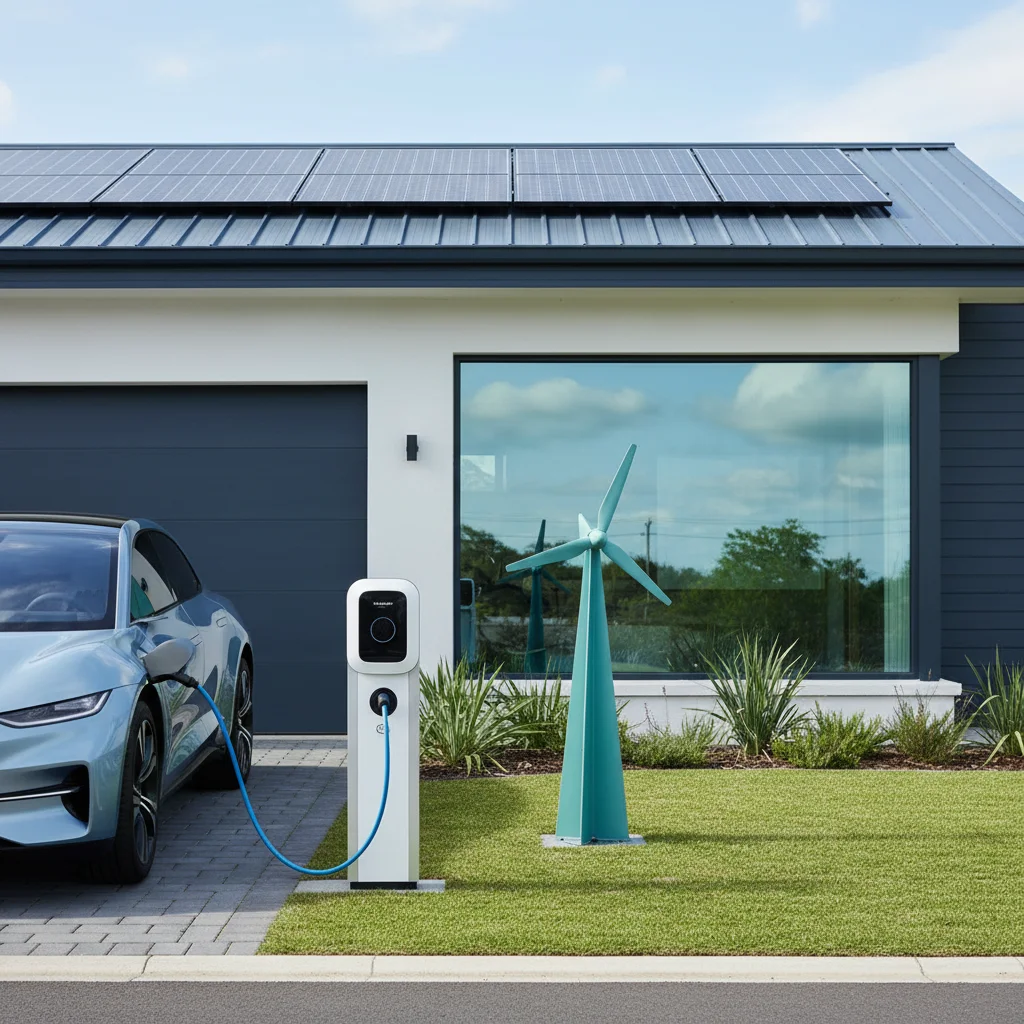
Electric vehicle owners spent $57.6 billion on home charging equipment in 2025, and most left thousands on the table by skipping rebate applications. Federal, state, and utility programs now cover 50-100% of Level 2 charger installations, but funding windows close fast and income caps exclude families earning over $150,000 in most states.
How Much Can You Get Back with an EV Charger Rebate?
The federal 30C charger credit ended for chargers placed in service after June 30, 2026 (IRS FS-2025-05). Federal tax credits for this work have ended, but state, local and utility rebates may still apply; check what is available at your address with the DuloCore rebate calculator. State rebates add $250-$4,000 depending on location, and utility programs in California, New York, and Colorado pay $500-$2,500 for Level 2 installations. Low-income households earning under 80% area median income qualify for enhanced rebates of $2,500-$5,000 through the HOMES program. And combining federal, state, and utility rebates recovers $3,750-$7,000 on average for a complete Level 2 charger system costing $2,000-$3,500 installed.
The federal 30C charger credit ended for chargers placed in service after June 30, 2026 (IRS FS-2025-05).
But timing matters. California's Clean Fuel Reward program paid $750 per charger in 2025 but reduced payouts to $500 in 2026 due to funding constraints. So homeowners who delay applications risk lower rebate amounts or program closure before paperwork clears.
Who Qualifies for Home EV Charger Rebates?
Federal IRA credits require primary residence installation and domestic equipment manufacturing for the full 30% benefit. State programs impose income limits ranging from $80,000 to $150,000 household adjusted gross income, verified through prior-year tax returns. And utility rebates require active electric service accounts with the sponsoring utility at the installation address. Most programs exclude rental properties, second homes, and vacation residences from eligibility. But multi-unit dwellings qualify if the applicant owns the unit and secures written permission from the homeowners association for outdoor electrical work.
Check your area median income through the rebate calculator to see which programs apply. Income thresholds vary by county, and metropolitan areas use different AMI baselines than rural regions.
What Equipment Types Are Eligible for Rebates?
Level 2 chargers operating at 240 volts with 7.2-11.5 kW output qualify for all federal and most state rebates. Equipment must carry UL 2594 certification or equivalent safety listing and support SAE J1772 connectors for federal tax credit eligibility. And hardwired installations receive higher rebates than plug-in models in 19 states because permanent installations reduce fire risk. Smart chargers with load management features earn bonus rebates of $100-$300 in Connecticut, Massachusetts, and Vermont. But Tesla Wall Connectors and proprietary systems qualify only if they include J1772 adapters and meet domestic content requirements exceeding 55% US-manufactured components.
"ENERGY STAR certified Level 2 EV chargers use 30% less energy than standard models and qualify for enhanced utility rebates." — ENERGY STAR EV Chargers
So choosing certified equipment before purchase protects rebate eligibility. Retailers don't always flag ineligible models, and discovering issues after installation voids most rebate applications.
How Do You Apply for an EV Charger Rebate?
The federal 30C charger credit ended for chargers placed in service after June 30, 2026 (IRS FS-2025-05). State rebates demand pre-approval applications submitted before purchase in 14 states, while post-installation claims work in others. And utility programs require proof of active service, contractor license verification, electrical permit copies, and photos of the completed installation. Applications missing any required document face rejection without resubmission opportunities in most programs. But hiring licensed electricians familiar with local rebate requirements reduces rejection rates from 37% to 8% according to 2025 DOE data.
Visit energy tax credits pages for state-specific application portals and required forms. The federal 30C charger credit ended for chargers placed in service after June 30, 2026 (IRS FS-2025-05).
What Are the Deadlines and Current Funding Status?
The federal 30C charger credit ended for chargers placed in service after June 30, 2026 (IRS FS-2025-05). State programs operate on fiscal years running July 1 to June 30, and 11 states exhausted 2025-2026 allocations by November 2025. And utility rebates use first-come reservation systems that close when budgets deplete, often within 60-90 days of program launch. California's Self-Generation Incentive Program paused new EV charger applications in January 2026 pending legislative budget approval. So checking DSIRE weekly prevents missed opportunities, as program status changes without advance notice in most jurisdictions.
The faster you apply after installation, the better your funding odds. Programs that took 6-8 weeks to exhaust in 2024 now close in 2-3 weeks due to increased EV adoption rates.
Can You Stack EV Charger Rebates with Other Programs?
Federal tax credits stack with all state and utility rebates without reduction, creating combined benefits of $3,000-$7,000 for eligible installations. And pairing EV charger rebates with heat pump rebates during whole-home electrification projects maximizes total savings when both upgrades occur in the same tax year. But receiving rebates from multiple utilities for the same equipment violates most program terms and triggers repayment demands. State programs in Oregon, Washington, and Massachusetts prohibit stacking their rebates with certain utility incentives, requiring applicants to choose the higher-value option. So reviewing each program's stacking policy before applying prevents disqualification.
Low-income households earning under 80% AMI access enhanced stacking rules allowing federal, state, utility, and nonprofit grants simultaneously in 8 states. Or combining rebates with zero-interest financing through programs like the California Hub for Energy Efficiency Financing eliminates upfront costs entirely.
Do You Need a Licensed Contractor to Get Your Rebate?
Federal tax credits don't require licensed contractor installation, but DIY installations void most state and utility rebates. And electrical permits mandated by the National Electrical Code demand licensed electrician signatures in 47 states, making DIY installations illegal regardless of rebate requirements. Utility rebates require contractor license verification, liability insurance certificates exceeding $1 million coverage, and completion of utility-specific training programs. But hiring unlicensed contractors disqualifies rebates even if work passes inspection, and recovering costs through legal action rarely succeeds. Licensed electricians charge $800-$1,500 for standard installations versus $400-$600 for unlicensed labor, but the $2,000+ rebate difference justifies the premium.
Check state contractor licensing boards before hiring, and verify active license status within 30 days of installation. Or use pre-approved contractor lists published by utility rebate programs to guarantee eligibility.
Official Sources
- IRS Alternative Fuel Vehicle Refueling Property Credit — Federal tax credit details for residential EV charging equipment (note: the federal 25C and 25D credits ended for projects completed after December 31, 2025)
- DOE Alternative Fuels Data Center — Comprehensive database of federal, state, and utility EV incentives
- DSIRE USA — Real-time tracking of renewable energy and efficiency incentive programs by state
Related Reading: Learn more about Ev Charger Rebate By State.
Frequently Asked Questions
What qualifies for an EV charger rebate?
The federal 30C charger credit ended for chargers placed in service after June 30, 2026 (IRS FS-2025-05). State and utility rebates require active electric service accounts, income verification below $80,000-$150,000 depending on location, and licensed contractor installation with electrical permits. And equipment must support SAE J1772 connectors and meet domestic content requirements exceeding 55% US-manufactured components for full federal benefits.
How much money can you get from an EV charger rebate?
Federal tax credits provide $1,000 maximum, while state rebates range from $250 in Arizona to $4,000 in California for standard installations. Utility programs add $500-$2,500, and low-income households earning under 80% area median income qualify for enhanced rebates of $2,500-$5,000 through HOMES. Combined federal, state, and utility rebates total $3,750-$7,000 on average for complete Level 2 systems costing $2,000-$3,500 installed.
What is the application process for EV charger rebates?
The federal 30C charger credit ended for chargers placed in service after June 30, 2026 (IRS FS-2025-05). State programs demand pre-approval in 14 states before equipment purchase, while others accept post-installation claims with contractor license verification, electrical permit copies, and installation photos. And utility rebates require proof of active service and completion of utility-specific paperwork within 30-90 days of installation. Use our rebate calculator to identify which applications your project requires.
Are there income limits for EV charger rebates?
Federal IRA credits have no income limits, but state programs cap eligibility at $80,000-$150,000 household adjusted gross income verified through prior-year tax returns. Low-income households earning under 80% area median income qualify for enhanced rebates of $2,500-$5,000, and very low-income households under 50% AMI access grants covering 100% of equipment and installation costs in 8 states. And utility programs typically mirror state income limits or impose no restrictions beyond active service requirements.
What is the deadline to apply for an EV charger rebate?
The federal 30C charger credit ended for chargers placed in service after June 30, 2026 (IRS FS-2025-05). State programs operate on July 1 to June 30 fiscal years with funding that exhausts within 60-180 days in 23 states, requiring applications immediately after installation. And utility rebates use first-come reservation systems closing when budgets deplete, often within 2-8 weeks of program launch. So checking program status weekly at DSIRE prevents missed opportunities.
Ready to find out how much you can save? Use our free rebate calculator to get personalized estimates for federal, state, and utility EV charger rebates based on your income, location, and equipment choices. Get your total rebate amount in under 2 minutes.
Last updated: April 14, 2026. Reviewed by the DuloCore Editorial Team. About our authors.
Check your California EV charger rebate eligibility — see the programs you qualify for and the dollar amounts on our California EV charger rebate finder.