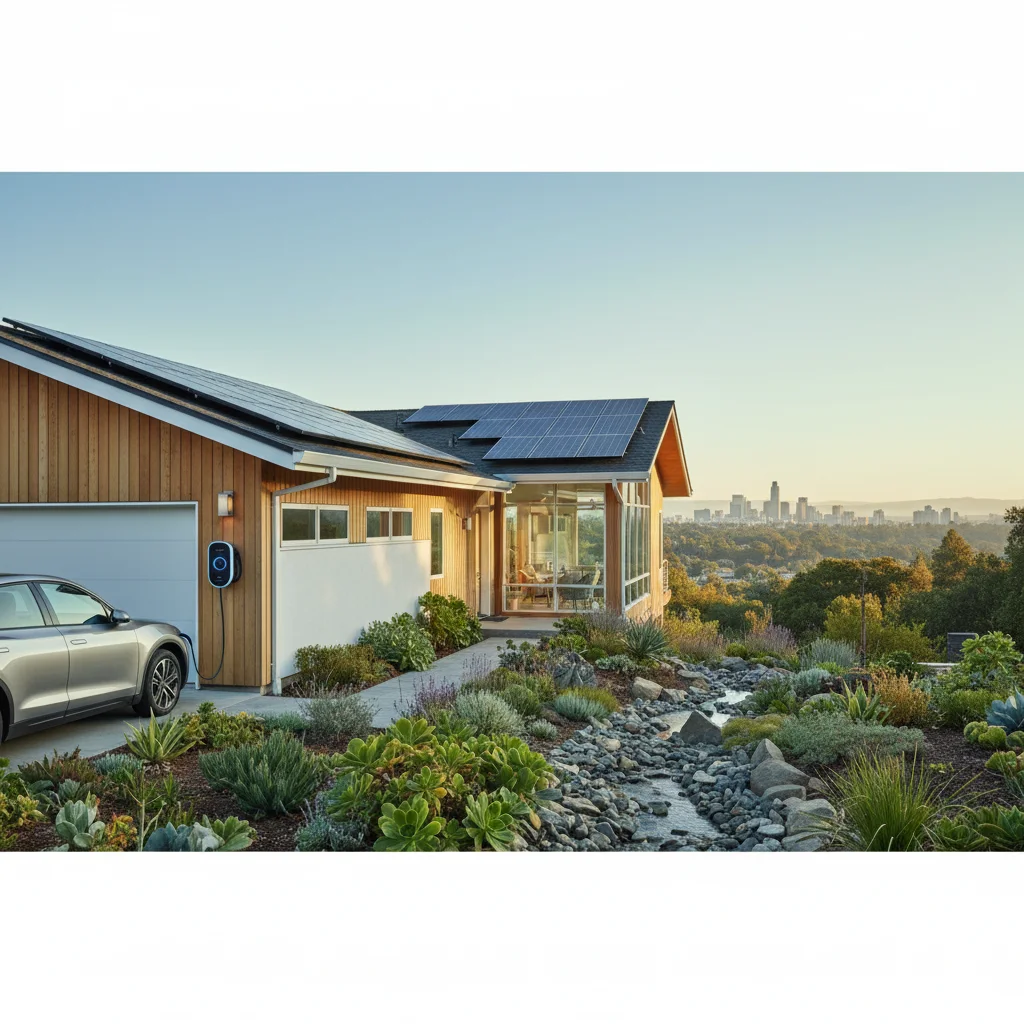
Oakland EV owners left $2,400 on the table last year by missing rebate deadlines. And with California's Clean Vehicle Rebate Project reinstated in 2026 alongside new Bay Area Air Quality Management District programs, the window is open again—but only for households earning under 400% of the federal poverty level and commercial properties installing Level 2 chargers before December 31, 2026.
What EV Charger Rebates Are Available in Oakland Right Now?
Oakland residents installing EV chargers in 2026 qualify for two stackable rebates: California's Clean Vehicle Rebate Project offering $2,000 for income-qualified households, and PG&E's EV Charge Network program providing $500-$4,000 for multi-unit dwelling and workplace installations. The federal 30C charger credit ended for chargers placed in service after June 30, 2026 (IRS FS-2025-05). State and utility programs operate on annual budgets that deplete mid-year.
So Oakland homeowners installing a $1,200 Level 2 charger in 2026 can claim $2,000 from California (if income-qualified) and potentially $500 from PG&E's program—totaling $2,500 in rebates on a $1,200 purchase. But each program carries distinct eligibility requirements, application processes, and deadlines that determine whether you receive any money at all.
How Much Money Can You Save With Oakland EV Charger Rebates?
Oakland EV charger rebates in 2026 reach up to $7,000 for multi-unit properties installing networked charging stations. The federal 30C charger credit ended for chargers placed in service after June 30, 2026 (IRS FS-2025-05). Federal tax credits for this work have ended, but state, local and utility rebates may still apply; check what is available at your address with the DuloCore rebate calculator. California's Clean Vehicle Rebate Project adds $2,000 for households earning below 400% of the federal poverty level ($120,000 for a family of four). PG&E's EV Charge Network contributes $500-$4,000 depending on property type and charger capacity. And the Bay Area Air Quality Management District's Carl Moyer Program provides up to $3,000 for public charging infrastructure serving disadvantaged communities.
The average Oakland homeowner installing a $1,500 Wallbox Pulsar Plus receives $1,000 in total rebates (California rebate $1,000 if income-qualified). Multi-unit dwelling owners installing ten Level 2 chargers at $12,000 total cost can claim $4,000 PG&E incentive and $3,000 Carl Moyer funding—$7,000 total. But these numbers collapse to zero if you miss application deadlines, fail income verification, or install equipment before securing pre-approval where required.
What Are the Eligibility Requirements for Oakland Charger Rebates?
The federal 30C charger credit ended for chargers placed in service after June 30, 2026 (IRS FS-2025-05).
California's Clean Vehicle Rebate Project for EV chargers requires household income below 400% of federal poverty level, California residency, and installation by a licensed electrician. PG&E's EV Charge Network demands pre-approval before installation, property owner consent for multi-unit dwellings, and charger models listed on PG&E's approved equipment roster. The Bay Area Air Quality Management District's Carl Moyer Program restricts funding to public charging stations operating at least five years in disadvantaged communities per CalEnviroScreen 4.0 mapping.
So a single Oakland homeowner earning $65,000 annually qualifies for California rebates but not Carl Moyer funding. A landlord installing chargers at a duplex in census tract 4019 qualifies for the California, PG&E and Carl Moyer programs if pre-approved by PG&E and serving a disadvantaged community.
"California's Clean Vehicle Rebate Project provides up to $2,000 for the purchase and installation of EV charging equipment for income-qualified residents." — DSIRE USA
What's the Deadline for Applying for Oakland EV Charger Rebates?
The federal 30C charger credit ended for chargers placed in service after June 30, 2026 (IRS FS-2025-05). California's Clean Vehicle Rebate Project accepts applications through December 31, 2026, but funding exhausted by August 2025 in the prior program year. PG&E's EV Charge Network requires pre-approval applications submitted 90 days before installation, with final rebate claims due within 180 days of project completion. The Bay Area Air Quality Management District's Carl Moyer Program runs annual funding cycles with applications opening March 1 and closing June 30, 2026.
And here's the trap that cost Oakland residents $2,400 last year: California's rebate operates on a first-come, first-served basis with no waitlist. The program allocated $8 million in 2025 and depleted funds by August 14. The 2026 program launched January 2 with $12 million, but 4,200 applications submitted in the first week already consumed 35% of available funding. So installing your charger in November 2026 likely means zero state rebate despite meeting all eligibility requirements.
Use our free rebate calculator to estimate your total savings based on current program funding levels.
Can You Stack Multiple Rebates for EV Chargers in Oakland?
Oakland EV charger installations qualify for stacking the California rebate and PG&E incentive simultaneously without reduction. The federal 30C charger credit ended for chargers placed in service after June 30, 2026 (IRS FS-2025-05). California's Clean Vehicle Rebate Project allows stacking with "all other federal, state, and local incentives." PG&E's EV Charge Network terms state rebates "may be combined with other available incentive programs."
But two restrictions apply. First, the total rebate amount cannot exceed the total installation cost—a $1,200 charger installation can have up to 100% of its costs covered, but no more. Second, the Bay Area Air Quality Management District's Carl Moyer Program requires a 15% cost match, meaning recipients must pay at least 15% of total project costs even after other rebates. So a $10,000 public charging station receiving $3,000 Carl Moyer funding must show $1,500 in unreimbursed costs after applying PG&E incentives.
The optimal stacking strategy for Oakland homeowners: apply for PG&E pre-approval first (90-day processing time), then submit California rebate application immediately after installation. For commercial properties, secure Carl Moyer funding before installation (applications close June 30), then layer PG&E incentives after project completion.
How Do You Apply for Oakland EV Charger Rebates Step-by-Step?
The federal 30C charger credit ended for chargers placed in service after June 30, 2026 (IRS FS-2025-05).
California's Clean Vehicle Rebate Project application portal (cleanvehiclerebate.org) requires uploading proof of income (two most recent pay stubs or prior year tax return), utility bill showing Oakland address, electrician invoice with installation date and equipment specifications, and photos of the installed charger. Applications process within 90 days, with funds disbursed via check to the address on file. PG&E's EV Charge Network demands pre-approval via pge.com/evcharge, including property owner consent forms for multi-unit dwellings, site electrical panel photos, and charger model selection from PG&E's approved roster. Post-installation verification requires electrician sign-off and charger serial number confirmation.
The Bay Area Air Quality Management District's Carl Moyer Program application (baaqmd.gov/carlmoyer) needs project cost estimates from three contractors, site ownership documentation, CalEnviroScreen 4.0 disadvantaged community verification, and five-year operational commitment. Applications submitted March 1-June 30, 2026 undergo technical review (60 days) followed by board approval (30 days) before installation authorization.
Official Sources
- Department of Energy - Energy Saver — Federal tax credits and energy efficiency rebate programs for residential and commercial properties (note: the federal 25C and 25D credits ended for projects completed after December 31, 2025)
- DSIRE USA — Comprehensive database of state incentives for renewables and efficiency, including California's Clean Vehicle Rebate Project
- IRS Alternative Fuel Infrastructure Tax Credit — Official guidance on federal EV charging equipment tax credits (note: the federal 30C charger credit ended for chargers placed in service after June 30, 2026)
Related Reading: Learn more about Ev Charger Brand Comparison and Ev Charger Buying Guide.
Frequently Asked Questions About Oakland EV Charger Rebates
What are the eligibility requirements for EV charger rebates in Oakland?
The federal 30C charger credit ended for chargers placed in service after June 30, 2026 (IRS FS-2025-05). California's Clean Vehicle Rebate Project demands household income below $120,000 for a family of four (400% federal poverty level), California residency, and licensed electrician installation. PG&E's program requires pre-approval 90 days before installation and property owner consent for rental properties.
How much can you get back from Oakland EV charger rebate programs?
Oakland homeowners receive $2,000 from California for income-qualified households and $500-$4,000 from PG&E depending on property type; federal tax credits no longer apply (IRS FS-2025-05). Total rebates range from $2,500 for single-family homes to $7,000 for commercial properties installing multiple networked chargers in disadvantaged communities. But California's $12 million budget depletes mid-year, and PG&E requires pre-approval before installation—missing either step reduces total rebates.
What is the application process for EV charger rebates in Oakland?
Start by securing PG&E pre-approval 90 days before installation via pge.com/evcharge, uploading site photos and selecting an approved charger model. After installation, submit California's rebate application at cleanvehiclerebate.org within 180 days, including income proof, utility bills, and electrician invoices. Commercial properties pursuing Carl Moyer funding must apply March 1-June 30, 2026 with three contractor bids and disadvantaged community verification.
When is the deadline to apply for EV charger rebates in Oakland?
The federal 30C charger credit ended for chargers placed in service after June 30, 2026 (IRS FS-2025-05). California's Clean Vehicle Rebate Project accepts applications through December 31, 2026, but funding historically depletes by August on a first-come, first-served basis. PG&E requires pre-approval applications 90 days before installation and final rebate claims within 180 days of completion. Carl Moyer Program applications open March 1 and close June 30, 2026, with no late submissions accepted regardless of funding availability.
How do Oakland EV charger rebates compare to California state incentives?
Oakland residents access the same California Clean Vehicle Rebate Project incentives as all state residents—$2,000 for income-qualified households installing residential chargers. But Oakland's location in PG&E territory unlocks additional utility rebates ($500-$4,000) unavailable to Southern California Edison or San Diego Gas & Electric customers. So total available rebates in Oakland exceed most California cities.
Ready to find out exactly how much you can save? Use our rebate calculator to get a personalized estimate based on your Oakland address, income level, and installation timeline. Enter your property details and see which programs you qualify for before funds run out.
Last updated April 14, 2026 — reviewed by DuloCore Editorial. About our authors.
Check your California EV charger rebate eligibility — see the programs you qualify for and the dollar amounts on our California EV charger rebate finder.