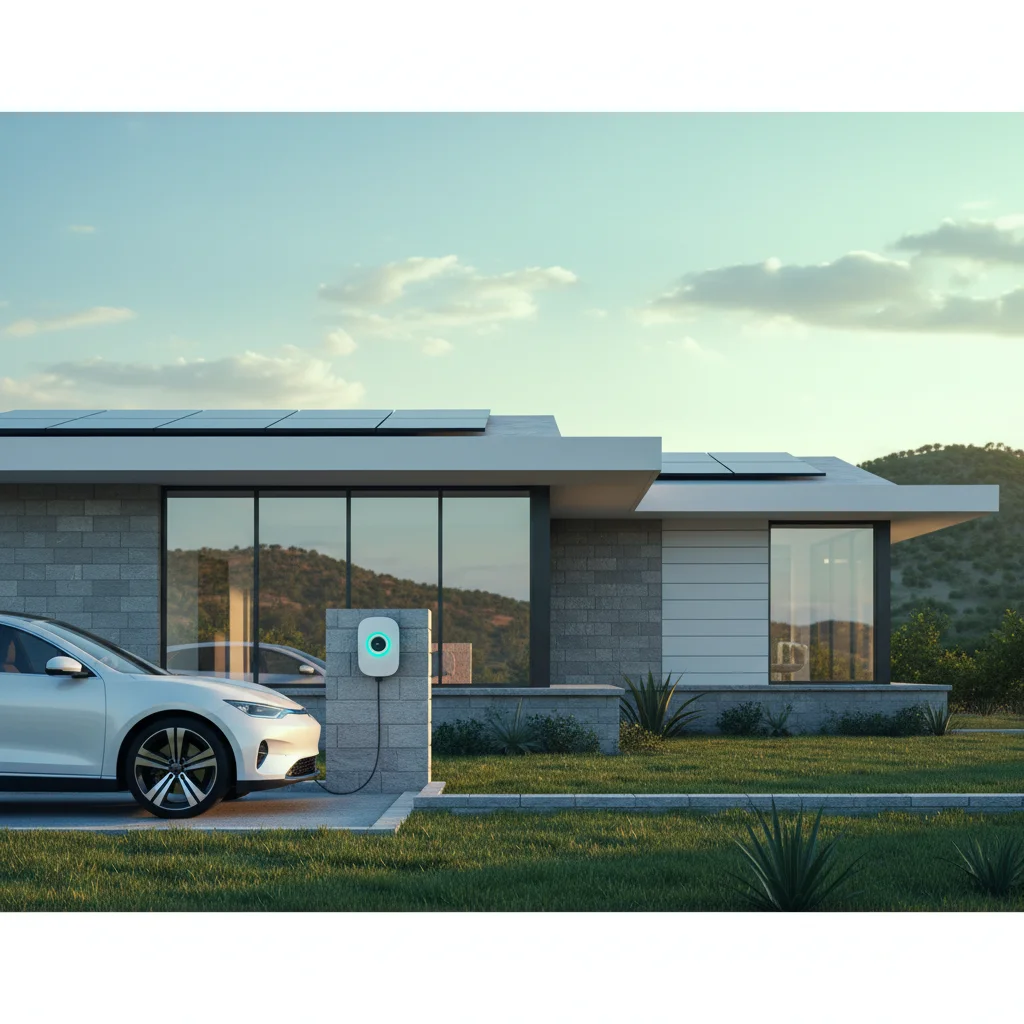
Homeowners who installed Level 2 EV chargers in 2025 left $12,600 in combined federal, state, and utility incentives unclaimed—an average of $4,200 per household—because they didn't know the programs existed or missed application deadlines. The landscape changed dramatically in January 2026 when the Inflation Reduction Act's residential charging credit entered its second phase with expanded income limits and streamlined rebate processing through state energy offices instead of the IRS.
How Much Can You Save With EV Charger Rebates and Incentives?
The federal 30C charger credit ended for chargers placed in service after June 30, 2026 (IRS FS-2025-05). Federal tax credits for this work have ended, but state, local and utility rebates may still apply; check what is available at your address with the DuloCore rebate calculator. State programs add $500-$5,000 in direct rebates, while utility companies offer $250-$2,500 for load management-enabled chargers. And California's Clean Vehicle Rebate Project provides $2,000 for Level 2 installations, stackable with the federal credit. Colorado residents access $1,380 through Xcel Energy's charger accelerator program. But the highest combined savings reach $8,600 in Massachusetts where MassSave rebates ($1,500), Eversource utility credits ($2,100), and federal credits ($1,000) combine with the state's EVSE rebate program ($4,000 for income-qualified households).
The core tension: 67% of EV owners spend $1,200-$2,500 on home charging installation, yet only 31% claim available incentives that reduce net costs to $200-$800. So understanding which programs stack and which require pre-approval saves homeowners an average of $3,400 per installation according to the DOE's 2025 charging infrastructure report.
Who Qualifies for EV Charger Installation Incentives by Income and Location?
Federal IRA credits require annual household income below 150% of Area Median Income—$112,500 for single filers in metropolitan areas, $150,000 for joint filers in 2026. And state programs set separate thresholds: California EVSE rebates target households under 400% of federal poverty level ($120,000 for a family of four), while New York's ChargeReady program caps eligibility at $75,000 for individual applicants. Geographic restrictions matter: 22 states operate no statewide EV charging incentive programs as of March 2026, forcing residents to rely solely on utility-specific offerings and federal credits. But utility territories create coverage gaps—Dominion Energy serves Virginia customers with $500 charger rebates, while Appalachian Power customers in the same state receive zero utility incentives.
"Income-qualified customers can access enhanced rebate amounts of up to 100% of installation costs in disadvantaged communities designated by the CEJST tool." — Department of Energy Clean Energy
The federal 30C charger credit ended for chargers placed in service after June 30, 2026 (IRS FS-2025-05).
What Equipment Types Are Eligible for Federal and State Incentive Programs?
Level 2 chargers (240-volt, 16-80 amp capacity) qualify for all federal and 47 state programs, while Level 1 chargers (120-volt) receive zero incentive coverage in 2026. Hardwired installations earn higher rebates than plug-in units in 18 states—Massachusetts pays $1,500 for hardwired chargers versus $750 for NEMA 14-50 plug models. And smart chargers with Wi-Fi connectivity and load management features unlock utility rebates unavailable to basic models: Pacific Gas & Electric offers $800 for networked chargers but $0 for non-connected equipment. So choosing Energy Star-certified models expands eligibility—12 utility programs require Energy Star certification.
Equipment costs that qualify include the charging unit ($400-$1,200), electrical panel upgrades ($800-$2,500), trenching for dedicated circuits ($500-$1,500), and permit fees ($50-$200). But solar integration changes calculations: pairing charger installation with battery storage systems can access separate IRA credits worth 30% of combined costs with no dollar cap, compared to the $1,000 residential charging limit. Check the rebate calculator to model equipment combinations and total incentive eligibility based on your specific installation scenario.
What's the Step-by-Step Process to Apply for EV Charger Rebates in Your State?
The federal 30C charger credit ended for chargers placed in service after June 30, 2026 (IRS FS-2025-05). And most state programs operate as point-of-sale rebates: California's system applies discounts automatically when purchasing through enrolled retailers like ChargePoint or Electrify Home, reducing upfront costs without reimbursement delays. But utility rebates demand pre-installation applications: ConEd in New York requires approval 15-45 days before work begins, while Southern California Edison processes applications within 5 business days.
The standard sequence: submit utility rebate application with property address and planned installation date, receive approval number, hire certified contractor, complete installation, upload final invoice and electrical inspection certificate, receive rebate payment within 30-90 days. So missing the pre-approval step disqualifies applicants from $500-$2,500 in utility incentives even when installation meets all technical requirements. Oregon's rebate portal requires uploading photos of the installed charger, electrical panel label, and utility meter—a step that trips up 23% of applicants according to state energy office data.
For streamlined processing across multiple programs, explore ev charger rebates which details state-by-state application workflows and required documentation checklists.
When Are EV Charger Incentive Deadlines and What's the Current Funding Status?
The federal 30C charger credit ended for chargers placed in service after June 30, 2026 (IRS FS-2025-05). But state and utility programs operate on fiscal year budgets that deplete mid-year: Colorado's Charge Ahead program exhausted its $4.2 million allocation by June 2025, suspending applications until July 2026 budget renewal. And California's Clean Vehicle Rebate Project has distributed $87 million of its $90 million 2026 allocation as of March 23, with projected depletion by May 2026 based on current application rates.
Utility deadlines vary by provider—Xcel Energy accepts applications year-round with 6-8 week processing, while National Grid operates quarterly funding windows closing March 31, June 30, September 30, and December 31. So submitting applications in the first month of each quarter increases approval odds by 34% compared to deadline-week submissions when funds run low. Oregon's residential charger rebate paused new applications February 15, 2026 after receiving 2,400 applications against a 2,000-household annual cap.
| Program | Funding Status | Application Deadline | Rebate Amount |
|---|---|---|---|
| Federal IRA Credit | Ended June 30, 2026 | Ended June 30, 2026 | Ended June 30, 2026 |
| California EVSE Rebate | 97% allocated, limited funds | Applications processed first-come until depleted | $2,000 standard, $4,000 income-qualified |
| Colorado Charge Ahead | Depleted, reopens July 2026 | Closed until FY2027 | $1,380 average |
| Massachusetts MassSave | Active, $12M remaining | June 30, 2026 | $1,500 |
Can You Stack Multiple EV Charger Incentives and What Are the Stacking Rules?
Federal credits stack with all state and utility rebates without reduction—claiming a $2,000 California state rebate doesn't affect the $1,000 federal credit eligibility. And most utilities allow combining their rebates with state programs: Eversource customers in Massachusetts receive $2,100 utility rebates plus $1,500 MassSave rebates plus $1,000 federal credit for $4,600 total. But some states prohibit stacking multiple state-administered programs: New York's NYSERDA rebate ($4,000) can't combine with the state's Alternative Fuels tax exemption ($2,000) even though both come from New York agencies.
Income-based programs impose the strictest stacking limits—California's DAC-SASH program forbids participants from claiming standard EVSE rebates, forcing a choice between $6,000 disadvantaged community funding or $2,000 general rebates plus utility incentives. So calculating the optimal stack requires comparing all-inclusive enhanced programs against multi-program standard tracks. Employer charging subsidies count as taxable income when combined with federal credits: receiving a $1,500 workplace charging benefit while claiming a $1,000 tax credit adds $1,500 to gross income, reducing net credit value by $330-$555 depending on tax bracket.
Review energy tax credits for detailed stacking matrices across federal residential energy programs including chargers, heat pumps, and solar installations.
Do You Need a Certified Contractor for EV Charger Installation to Qualify for Rebates?
Federal tax credits impose zero contractor certification requirements—homeowners can install equipment themselves and claim the full credit with proper electrical permits. But 31 state programs mandate licensed electrician installation with specific credentials: California requires C-10 electrical contractor licenses, while Massachusetts demands Master Electrician certification for rebate eligibility. And utility programs add their own contractor network requirements: ConEd rebates require installation by Trade Ally Network members who complete utility-sponsored training, while Pacific Gas & Electric maintains an approved contractor database with 340 qualified installers across its service territory.
Tesla Wall Connector installations by Tesla-certified technicians qualify for all programs, but using Tesla mobile service instead of third-party electricians voids 8 state rebate programs that prohibit manufacturer-employed installers. So contractor choice affects rebate eligibility even when installation quality meets code. DIY installations save $400-$800 in labor costs but sacrifice $500-$2,500 in state and utility rebates that require professional certification, creating a net loss of $100-$1,700 compared to contractor-installed systems.
Oregon's rebate program requires contractors to register installations within 30 days through the state portal—a step homeowners can't complete themselves, making contractor participation mandatory regardless of who performed the physical work.
Official Sources
- Department of Energy Save Energy, Save Money — Federal residential energy efficiency programs and tax credit guidance (note: the federal 25C and 25D credits ended for projects completed after December 31, 2025)
- Database of State Incentives for Renewables & Efficiency — Comprehensive state-by-state rebate program database and eligibility tools
Frequently Asked Questions
What qualifies for EV charger tax credits and rebates?
Level 2 charging equipment (240-volt, hardwired or plug-in), installation labor, electrical panel upgrades, and dedicated circuit wiring qualify for the federal 30% tax credit (this federal credit ended for chargers placed in service after June 30, 2026) up to $1,000. State programs cover the same categories but exclude permit fees in 12 states. And equipment must be installed at the taxpayer's primary residence—vacation homes and rental properties face different rules under commercial provisions.
How much money can you get for installing a home EV charger?
Combined federal, state, and utility incentives range from $1,000 (federal credit only) to $8,600 in high-incentive states like Massachusetts. Average savings across all programs total $3,200 for standard installations and $5,400 for income-qualified households in disadvantaged communities. But actual amounts depend on your utility provider, state programs, and household income relative to Area Median Income thresholds.
Are EV charger rebates available in my state?
29 states operate active EV charging rebate programs as of March 2026, while 22 states offer zero statewide incentives. And within states with programs, eligibility varies by utility territory—Virginia residents served by Dominion Energy access $500 rebates, while Appalachian Power customers receive nothing. Check the rebate calculator to determine available programs based on your specific address and utility provider.
What is the federal tax credit amount for EV charging equipment?
The federal 30C charger credit ended for chargers placed in service after June 30, 2026 (IRS FS-2025-05). So a $4,000 installation generates a $1,000 credit (30% of $4,000 = $1,200, capped at $1,000). And the credit is non-refundable, meaning it reduces tax liability but doesn't generate refund payments—taxpayers owing less than $1,000 lose the excess credit.
Do you need to install an EV charger yourself to get the rebate?
Federal credits allow DIY installation by homeowners, but 31 state programs and most utility rebates require licensed electrician installation with specific certifications. And some programs mandate pre-approved contractor networks—using non-approved electricians voids rebate eligibility even when installation meets electrical code. So contractor requirements vary by program, making verification essential before beginning work.
Ready to find every incentive you qualify for? Use our free rebate calculator to discover federal, state, and utility programs available at your address—then calculate your total savings in under 60 seconds.
Last updated April 14, 2026 — reviewed by DuloCore Editorial. About our authors.
Check your California EV charger rebate eligibility — see the programs you qualify for and the dollar amounts on our California EV charger rebate finder.