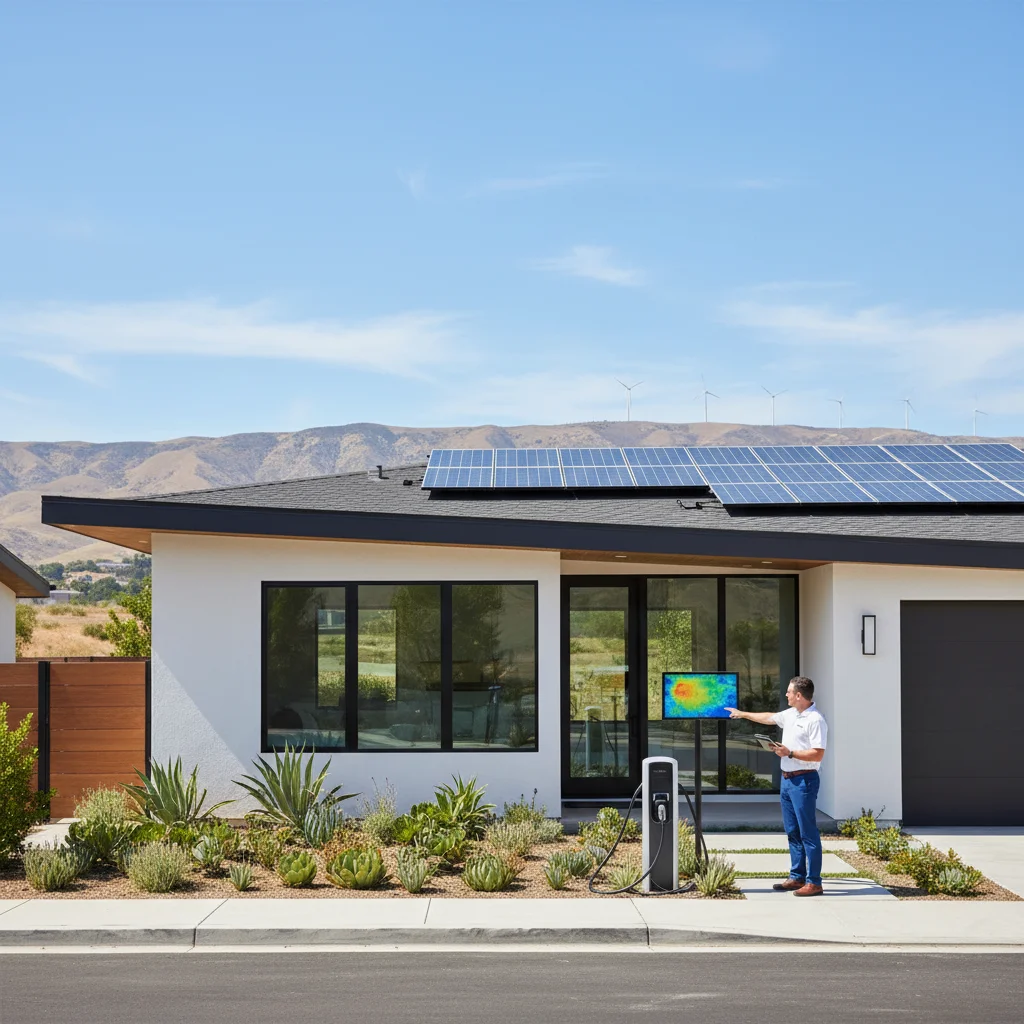
Homeowners in the Inland Empire pay $150 to $800 more for professional energy audits than residents in coastal California counties, yet utility rebates and federal programs now reimburse up to 100% of audit costs for qualifying households—making 2026 the first year since 2019 that free comprehensive audits are available to renters and moderate-income homeowners without income verification delays.
Energy audits in the Inland Empire cost $300–$800 for comprehensive home assessments in 2026, with utility-sponsored free audits available through Southern California Edison and The Gas Company for income-qualified households earning up to 200% of federal poverty guidelines, and federal rebates covering $150–$300 of paid audit costs under the Inflation Reduction Act Home Energy Rebate programs.
How Much Does an Energy Audit Cost in the Inland Empire?
Professional energy audits in Riverside and San Bernardino counties range from $300 for basic walk-through assessments to $800 for comprehensive blower-door and thermal imaging diagnostics in 2026. Certified auditors meeting BPI (Building Performance Institute) standards charge $450–$650 for mid-tier audits that include HVAC efficiency testing, insulation inspection, and air leakage measurement. And utility-sponsored no-cost audits through Southern California Edison's Energy Efficiency Program serve households earning under 200% of federal poverty level—$60,000 annual income for a family of four—with same services valued at $500–$700 in the private market.
The Energy Upgrade California Home Upgrade program reimburses $150–$300 of paid audit costs when homeowners complete qualifying improvements within 12 months of assessment. So a $500 audit drops to $200–$350 net cost after rebate processing, typically delivered as bill credits within 60–90 days of upgrade verification. But most Inland Empire residents qualify for free utility audits before paying out-of-pocket, based on income thresholds adjusted annually each January.
What Income Limits Apply to Energy Audit Programs in Inland Empire?
Southern California Edison's free audit program in 2026 serves households at or below 200% of federal poverty guidelines: $60,000 for families of four, $51,640 for three-person households, $43,280 for two people, and $30,120 for individuals. The Gas Company's parallel program uses identical thresholds but extends eligibility to 250% FPL—$75,000 for families of four—in designated disadvantaged communities, covering most of Riverside, San Bernardino, and eastern Los Angeles County census tracts identified in CalEnviroScreen 4.0 scoring.
And the federal Home Energy Rebate Program—administered through California's HOMES (Home Owner Managing Energy Savings) initiative launching statewide in Q3 2026—sets income caps at 80% Area Median Income ($89,600 for Riverside-San Bernardino MSA four-person households) for standard rebates, with enhanced rebates up to $14,000 available only to households under 150% FPL ($54,000 for families of four). But audit costs themselves remain fully reimbursable for all income tiers when paired with qualifying weatherization projects exceeding $2,500 in total investment.
"California's HOMES program will cover 100% of pre-upgrade energy assessment costs for all participating households, regardless of income, when audits are performed by certified BPI professionals and lead to modeled energy savings of at least 20%." — California Energy Commission
What Documentation Do You Need to Qualify for an Energy Audit?
Income verification for free utility audits requires one of three document sets: prior-year federal tax return (Form 1040), three consecutive pay stubs covering 90 days, or enrollment confirmation in means-tested programs like CalFresh, Medi-Cal, or LIHEAP (Low Income Home Energy Assistance Program). Southern California Edison accepts digital uploads through the online application portal at sce.com/homeenergyaudit, processing most approvals within 5–7 business days. And The Gas Company requires identical documentation submitted via fax (800-427-2200) or mail, with 10–14 day processing times for paper applications.
Property ownership verification isn't required for renter households seeking audits, but landlord permission forms must accompany applications when requesting follow-up weatherization work. So renters receive free assessments and recommendations but can't access rebates for air sealing or insulation upgrades without property owner consent and cost-sharing agreements documented on utility rebate forms. But portable efficiency measures like LED lighting, smart thermostats, and advanced power strips remain eligible for no-cost installation during renter audits under both utility programs.
Federal HOMES rebates require additional documentation: W-2 wage statements or 1099 forms for self-employed applicants, proof of primary residence (utility bill or DMV registration matching audit address), and homeowner's insurance declarations page confirming active coverage. And households claiming enhanced rebate tiers must submit CalEnviroScreen community designation letters—automatically generated by entering property address at California OEHHA's mapping tool—alongside standard income verification.
Is Pre-Approval Required Before Getting an Energy Audit?
Southern California Edison and The Gas Company require pre-approval applications submitted 10–20 business days before desired audit dates, with appointment scheduling handled after income verification clears. Walk-in or same-week audit requests aren't available through utility programs, but private auditors accept immediate bookings with 2–5 day lead times for paid assessments. And federal HOMES rebates don't require pre-audit approval—homeowners can complete paid assessments first and submit reimbursement claims with upgrade project applications—but California Energy Commission guidance recommends pre-enrollment to lock in 2026 program funding before annual allocations expire.
The Energy Upgrade California program operates on rolling enrollment without advance approval requirements: homeowners schedule paid audits with certified contractors, complete recommended upgrades within 12 months, and submit combined rebate applications with audit receipts and contractor invoices. So pre-approval isn't mandatory but waiting until post-upgrade submission risks funding exhaustion, particularly in high-demand periods like Q4 when homeowners rush year-end tax planning. But utility programs guarantee audit availability to all income-qualified applicants regardless of seasonal demand, with extended wait times (3–6 weeks) during peak summer enrollment.
Private auditors offering financing through PACE (Property Assessed Clean Energy) programs—including HERO and Ygrene operating in Riverside and San Bernardino counties—require credit checks and property lien searches before scheduling audits bundled with improvement loans. And these pre-qualification steps add 7–10 days to scheduling timelines but enable immediate upgrade financing without upfront cash requirements, appealing to homeowners ineligible for income-based utility programs.
What Are the Funding Sources and Stacking Rules for Inland Empire Energy Audits?
Utility audit programs draw from California Public Utilities Commission-mandated ratepayer funds collected through monthly electric and gas bills, allocated annually through three-year energy efficiency portfolios. Southern California Edison's 2024–2026 portfolio designates $47 million for residential audits and direct-install services across its service territory, including all Inland Empire communities. And The Gas Company operates parallel funding of $23 million statewide, with 40% targeted to disadvantaged communities under Assembly Bill 802 equity requirements.
Federal HOMES rebates leverage $310 million in Inflation Reduction Act funds allocated to California through 2031, with audit reimbursement capped at $500 per household or actual cost, whichever is lower. Stacking rules permit combining utility free audits with federal rebates only when utility assessments don't meet BPI certification standards required for HOMES eligibility—meaning most households must choose between free utility service or paid BPI audit with federal reimbursement. But Energy Upgrade California rebates stack freely with both utility and federal programs since they reimburse upgrade costs rather than audit expenses directly.
"Homeowners cannot receive both a free utility audit and federal audit reimbursement for the same assessment, but can layer utility audits with upgrade rebates from multiple programs as long as total incentives don't exceed 100% of project costs." — Database of State Incentives for Renewables & Efficiency
Local municipal programs in Riverside, San Bernardino, and Ontario offer supplemental $100–$250 audit rebates funded through Measure A and Measure I sales tax allocations, stackable with all state and federal incentives when combined rebates remain under total audit cost. So a $600 paid audit could receive $300 federal HOMES reimbursement, $150 Energy Upgrade California credit, and $150 city rebate for zero net cost—but only if application timing and documentation meet all three programs' requirements simultaneously.
When Are the Application Deadlines for Energy Audit Rebates and Incentives?
Southern California Edison and The Gas Company utility programs operate year-round with no application deadlines, accepting new enrollments until annual budget allocations deplete—historically occurring in November–December for income-qualified programs. And 2026 funding increased 18% over 2025 levels, extending typical depletion to January–February 2027 based on California Public Utilities Commission projections. But households applying after October face 4–8 week wait times versus 2–3 weeks in off-peak months.
Federal HOMES program applications opened March 1, 2026, and accept submissions through December 31, 2030, or until California's $310 million allocation exhausts. California Energy Commission estimates current funding supports 620,000 household rebates statewide, with audit reimbursement representing 15–20% of total claims—suggesting capacity for 93,000–124,000 audit rebates before program closure. And applications submitted before September 30, 2026, receive priority processing under first-quarter incentive rules, with 30-day approval timelines versus 60–90 days for later submissions.
Energy Upgrade California's 12-month upgrade completion window creates effective application deadlines tied to project timelines: audits performed in January 2026 must pair with upgrades finished by January 2027 to qualify for rebates. So households planning major renovations in 2027 should delay audits until Q4 2026 to maximize the compliance window. But audit costs are reimbursed at application submission regardless of upgrade completion timing, creating risk of repayment demands if projects don't finish within program deadlines.
| Program | Audit Cost | Income Limit | Application Deadline | Reimbursement Timeline |
|---|---|---|---|---|
| SCE Free Audit | $0 | 200% FPL ($60k family of 4) | Rolling until funds deplete | N/A (no-cost service) |
| Gas Company Free Audit | $0 | 250% FPL in DACs ($75k family of 4) | Rolling until funds deplete | N/A (no-cost service) |
| Federal HOMES Rebate | $150–$500 reimbursed | 80% AMI ($89,600 in Riverside-SB) | Dec 31, 2030, or funds exhausted | 30–90 days post-approval |
| Energy Upgrade CA | $150–$300 reimbursed | No income limit | 12 months after audit date | 60–90 days after upgrade verification |
Official Sources
- California Energy Commission Home Energy Rebate Programs — Official state administrator for federal HOMES and HEEHRA rebates, including audit reimbursement guidelines and income verification requirements.
- Database of State Incentives for Renewables & Efficiency — Comprehensive database of California utility rebates, municipal programs, and stacking rules updated monthly by NC Clean Energy Technology Center.
- U.S. Department of Energy Home Energy Audits — Federal guidance on professional audit standards, DIY assessment tools, and savings projections by climate zone.
Related Reading: Learn more about Energy Audit Before And After Results and Energy Audit Case Studies Residential.
Related Reading: Learn more about Cooling Season Energy Audit Checklist and Dehumidifier Energy Consumption Audit.
Frequently Asked Questions
How much does an energy audit cost in the Inland Empire?
Professional energy audits in Riverside and San Bernardino counties cost $300–$800 in 2026, with basic walk-through assessments at $300–$400 and comprehensive blower-door tests with thermal imaging at $600–$800. Certified BPI auditors charge median rates of $500–$550 for mid-tier services including HVAC diagnostics and insulation inspection. And utility-sponsored free audits through Southern California Edison serve income-qualified households earning under $60,000 annually for families of four, eliminating all out-of-pocket costs for approximately 340,000 Inland Empire households meeting income thresholds.
Are energy audits free in California?
Energy audits are free for California households earning up to 200% of federal poverty level through investor-owned utility programs operated by Southern California Edison, Pacific Gas & Electric, San Diego Gas & Electric, and SoCalGas. And the 2026 income threshold of $60,000 for four-person families covers approximately 38% of California households based on Census Bureau income distribution data. But households above income limits pay $300–$800 for private audits, with $150–$500 reimbursed through federal HOMES rebates when paired with qualifying weatherization upgrades exceeding $2,500 in total investment.
Who is eligible for energy audit rebates in the Inland Empire?
All Inland Empire homeowners and renters qualify for federal HOMES audit reimbursement regardless of income when assessments are performed by BPI-certified professionals and lead to energy upgrades saving at least 20% of modeled household consumption. And income-qualified households earning under 200% federal poverty level—$60,000 for families of four—receive free utility audits through Southern California Edison and The Gas Company programs with no reimbursement applications required. But renters must obtain landlord permission documented on utility forms before accessing follow-up weatherization rebates, while homeowners face no approval requirements beyond income verification.
How long does an energy audit take?
Basic walk-through audits require 45–90 minutes for single-family homes under 2,000 square feet, covering visual inspection of insulation, HVAC equipment, water heaters, and air leakage around doors and windows. Comprehensive audits with blower-door depressurization testing and infrared thermal imaging extend to 2–4 hours, generating detailed reports with modeled savings projections and prioritized upgrade recommendations. And utility-sponsored free audits through Southern California Edison take 90–120 minutes including direct-install services like LED bulb replacement, smart thermostat installation, and weatherstripping—adding $150–$250 in immediate efficiency improvements beyond assessment value.
What is the difference between a free energy audit and a paid professional audit?
Free utility audits provided by Southern California Edison and The Gas Company meet California Title 24 standards but lack BPI certification required for federal HOMES rebate eligibility, limiting qualifying households to state and local incentives only. Paid professional audits from BPI-certified contractors include blower-door testing, duct leakage measurement, and combustion safety analysis—generating detailed energy models accepted by all federal, state, and local rebate programs. And paid audits cost $450–$800 but unlock $150–$500 federal reimbursement plus eligibility for $4,000–$14,000 in HOMES upgrade rebates, while free audits provide $200–$300 in direct-install services but don't qualify for federal incentive stacking beyond basic weatherization programs.
Ready to reduce energy costs and qualify for thousands in rebates? Use our free rebate calculator to discover your exact savings potential and find certified auditors in Riverside and San Bernardino counties.
Find Your Energy Audit Rebates in 60 Seconds
Calculate your eligibility for free audits and federal reimbursement—no income verification required to see estimates.
Start Your Rebate Calculator →Last updated: April 14, 2026. Reviewed by the DuloCore Editorial Team. About our authors.