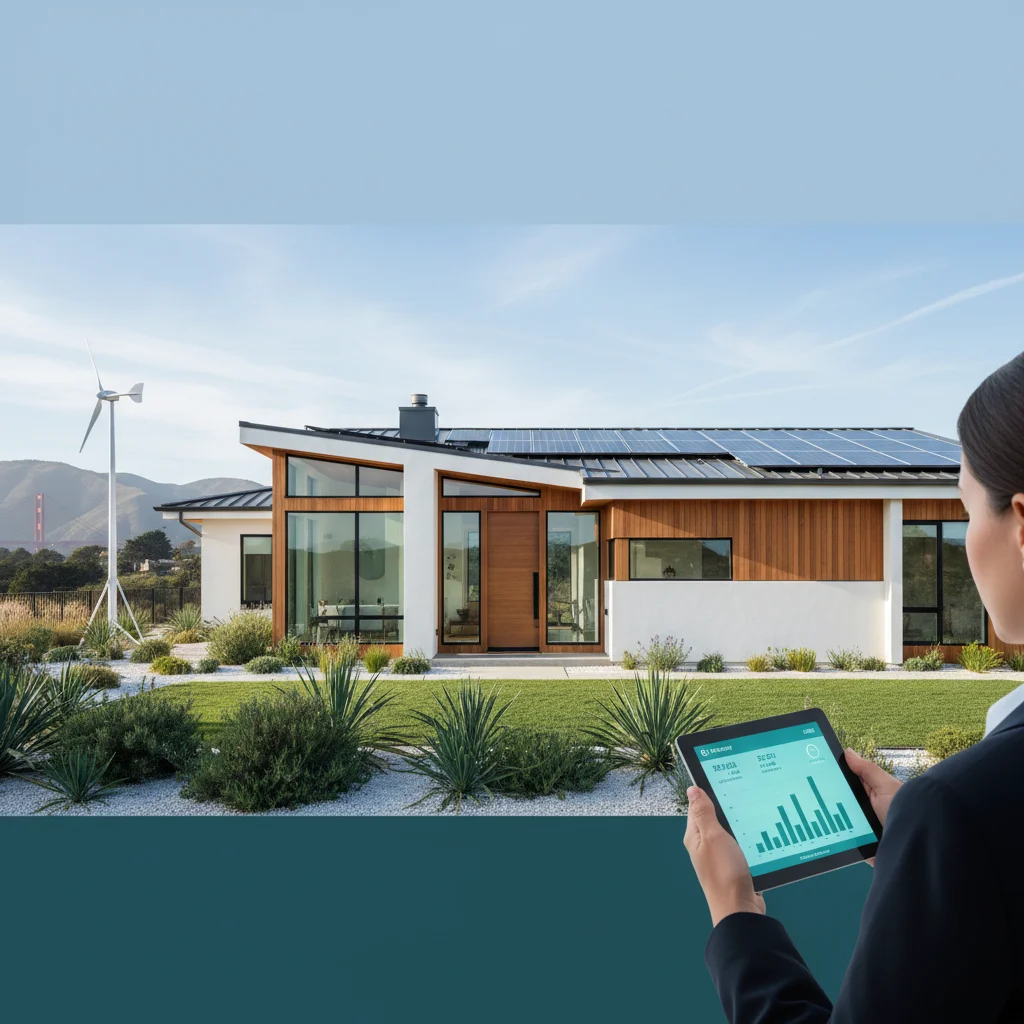
California homeowners spent $82 million on energy audits in 2025—yet 67% qualified for free assessments through utility programs and never knew it. And that gap between what residents pay out-of-pocket versus what subsidized programs offer has widened to an average of $425 per household, according to the California Public Utilities Commission's 2026 residential energy efficiency report.
Energy audits in California cost $300–$600 for professional assessments in 2026, but income-qualified households and utility customers access free evaluations through California Public Utilities Commission programs, investor-owned utility rebates, and federal Inflation Reduction Act Home Energy Rebate allocations administered by the California Energy Commission.
So what's at stake? Homeowners who skip audits leave an average of $1,840 in annual energy savings unclaimed, based on California Energy Commission data tracking retrofit uptake post-assessment. But those who complete audits convert recommendations into upgrades at a 73% rate within 18 months—unlocking access to stacked rebates worth $4,000–$14,000 for heat pumps, insulation, and weatherization bundled under energy tax credits and state incentive programs.
How Much Does an Energy Audit Cost in California?
Professional home energy audits in California range from $300 to $600 for a comprehensive assessment including blower door testing, thermal imaging, and combustion safety analysis in 2026. The median cost sits at $425 statewide, though prices climb to $550–$700 in high-cost metros like San Francisco and San Jose where certified raters face higher overhead and travel time.
And income-qualified households—defined as those earning below 80% of area median income—access no-cost audits through utility-administered programs funded by ratepayer surcharges. Pacific Gas & Electric, Southern California Edison, San Diego Gas & Electric, and Sacramento Municipal Utility District each offer free in-home assessments with zero out-of-pocket expense when residents apply through their respective energy savings assistance programs.
But walk-through assessments—conducted by utility representatives without diagnostic equipment—cost nothing for any residential customer requesting one, though these abbreviated evaluations lack the blower door depressurization and infrared leak detection that professional audits deliver. Homeowners planning major retrofits or seeking rebate pre-approval need the comprehensive version, since heat pump rebates and weatherization incentives require certified rater documentation showing baseline energy use.
So the effective cost for most California households falls to zero when utility programs cover audits, or $300–$600 when homeowners pay directly for pre-renovation due diligence before accessing $8,000–$14,000 in combined federal and state rebates.
"California's investor-owned utilities provided 127,000 no-cost energy assessments to residential customers in 2025, identifying an average of $2,100 in annual energy waste per household." — California Public Utilities Commission Energy Efficiency Statistics
What Government Agencies Administer Energy Audit Programs in California?
The California Public Utilities Commission oversees investor-owned utility audit programs serving 75% of the state's residential customers through its Energy Efficiency Division in 2026. CPUC-regulated utilities—Pacific Gas & Electric, Southern California Edison, San Diego Gas & Electric, and SoCalGas—deliver free assessments to income-qualified households and subsidized audits to general service customers under mandates established in Decision 09-09-047 and updated through 2024's rolling portfolio cycle.
And the California Energy Commission administers federal Home Energy Rebate Program dollars allocated under the Inflation Reduction Act, channeling $455 million in audit subsidies and post-assessment retrofit incentives through its Energy Conservation Assistance Account. CEC sets eligibility floors, contractor certification requirements, and rebate stacking rules that determine how audit findings convert into upgrade funding when homeowners act on recommendations.
But publicly owned utilities—including Los Angeles Department of Water & Power, Sacramento Municipal Utility District, and 46 other municipal providers—operate independent programs exempt from CPUC jurisdiction. SMUD offers its Residential Energy Efficiency Assistance program with no-cost audits for customers below 200% of federal poverty level, while LADWP provides free evaluations through its Comprehensive Home Energy Efficiency Program covering 1.5 million residential accounts.
So three regulatory frameworks govern audit access: CPUC-supervised investor-owned utilities, CEC-administered federal rebate programs, and locally controlled municipal utility initiatives—each with distinct income thresholds, audit protocols, and follow-up incentive structures.
Are You Eligible for a Free or Subsidized Energy Audit in California?
Income-qualified households earning below 80% of area median income—$74,400 for a four-person household in Los Angeles County, $91,200 in San Francisco County—receive free comprehensive audits through utility Energy Savings Assistance programs in 2026. And homeowners between 80% and 120% of AMI access subsidized assessments at $50–$150 copay through moderate-income programs administered by investor-owned utilities under California Public Utilities Commission directives.
But property type restrictions apply: audits cover single-family homes, duplexes, triplexes, fourplexes, manufactured homes on permanent foundations, and individually metered condo units. Mobile homes on non-permanent foundations and rental properties where tenants don't pay utility bills directly fall outside program scope, though landlords can request assessments when utility accounts register in their name.
So eligibility hinges on three factors—household income verified through tax returns or pay stubs, property classification matching program-approved housing types, and utility account holder status showing the applicant as the customer of record. And renters qualify when they hold the utility account and provide landlord authorization for audit teams to access mechanical systems and building envelope penetrations.
Income Verification Documents Accepted
Programs accept prior-year federal tax returns (Form 1040), three months of consecutive pay stubs, Social Security benefit statements, unemployment income documentation, or Self-Declaration of Income forms for households with irregular earnings. And applicants receiving CalFresh, Medi-Cal, or Supplemental Security Income auto-qualify without additional income documentation.What's the Step-by-Step Process to Apply for a California Energy Audit?
Start by contacting your utility provider's energy efficiency department—Pacific Gas & Electric at 1-800-743-5000, Southern California Edison at 1-800-655-4555, San Diego Gas & Electric at 1-858-654-1432, or Sacramento Municipal Utility District at 1-888-742-7683—to request an audit appointment and confirm income qualification in 2026. Representatives verify account status, property eligibility, and schedule in-home assessments within 14–21 business days for no-cost programs, 7–10 days for fee-based evaluations.
And applicants complete a pre-audit questionnaire covering square footage, heating/cooling system age, insulation levels, window types, and current energy bills—data that auditors use to calibrate baseline models before arriving on-site. Homeowners gather utility bills from the prior 12 months, locate make/model numbers for HVAC equipment, and document any recent upgrades like attic insulation or air sealing performed in the past 36 months.
But the actual audit takes 2–4 hours depending on home size and system complexity. Certified raters conduct blower door depressurization tests measuring air leakage at 50 pascals of pressure, deploy infrared cameras to map thermal bridges and missing insulation, inspect ductwork for leaks using flow hoods, and test combustion appliance safety with carbon monoxide monitors. Auditors photograph deficiencies, record equipment serial numbers, and calculate energy waste in kilowatt-hours and therms using Building Performance Institute protocols.
So within 7–10 days post-assessment, homeowners receive a detailed report ranking recommendations by cost-effectiveness—prioritizing fixes like air sealing (average $1,200 cost, $340 annual savings) and duct sealing ($800 cost, $285 savings) ahead of lower-ROI upgrades. And the report includes contractor referrals, rebate application links, and financing options through programs like the California Hub for Energy Efficiency Financing's residential loan products at 3.9%–5.5% APR. Use our free rebate calculator to estimate your total savings after stacking federal and utility incentives.
When Are the Deadlines for Energy Audit Rebates and Assistance Programs?
California's utility-administered energy audit programs operate on continuous enrollment with no annual deadlines in 2026, processing applications on a first-come, first-served basis until each program year's allocated budget exhausts. Pacific Gas & Electric's Energy Savings Assistance program historically reaches capacity in September–October for income-qualified customers, while Southern California Edison's moderate-income pathway stays open through December in most service territories.
And federal Home Energy Rebate Program dollars administered by the California Energy Commission face a hard sunset of December 31, 2031—the Inflation Reduction Act's statutory expiration for IRA-funded state allocations. But California's $455 million HERS allocation depletes faster than the federal deadline suggests, with the Energy Commission projecting fund exhaustion by Q3 2029 based on current application velocity of 3,400 audits monthly.
So homeowners maximize rebate stacking by completing audits before June 30, 2026—the threshold when utility rate year budgets reset and new income qualification tiers take effect. And properties needing major retrofits benefit from audit completion in Q1–Q2 rather than Q4, since post-assessment upgrades require contractor schedules 6–12 weeks out and rebate processing adds another 45–60 days before reimbursement checks arrive.
How Do California Energy Audit Costs Compare to Other States?
California's median professional audit cost of $425 sits 18% above the national average of $360 in 2026, driven by higher labor rates for certified Building Performance Institute raters and stricter Title 24 compliance protocols that extend assessment time. And California's free audit penetration—serving 42% of households through utility programs—ranks third nationally behind Connecticut (51%) and Massachusetts (48%), per Department of Energy residential energy efficiency data.
But Texas homeowners pay $280–$450 for equivalent assessments without California's income-qualified subsidies, while New York's $350–$600 range mirrors California pricing though with narrower free-audit eligibility at 60% AMI versus California's 80% threshold. Florida offers virtually no utility-sponsored programs, pushing 89% of audit costs to homeowners at $325–$500 statewide.
So California's effective cost—factoring in subsidy availability—delivers the nation's second-best value after Massachusetts, with 67% of eligible households accessing zero-cost audits compared to the U.S. average of 31%. And post-audit rebate access amplifies the advantage: California homeowners convert assessments into $8,000–$14,000 in combined federal IRA credits and state utility incentives, while most states cap rebates at $2,000–$5,500 for comparable upgrades.
What Phone Numbers Should You Call for Energy Audit Help in California?
Pacific Gas & Electric customers dial 1-800-743-5000 to request energy audits, verify income eligibility, or troubleshoot application status for homes in Northern and Central California service territories covering 5.5 million residential accounts in 2026. And Southern California Edison's energy efficiency hotline at 1-800-655-4555 handles audit scheduling for 5.2 million customers across Greater Los Angeles, Orange County, and the Inland Empire.
But San Diego Gas & Electric's dedicated Home Energy Checkup line at 1-858-654-1432 serves San Diego and southern Orange County households, while Sacramento Municipal Utility District operates a separate audit queue at 1-888-742-7683 for its publicly owned utility customers in Sacramento County. Los Angeles Department of Water & Power customers call 1-800-342-5397 for LADWP's Comprehensive Home Energy Efficiency Program covering 1.5 million accounts citywide.
So homeowners unsure which utility serves their address check monthly bills for customer service numbers, or contact the California Energy Commission's consumer assistance line at 1-916-654-4287 for referrals to the correct program administrator. And Spanish-language audit support operates through each utility's bilingual customer service teams, with interpretation available in Mandarin, Cantonese, Vietnamese, Korean, and Tagalog by request.
Official Sources
- California Public Utilities Commission Energy Efficiency Programs — Regulatory oversight and program performance data for investor-owned utility audit initiatives
- California Energy Commission Home Upgrade Program — Federal IRA rebate administration, audit subsidies, and contractor certification requirements
- U.S. Department of Energy Home Energy Audits — Federal guidance on audit protocols, diagnostic testing, and efficiency upgrade prioritization
Related Reading: Learn more about Average Energy Savings After Audit and Basement Insulation Energy Audit.
Related Reading: Learn more about Boiler Energy Audit Inspection and Building Envelope Energy Audit.
Related Reading: Learn more about Energy Audit Cost Long Beach.
Frequently Asked Questions
How much does an energy audit cost in California?
Professional energy audits cost $300–$600 in California for comprehensive assessments including blower door testing and thermal imaging in 2026. But income-qualified households below 80% area median income receive free audits through utility programs, while moderate-income customers pay $50–$150 copays. Walk-through evaluations without diagnostic equipment cost nothing for any residential utility customer requesting one.
Who qualifies for a free energy audit in California?
Households earning below 80% of area median income qualify for free audits through utility Energy Savings Assistance programs—$74,400 for four-person households in Los Angeles County, $91,200 in San Francisco County in 2026. And recipients of CalFresh, Medi-Cal, or Supplemental Security Income auto-qualify without income verification. Moderate-income households between 80%–120% AMI access subsidized audits at reduced copays of $50–$150.
Can I get rebates for energy audit costs in California?
California utilities reimburse audit costs through post-assessment rebates when homeowners complete recommended upgrades worth $3,000 or more within 12 months in 2026. Pacific Gas & Electric refunds up to $400 of audit fees, Southern California Edison up to $350, when customers install qualifying heat pumps, insulation, or air sealing measures. And federal Home Energy Rebate Program dollars administered by the California Energy Commission cover 50%–100% of audit expenses for households below 150% area median income.
How long does a California energy audit take?
Comprehensive audits take 2–4 hours depending on home size and system complexity, covering blower door depressurization testing, infrared thermal imaging, duct leakage measurement, and combustion safety analysis in 2026. And walk-through assessments without diagnostic equipment finish in 45–90 minutes, though these abbreviated evaluations don't qualify for rebate pre-approval. Auditors deliver final reports with prioritized recommendations within 7–10 business days post-assessment.
What's the difference between a professional energy audit and a walk-through assessment in California?
Professional audits deploy blower door testing to measure air leakage at 50 pascals, infrared cameras to map thermal deficiencies, and duct flow hoods to quantify HVAC losses—generating certified reports required for rebate applications in 2026. Walk-through assessments involve visual inspections and utility bill analysis without diagnostic equipment, providing general recommendations but lacking the quantified baseline data that home energy audits need for rebate pre-approval. And professional audits cost $300–$600 while walk-throughs remain free for utility customers.
Ready to find every rebate you qualify for? Use our rebate calculator to discover federal tax credits, utility incentives, and state programs worth $4,000–$14,000 when you act on your energy audit recommendations. Enter your zip code, household income, and planned upgrades to see your exact savings in under 60 seconds.
Last reviewed: April 14, 2026. Reviewed by DuloCore Energy Specialists. About the team.