Update (2026): The federal Energy Efficient Home Improvement Credit (Section 25C) expired December 31, 2025, following the passage of the OBBBA. Check state and local programs for current incentives.
Up to 40% of the energy used for heating and cooling a typical home is wasted on uncontrolled air leakage. This isn't just a drafty window; it's a constant drain on your utility bills, effectively heating or cooling the outdoors. So as energy costs continue to rise in 2026, identifying these invisible leaks through the building's shell—its walls, windows, roof, and foundation—is the first step toward stopping the financial drain.
How Much Can You Save: Exploring Rebate Amounts for Building Envelope Energy Audits?
A building envelope energy audit rebate is a state or utility incentive designed to offset the cost of professional testing. So these programs, with amounts ranging from $150 to $500, directly reduce the homeowner's out-of-pocket expense for identifying critical air leaks and insulation gaps in 2026.
Rebate amounts for a building envelope audit vary by location and provider. For instance, a state-level program may offer a flat $250 rebate, while a local utility program offers a 50% rebate up to $200. And some programs under the Inflation Reduction Act framework bundle the audit cost into larger weatherization rebates, which can reach up to $1,600 for air sealing and insulation improvements. But the initial audit rebate itself typically covers between 30% and 75% of the total cost, which averages $300 to $700. So homeowners often pay less than $200 for a professional assessment that identifies thousands in potential annual savings. The key is identifying all available local programs to maximize the financial return. You can use a rebate calculator to see 2026 incentives in your area.
Am I Eligible? Understanding Income Limits and Qualifying Equipment for Energy Audit Programs.
Eligibility for a building envelope energy audit rebate depends on state, utility, and federal guidelines for 2026. So these requirements often include income limits, property type (single-family, multifamily), and the use of certified auditors, ensuring incentives target specific residential energy reduction goals.
Most utility-sponsored rebates are available to all customers in their service area, regardless of income. But state-run programs, especially those funded by federal grants, often have income-based tiers. For example, a household earning below 80% of the Area Median Income (AMI) may qualify for a 100% free audit, while those earning up to 150% AMI qualify for a smaller, flat-rate rebate of $150. And the property must typically be a primary residence. The audit itself is the "qualifying equipment," but any subsequent work, like adding insulation, must meet specific material standards (e.g., R-value) to qualify for further rebates. Verifying your specific utility's 2026 rules is a critical first step. Learn more about how these tie into broader energy tax credits.
How Do I Apply? Navigating the Application Process and Deadlines for Audit Rebates.
The application process for a building envelope energy audit rebate is a structured procedure requiring homeowners to submit specific documentation by a set deadline. So this typically involves a pre-approval step, proof of a completed audit by a certified professional, and an itemized invoice for reimbursement in 2026.
First, homeowners must confirm the program is active and accepting applications for 2026. And many utilities require pre-authorization before the audit is performed. After the audit, you'll submit an online or mail-in application that includes the contractor's invoice and certification number (e.g., BPI certification). But you must be careful with deadlines; some programs require submission within 90 days of the audit completion date. The U.S. Department of Energy emphasizes the importance of certified professionals.
"A professional technician can use a calibrated fan, known as a blower door, to measure a home's overall air leakage. These home energy assessments can pinpoint where your house is losing energy and what to do to save money." — U.S. Department of Energy
So failing to use a qualified auditor is the most common reason for a rejected application.
Can I Combine Programs? Understanding Stacking Rules and Current Funding Status by State and Utility.
Stacking rules for building envelope audit rebates define whether a homeowner can combine multiple incentives from different sources, such as federal, state, and utility programs. And the ability to stack rebates in 2026 depends entirely on the specific terms and conditions of each individual program.
Most programs allow stacking. For example, a homeowner can receive a $200 rebate from their local utility and also apply the audit's findings to qualify for a federal tax credit for the resulting improvements, like new insulation. But some state-level, income-qualified programs prohibit combining their funds with other incentives to ensure the money reaches the intended households. And funding status is critical; many state programs operate on a first-come, first-served basis and can run out of funds by the third quarter of the year. So it's essential to check program websites for current 2026 funding levels before scheduling an audit. Stacking is a powerful way to reduce costs for upgrades like new heat pump rebates.
Who Can Perform the Audit? Finding Qualified Contractors and Meeting State & Utility Requirements.
A qualified contractor for a building envelope energy audit is a professional holding specific industry certifications required by the rebate program. So utilities and states mandate these credentials, such as BPI (Building Performance Institute) or RESNET (Residential Energy Services Network) certification, to ensure accurate and standardized testing for 2026.
Using an uncertified contractor will automatically disqualify your rebate application. And rebate programs maintain a public list of pre-approved, certified energy auditors on their websites. Homeowners must hire a professional from this list. The audit must include specific diagnostic tests, such as a blower door test to measure air leakage (measured in CFM, or cubic feet per minute) and infrared thermography to identify insulation voids. So the final report from the contractor serves as the primary proof of service for the rebate application. Always verify a contractor's certification number and check that they are on your utility's approved 2026 list before signing any contract. This is a crucial step in any home energy audit.
2026 Building Envelope Audit Rebate Comparison
| Program / Provider | Rebate Amount | Key Eligibility Requirement | Application Deadline |
|---|---|---|---|
| Federal IRA Credit | — | Ended Dec 31, 2025 | December 31, 2025 |
| NYSERDA (New York) | Up to $500 | Must use a BPI GoldStar Contractor | Rolling, check funding |
| PG&E (California) | $150 | Must be a PG&E residential electric or gas customer | December 31, 2026 |
Official Sources
- DSIRE (Database of State Incentives for Renewables & Efficiency) — A comprehensive database of state, local, utility, and federal incentives and policies that promote renewable energy and energy efficiency.
- ENERGY STAR Rebate Finder — A tool from the U.S. EPA that helps find local rebates on ENERGY STAR certified products.
- U.S. Department of Energy (DOE) Energy Saver — Federal guidance on home energy efficiency, including information on assessments, tax credits, and savings. (note: the federal 25C and 25D credits ended for projects completed after December 31, 2025)
Related Reading: Learn more about Energy Audit Case Studies Residential and Energy Audit Condo Apartment.
Frequently Asked Questions About Building Envelope Energy Audits and Rebates
What are the eligibility requirements for a building envelope energy audit rebate?
Eligibility typically depends on three factors. First, you must be a customer of the sponsoring utility or a resident of the state offering the program. Second, the property is usually required to be a primary residence and a specific type, like a single-family home. Third, and most importantly, the audit must be performed by a contractor with a valid 2026 certification, such as one from the Building Performance Institute (BPI).
How much does a building envelope energy audit cost, and what rebates are available?
A professional building envelope energy audit typically costs between $300 and $700 in 2026. Rebates are widely available to offset this expense. And these incentives usually range from $150 to $500, with some income-qualified programs covering 100% of the cost. The exact rebate amount depends on your specific state and local utility provider's current program offerings.
What happens during a building envelope energy audit?
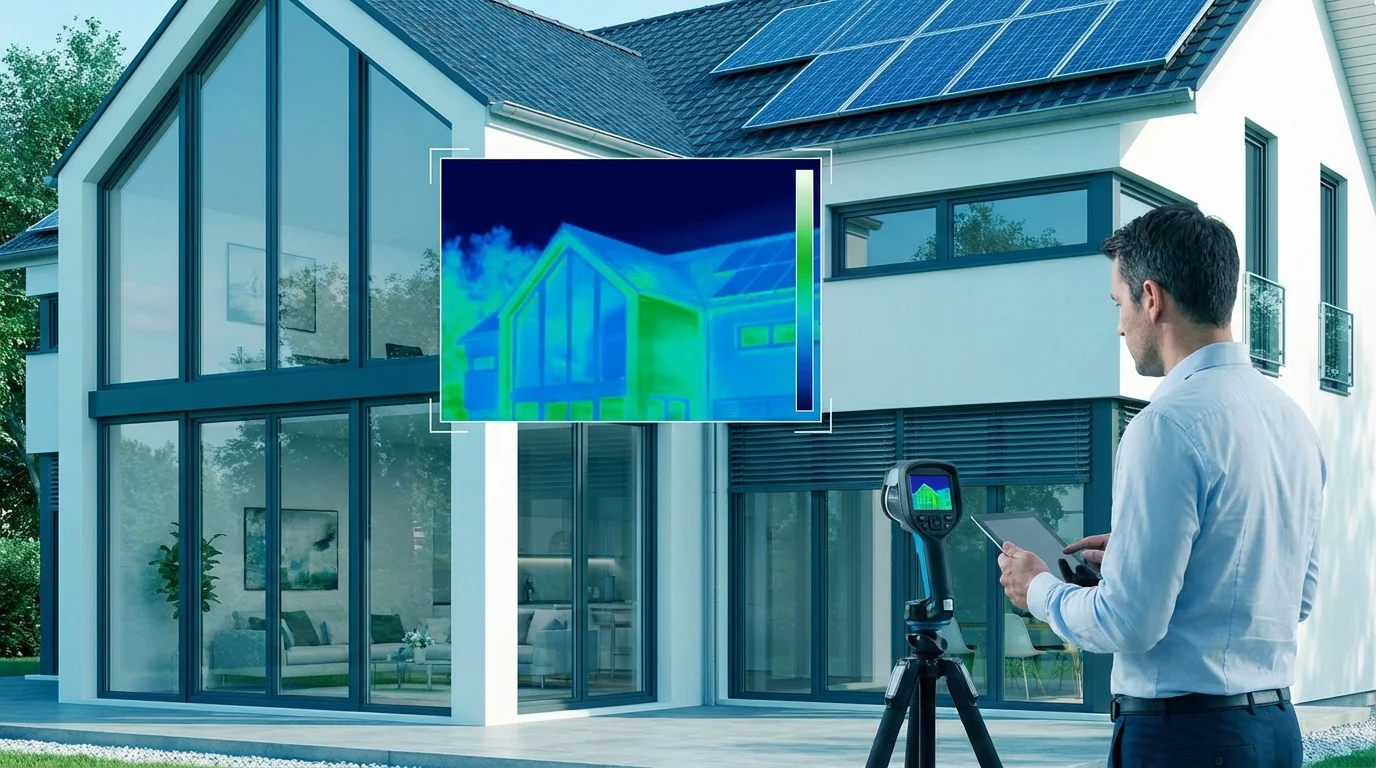
During the audit, a certified technician performs several diagnostic tests. The main test is a blower door test, which depressurizes the house to measure the total air leakage rate in CFM (cubic feet per minute). And the technician uses an infrared camera to visually identify insulation gaps and air leaks in walls, ceilings, and around windows. The audit takes 2-3 hours and results in a detailed report with prioritized recommendations.
What are the key differences between a building envelope audit and a comprehensive home energy audit?
A building envelope audit focuses specifically on the home's shell: insulation, air leaks, windows, and doors. But a comprehensive home energy audit is broader. It includes the building envelope assessment plus an analysis of HVAC systems, water heaters, lighting, and major appliances. So if you suspect your high bills are from an old furnace, a comprehensive audit is better; if you feel drafts, a building envelope audit is sufficient.
Are there deadlines to apply for rebates after completing a building envelope energy audit?
Yes, deadlines are strict. Most utility and state rebate programs require homeowners to submit their application and all supporting documentation, like the contractor's invoice, within a specific timeframe after the audit is completed. This window is typically 60 to 90 days. So missing this deadline will result in the forfeiture of the rebate, even if the audit was performed correctly by a certified professional.
Find Your Building Envelope Rebates Instantly
Don't leave money on the table. A building envelope audit can uncover hundreds in annual savings, and rebates can cover up to 75% of the cost. Use our free tool to see every 2026 rebate and tax credit you qualify for in under two minutes.
Calculate Your Savings NowLast updated: April 14, 2026. Reviewed by the DuloCore Editorial Team. About our authors.