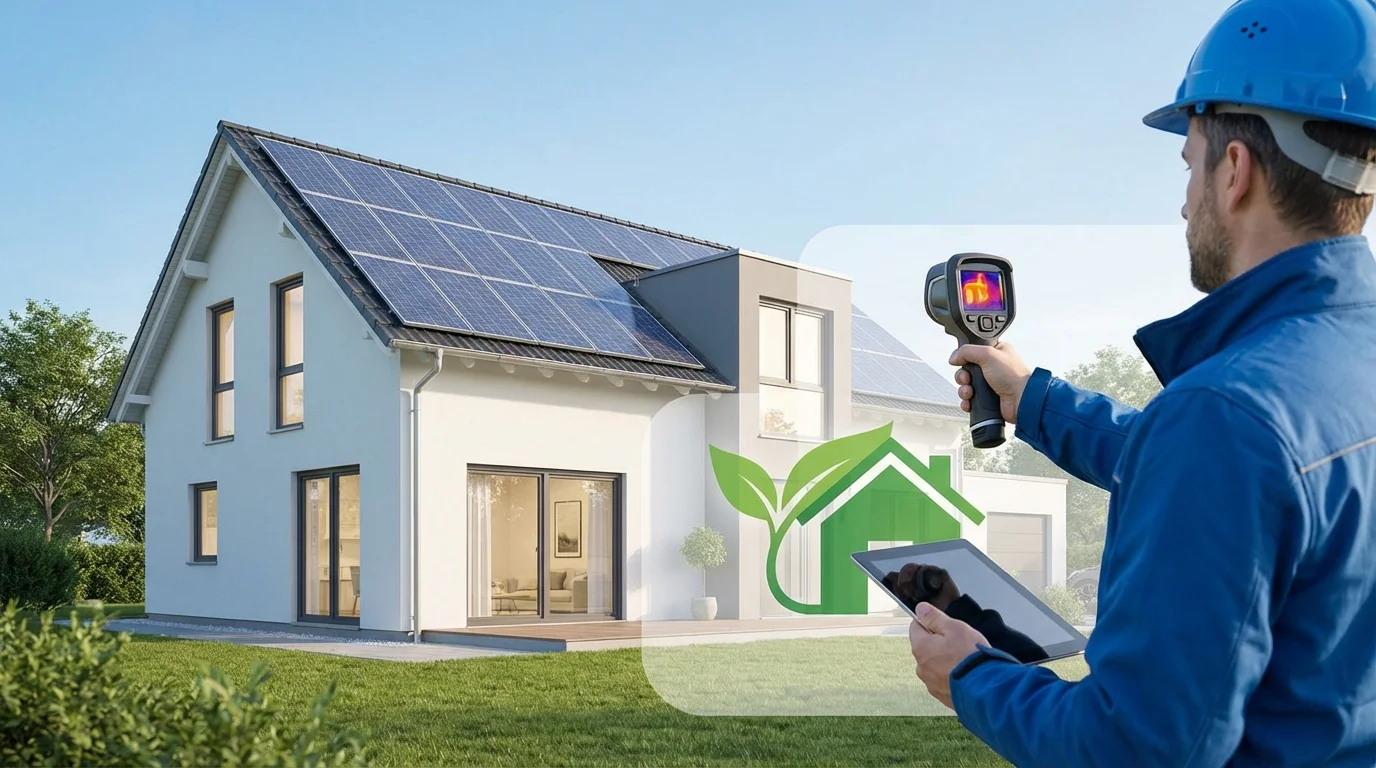
Up to 45% of a home's energy usage is wasted through air leaks, inefficient appliances, and poor insulation. Residential energy audit case studies reveal that these invisible drafts and outdated systems directly drain hundreds of dollars from household budgets each year. So addressing this waste isn't just about comfort; it's a direct financial recovery strategy available to homeowners in 2026.
What Financial Savings and Rebate Amounts Can Residential Energy Audits Uncover?
Residential energy audits identify specific upgrades that unlock between 5% and 30% in annual utility bill savings. So these professional assessments provide a detailed roadmap to accessing thousands in state and utility rebates. And in 2026, homeowners frequently qualify for combined incentives exceeding $10,000 for comprehensive weatherization and electrification projects.
A comprehensive home energy audit is the first step in quantifying potential savings. And case studies consistently show that the audit cost, typically $300-$500, is recovered within 1-2 years through energy savings alone, even before rebates are applied. For example, an audit may reveal that a $2,500 insulation upgrade, eligible for a $1,200 state rebate, will reduce heating costs by 20%, saving an additional $400 annually. So the net cost of the project is just $1,300, with a payback period of under four years. The Department of Energy reports that combining weatherization with efficient appliance upgrades produces the deepest savings. But without the diagnostic data from an audit, homeowners often misdirect funds toward less impactful improvements. Use our free rebate calculator to see what you qualify for.
Am I Eligible for Home Energy Rebates Based on Income, and What Equipment Qualifies?
Home energy rebate eligibility in 2026 is often tiered based on Area Median Income (AMI), with low-to-moderate income households receiving the highest amounts. And qualifying equipment includes ENERGY STAR certified heat pumps, insulation, air sealing, windows, and high-efficiency water heaters.
Eligibility rules are set by state energy offices and utility providers. So income thresholds vary by region; for instance, a household earning below 80% of AMI often qualifies for point-of-sale rebates covering up to 100% of project costs, capped at $14,000. But households earning between 80% and 150% of AMI typically qualify for rebates covering 50% of the cost. Qualifying equipment must meet strict efficiency standards. And this includes heat pumps with a SEER2 rating of 16 or higher and specific types of insulation like spray foam or dense-pack cellulose. Federal energy tax credits also provide a 30% credit up to $3,200 annually, which stacks on top of most state rebates, further reducing out-of-pocket costs for qualified installations.
How Do I Apply for Residential Energy Rebates from State and Utility Programs?
The application process for 2026 residential energy rebates involves pre-approval, installation by a certified contractor, and submission of itemized invoices. And homeowners typically initiate the process through a state or utility web portal, often requiring the results of a recent home energy audit.
First, homeowners identify their local program through resources like the DSIRE database. So the next step is to schedule an energy audit with a program-approved assessor. And this audit generates a report detailing recommended upgrades and their estimated rebate values. The homeowner then gets project quotes from certified contractors and submits them for pre-approval. But work must not begin before receiving this approval. After the installation is complete, the contractor provides final invoices and proof of purchase, which are uploaded to the program portal. And the rebate is then issued as a direct payment or an instant discount, depending on the program's structure. Many programs offer assistance to help navigate the paperwork, which often has a submission deadline of 90 days post-installation.
What Are the Key Deadlines, Funding Status, and Stacking Rules for Energy Efficiency Incentives?
Key deadlines for 2026 energy incentives are typically December 31st, but funding is allocated on a first-come, first-served basis and often runs out before year-end. And stacking rules permit combining federal tax credits with state and utility rebates, though some programs limit total incentives.
Funding status is a critical factor. So homeowners must check their state energy office's website for real-time updates, as popular programs like those for heat pump rebates can be depleted by the third quarter. Deadlines are firm; an application submitted after the cutoff date is automatically rejected. Stacking rules define how different incentives interact. For example, a homeowner can claim the 30% federal tax credit on the out-of-pocket cost of a heat pump (this federal credit ended for property placed in service after December 31, 2025) after a $2,000 state rebate is applied. But some utilities prohibit stacking their rebate with a state-level incentive for the same piece of equipment. Understanding these rules is essential for maximizing financial returns and avoiding application denial. (Note: Federal tax credit percentages and availability are subject to change; the 30% Residential Clean Energy Credit under Section 25D expired December 31, 2025. Verify current incentives at energy.gov.)
"By combining upgrades with rebates and financing, you can cut your energy bills and make your home healthier and more comfortable." — U.S. Department of Energy
Residential Rebate Program Comparison (2026)
| Program Feature | Mass Save (MA) | NYSERDA (NY) | ComEd (IL) |
|---|---|---|---|
| Max Rebate (Heat Pump) | Up to $10,000 | Up to $8,000 | Up to $3,500 |
| Income Eligibility | Tiered; up to 120% AMI for enhanced rebates | Tiered; up to 80% AMI for 100% coverage | Not income-based for most programs |
| 2026 Deadline | Rolling; fund depletion varies | December 15, 2026 (check funding) | December 31, 2026 |
| Stacking Allowed? | Yes, with federal credits | Yes, with federal credits and some utility | Yes, with federal credits |
What Contractor Requirements Apply to Residential Energy Audit Rebates?
Contractor requirements for residential energy audit rebates mandate that installers hold specific state licenses and program-specific certifications. And work completed by uncertified contractors is ineligible for rebates, forcing homeowners to cover 100% of the project cost without financial assistance.
Most state and utility rebate programs maintain a public list of approved, certified contractors. So homeowners must select an installer from this list to ensure their project qualifies. These contractors are required to be licensed, insured, and often hold certifications from organizations like the Building Performance Institute (BPI). But simply being a licensed HVAC technician or electrician is not enough. The contractor must also complete program-specific training on installation standards and rebate processing. And before signing a contract, homeowners must verify the contractor’s status on the official program website. This step protects the homeowner and guarantees that the installation meets the strict efficiency and safety standards tied to the financial incentive. Find qualified installers with our free rebate calculator.
"DSIRE is the most comprehensive source of information on incentives and policies that support renewables and energy efficiency in the United States." — DSIRE
Official Sources
- ENERGY STAR Rebate Finder — A tool from the U.S. EPA to find local rebates on certified products.
- IRS Clean Energy Credits for Homeowners — Official guidance from the IRS on federal tax credits for home energy upgrades. (note: the federal 25C and 25D credits ended for projects completed after December 31, 2025)
- Database of State Incentives for Renewables & Efficiency (DSIRE) — A comprehensive database of state, local, utility, and federal incentives.
Frequently Asked Questions
What kind of energy savings are demonstrated in residential audit case studies?
Residential audit case studies consistently demonstrate energy savings between 15% and 30% annually. For a typical home with a $2,200 annual energy bill, this translates to savings of $330 to $660 per year. And homes that implement comprehensive upgrades, including air sealing, attic insulation, and a heat pump installation, often report savings at the higher end of this range.
What is the typical process for a residential energy audit featured in a case study?
A typical residential energy audit process involves a 2-4 hour onsite inspection. So an auditor uses a blower door test to measure air leakage and infrared thermography to identify insulation gaps. And they also inspect HVAC systems, water heaters, and lighting. The process concludes with a detailed report outlining recommended upgrades, projected energy savings, and available rebates, which serves as the basis for the case study.
Is there a timeframe for seeing results from energy efficiency upgrades highlighted in case studies?
Yes, results are often visible on the first utility bill following the upgrade. For instance, air sealing and insulation provide immediate comfort and heating/cooling savings, typically reducing consumption by 10-20% in the first month. And upgrades like new windows or a high-efficiency heat pump show their full financial impact over the first full year, accounting for seasonal performance differences.
Unlock Your Home's Savings Potential
A professional energy audit is the first step to lowering your bills. But finding the right rebates makes it affordable. Use DuloCore’s free rebate calculator to see the exact incentives you qualify for in 2026.
Calculate Your Rebates NowLast updated: April 14, 2026. Reviewed by the DuloCore Editorial Team. About our authors.