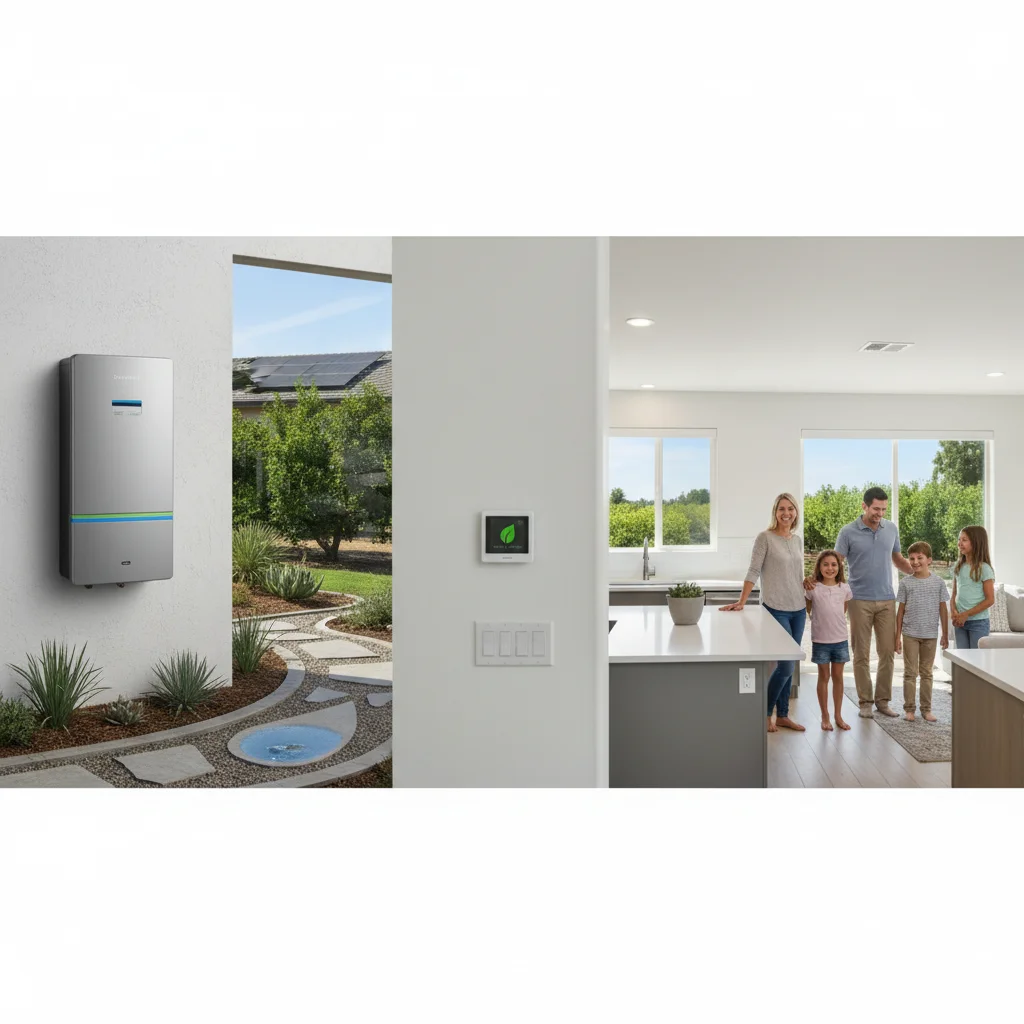
California homeowners replaced more than 87,000 water heaters in 2025, and nearly 42% left rebate money on the table. The Central Valley's mix of investor-owned utilities and municipal districts creates a patchwork of rebate programs that stack with federal tax credits—but only if you know which programs apply to your ZIP code and what documentation you need before the installer leaves your property.
What Water Heater Rebates Are Available in the Central Valley for 2026?
Central Valley homeowners access three rebate tiers in 2026: Pacific Gas & Electric (PG&E) offers $300-$2,000 for heat pump water heaters depending on household income, Sacramento Municipal Utility District (SMUD) provides $500-$3,000 for qualifying ENERGY STAR units, and the federal IRA tax credit covers 30% of equipment and installation costs up to $2,000. And municipal districts like Turlock Irrigation District and Modesto Irrigation District run separate programs with rebates ranging from $200-$800.
The Tech Clean California program adds another layer: income-qualified households earning below 80% area median income receive an additional $1,000-$4,000 for heat pump water heater installations. So a Fresno household with three residents and combined income under $73,200 qualifies for the enhanced rebate tier. But Merced County residents must verify their utility provider first—some areas fall under PG&E jurisdiction while others operate under irrigation district service territories.
SMUD territory includes Sacramento, Rancho Cordova, and parts of Elk Grove and Folsom. PG&E covers Fresno, Stockton, Modesto, Bakersfield, and most unincorporated Central Valley areas. And irrigation districts like TID serve specific pockets within these broader service areas, creating overlap zones where homeowners might access multiple rebate programs.
The federal home energy tax credits (Sections 25C and 25D) ended for projects completed after December 31, 2025 (IRS FS-2025-05).
How Much Money Can You Save With Central Valley Water Heater Rebates?
A typical Central Valley heat pump water heater installation costs $3,500-$5,000 for equipment and labor. Stack the federal 30% tax credit ($1,050-$1,500) with a PG&E standard rebate ($300) and the total out-of-pocket drops to $2,150-$3,200. But income-qualified households combining Tech Clean California's $4,000 rebate with the federal credit pay as little as $0-$500 for a complete installation.
So the math changes dramatically based on three factors: household income, utility service territory, and water heater type. A 50-gallon heat pump water heater with a 3.5 Unified Energy Factor saves $380-$470 annually compared to a conventional electric resistance model in PG&E territory where electricity rates average $0.34 per kWh. And SMUD customers with lower rates around $0.18 per kWh still save $200-$280 per year.
Payback periods range from 2-8 years. Income-qualified households with maximum rebate stacking see immediate positive returns. Standard rebate recipients hit break-even in 4-6 years. But those who skip the rebate application entirely extend payback to 8-10 years. Calculate your specific savings potential with a rebate calculator that accounts for your utility rates and household size.
What Are the Eligibility Requirements for Water Heater Rebate Programs?
PG&E requires the new water heater to replace an existing electric resistance or natural gas unit, carry an ENERGY STAR certification, and meet a minimum Uniform Energy Factor of 2.0. SMUD sets the UEF threshold higher at 2.2 for standard rebates and 3.0 for premium tiers. And both utilities mandate professional installation by a licensed contractor—DIY installations don't qualify.
Income verification determines rebate tier access. Tech Clean California defines moderate income as 80-150% of area median income (AMI) and low income as below 80% AMI. So a Sacramento household with four people earning $97,600 qualifies for moderate-income rebates but not the maximum low-income tier. Submit tax returns or pay stubs from the past 60 days to verify income status.
Property eligibility restricts most programs to owner-occupied single-family homes and townhomes. Rental properties don't qualify for homeowner rebates but may access separate multifamily programs. And the federal IRA credit applies only to existing homes—new construction follows different tax credit rules.
What Documentation Do You Need to Claim Your Water Heater Rebate?
Every rebate program requires an itemized invoice showing equipment model numbers, installation labor costs, and contractor license information. Take photos of the equipment data plate before the installer finishes—you'll need the model number, serial number, and UEF rating for the application. And keep the manufacturer's specification sheet that lists ENERGY STAR certification.
PG&E's online portal requires PDF uploads of the invoice, proof of payment, and a post-installation verification form signed by the contractor. SMUD adds a requirement for before-and-after photos showing the old water heater removed and the new unit installed. So tell your contractor you need documentation photos before they haul away the old equipment.
Income-qualified applicants submit additional documents: most recent tax return or three consecutive pay stubs, proof of residence matching the installation address, and a signed income attestation form. Tech Clean California processes applications through the same portals but routes them to a separate verification queue that takes 4-6 weeks instead of the standard 2-3 weeks.
Form 5695 only covers qualifying work completed by December 31, 2025 and claimed on a 2025 return; the federal 25C and 25D credits ended after that date (IRS FS-2025-05). Federal tax credits for this work have ended, but state, local and utility rebates may still apply; check what is available at your address with the DuloCore rebate calculator. And your tax preparer needs the total project cost including installation labor to calculate the 30% credit up to the $2,000 maximum.
What Is the Deadline to Apply for Water Heater Rebates in Your Area?
PG&E accepts applications within 180 days of installation with funds allocated on a first-come, first-served basis until the annual budget depletes. The 2026 program year runs January 1 through December 31, but historical data shows funds exhausting by October in high-demand territories like Fresno and Stockton. So submit applications within 30 days of installation to avoid missing the funding window.
SMUD operates on a calendar year with a hard December 31 deadline for installations. Applications submitted after January 15 of the following year get rejected even if the installation happened in the prior year. The federal Energy Efficient Home Improvement Credit (Section 25C) ended for property placed in service after December 31, 2025 (IRS FS-2025-05).
Tech Clean California processes applications year-round but pauses intake when quarterly budgets reach 90% capacity. Check the program dashboard at California TECH Initiative before scheduling installation—the status updates weekly. And municipal irrigation district programs typically run July 1 through June 30 fiscal years with different deadlines than the utilities.
Extensions rarely happen. Equipment failures or emergency replacements don't bypass the application window. Install in March, submit in April, and you're safely ahead of the fall rush when contractors push installations before winter and funding runs low.
How Does the Water Heater Rebate Application Process Work?
Start by verifying your utility service territory at your provider's website—don't assume based on city boundaries since irrigation districts create service pockets. Create an online account with your utility and locate the rebate application portal under residential programs. And confirm the current year's program requirements since eligibility rules and rebate amounts change annually.
Schedule a pre-installation assessment if required. SMUD mandates a free virtual or in-person evaluation for rebates over $1,000 to verify existing equipment and confirm installation feasibility. PG&E skips this step for standard rebates but requires it for income-qualified tiers. So book the assessment 2-3 weeks before your planned installation date.
Choose a contractor from the utility's approved installer list. These contractors know the documentation requirements and often submit rebate applications on your behalf as part of the installation service. But verify this in writing—some contractors charge $50-$150 for application assistance while others include it free.
Submit the application with all required documents within 30 days of installation. Online portals provide instant confirmation and a tracking number. PG&E processes standard applications in 4-6 weeks with rebate checks mailed to the address on file. SMUD offers direct deposit if you add bank account information to your utility profile, cutting payment time to 2-3 weeks.
Form 5695 only covers qualifying work completed by December 31, 2025 and claimed on a 2025 return; the federal 25C and 25D credits ended after that date (IRS FS-2025-05). TurboTax and H&R Block software include this form in home improvement sections. And the credit reduces your tax liability dollar-for-dollar—if you owe $3,000 and claim a $1,500 water heater credit, your final tax bill drops to $1,500.
Link rebates to broader energy tax credits strategies. Install a heat pump for whole-home efficiency and stack multiple credits in the same tax year. And track all water heater rebates across California to compare programs if you're considering relocation or investment properties.
Official Sources
- DOE Energy Saver — Federal guidance on energy-efficient water heaters, rebates, and tax credits (note: the federal 25C and 25D credits ended for projects completed after December 31, 2025)
- DSIRE Database — Comprehensive database of state incentives for renewable energy and energy efficiency
- IRS Energy Incentives — Official federal tax credit information and filing requirements (note: the federal 25C and 25D credits ended for projects completed after December 31, 2025)
Related Reading: Learn more about Water Heater Contractor Central Valley.
Frequently Asked Questions
What water heater rebates are available in the Central Valley?
Central Valley homeowners access PG&E rebates of $300-$2,000, SMUD rebates of $500-$3,000, and federal IRA tax credits covering 30% of costs up to $2,000. Income-qualified households earning below 80% AMI receive Tech Clean California rebates of $1,000-$4,000. And municipal irrigation districts offer separate programs ranging from $200-$800 depending on service territory. Rebate amounts depend on equipment efficiency, household income, and utility provider.
How much can I save with a water heater rebate in Central Valley?
Total savings reach $5,500-$7,000 for income-qualified households stacking all available rebates and credits on a $4,500 installation. Standard rebate recipients save $1,350-$1,800 combining utility rebates with the federal tax credit. And annual operating cost reductions of $200-$470 provide ongoing savings for 10-15 years. Use a rebate calculator to estimate your specific savings based on current utility rates and household size.
Am I eligible for Central Valley water heater rebates?
Eligibility requires replacing an existing electric or gas water heater with an ENERGY STAR certified heat pump model rated 2.0 UEF or higher. The property must be an owner-occupied single-family home or townhome in PG&E, SMUD, or irrigation district territory. And installation must use a licensed contractor who provides itemized invoices and manufacturer certifications. Income-qualified tiers require verification of household income below 150% area median income.
What is the process to apply for a water heater rebate in Central Valley?
Create an online account with your utility provider and complete the rebate pre-application if required for income-qualified tiers. Install the qualifying water heater using an approved contractor and collect itemized invoices, equipment photos, and manufacturer certifications. Submit the application with all documentation within 180 days of installation through the utility's online portal. Processing takes 2-6 weeks depending on program tier, with rebates paid by check or direct deposit.
When is the deadline to apply for Central Valley water heater rebates?
PG&E requires applications within 180 days of installation before December 31, 2026, but funding typically exhausts by October in high-demand areas. SMUD enforces a hard December 31 installation deadline with applications due by January 15, 2027. And the federal IRA tax credit follows tax year rules—2026 installations get claimed on returns filed by April 15, 2027. Submit applications within 30 days of installation to secure funding before annual budgets deplete.
Ready to find out exactly how much you can save? Use our free rebate calculator to get personalized estimates based on your utility provider, household income, and water heater specifications. The calculator shows total rebate amounts, expected payback periods, and annual energy savings for your specific situation.
Last updated April 14, 2026 — reviewed by DuloCore Editorial. About our authors.
Check your California water heater rebate eligibility — see the programs you qualify for and the dollar amounts on our California water heater rebate finder.