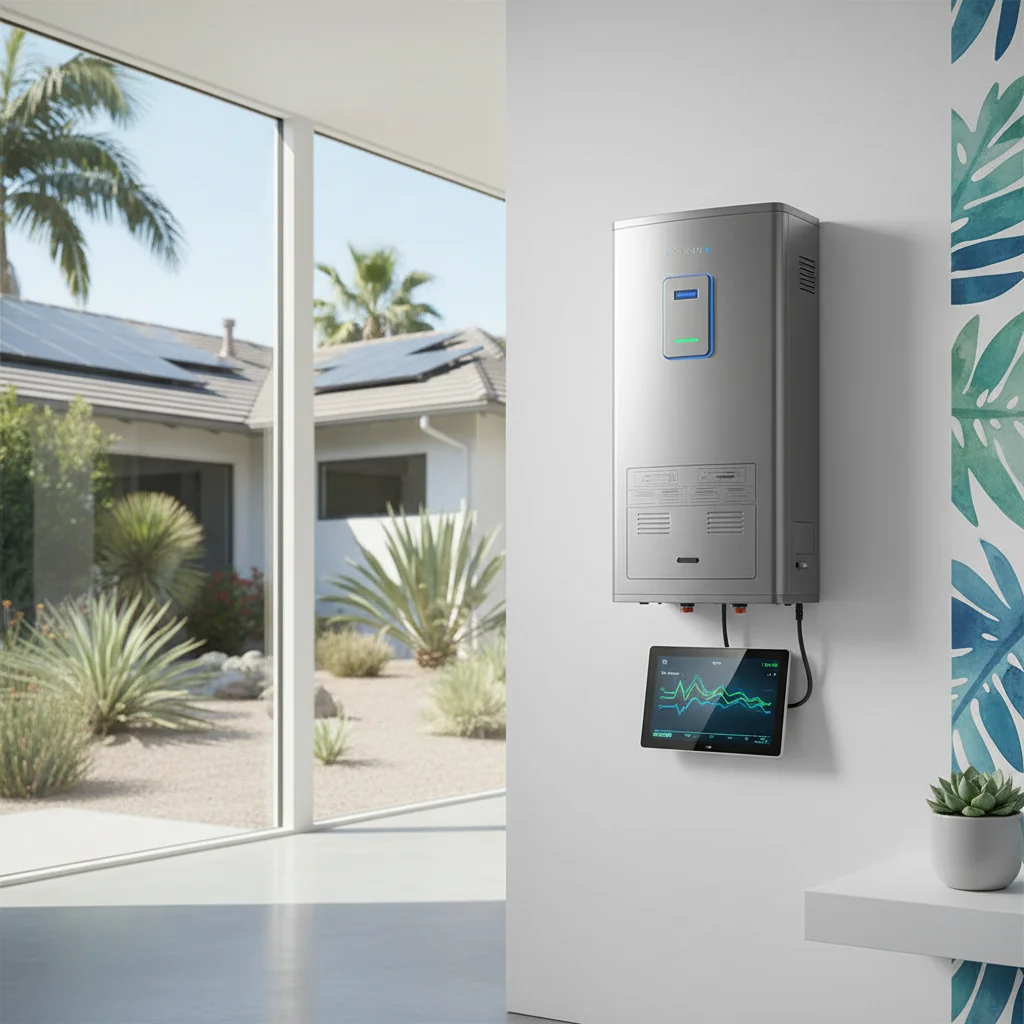
California homeowners spent $1.2 billion on wasted water heating energy in 2025. And that number climbs every year as electricity rates hit $0.42 per kWh in coastal zones. Water heating accounts for 18% of residential energy use statewide, making it the second-largest energy expense after HVAC systems. But 2026 brings a convergence of federal tax credits, state rebates, and utility incentives that can cut installation costs by $3,000 to $5,000 for qualifying efficient models.
How Long Does It Take to Recoup Your Investment in a High-Efficiency Water Heater?
Heat pump water heaters in California deliver payback periods of 3 to 7 years, depending on climate zone and household size. A typical installation costs $3,500 before incentives, saves $400 annually on energy bills, and qualifies for a $2,000 federal tax credit plus $500 to $1,500 in state and utility rebates through 2026 programs.
The fastest payback happens in coastal zones 3 and 4, where moderate temperatures let heat pumps operate at peak efficiency year-round. A four-person household in San Diego replacing a standard electric resistance tank sees payback in 3.2 years after rebates. So the unit pays for itself entirely by year four, then delivers pure savings for the remaining 12 to 15 years of its lifespan.
But inland zones 10 through 16 face longer payback periods of 5 to 7 years because extreme summer heat and winter cold force heat pumps to work harder. The technology still saves money—just slower. And tankless gas models in these zones sometimes match heat pump economics when natural gas rates stay below $1.80 per therm.
The math changes dramatically with federal tax credits. The federal Energy Efficient Home Improvement Credit (Section 25C) ended for property placed in service after December 31, 2025 (IRS FS-2025-05). Federal tax credits for this work have ended, but state, local and utility rebates may still apply; check what is available at your address with the DuloCore rebate calculator. That single credit shaves 18 to 24 months off the payback timeline for most installations.
"Heat pump water heaters use up to 63% less energy than conventional electric resistance models, making them one of the most cost-effective home upgrades available." — ENERGY STAR
Which Water Heater Type Works Best for Your California Climate Zone?
California's 16 climate zones demand different water heater technologies. Heat pumps dominate zones 1 through 9 (coastal and valley regions) where ambient temperatures stay between 40°F and 90°F most of the year. These units extract heat from surrounding air, so they operate most efficiently in moderate climates. A Rheem ProTerra heat pump model in Sacramento (zone 12) delivers a Uniform Energy Factor of 3.55, meaning it produces 3.55 units of heat for every unit of electricity consumed.
But desert zones 14 through 16 present challenges. Summer garage temperatures hit 115°F, and heat pumps struggle when source air exceeds 95°F. So tankless gas heaters often make more sense in Palm Springs, Bakersfield, and Fresno. These units provide endless hot water and don't rely on ambient temperature for efficiency.
Solar thermal systems work exceptionally well in zones 10 through 16, where annual solar radiation exceeds 2,200 kWh per square meter. A family of four in Riverside can meet 60% to 80% of hot water needs with a $6,000 solar thermal system paired with an electric backup tank. The federal Energy Efficient Home Improvement Credit (Section 25C) ended for property placed in service after December 31, 2025 (IRS FS-2025-05).
Condensing tankless gas models suit mountain zones 1 and 16, where winter temperatures drop below freezing. These units achieve 96% thermal efficiency by capturing waste heat from exhaust gases. But they require indoor installation or freeze-protection accessories, adding $400 to $800 to project costs.
Use our free rebate calculator to find which water heater type qualifies for the most incentives in your specific climate zone and utility territory.
How Do Tankless, Heat Pump, and Solar Water Heaters Compare in Cost and Performance?
| Technology | Installed Cost | Annual Operating Cost | Lifespan | 2026 Federal Credit | Typical California Rebate |
|---|---|---|---|---|---|
| Heat Pump (Electric) | $3,200-$4,500 | $180-$280 | 13-15 years | $2,000 | $500-$1,500 |
| Tankless (Gas) | $2,800-$4,200 | $240-$360 | 20-25 years | $0 | $0-$300 |
| Solar Thermal + Backup | $5,500-$8,000 | $80-$150 | 20-25 years | 30% of cost | $500-$1,200 |
| Standard Electric Tank | $1,200-$2,000 | $480-$650 | 10-12 years | $0 | $0 |
Heat pump water heaters deliver the lowest operating costs at $180 to $280 annually for a typical California household. And they qualify for the largest rebate stack: $2,000 federal credit plus $500 to $1,500 from programs like the California Tech Clean California Initiative and utility-specific rebates.
But tankless gas models last longest at 20 to 25 years versus 13 to 15 for heat pumps. So lifecycle costs sometimes favor tankless in homes with cheap natural gas access. A household paying $1.40 per therm in San Jose spends $240 annually on a condensing tankless unit versus $200 for a heat pump—a negligible difference that doesn't justify the heat pump's higher upfront cost without rebates.
Solar thermal systems offer the lowest operating costs at $80 to $150 per year because sunshine is free. But the $5,500 to $8,000 installed price creates a 12- to 18-year payback period even with the 30% federal credit (this federal credit ended for property placed in service after December 31, 2025). So these systems make financial sense only for households planning to stay in their homes long-term or in areas where electricity rates exceed $0.40 per kWh.
Standard electric resistance tanks cost the least upfront at $1,200 to $2,000 but deliver the highest operating costs at $480 to $650 annually. And they qualify for zero rebates in 2026. California utilities phase out incentives for inefficient models to meet state decarbonization goals.
"Tankless water heaters can be 24% to 34% more energy efficient than conventional storage tank water heaters for homes that use 41 gallons or less of hot water daily." — U.S. Department of Energy
What's the Real Lifespan of Energy-Efficient Water Heaters in California Homes?
Heat pump water heaters last 13 to 15 years in California installations, while tankless gas models reach 20 to 25 years with proper maintenance. Standard electric tanks fail earliest at 10 to 12 years. So lifecycle replacement costs matter as much as initial purchase price when comparing technologies.
The difference comes down to mechanical complexity and water quality. Heat pump units contain compressors, fans, and refrigerant loops—components that wear out faster than simple heating elements. And California's hard water accelerates scale buildup on heat exchangers, reducing efficiency by 10% to 15% over a decade without annual flushing.
Tankless gas heaters avoid the tank corrosion that kills conventional models. But they demand annual descaling in areas with water hardness above 120 mg/L (most of Southern California). Skipping this maintenance cuts lifespan to 12 to 15 years and voids manufacturer warranties.
Solar thermal collectors last 20 to 30 years because they contain no moving parts in the glazed panels themselves. But circulation pumps and controllers fail every 10 to 12 years, adding $800 to $1,200 in mid-life replacement costs. So total cost of ownership remains competitive with heat pumps despite the higher initial price.
Warranty coverage tells the lifespan story. Heat pump manufacturers offer 6-year parts and 10-year tank warranties. Tankless gas makers provide 12- to 15-year heat exchanger warranties. And that gap reflects real-world durability differences.
California's mild climate extends all water heater lifespans compared to extreme-weather states. A heat pump unit in freezing climates might last 10 years; the same model in Oakland runs 15 years because it never operates at temperature extremes that stress components.
What Financial Incentives and Rebates Can You Access in 2026?
The federal Energy Efficient Home Improvement Credit (Section 25C) ended for property placed in service after December 31, 2025 (IRS FS-2025-05). This applies to units with a Uniform Energy Factor of at least 2.0 and a rated storage volume of at least 50 gallons. And the credit covers both equipment and labor costs up to the $2,000 cap.
California's Tech Clean California initiative offers $750 to $1,500 for qualifying heat pump water heater installations depending on household income and location. Low-to-moderate income households earning up to 80% of Area Median Income receive the maximum $1,500. And the program runs through December 2026 with $120 million in total funding.
Utility-specific rebates stack on top of federal and state programs. Pacific Gas & Electric offers $500 for ENERGY STAR certified heat pump models. Southern California Edison provides $800. And Bay Area Air Quality Management District adds $500 for gas-to-electric conversions that eliminate combustion appliances.
So a San Francisco homeowner earning $95,000 annually (just above the income limit) qualifies for $2,000 federal + $750 state + $500 PG&E + $500 BAAQMD = $3,750 in total incentives on a $3,800 installed cost. That reduces out-of-pocket expense to $50 before energy savings.
But program funds expire throughout the year. Tech Clean California ran out of money in September 2025 and didn't reopen until March 2026. And utility rebates operate on first-come, first-served basis with no guarantee of availability.
Low-income programs provide even larger benefits. The Energy Savings Assistance Program offers free water heater replacement for households earning up to 200% of federal poverty guidelines. And the program upgraded 47,000 water heaters in 2025 at zero cost to participants.
For detailed information on current energy tax credits and how they stack with California programs, see our comprehensive guide.
What's the Step-by-Step Process for Installing an Efficient Water Heater in California?
Installation starts with a professional assessment to determine the right technology and size for your household. A qualified contractor calculates hot water demand based on fixture count, occupancy, and usage patterns. And they verify electrical panel capacity for heat pump models, which draw 30 amps during heating cycles.
Permitting comes next. California requires building permits for water heater replacement in all jurisdictions. And heat pump installations need Title 24 compliance verification showing the new system meets or exceeds state energy efficiency standards. Contractors typically handle permitting, adding $150 to $300 to project costs and 5 to 14 days to the timeline.
The physical installation takes 4 to 8 hours for a straightforward tank replacement and up to 2 days for conversions that require electrical panel upgrades or natural gas line removal. Heat pump units need 1,000 cubic feet of surrounding air space for proper operation. So garage and basement installations work best, while small closets don't.
Inspectors verify electrical connections, seismic straps (required statewide), temperature and pressure relief valve installation, and proper venting for gas models. And Title 24 compliance inspections confirm the system meets California's energy code requirements before final approval.
Rebate applications come after installation and inspection. Most programs require proof of purchase, contractor invoices, installation photos, and model number verification. And processing times run 6 to 12 weeks for state and utility rebates versus 4 to 18 months for federal tax credits claimed on annual returns.
Maintenance training completes the process. Contractors explain how to drain sediment quarterly, test the pressure relief valve annually, and monitor the heat pump's air filter monthly. And they provide documentation for warranty registration and future service needs.
If you're also considering other efficiency upgrades, explore available heat pump rebates that can stack with water heater incentives.
Official Sources
- ENERGY STAR Water Heaters — Federal efficiency standards and product certification database
- U.S. Department of Energy: Water Heating — Technology comparisons and efficiency guidelines
- Database of State Incentives for Renewables & Efficiency — California rebate program search and eligibility details
Related Reading: Learn more about Energy Auditor Certification Programs and Energy Efficient Home Improvement Credit For Water Heater.
Frequently Asked Questions
What are the energy efficiency requirements for water heater rebates in California?
Heat pump water heaters must achieve a Uniform Energy Factor of at least 2.0 with a minimum 50-gallon storage capacity to qualify for the $2,000 federal tax credit. California's Tech Clean California program requires ENERGY STAR certification, which mandates UEF ratings above 3.3 for 50-gallon models. And utility rebates typically demand third-party verification through the California Energy Commission's appliance database. So the unit must appear on the approved models list before rebate applications are accepted.
How much can I save with a water heater rebate in California?
Total rebates reach $3,750 to $4,500 when stacking federal, state, and utility programs in 2026. The federal tax credit provides $2,000, Tech Clean California offers $750 to $1,500 based on income, and utility rebates add $500 to $1,000 depending on territory. And gas-to-electric conversions in air quality management districts receive an additional $500. So a $3,800 installation drops to $50 to $300 out-of-pocket for qualifying households, with payback achieved in the first year through energy savings alone.
Am I eligible for California water heater rebates if I rent my home?
Renters qualify only if they own the water heater and pay directly for installation costs. And they need written landlord permission for any modification requiring building permits. But most rebate programs require the applicant to be the property owner and ratepayer of record. So landlords typically claim incentives for rental property upgrades, not tenants. California's Energy Savings Assistance Program provides an exception by offering free replacements for low-income renters in qualifying multifamily properties through utility-administered programs.
What is the deadline for applying for water heater energy efficiency rebates in California?
The federal Energy Efficient Home Improvement Credit (Section 25C) ended for property placed in service after December 31, 2025 (IRS FS-2025-05). But state and utility rebates operate until funds exhaust. Tech Clean California accepted applications through December 31, 2026 or until the $120 million budget depletes. And utility programs like PG&E's heat pump rebate close when annual allocations run out, typically between September and November. So applications submitted in Q1 and Q2 have the highest approval rates.
How do tankless water heaters compare to traditional water heaters for California rebates?
Tankless gas models qualify for zero federal tax credits and limited utility rebates of $0 to $300 in 2026. Only heat pump water heaters receive the $2,000 federal credit and $750 to $1,500 state incentives. So the rebate advantage strongly favors heat pumps despite tankless models' longer 20- to 25-year lifespan. And California's building decarbonization goals push utilities to phase out gas appliance incentives entirely by 2030. But tankless units still make economic sense in climate zones 14 through 16 where heat pumps operate less efficiently.
Ready to find out how much you can save? Use our free rebate calculator to see exactly which incentives you qualify for based on your location, income, and home details. Get your personalized savings estimate in under 60 seconds.
Last updated: April 14, 2026. Reviewed by the DuloCore Editorial Team. About our authors.
Check your California water heater rebate eligibility — see the programs you qualify for and the dollar amounts on our California water heater rebate finder.