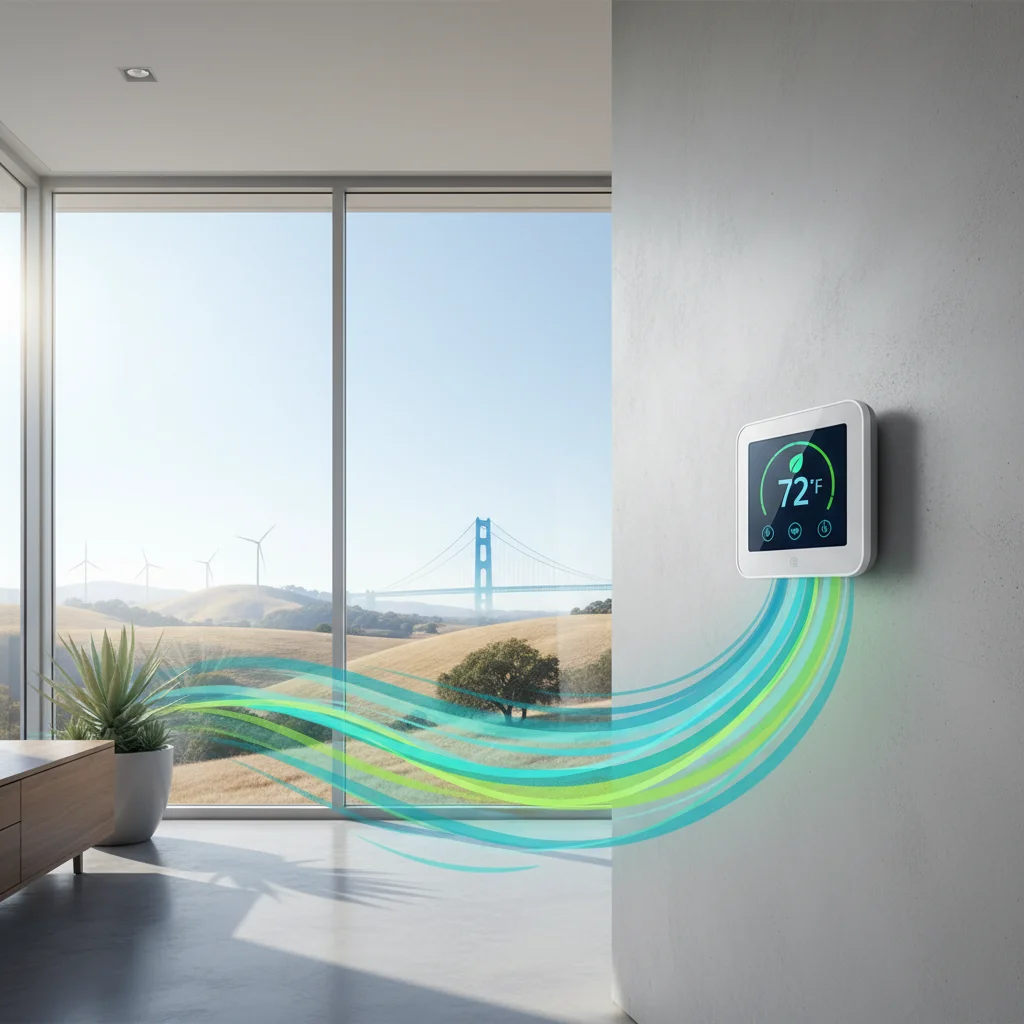
California households waste $300 to $600 annually on heating and cooling costs that a programmable thermostat could eliminate. And that's just the baseline — smart thermostats with machine learning capabilities cut energy waste by an additional 10% to 23% compared to standard programmable models, according to Lawrence Berkeley National Laboratory testing across 300 California homes.
What Agency Administers Smart Thermostat Rebates in California?
California Public Utilities Commission (CPUC) oversees smart thermostat rebate programs through investor-owned utilities including Pacific Gas & Electric, Southern California Edison, San Diego Gas & Electric, and Sacramento Municipal Utility District. Each utility operates its own incentive structure with rebates ranging from $50 to $120 per device installed. Program administration happens at the utility level with quarterly budget allocations determined by CPUC-approved energy efficiency portfolios for 2026.
But not all California residents qualify through the same pathway. TECH Clean California, the statewide building decarbonization program, offers $100 rebates for smart thermostats when bundled with heat pump installations in eligible climate zones. The program targets HVAC system replacements rather than standalone thermostat upgrades. And low-income households earning 80% or less of area median income qualify for enhanced rebates up to $200 through Energy Savings Assistance programs.
So the administering agency depends on your utility service territory, income level, and whether you're replacing an entire HVAC system or just upgrading controls. Sacramento Municipal Utility District (SMUD) customers access rebates through SMUD's Energy Marketplace portal. PG&E, SCE, and SDG&E customers apply through their respective utility websites with separate application processes and documentation requirements.
What's the Deadline for California Smart Thermostat Incentives in 2026?
December 31, 2026 marks the funding deadline for current California smart thermostat rebate programs administered by investor-owned utilities. Budget allocations reset annually on January 1, and utilities typically exhaust funds by Q3 in high-demand service territories like Los Angeles and San Francisco. PG&E's 2026 smart thermostat budget stands at $4.2 million with 35,000 rebates available on a first-come, first-served basis.
Applications submitted before December 31, 2026 receive processing priority even if funds deplete before approval. But post-installation applications face stricter scrutiny — utilities require proof of purchase dated within 180 days of application submission. And installation dates before January 1, 2026 automatically disqualify applicants from 2026 program funding regardless of when the application arrives.
TECH Clean California operates on a different timeline with rolling enrollment through December 2027. The program accepts applications year-round until the $120 million budget depletes across all TECH initiatives. Smart thermostat rebates represent roughly 8% of total TECH funding allocation. So bundled heat pump and thermostat installations carry December 2027 deadlines while standalone thermostat rebates expire December 31, 2026.
Calculate your rebate calculator eligibility before utility budgets run dry.
How Much Can You Save on Energy Bills With a Smart Thermostat in California?
Lawrence Berkeley National Laboratory tracked 300 California households for 24 months and documented annual savings of $131 to $145 per household after smart thermostat installation. Savings varied by climate zone — households in Fresno and Sacramento averaged $180 annually while coastal regions like San Francisco and San Diego saw $95 to $110 reductions. And homes with central air conditioning and gas heating saved 23% more than heat pump households because smart thermostats optimize multi-stage HVAC cycling.
"Smart thermostats reduce HVAC energy consumption by 10% to 23% on average, with the highest savings in homes with inefficient baseline usage patterns." — Lawrence Berkeley National Laboratory
But raw dollar savings tell only part of the story. California's tiered electricity pricing structure means high-use customers in Tier 3 and Tier 4 brackets (above 400% of baseline) save disproportionately. A household consuming 1,200 kWh monthly in PG&E territory saves $18 to $22 monthly by reducing consumption 15% through smart scheduling. And Time-of-Use rate plan customers save an additional $30 to $45 annually by pre-cooling during off-peak hours.
So total first-year savings include utility rebates ($50 to $200), energy bill reductions ($131 to $180), and avoided HVAC maintenance costs ($40 to $60) from reduced runtime. Three-year total savings range from $545 to $820 depending on climate zone, baseline usage, and rate plan structure. Payback periods average 8 to 14 months for devices costing $120 to $250 after rebates.
Are You Eligible for California Smart Thermostat Rebates and Incentives?
California smart thermostat rebate eligibility requires four qualifying criteria: active utility service in participating territories, ENERGY STAR-certified device installation, professional HVAC contractor verification, and completed application within 180 days of purchase. Owner-occupied single-family homes, multifamily units, and rental properties all qualify if the utility account holder submits the application. And renters need landlord approval documentation for installations requiring HVAC system modifications.
But income-qualified programs carry additional requirements. Energy Savings Assistance participants must earn 200% or less of federal poverty guidelines — $60,000 for a family of four in 2026. TECH Clean California's enhanced rebates require proof of income through tax returns or benefit program enrollment letters. And low-income applicants receive expedited processing with approval timelines of 14 to 21 days compared to 30 to 45 days for standard applications.
Device eligibility extends beyond ENERGY STAR certification. Utilities require WiFi connectivity, mobile app control, learning algorithms or occupancy sensors, and compatibility with existing HVAC systems. Google Nest Learning Thermostat, ecobee SmartThermostat, Honeywell Home T9, and Emerson Sensi Touch all meet California utility requirements. But proprietary systems tied to specific HVAC manufacturers may not qualify — check your utility's approved device list before purchasing.
What's the Step-by-Step Process to Claim Your California Smart Thermostat Rebate?
Step 1 requires verifying your utility's current 2026 rebate amount and available funding through their online portal or customer service line. PG&E, SCE, SDG&E, and SMUD each maintain separate application systems with different documentation requirements. And budget depletion happens quarterly — checking funding availability before purchase prevents application rejection.
Step 2 involves purchasing an ENERGY STAR-certified smart thermostat from an approved retailer. Keep itemized receipts showing device model number, purchase date, and payment confirmation. And retain product packaging with the UPC code — some utilities require photos of packaging as proof of new device purchase rather than secondhand marketplace acquisition.
Step 3 requires professional installation by a licensed HVAC contractor holding a valid C-20 Warm-Air Heating, Ventilating and Air-Conditioning license in California. Self-installation disqualifies applications for PG&E, SCE, and SDG&E rebates. But SMUD allows DIY installation if the applicant submits photos of thermostat wiring, mounting location, and operational confirmation screens. And TECH Clean California mandates contractor installation with completed workmanship certificates.
Step 4 involves submitting the online application with required documentation: itemized receipt, contractor invoice (if applicable), proof of installation date, device serial number, and utility account number. Applications undergo 30 to 45-day review periods. And incomplete submissions face automatic rejection without notification — double-check all required fields before submitting.
Step 5 delivers rebate payment via mailed check, bill credit, or direct deposit depending on utility preference. PG&E and SCE default to bill credits applied within 60 to 90 days. SMUD offers direct deposit with 21-day processing. And TECH Clean California issues checks within 6 to 8 weeks of approval.
How Do California Smart Thermostat Programs Compare to Federal Tax Credits?
Federal tax credits for smart thermostats expired January 1, 2026 when the Section 25C Energy Efficient Home Improvement Credit sunset provision took effect. The federal Energy Efficient Home Improvement Credit (Section 25C) ended for property placed in service after December 31, 2025 (IRS FS-2025-05). Federal tax credits for this work have ended, but state, local and utility rebates may still apply; check what is available at your address with the DuloCore rebate calculator. And the 30% credit now applies only to heat pumps, heat pump water heaters, biomass stoves, and building envelope improvements.
But California's state-level rebates fill the gap left by federal program elimination. Utility rebates of $50 to $200 provide immediate point-of-sale discounts or post-installation reimbursements without tax filing requirements. And low-income enhanced rebates through Energy Savings Assistance programs deliver $200 payments within 30 days compared to tax credit delays of 4 to 12 months for federal refund processing.
So the financial comparison favors California's utility rebate structure for 2026. A household installing a $250 smart thermostat receives $120 from SCE within 60 days versus $0 federal tax credit. And combining the utility rebate with $145 annual energy savings yields $265 first-year benefit — a 106% return on the $130 net device cost.
Explore other energy tax credits available for California homeowners in 2026.
Official Sources
- ENERGY STAR Certified Thermostats — Federal certification database for qualifying devices
- Database of State Incentives for Renewables & Efficiency — Comprehensive California rebate program directory
- California Public Utilities Commission Energy Efficiency Programs — Official program oversight and budget documentation
Related Reading: Learn more about Energy Improvements Under 1000 Dollars and Energy Improvements Under 500 Dollars.
Related Reading: Learn more about Door Weatherstripping Energy Savings and Energy Improvements Under 1000 Dollars.
Frequently Asked Questions
What smart thermostat brands qualify for California energy rebates?
Google Nest Learning Thermostat (all generations), ecobee SmartThermostat Premium and Lite, Honeywell Home T9 and T10 Pro, Emerson Sensi Touch 2, and Lux Kono Smart all qualify for California utility rebates in 2026. Devices must carry ENERGY STAR certification, WiFi connectivity, and mobile app control. And proprietary systems from Carrier, Trane, or Lennox may qualify only if purchased through participating HVAC contractors in utility-approved installation programs.
How much can you save on your energy bill with a smart thermostat in California?
California households save $131 to $180 annually on combined electricity and natural gas costs after smart thermostat installation, according to Lawrence Berkeley National Laboratory's 24-month field study. Savings vary by climate zone — Fresno and Sacramento homes average $180 yearly while coastal San Francisco and San Diego properties see $95 to $110 reductions. And Time-of-Use rate plan customers save an additional $30 to $45 annually through automated pre-cooling during off-peak hours.
Are smart thermostats eligible for the California 25C tax credit in 2026?
No. The federal Section 25C Energy Efficient Home Improvement Credit expired December 31, 2025. The Inflation Reduction Act's replacement credit excludes standalone thermostat installations from the qualified expense list for 2026 and beyond. But California utility rebates of $50 to $200 remain available through PG&E, SCE, SDG&E, and SMUD programs. And bundled installations with heat pump rebates through TECH Clean California qualify for combined incentives up to $6,500.
What is the rebate amount for installing a smart thermostat in California?
Pacific Gas & Electric offers $75 per smart thermostat in 2026. Southern California Edison provides $85 per device. San Diego Gas & Electric pays $50 per installation. Sacramento Municipal Utility District delivers $120 rebates. And low-income households qualifying for Energy Savings Assistance programs receive enhanced rebates of $150 to $200 depending on utility territory. TECH Clean California adds $100 rebates when smart thermostats accompany heat pump system replacements.
How long does it take to get a smart thermostat rebate approved in California?
Standard applications receive approval within 30 to 45 days of submission. Low-income Energy Savings Assistance applications process faster with 14 to 21-day timelines. And incomplete submissions face automatic rejection without resubmission opportunities — verify all required documentation before applying. Payment delivery adds 15 to 30 days for mailed checks or 7 to 14 days for bill credits. SMUD offers the fastest turnaround with 21-day direct deposit processing for complete applications.
Ready to maximize your smart thermostat savings? Use our free rebate calculator to find every available incentive in your California utility territory. Get personalized savings estimates, application deadlines, and step-by-step claiming instructions in under 60 seconds.
Last reviewed: April 14, 2026. Reviewed by DuloCore Energy Specialists. About the team.
Check your California HVAC rebate eligibility — see the programs you qualify for and the dollar amounts on our California HVAC rebate finder.