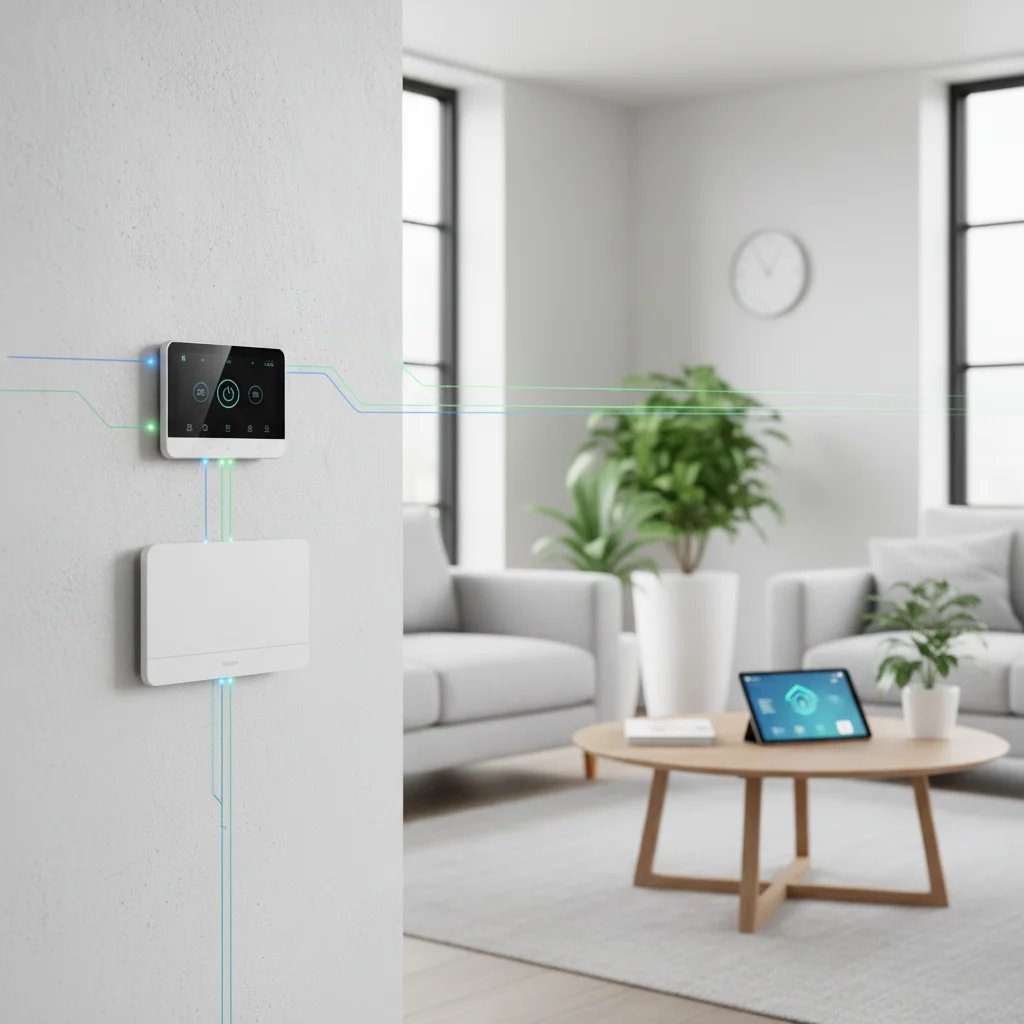
Most ductless mini split owners don't realize their systems can't connect to standard smart thermostats without a protocol adapter—and that oversight costs them $300-$800 per year in missed efficiency gains. Mini splits use infrared remote signals or proprietary communication protocols, not the 24V wiring that Nest, Ecobee, and Honeywell expect. But adapters from Cielo Breez, Sensibo, and Ambi Climate bridge that gap, unlocking programmable schedules, occupancy sensing, and energy rebates worth $50-$100 per thermostat in 2026.
What Smart Thermostat Models Are Compatible with Mini Split Systems?
Mini splits operate on infrared or RS-485 communication protocols incompatible with standard 24-volt smart thermostats. Cielo Breez Plus, Sensibo Sky, and Ambi Climate support 6,000+ mini split models from Mitsubishi, Daikin, Fujitsu, LG, and Gree through Wi-Fi-enabled IR blasters. These adapters cost $89-$179 and qualify for energy efficiency rebates in California's 2026 programs.
Most mini split manufacturers—Mitsubishi Electric with Kumo Cloud, Daikin with Daikin One+, and Fujitsu with FGLair—also offer proprietary smart controls. And these native systems maintain warranty coverage while adding geofencing, humidity control, and integration with Google Home or Alexa. But third-party adapters like Cielo and Sensibo work across brands, making them ideal for homes with mixed equipment.
The California Energy Commission's 2026 Technology Incentive Program covers smart thermostats that reduce HVAC energy use by 10% or more. Both native manufacturer controls and certified third-party adapters qualify. So homeowners save $50-$100 per device through utility rebates while cutting cooling costs by $200-$400 annually.
Are You Eligible for Rebates or Tax Credits on Smart Thermostat Installation?
California's 2026 Tech Clean California program offers $50-$75 rebates for ENERGY STAR-certified smart thermostats installed with ductless mini splits. Homeowners in PG&E, SCE, and SDG&E territories qualify regardless of income, though moderate-income households earning 80%-120% of Area Median Income receive bonus incentives of $25-$50. And the federal Inflation Reduction Act provides a $150 credit for smart thermostats that integrate with heat pumps, covering installation through December 31, 2032.
"Smart thermostats must be ENERGY STAR Most Efficient certified and demonstrate 8% or more energy savings to qualify for California rebates." — California Energy Commission
Eligibility requires professional installation by a licensed HVAC contractor with a C-20 Warm-Air Heating, Ventilation and Air-Conditioning license. So DIY installations don't qualify for rebates, but contractor fees of $100-$200 are offset by the rebate amount. Homeowners also need manufacturer documentation proving the smart thermostat model appears on the ENERGY STAR certified product list.
Income limits for enhanced rebates follow HUD Area Median Income tables updated annually. For 2026, moderate-income households in San Francisco County qualify at incomes up to $141,000 for a family of four, while Los Angeles County caps at $118,000. And low-income households earning below 80% AMI receive rebates of $100-$150, doubling the standard incentive.
How Much Can You Save with a Smart Thermostat on Your Mini Split System?
Smart thermostats reduce mini split energy consumption by 10%-23% through automated scheduling, occupancy detection, and remote temperature adjustments. A household spending $1,200 annually on cooling saves $120-$276 per year. And programmable setbacks—raising cooling setpoints by 7-10°F during unoccupied hours—deliver the largest savings, cutting runtime by 15%-30% in California's mild climate zones.
Cielo Breez and Sensibo users report average savings of $200-$400 annually in homes with 2-3 mini split zones. These adapters learn occupancy patterns, adjust temperatures based on weather forecasts, and send alerts when filters need cleaning. So maintenance intervals improve, extending compressor lifespan by 2-3 years and avoiding $800-$1,500 replacement costs.
Rebates and tax credits further accelerate payback. A $129 Sensibo Sky with $75 utility rebate and $150 federal credit costs -$96 net—homeowners get paid to install it. And the device pays for itself in energy savings within 6-12 months, delivering $2,000-$3,000 in cumulative savings over a 10-year lifespan.
| Program | Rebate Amount | Income Limit | Deadline |
|---|---|---|---|
| Tech Clean California (PG&E) | $50-$100 | 120% AMI for enhanced | December 31, 2026 |
| Federal IRA Heat Pump Credit | $150 | No limit | December 31, 2032 |
| SCE Smart Thermostat Rebate | $75 | No limit | Ongoing (funds available) |
What's the Step-by-Step Process to Apply for Smart Thermostat Incentives?
Homeowners start by verifying their smart thermostat model appears on the ENERGY STAR Most Efficient certified product list at energystar.gov. California's Tech Clean California requires pre-approval for rebates above $75, submitted through the utility's online portal 7-14 days before installation. And contractors must hold an active C-20 HVAC license and provide proof of insurance with $1 million general liability coverage.
After installation, homeowners submit an online rebate application with photos of the installed thermostat, the serial number label, and the dated contractor invoice. PG&E and SCE process applications within 6-8 weeks, issuing rebates via check or bill credit. But SoCalGas and SDG&E offer instant rebates at point of sale through participating contractors, eliminating the reimbursement wait.
For the federal $150 heat pump credit, homeowners claim it on IRS Form 5695 when filing their 2026 tax return. The credit covers smart thermostats installed between January 1 and December 31, 2026. And the installer's certification statement—confirming the thermostat integrates with an ENERGY STAR heat pump or mini split—must be retained for three years in case of audit.
Use the free rebate calculator to estimate total savings from utility rebates, federal credits, and annual energy reductions.
What Documentation and Contractor Requirements Do You Need for Approval?
California rebate programs require an itemized contractor invoice showing the thermostat model number, installation date, labor charges, and total project cost. The invoice must come from a California-licensed contractor with an active C-20 license verified through the Contractors State License Board. And the thermostat's ENERGY STAR certification number and manufacturer's spec sheet proving 8%+ energy savings must be uploaded with the application.
Homeowners also need proof of purchase—a dated receipt from the retailer or distributor—and photos of the installed thermostat displaying the serial number label. For income-qualified enhanced rebates, applicants submit copies of their two most recent federal tax returns or pay stubs covering the last 60 days. And utility account numbers must match the installation address to prevent fraud.
"Smart thermostats paired with ductless heat pumps qualify for the federal 25C energy efficiency credit, now extended through 2032 under the Inflation Reduction Act." — U.S. (note: the original Section 25C/25D credits expired December 31, 2025; they were replaced by updated credits under the Inflation Reduction Act) Department of Energy
Contractors must provide a signed certification statement confirming the thermostat connects to an ENERGY STAR-certified mini split and meets the utility's technical specifications. PG&E and SCE publish approved contractor lists on their websites. So homeowners choosing unlisted contractors risk application denial or delayed processing.
What Are the Deadlines and Funding Status for Current Rebate Programs?
Tech Clean California's 2026 smart thermostat rebates remain open through December 31, 2026, with $8.4 million in total funding allocated statewide. PG&E holds $3.2 million in available funds as of April 2026, while SCE allocated $2.9 million. But SoCalGas exhausted its first-quarter budget by March 15, 2026, and won't reopen applications until July 1, 2026.
The federal Inflation Reduction Act heat pump credit has no annual cap and continues through December 31, 2032. Homeowners claim the $150 credit per tax year, not per device, so installing multiple thermostats in 2026 still yields a single $150 credit. And the credit is non-refundable—it reduces tax liability but won't generate a refund if liability falls below the credit amount.
Utility programs operate on a first-come, first-served basis with quarterly budget reviews. SDG&E paused its smart thermostat rebate from January-February 2026 due to high demand but reopened March 1 with $1.1 million in new funding. So homeowners planning installations later in the year face higher risk of fund depletion and must check real-time availability at their utility's website before purchasing equipment.
How Do Smart Thermostat Rebates Stack with Other Energy Efficiency Programs?
Smart thermostat rebates combine with heat pump rebates and energy tax credits to reduce total project costs by 40%-60%. A homeowner installing a $4,500 ductless mini split with a $129 smart thermostat receives a $2,000 Tech Clean California heat pump rebate, a $75 thermostat rebate, and $2,000 in federal heat pump credits. And the smart thermostat's $150 federal credit stacks separately, totaling $4,225 in incentives on a $4,629 project.
California's Energy Upgrade California program allows stacking of utility rebates with federal credits but prohibits double-dipping on the same measure. So homeowners can't claim both a state and federal rebate for the same thermostat. But they can layer a state heat pump rebate, a federal heat pump credit, and a separate federal thermostat credit because each targets a distinct component.
Income-qualified programs like the California Alternate Rates for Energy (CARE) offer additional 20%-30% discounts on utility bills after installing smart thermostats. These bill reductions stack with rebates, compounding annual savings. And low-income households earning below 80% AMI qualify for free weatherization services through the Low-Income Home Energy Assistance Program (LIHEAP), bundling insulation, air sealing, and smart controls into a no-cost package.
Official Sources
- U.S. Department of Energy - Energy Saver — Federal guidance on energy-efficient home improvements and tax credits
- California Energy Commission - Tech Clean California — State rebate programs for clean energy technologies
- ENERGY STAR Certified Smart Thermostats — Official list of qualifying thermostat models
Related Reading: Learn more about Smart Home Energy Monitoring Systems.
Frequently Asked Questions
Can smart thermostats work with mini split systems?
Smart thermostats work with mini splits using Wi-Fi adapters like Cielo Breez ($89-$179) or manufacturer-specific controls like Mitsubishi's Kumo Cloud. Standard 24-volt thermostats don't connect directly because mini splits use infrared or proprietary protocols. But adapters bridge the gap, enabling scheduling, remote control, and energy tracking. And 6,000+ mini split models from Daikin, Fujitsu, LG, and Gree support third-party smart controls.
Are smart thermostats compatible with all mini split brands?
Third-party adapters support 90% of mini split brands sold in the U.S., including Mitsubishi, Daikin, Fujitsu, LG, Gree, and Carrier. Sensibo Sky and Cielo Breez maintain compatibility databases listing 6,000+ models. But some commercial or specialty units require manufacturer-specific controls. And multi-zone systems need one adapter per indoor head unit, increasing costs to $267-$537 for a three-zone setup.
Do smart thermostats qualify for energy rebates with mini splits?
ENERGY STAR-certified smart thermostats qualify for $50-$100 California utility rebates and a $150 federal tax credit through 2032. The thermostat must connect to an ENERGY STAR heat pump or mini split and demonstrate 8%+ energy savings. And professional installation by a C-20 licensed contractor is required for rebate approval. Homeowners also stack these incentives with separate smart thermostat rebates for additional savings.
What's the difference between smart thermostats and mini split controls?
Smart thermostats for mini splits are Wi-Fi adapters that retrofit existing systems with programmable schedules, occupancy sensing, and remote access. Native mini split controls like Daikin One+ or Mitsubishi Kumo Cloud integrate directly with the manufacturer's communication protocol. And adapters cost $89-$179 while native controls range from $150-$300. But both deliver 10%-23% energy savings and qualify for California's 2026 rebates.
How much can you save by adding a smart thermostat to a mini split system?
Households save $120-$276 annually through 10%-23% reductions in cooling energy use. Smart thermostats automate setbacks, raising temperatures by 7-10°F during unoccupied hours and cutting runtime by 15%-30%. And a $129 adapter with $75 rebate and $150 federal credit costs -$96 net, paying for itself in energy savings within 6-12 months. Over 10 years, cumulative savings reach $2,000-$3,000 per mini split zone.
Ready to unlock savings? Use our free rebate calculator to find every incentive available for your smart thermostat and mini split installation. Enter your ZIP code, income, and equipment details to get a personalized estimate in under 60 seconds—and discover how to stack rebates for maximum savings.
Last updated: April 14, 2026. Reviewed by the DuloCore Editorial Team. About our authors.
Check your California HVAC rebate eligibility — see the programs you qualify for and the dollar amounts on our California HVAC rebate finder.