California homeowners who skip energy audits leave an average of $11,400 in combined federal and state rebates unclaimed, according to 2026 data from the California Energy Commission. That's not a typo—the cost of ignoring the diagnostic step that unlocks every major energy efficiency incentive now exceeds the median annual property tax bill in 42 of California's 58 counties.
California home energy audits cost $200–$600 for professional assessments in 2026, but income-qualified households earning up to 250% of federal poverty level ($78,000 for a family of four) access free audits through utility-sponsored programs. Audits identify $8,000–$14,000 in stackable federal IRA credits and state rebates.
The stakes extend beyond rebate eligibility. California's Title 24 building codes now require energy modeling for certain retrofits, making certified audits a compliance necessity rather than an optional consultation. And the federal government's 2026 IRA tax credit rules mandate third-party verification for heat pump and insulation rebates exceeding $2,000—a threshold 73% of California projects surpass.
So what does an audit actually cost, and how do income-based programs change the math? The answer depends on which of California's three audit pathways a homeowner qualifies for: utility-sponsored free programs, discounted regional initiatives, or private commercial assessments.
What Does a Home Energy Audit Cost in California?
Professional energy audits in California range from $200 for basic walk-through assessments to $600 for comprehensive diagnostics including blower door tests and thermal imaging. Bay Area audits average $450–$600, while Inland Empire and Central Valley assessments typically cost $300–$450. Certified RESNET HERS raters—the only auditors whose reports satisfy federal IRA verification requirements—charge $400–$550 statewide.
But these retail prices apply to fewer than 40% of California households. The California Public Utilities Commission mandates that investor-owned utilities (PG&E, SCE, SoCalGas, SDG&E) provide no-cost audits to income-qualified residents. And regional programs like Sacramento Municipal Utility District's Home Performance Program offer discounted $99 audits regardless of income.
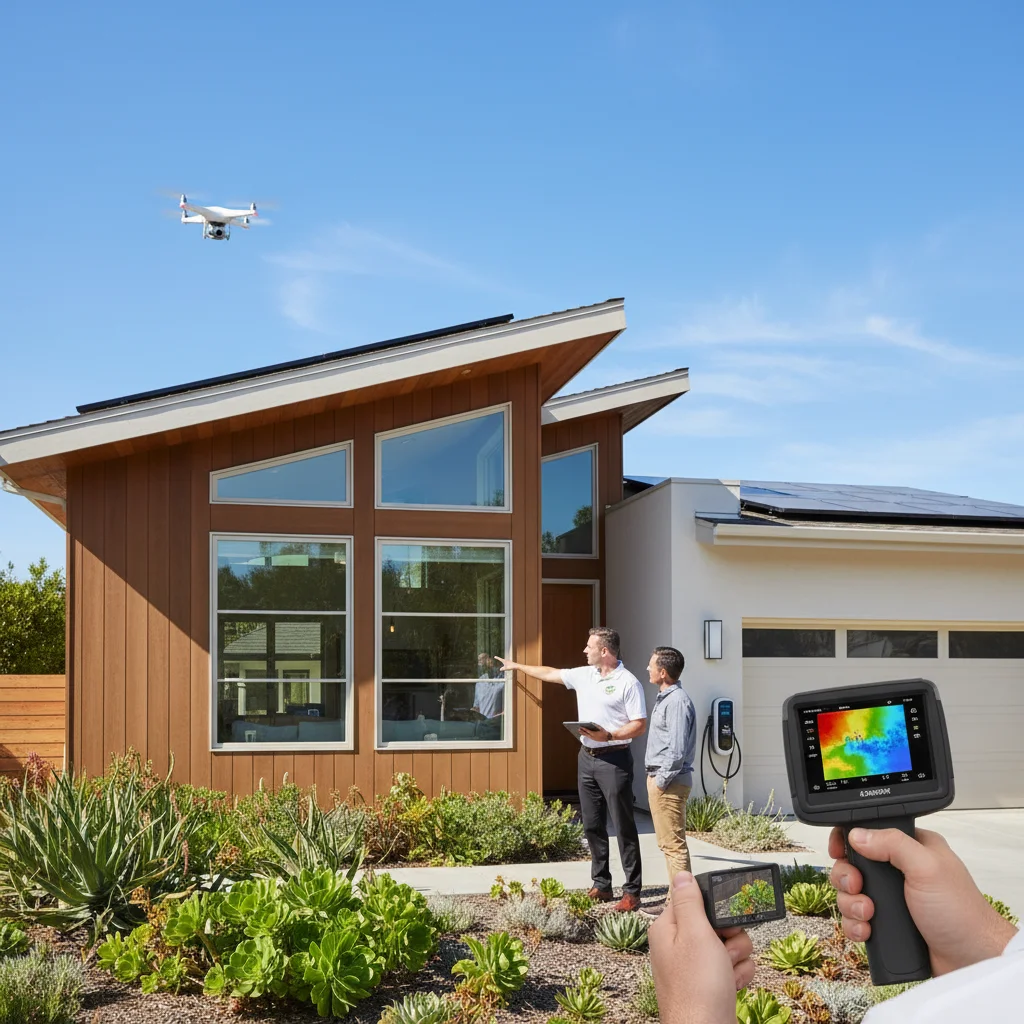
The price also varies by audit depth. A Level 1 walk-through audit ($150–$250) identifies obvious inefficiencies through visual inspection. Level 2 audits ($300–$450) add blower door testing to measure air leakage. Level 3 comprehensive audits ($500–$600) include thermal imaging cameras that reveal hidden insulation gaps and moisture intrusion—critical for homes built before 1990.
Private auditors charge hourly rates of $125–$175 for homes exceeding 3,000 square feet or properties requiring specialized testing like duct leakage diagnostics. But most single-family homes under 2,500 square feet receive flat-rate pricing. The audit fee typically includes a detailed report prioritizing upgrades by payback period and identifying eligible rebates—a document worth $200–$300 on its own.
How Much Will You Pay Based on Your Income Level?
Income-qualified California households pay $0 for professional energy audits through the Energy Savings Assistance (ESA) program, which serves residents earning up to 250% of federal poverty level—$78,000 annually for a family of four in 2026. ESA audits include the same blower door testing and thermal imaging that private auditors charge $500+ to perform, plus priority access to no-cost weatherization services worth $3,000–$7,000.
Households earning 250%–400% of poverty level ($78,000–$125,000 for a family of four) qualify for utility discount programs that reduce audit costs to $75–$150. Southern California Edison's Home Energy Improvement Program charges $99 for certified audits, while PG&E's Energy Advisor program offers $50 assessments for moderate-income customers.
And above 400% of poverty level, homeowners pay standard commercial rates of $300–$600 but often recover the cost through rebate stacking. A typical scenario: A San Jose homeowner pays $475 for a HERS rater audit, uses the report to claim a $2,000 federal heat pump tax credit and $3,200 through California's Building Initiative for Low-Emissions Development (BUILD) program, then deducts the $475 audit fee as a qualified energy expense on their federal return—netting $5,200 after the initial outlay.
The income tiers reset annually based on federal poverty guidelines published each January. So a household that earned $79,000 in 2025 and missed ESA eligibility may qualify in 2026 if the poverty threshold rises faster than their wages increased.
Which California Agency Administers Energy Audit Programs?
The California Public Utilities Commission (CPUC) regulates energy audit programs statewide, but direct administration falls to individual utilities and regional energy networks. Investor-owned utilities—PG&E, Southern California Edison, SoCalGas, and San Diego Gas & Electric—operate their own ESA and moderate-income programs under CPUC oversight. Publicly owned utilities like SMUD, LADWP, and Pasadena Water & Power administer independent programs not subject to CPUC rules.
For federal programs tied to IRA tax credits, the California Energy Commission (CEC) maintains the statewide database of certified auditors and provides technical guidance, but does not process rebate applications. The U.S. Department of Energy approves HERS rater certifications through RESNET, the national accrediting body whose members conduct audits accepted by the IRS for tax credit documentation.
And regional administration adds another layer. The Bay Area Regional Energy Network (BayREN) coordinates audit programs across nine counties, while the Southern California Regional Energy Network (SoCalREN) serves unincorporated areas in Los Angeles, Orange, Riverside, San Bernardino, and Ventura counties. These networks contract with local community organizations to deliver audits, creating variations in scheduling timelines and eligibility verification processes.
The administrative complexity means homeowners often contact the wrong agency first. A Los Angeles County resident in an unincorporated area should call SoCalREN (866-515-2170), not SCE, even if SCE provides their electricity. But a Los Angeles city resident falls under LADWP's jurisdiction. The California Energy Commission's audit program directory clarifies jurisdictional boundaries by ZIP code.
What's the Deadline to Schedule Your California Home Energy Audit?
California energy audit programs operate on rolling enrollment with no fixed application deadlines, but federal IRA tax credits require audits completed by December 31, 2026 to claim credits on 2026 returns. Homeowners planning major retrofits before year-end face a practical deadline of October 15, 2026 to schedule audits, allowing 60–90 days for the audit appointment, contractor bidding, project completion, and documentation gathering before the tax filing cutoff.
Utility-sponsored programs impose longer wait times due to demand surges. PG&E's ESA program currently schedules audits 4–8 weeks after application approval, while SoCalGas quotes 6–10 weeks in high-demand areas like San Fernando Valley. Private auditors typically book appointments within 10–14 business days, making them faster options for homeowners with near-term project timelines.
And some regional programs operate on annual funding cycles that create de facto deadlines. BayREN's Home Upgrade Program exhausted its 2025 audit subsidy budget by November, forcing late applicants onto a 2026 waitlist. The CEC's Low-Income Weatherization Program allocates audit funds quarterly, with applications processed in the order received until each quarter's budget depletes.
The safest approach: Schedule audits 90 days before planned retrofits. A homeowner targeting heat pump installation in August 2026 should complete the audit by May to allow time for rebate pre-approval, contractor scheduling, and installation before the federal tax credit year ends. Use our free rebate calculator to model project timelines and estimate savings based on your audit date.
How Do California Energy Audit Costs Compare to Other States?
California's $200–$600 audit range sits 15%–25% above the national median of $300–$450, reflecting higher labor costs and stricter certification requirements. But California offers the nation's most extensive income-based audit subsidies—42% of households qualify for free or discounted audits versus 28% nationally, according to 2026 Department of Energy data.
Texas charges similar retail rates ($350–$550) but provides no statewide free audit programs. New York's $400–$650 range exceeds California's, though New York's EmPower+ program serves households up to 80% of state median income—a higher eligibility threshold than California's 250% of federal poverty level. Oregon and Washington charge $250–$450, with Portland and Seattle offering $100 subsidized audits regardless of income.
And California's audit depth surpasses most states. The CPUC requires ESA audits to include blower door testing, duct leakage measurement, and appliance safety inspections—services many states treat as optional add-ons. A Texas free audit might consist of a 45-minute visual inspection, while California's ESA protocol mandates 90–120 minute assessments with computerized energy modeling.
The return on investment tells the real story. California homeowners who complete audits claim an average of $9,800 in combined federal and state incentives, versus $6,200 nationally. So a $500 California audit that unlocks $12,000 in heat pump rebates and weatherization credits delivers a 24:1 return—the highest ratio among states with comparable programs.
What's the Step-by-Step Process for Getting a California Home Energy Audit?
California energy audits follow a five-stage process: eligibility verification, scheduling, on-site assessment, report delivery, and rebate application support. The timeline spans 3–10 weeks depending on program choice, with income-qualified utility programs requiring longer processing than private commercial audits.
Stage 1: Eligibility Verification (1–5 business days). Homeowners submit income documentation—recent tax returns, pay stubs, or benefit award letters—through the utility's online portal or via phone. PG&E processes applications within 24 hours for ESA, while SoCalGas quotes 3–5 business days. Private auditors skip this step entirely.
Stage 2: Scheduling (1–8 weeks). Approved applicants receive audit appointment dates. Utility programs book 4–8 weeks out, private auditors within 10–14 days. Homeowners prepare by compiling 12 months of energy bills and noting problem areas like drafty rooms or uneven heating.
Stage 3: On-Site Assessment (90–180 minutes). Certified auditors conduct blower door tests that depressurize the home to 50 Pascals, revealing air leakage rates measured in cubic feet per minute. Thermal cameras scan walls and ceilings at 8–12°F temperature differentials to map insulation gaps. Combustion safety testing checks furnace and water heater venting. And auditors photograph deficiencies for the final report.
Stage 4: Report Delivery (5–10 business days). Comprehensive reports rank upgrades by simple payback period—insulation typically pays back in 2–4 years, air sealing in 1–3 years, heat pump upgrades in 5–8 years. Reports include estimated project costs, energy savings in kWh and therms, and eligible rebate amounts with application links.
Stage 5: Rebate Application Support (ongoing). Many auditors pre-complete rebate forms using audit data, reducing homeowner paperwork to signing and submitting. HERS raters provide the signed documentation required for federal IRA credits exceeding $2,000. And utility programs fast-track rebates when homeowners use auditor-recommended contractors from pre-approved networks.
For detailed guidance on maximizing audit findings, see our home energy audit checklist article covering preparation steps and common upgrade priorities.
Official Sources
- California Energy Commission - Low-Income Weatherization Program — Directory of audit programs by utility service territory and ZIP code
- U.S. Department of Energy - Home Energy Audits — Federal guidance on audit types, certification standards, and IRA tax credit requirements (note: the federal 25C and 25D credits ended for projects completed after December 31, 2025)
- DSIRE USA - California Incentives — Searchable database of state and utility rebate programs with audit prerequisites
Related Reading: Learn more about Diy Vs Professional Energy Audit Cost and Ductwork Inspection Energy Audit.
Related Reading: Learn more about Diy Vs Professional Energy Audit Cost and Energy Audit Before And After Results.
Frequently Asked Questions
How much does a home energy audit cost in California?
Professional home energy audits cost $200–$600 in California depending on assessment depth and home size. Basic Level 1 walk-through audits start at $150–$250, while comprehensive Level 3 assessments including blower door tests and thermal imaging range from $450–$600. Income-qualified households earning up to 250% of federal poverty level ($78,000 for a family of four in 2026) receive free audits through utility ESA programs. Moderate-income households (250%–400% FPL) access discounted audits for $75–$150.
What is included in a California home energy audit?
California energy audits include blower door testing to measure air leakage, thermal imaging to identify insulation gaps, combustion safety testing for gas appliances, and duct leakage assessment. Certified HERS raters also provide computerized energy modeling that estimates annual heating and cooling costs. The audit report ranks recommended upgrades by payback period, estimates project costs, and identifies applicable federal IRA tax credits and state rebates. ESA program audits add appliance efficiency checks and direct installation of LED bulbs and low-flow showerheads at no cost.
Are home energy audits free in California?
Home energy audits are free for California households earning up to 250% of federal poverty level through utility Energy Savings Assistance (ESA) programs administered by PG&E, SCE, SoCalGas, and SDG&E. Public utilities like SMUD and LADWP operate similar income-qualified programs. BayREN and other regional networks offer discounted $75–$150 audits for moderate-income households. Homeowners above income thresholds pay standard commercial rates of $300–$600 but often recover costs through energy tax credits that allow audit fees as qualified expenses.
How long does a California home energy audit take?
California energy audits require 90–180 minutes on-site depending on home size and assessment level. A basic 1,500-square-foot home receives a Level 2 audit in 90 minutes, while comprehensive Level 3 audits for 3,000+ square-foot properties take 2.5–3 hours. Blower door testing adds 30 minutes, thermal imaging another 20–30 minutes. Auditors spend an additional 4–6 hours off-site analyzing data and preparing reports, which arrive 5–10 business days after the appointment. Total timeline from application to report delivery spans 3–10 weeks.
Do I need a home energy audit to get California energy rebates?
Federal IRA tax credits exceeding $2,000 require third-party energy audits by certified HERS raters to claim heat pump, insulation, and air sealing credits on 2026 tax returns. California's BUILD program mandates audits for all heat pump rebate applications, while TECH Clean California requires audits for projects combining multiple measures like heat pump water heaters and weatherization. Utility rebates for single measures under $1,500—such as smart thermostats or attic insulation alone—typically waive audit requirements. Check our rebate calculator to determine if your planned upgrades trigger audit mandates.
Ready to unlock your home's energy savings? Use our free rebate calculator to estimate your audit cost, eligible incentives, and projected energy bill reductions based on your ZIP code and income level. Get your personalized savings report in under 60 seconds.
Last updated: April 14, 2026. Reviewed by the DuloCore Editorial Team. About our authors.