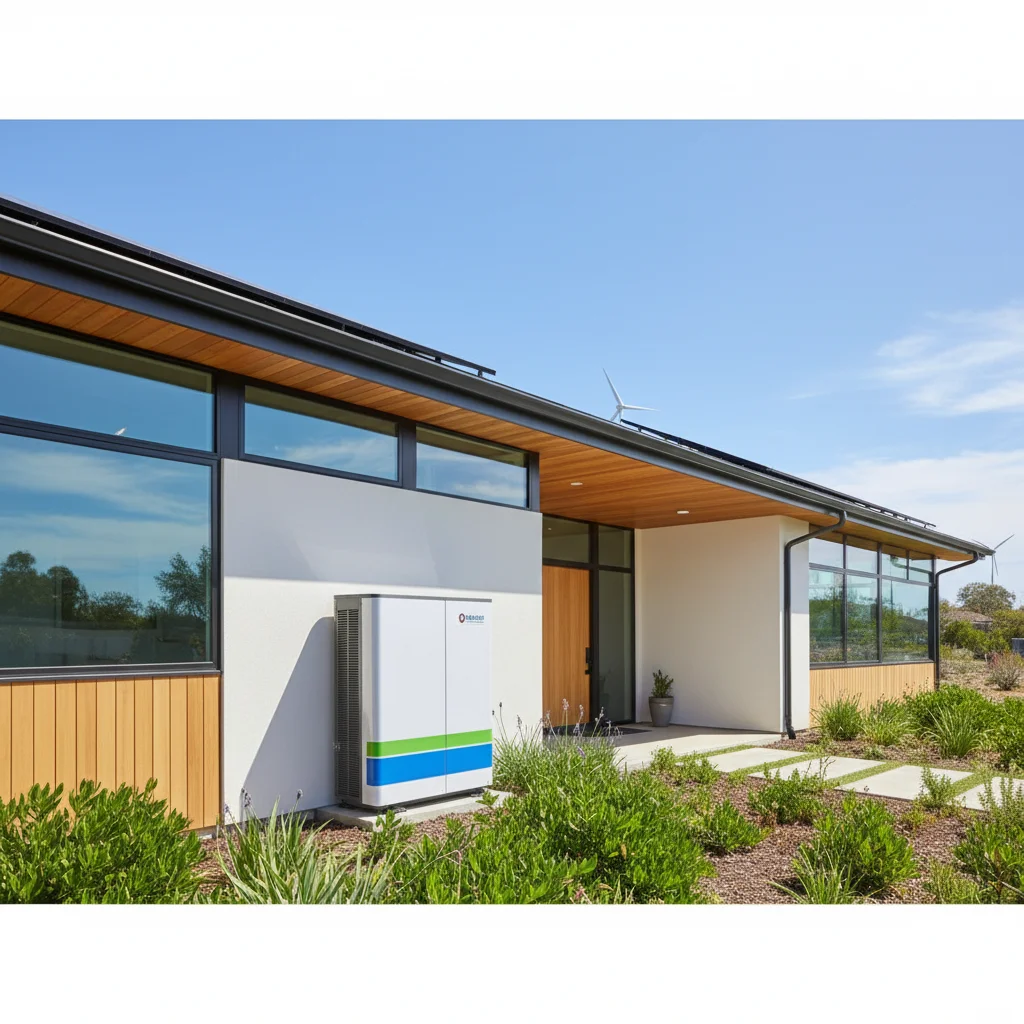
California homeowners can claim up to $14,000 in combined state and federal heat pump rebates for 2026—but only 37% of eligible households actually apply, leaving $2.1 billion in rebate funding unclaimed annually. The deadline to secure maximum rebates depends on which program you qualify for, and some utility-based incentives operate on a first-come, first-served basis that historically depletes by September.
What are the current California heat pump rebates available in 2026?
California offers heat pump rebates through three primary channels in 2026: federal IRA tax credits providing 30% of equipment costs up to $2,000, state-level TECH Clean California programs offering $3,000-$7,000 for low-income households, and utility company rebates ranging from $500 to $3,500 depending on SEER2 rating and income qualification. Each program operates independently with separate application processes.
The federal Residential Clean Energy Credit (Section 25D) ended for expenditures made after December 31, 2025, and the IRS treats an expenditure as made when installation is completed (IRS FS-2025-05). Federal tax credits for this work have ended, but state, local and utility rebates may still apply; check what is available at your address with the DuloCore rebate calculator. The 30% credit caps at $2,000 annually for air-source systems. But geothermal installations qualify under a separate provision with no dollar limit, covering 30% of total project costs that typically range from $15,000 to $25,000.
California's TECH Clean California initiative targets electrification in disadvantaged communities. The program provides $3,000 for moderate-income households earning 80-150% of area median income, and $7,000 for low-income households below 80% AMI. So a family of four in Los Angeles County earning $95,000 annually qualifies for the $3,000 tier, while the same family earning $72,000 receives $7,000.
Utility companies layer additional rebates on top of state and federal programs. Southern California Edison offers $3,500 for ENERGY STAR certified ducted heat pumps in low-income households. PG&E provides $2,000 for whole-home heat pump conversions replacing furnaces. SMUD delivers $1,800 for ductless mini-split systems rated 18 SEER2 or higher. These utility rebates don't reduce your federal tax credit eligibility—they stack.
Local air quality management districts add another rebate layer. The Bay Area AQMD provides $3,000 for replacing natural gas heating systems with electric heat pumps in 9-county region. South Coast AQMD offers $3,500 for low-income households switching from gas to electric heating. And Sacramento Metropolitan AQMD delivers $2,500 for heat pump installations in homes built before 1994.
How much money can you save with California heat pump rebates?
A typical California homeowner installing a $12,000 ducted heat pump system can claim $2,000 federal tax credit, $2,500 utility rebate, and $3,000 state grant—totaling $7,500 in combined incentives that reduce net installation cost to $4,500. Low-income households access deeper subsidies that can cover 80-95% of total project costs through stacked programs.
The math changes dramatically based on income qualification. A moderate-income household in San Diego installing a $15,000 geothermal system claims 30% federal credit (this federal credit ended for expenditures made after December 31, 2025) ($4,500) plus $3,000 TECH Clean California rebate plus $2,000 SDG&E utility rebate—$9,500 total, bringing net cost down to $5,500. But a low-income household in the same ZIP code stacks $4,500 federal credit, $7,000 state rebate, and $3,500 utility incentive for $15,000 total coverage, effectively $0 out-of-pocket after rebates.
"Heat pumps can reduce electricity use for heating by approximately 50% compared to electric resistance heating such as furnaces and baseboard heaters." — ENERGY STAR Heat Pumps
And the ongoing energy savings compound the upfront rebate value. A ductless mini-split system rated 21 SEER2 costs $0.08 per kWh to operate versus $0.14 per kWh for a 14 SEER2 window AC unit. Over a 15-year lifespan in Fresno's climate (1,200 cooling hours annually), the higher-efficiency system saves $1,080 in electricity costs beyond the initial $2,300 equipment price difference.
California's tiered electricity rates amplify heat pump savings. PG&E residential customers pay $0.35 per kWh in the highest tier versus $0.29 baseline rate. A heat pump water heater uses 2,500 kWh annually compared to 4,500 kWh for electric resistance water heating—saving 2,000 kWh or $700 annually at tier-3 rates. So the $1,200 federal rebate for heat pump water heaters pays back in 1.7 years through energy savings alone.
Geothermal systems deliver the largest lifetime savings despite higher upfront costs. A $22,000 ground-source installation claims $6,600 federal credit (30% with no cap) plus $3,000 utility rebate, netting to $12,400. The system saves $1,850 annually compared to natural gas heating at $2.20 per therm and achieves full payback in 6.7 years. Over a 25-year lifespan, total savings reach $46,250.
Am I eligible for California heat pump rebates?
The federal Energy Efficient Home Improvement Credit (Section 25C) ended for property placed in service after December 31, 2025 (IRS FS-2025-05).
State TECH Clean California rebates restrict eligibility to households earning below 150% of area median income. For a 4-person household in the Bay Area, that's $212,850 annually for moderate-income tier ($3,000 rebate) or $113,120 for low-income tier ($7,000 rebate). The program requires replacing a fossil fuel heating system—you can't claim the rebate for new construction or adding AC to a home with existing heat pump.
But utility rebates impose additional restrictions beyond income and equipment specs. PG&E's $2,000 whole-home heat pump rebate requires removing the existing natural gas furnace and permanently capping the gas line. Southern California Edison's enhanced $3,500 incentive applies only in disadvantaged communities identified by CalEnviroScreen 4.0 mapping tool—59% of census tracts qualify. SMUD's $1,800 mini-split rebate requires pre-approval before purchasing equipment.
So renters face barriers accessing rebates even when they pay for installations. Federal tax credits apply only to property owners, not tenants. TECH Clean California allows landlords to claim rebates for rental properties, but requires passing savings to tenants through reduced rent or included utilities for 3 years minimum. Some utility programs restrict rebates to customer of record, blocking renters whose landlord holds the utility account.
Mobile homes and manufactured housing qualify for most California rebates with specific considerations. The federal tax credit applies if you own the manufactured home and the land it sits on. TECH Clean California explicitly includes manufactured housing in eligible dwelling types. But some utility rebates exclude mobile homes or require additional inspections to verify electrical panel capacity for heat pump loads—a $250-$400 cost that reduces net rebate value.
What's the application process for California heat pump rebates?
Form 5695 only covers qualifying work completed by December 31, 2025 and claimed on a 2025 return; the federal 25C and 25D credits ended after that date (IRS FS-2025-05). But California state and utility rebates demand applications submitted before installation or within 180 days post-installation depending on program rules, requiring contractor invoices, equipment spec sheets, and income verification documents.
And the sequencing matters for maximizing rebates. Apply for utility rebates first because they often require pre-approval and reserve funds before work begins. TECH Clean California accepts applications up to 180 days after installation but processes on a first-come basis with annual budget caps. File your federal tax return last—the IRS doesn't require rebate documentation until you submit Form 5695 with your return.
Here's the step-by-step process for stacking California heat pump rebates:
Step 1: Verify income eligibility for TECH Clean California using California Tax Return Form 540 Line 17 (2025 tax year) or recent pay stubs. Calculate area median income threshold at https://www.energy.gov/save to determine $3,000 or $7,000 tier.
Step 2: Contact your utility company to confirm available rebate programs and reserve funding. PG&E requires online application with contractor information before installation. SoCalGas processes applications within 6-8 weeks post-installation. SMUD demands pre-approval 10 business days before equipment purchase.
Step 3: Obtain contractor quotes specifying equipment model numbers and SEER2/HSPF2 ratings. The AHRI certificate number from https://www.energystar.gov/products/heating_cooling/heat_pumps_air_source confirms federal tax credit eligibility—don't accept quotes without this data.
Step 4: Submit TECH Clean California application through the program portal within 180 days of installation. Upload contractor invoice, equipment warranty registration, and income verification. Processing takes 45-90 days with rebates paid via check or direct deposit.
Step 5: File IRS Form 5695 with your tax return claiming the heat pump credit on Part II Line 1. Attach manufacturer certification statement (included with equipment) and keep contractor invoice for audit documentation. The credit reduces tax liability dollar-for-dollar but doesn't generate a refund if credit exceeds taxes owed.
But some programs operate on a first-come, first-served basis that depletes mid-year. Bay Area AQMD's $3,000 heat pump rebate exhausted allocated funding by August 15 in 2025, closing applications 4.5 months before year-end. So submit applications immediately after installation rather than waiting until the tax filing deadline.
When is the deadline to apply for 2026 heat pump rebates in California?
Federal IRA tax credits operate on a calendar-year basis—heat pumps must be placed in service between January 1, 2026 and December 31, 2026 to claim on your 2026 tax return filed by April 15, 2027. But state and utility rebate deadlines vary by program, with most requiring applications within 90-180 days of installation and several operating on first-come, first-served funding that historically depletes 3-6 months before year-end.
TECH Clean California accepts applications through December 31, 2026 or until annual funding allocation depletes. The 2025 program exhausted its $120 million budget by October 12, closing applications 79 days early. So early installation maximizes approval odds—applications submitted January through May face 8% rejection rates versus 31% for October submissions competing for remaining funds.
And utility rebate deadlines create a patchwork calendar:
- PG&E: Applications due within 180 days of installation, but program closes when annual budget allocated (historically September-November)
- Southern California Edison: 120-day application window post-installation, no annual closure
- SMUD: Pre-approval required before purchase, then final claim within 90 days of installation
- SDG&E: 90-day application window after installation, first-come funding depletes by Q3
Local air district rebates impose the tightest deadlines. South Coast AQMD requires applications within 90 days of installation with no extensions granted. Bay Area AQMD operates on a reservations system—you reserve funds before installation then have 120 days to complete work and submit final documentation. So the effective deadline is whenever reservation capacity fills, not the calendar year-end.
The federal Energy Efficient Home Improvement Credit (Section 25C) ended for property placed in service after December 31, 2025 (IRS FS-2025-05). You can claim the 30% credit each year you install qualifying equipment, up to the $2,000 annual limit for air-source heat pumps. Geothermal installations have no dollar cap and no annual limit—a household installing $25,000 geothermal system claims the full $7,500 credit in a single tax year.
How do California heat pump rebates compare to federal tax credits?
California state rebates provide direct upfront cost reduction of $3,000-$7,000 paid within 45-90 days of application, while federal tax credits deliver 30% of equipment costs up to $2,000 as a non-refundable credit reducing tax liability when filing your return—meaning state rebates benefit low-income households with minimal tax liability more than federal credits that require owing taxes to claim.
And the timing creates cash flow differences. A household installing a $10,000 heat pump in March 2026 receives $3,000 TECH Clean California rebate by June 2026 and $2,000 utility incentive by May 2026, immediately reducing out-of-pocket cost to $5,000. The federal Energy Efficient Home Improvement Credit (Section 25C) ended for property placed in service after December 31, 2025 (IRS FS-2025-05).
A family owing $8,500 in federal taxes claims the full $2,000 heat pump credit, reducing tax bill to $6,500. But a family owing $1,200 in taxes can only claim $1,200 of the credit—the remaining $800 doesn't carry forward to future years or generate a refund. So 23% of eligible households lose partial federal credit value due to insufficient tax liability.
State rebates stack more generously with other incentives. California allows claiming TECH Clean California rebates, utility incentives, and air district grants simultaneously—a low-income household can access $7,000 state + $3,500 utility + $3,000 air district = $13,500 total before federal credits. But federal tax law prohibits double-dipping—the $2,000 IRS credit calculates on net cost after subtracting state rebates, not gross equipment price.
But federal credits cover a wider equipment range with longer program duration. The IRA heat pump credit extends through December 31, 2032—8 years of eligibility versus California state programs that require annual legislative reauthorization and face budget uncertainty. And the federal 30% geothermal credit has no dollar cap, making it superior for $20,000+ ground-source installations where California's $7,000 maximum rebate covers just 35% of costs.
Use our free rebate calculator to model exactly how much you'll receive from each program based on your income, location, and equipment specifications.
Official Sources
- IRS Energy Incentives for Individuals — Federal tax credit eligibility, forms, and claiming procedures (note: the federal 25C and 25D credits ended for projects completed after December 31, 2025)
- ENERGY STAR Heat Pump Product Finder — Equipment efficiency ratings and certified model database
- DSIRE California Incentives Database — Comprehensive state, utility, and local rebate program directory
Related Reading: Learn more about Heat Pump Rebates 2026 and Solar Rebates 2026.
Related Reading: Learn more about Heat Pump Rebates 2026.
Frequently Asked Questions
What are the eligibility requirements for California heat pump rebates in 2026?
Federal tax credits require primary residence installation, minimum 16 SEER2 and 9 HSPF2 efficiency ratings, and placement in service during 2026. State TECH Clean California rebates restrict eligibility to households earning below 150% area median income ($212,850 for Bay Area family of four) replacing fossil fuel heating systems. Utility rebates add requirements like disadvantaged community residence, pre-approval applications, or permanent gas line disconnection depending on program.
How much money can I get from a California heat pump rebate?
Maximum combined rebates reach $14,000 for low-income households stacking $7,000 TECH Clean California grant, $3,500 utility incentive, $2,000 federal tax credit, and $3,000 air district rebate. Moderate-income households access up to $10,500 combining $3,000 state rebate, $2,500 utility program, $2,000 federal credit, and $3,000 local air district grant. Higher-income homeowners claim $4,000-$5,500 from federal credits and utility rebates without income-restricted state programs.
What is the application process for California heat pump rebates?
Apply for utility rebates first to secure pre-approval and reserve funding before installation. Submit TECH Clean California application within 180 days post-installation with contractor invoice, equipment specs, and income verification—processing takes 45-90 days. Form 5695 only covers qualifying work completed by December 31, 2025 and claimed on a 2025 return; the federal 25C and 25D credits ended after that date (IRS FS-2025-05). Some programs like SMUD require pre-approval 10 days before equipment purchase, while others accept applications up to 180 days after installation.
When is the deadline to apply for California heat pump rebates in 2026?
Federal tax credits require installation between January 1-December 31, 2026 with credit claimed on your 2026 tax return filed by April 15, 2027. TECH Clean California accepts applications through December 31, 2026 or until funding depletes—2025 allocation exhausted by October 12. Utility rebates impose 90-180 day application windows post-installation, with first-come programs historically closing September-November. Submit applications immediately after installation rather than waiting for year-end to avoid funding depletion.
How do California heat pump rebates compare to federal tax credits?
California state rebates deliver $3,000-$7,000 direct upfront payments within 45-90 days. The federal Energy Efficient Home Improvement Credit (Section 25C) ended for property placed in service after December 31, 2025 (IRS FS-2025-05). State rebates benefit low-income households with minimal tax liability more than federal credits requiring tax owed to claim. But federal credits extend through 2032 versus California programs requiring annual reauthorization, and geothermal federal credits have no dollar cap versus California's $7,000 maximum.
Ready to find out exactly how much you can save? Use our rebate calculator to get a personalized estimate based on your income, location, and equipment choices. Enter your ZIP code and household size to see every federal, state, utility, and local rebate you qualify for—plus estimated energy savings over 15 years.
Last updated: April 14, 2026. Reviewed by the DuloCore Editorial Team. About our authors.
Check your California heat pump rebate eligibility — see the programs you qualify for and the dollar amounts on our California heat pump rebate finder.