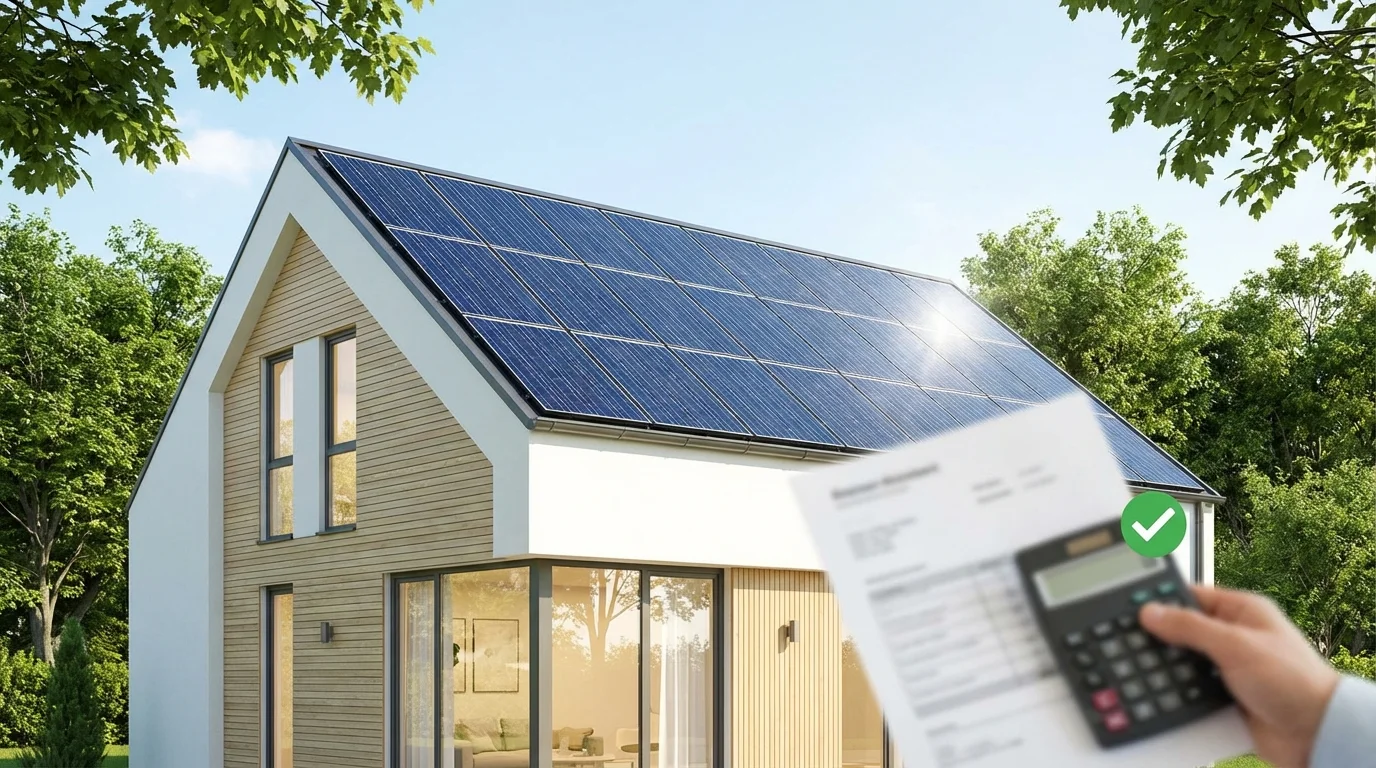
Update (2026): The federal Residential Clean Energy Credit (Section 25D) expired December 31, 2025, following the passage of the One Big Beautiful Bill Act (OBBBA). The information below reflects historical credit availability. Check state and local programs for current incentives.
With residential electricity rates increasing by over 13% since 2021, homeowners are facing unprecedented utility bills. The financial incentives designed to offset the cost of solar energy are shifting just as quickly. So understanding the landscape of 2026 solar rebates isn't just about saving money; it's a critical step in securing energy independence before program funds are exhausted.
What Solar Rebates Are Available in My State and Utility Area for 2026?
State and utility solar rebates for 2026 are geographically specific financial incentives offered by local governments or power companies to reduce the upfront cost of solar panel installation. These programs, which vary from a $500 one-time payment to over $5,000, are distinct from federal tax credits.
Solar rebate availability in 2026 is entirely dependent on your zip code. And state-level programs, like California's Self-Generation Incentive Program (SGIP) or New York's NY-Sun initiative, offer thousands back for solar-plus-storage systems. But utility companies often provide their own separate rebates, such as Austin Energy's solar incentive which pays up to $2,500. These programs are not uniform; a homeowner in one county receives a $1,000 rebate while a neighbor in the next county receives nothing. So verifying local eligibility is the first step. The availability and funding for these programs change annually, making it essential for homeowners to check for 2026 updates. You can find a comprehensive list of local programs in our guide to solar panel rebates. So it's crucial to confirm the active programs for your specific address.
How Much Can I Save with 2026 Solar Rebates, and What Equipment Qualifies?
Homeowners can save between $500 and $8,000 on a new solar system in 2026 by combining local rebates with the federal tax credit. Qualifying equipment typically includes photovoltaic (PV) panels, inverters, and increasingly, battery storage systems with a capacity of 3 kWh or more.
The exact savings depend on the specific rebate program. For example, some utility programs offer a flat $500 per installation, while state programs offer performance-based incentives paying $0.20 per watt, which amounts to $1,200 for a typical 6kW system. And to qualify, the equipment almost always must be new and certified by organizations like the Solar Rating & Certification Corporation (SRCC) or ENERGY STAR. Battery storage systems are frequently included, with rebates often adding an extra $250 to $500 per kilowatt-hour of capacity. Use our free rebate calculator to find your exact savings. So homeowners must ensure their contractor installs qualifying components to receive the full financial benefit, as using non-certified equipment results in automatic disqualification from most programs.
Am I Eligible? Understanding Income Limits and Other Requirements for 2026 Solar Rebates
Eligibility for 2026 solar rebates is determined by homeownership, location, utility provider, and in many cases, household income. Programs funded by the Inflation Reduction Act often include income caps, reserving rebates up to $8,000 for households earning below 80% of the area median income (AMI).
Beyond income, standard requirements mandate that the applicant must own the home where the system is installed. And the property must be the owner's primary residence. Some programs also set technical specifications, such as a minimum or maximum system size, typically between 3 kW and 10 kW, to ensure the system is appropriately sized for the home's needs. The U.S. Department of Energy emphasizes that these programs aim to expand access to clean energy. So homeowners should review their specific state and utility program guidelines, as failing to meet even one criterion, like an income limit that is $100 over the threshold, will lead to a denied application. Many of these programs work alongside federal energy tax credits.
What's the Application Process, Key Deadlines, and Contractor Requirements for 2026?
The 2026 solar rebate application process typically involves a pre-approval application, installation by a certified professional, and a final submission with invoices before a specific deadline. Many state programs have funding cycles that close quarterly, with deadlines often falling on March 31, June 30, and September 30.
First, homeowners or their installers submit an application to reserve funds, which requires a project proposal and equipment specifications. But once approved, the installation must be completed. And a key requirement is that the installer must be certified, often through the North American Board of Certified Energy Practitioners (NABCEP), and carry adequate insurance. So after installation, a final application packet, including the final invoice, inspection report, and interconnection agreement from the utility, must be submitted before the program's deadline. Missing a deadline or using a non-certified contractor are the two most common reasons for an application's rejection. Therefore, verifying contractor credentials and program timelines is a non-negotiable step for securing rebates.
Can I Stack 2026 Solar Rebates with Other Incentives, and What's the Funding Status?
Homeowners can stack most 2026 state and utility solar rebates with the 30% federal Residential Clean Energy Credit. Funding for local rebate programs is limited and allocated on a first-come, first-served basis, often running out before the end of the calendar year.
Stacking incentives is the primary strategy for maximizing solar savings. For example, a homeowner can receive a $2,000 state rebate and still claim the full 30% federal tax credit on the net project cost. So a $20,000 solar installation would first be reduced to $18,000 by the state rebate, and the 30% federal credit (this federal credit ended for expenditures made after December 31, 2025) would then apply to that amount, saving an additional $5,400. But the funding status of these local programs is critical.
"Since DSIRE is a publicly funded project, the information is free and available to the public." — DSIRE Many state energy offices post real-time dashboards showing remaining funds, which often deplete by the third quarter. This is also true for other technologies, as seen with some heat pump rebates. So waiting until later in the year to apply is a financial risk. (Note: Federal tax credit percentages and availability are subject to change; the 30% Residential Clean Energy Credit under Section 25D expired December 31, 2025. Verify current incentives at energy.gov.)
2026 Solar Incentive Comparison
| Incentive Type | Typical Amount/Value | Key Eligibility | 2026 Status |
|---|---|---|---|
| Federal Tax Credit (IRA) | Ended Dec 31, 2025 | — | Active through December 31, 2025 |
| State Rebate | $500 - $3,000 flat rebate | State residency, income limits | Varies; check state energy office |
| Utility Grant | $250 - $2,500 upfront | Must be a customer of the utility | Varies; funds often deplete by Q3 |
Official Sources
- Database of State Incentives for Renewables & Efficiency (DSIRE) — The most comprehensive source for up-to-date information on state and utility renewable energy incentives.
- ENERGY STAR Rebate Finder — A federal tool to find rebates on ENERGY STAR certified products, including solar water heaters and related equipment.
- IRS Home Energy Credits — Official guidance from the IRS on federal tax credits for clean energy equipment. (note: the federal 25C and 25D credits ended for projects completed after December 31, 2025)
Related Reading: Learn more about Florida Solar Rebates 2026 and North Carolina Solar Rebates 2026.
Frequently Asked Questions
What are the eligibility requirements for solar rebates in 2026?
Eligibility for 2026 solar rebates primarily requires homeownership and that the property is your primary residence. Many state and utility programs also have income limits, often targeting households below 80% or 150% of the Area Median Income (AMI). Additionally, the solar panel system must typically be new and installed by a certified contractor.
How much can homeowners expect to save with solar rebates in 2026?
Homeowners can expect to save between $500 and $5,000 from state and utility rebates alone in 2026. When combined with the 30% federal tax credit, total savings on a $25,000 system can exceed $9,500. The exact amount depends entirely on your location, income, and the specific equipment installed.
What is the application process for securing solar rebates in 2026?
The process typically involves three steps. First, submit a pre-installation application to reserve your funds. Second, have the system installed by a qualified professional. Third, submit a final application with all paid invoices and inspection documents before the program's deadline, which is often quarterly. Missing any step results in forfeiture of the rebate.
Are there specific deadlines to apply for 2026 solar rebate programs?
Yes, deadlines are strict. Most 2026 state and utility rebate programs operate on a first-come, first-served basis until funds are depleted. Many have specific application windows or quarterly deadlines, such as March 31 or June 30. It's critical to check with your local program administrator for the exact 2026 schedule.
Will federal solar tax credits still be available alongside 2026 rebates?
Yes, the federal Residential Clean Energy Credit will be available at 30% through December 31, 2025. This tax credit can be combined with state and local solar rebates. The credit applies to the net cost of the project after any direct rebates have been subtracted, maximizing total savings for homeowners.
Unlock Your 2026 Solar Savings
Rebate programs are complex and funds are limited. Don't leave thousands of dollars on the table. Use DuloCore's free rebate calculator to instantly see how much you can save on a new solar installation in your area.
Calculate Your Savings NowLast reviewed: April 14, 2026. Reviewed by DuloCore Energy Specialists. About the team.
Check your California solar rebate eligibility — see the programs you qualify for and the dollar amounts on our California solar rebate finder.