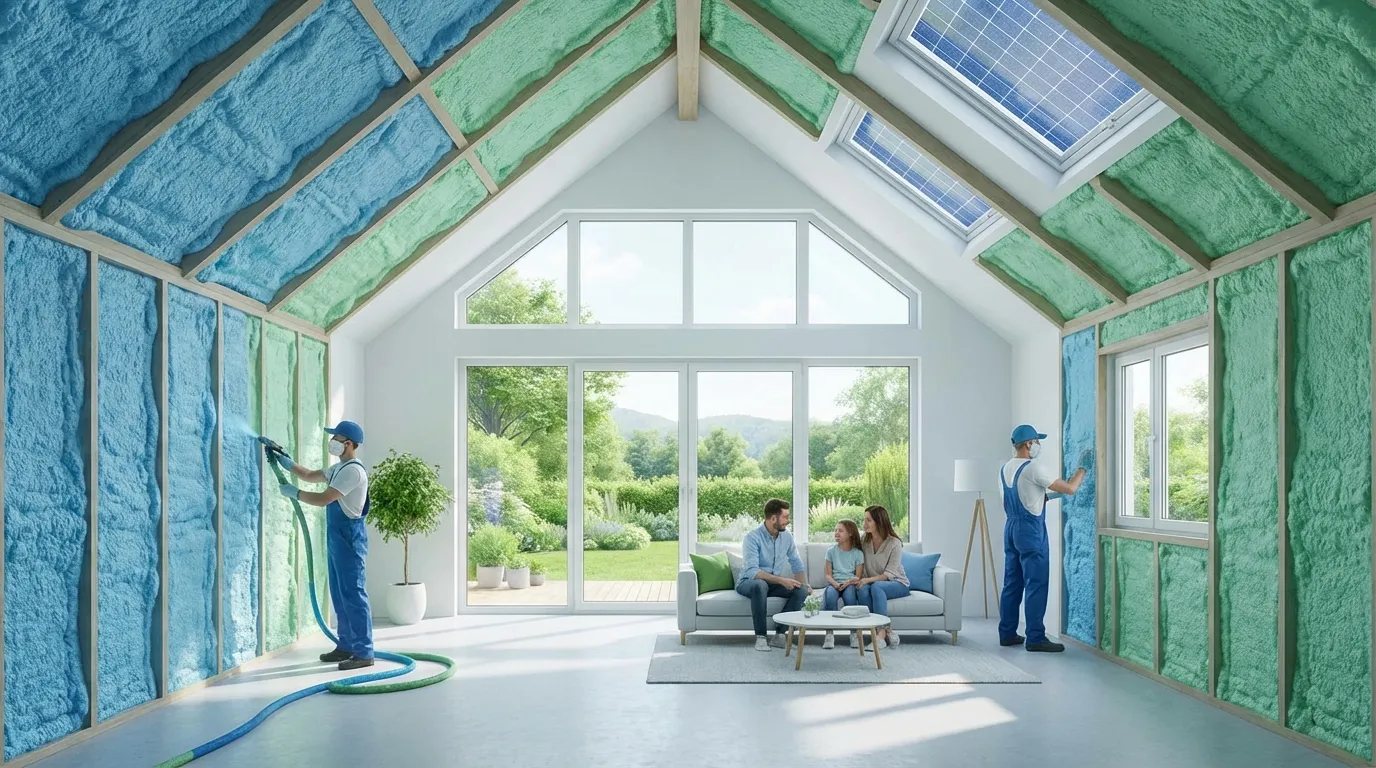
Up to 40% of a home's energy loss occurs through its attic and walls, a gap that properly installed insulation directly addresses. So, sealing these air leaks with spray foam not only improves comfort but also unlocks thousands of dollars in government and utility incentives designed to lower the upfront cost. These programs are active now, rewarding homeowners for making efficiency upgrades that reduce energy consumption.
How Much Can You Save? Discovering Spray Foam Insulation Rebate Amounts and Eligible Equipment
The federal Energy Efficient Home Improvement Credit (Section 25C) ended for property placed in service after December 31, 2025 (IRS FS-2025-05).
State and utility rebates often provide direct cash-back incentives from $200 to over $1,500, depending on the project's scope and the R-value achieved. For example, a utility may offer $0.50 per square foot for attic insulation that reaches an R-value of 49. So, combining these programs maximizes your return on investment for the project. Always check your local utility provider for specific insulation rebates available in your area.
Who Qualifies for Spray Foam Rebates? Understanding Income Limits, State, Utility, and Contractor Requirements
Eligibility for spray foam rebates depends on homeownership, primary residence status, and sometimes income levels for specific state programs. So, utility rebates often require residency within a specific service area and use of a certified contractor for installation.
The federal Energy Efficient Home Improvement Credit (Section 25C) ended for property placed in service after December 31, 2025 (IRS FS-2025-05). Federal tax credits for this work have ended, but state, local and utility rebates may still apply; check what is available at your address with the DuloCore rebate calculator. State and utility programs often carry their own restrictions. So, some offer enhanced rebates for low-to-moderate-income households, requiring income verification. For example, a state program may offer a 50% rebate for households under 80% of the Area Median Income (AMI), compared to a 25% rebate for others. Many utility rebates also mandate that the installation be performed by a contractor from their pre-approved or certified network. This ensures the work meets quality standards and achieves the projected energy savings.
What is the Application Process for Spray Foam Insulation Rebates, and What Are the Key Deadlines?
State and utility programs require submitting invoices, contractor certifications, and application forms directly to the provider, often within 90 days of project completion.
Form 5695 only covers qualifying work completed by December 31, 2025 and claimed on a 2025 return; the federal 25C and 25D credits ended after that date (IRS FS-2025-05). Utility and state rebate processes are different. These typically require you to submit an online or mail-in application post-installation. So, you'll need to provide paid invoices, photos of the completed work, and contractor details. Deadlines are strict; many programs require submission within 30 to 90 days of the service date, and funds are often first-come, first-served.
Are Spray Foam Rebate Funds Available, and Can You Stack Multiple Rebates for Maximum Savings?
The federal Energy Efficient Home Improvement Credit (Section 25C) ended for property placed in service after December 31, 2025 (IRS FS-2025-05).
The federal Energy Efficient Home Improvement Credit (Section 25C) ended for property placed in service after December 31, 2025 (IRS FS-2025-05). The ability to stack rebates is a key strategy for maximizing savings. But some utilities have anti-stacking rules. So, their terms may state that the utility rebate amount will be reduced by the value of any other financial incentive received. It is critical to read the fine print for each program to understand how they interact. This ensures you accurately calculate your total out-of-pocket cost. You can read background on the ended federal energy tax credits.
How to Find Specific Spray Foam Insulation Rebates in Your State or Utility Area (See also: attic insulation cost and savings.) (See also: insulation rebates for manufactured homes.) (See also: whole home insulation upgrade rebates.) (See also: geothermal tax credit.)
Homeowners find local spray foam insulation rebates by searching the DSIRE database, checking their utility provider's website directly, or using DuloCore's rebate calculator. So, these resources provide up-to-date information on available funds, eligibility rules, and application forms for specific zip codes in 2026.
Start by visiting the Database of State Incentives for Renewables & Efficiency (DSIRE), a comprehensive resource funded by the U.S. Department of Energy. And you can filter by state and technology type (e.g., "Insulation") to see a list of active programs. Next, go directly to your electric or gas utility's website and look for a "rebates," "savings," or "energy efficiency" section. So, this is where you'll find the most specific information for your service area, including application forms and lists of approved contractors.
"DSIRE is the most comprehensive source of information on incentives and policies that support renewable energy and energy efficiency in the United States." — DSIRE
Finally, using a dedicated rebate calculator simplifies the entire process by aggregating available state and local incentives based on your zip code and project details.
Spray Foam Insulation Rebate Program Comparison
| Program Type | Typical Amount | Common Eligibility Rules | Application Deadline |
|---|---|---|---|
| Federal Tax Credit (25C) | Ended Dec 31, 2025 | — | Ended Dec 31, 2025 |
| State Rebate | $250 - $2,000+ | Often income-based; requires energy audit | Varies; often end of fiscal year or when funds run out |
| Utility Rebate | $0.25 - $1.50 per sq. ft. | Must be a customer; requires certified contractor | Typically 30-90 days after project completion |
Frequently Asked Questions
Frequently asked questions about spray foam rebates cover eligibility, which typically requires meeting material standards and using a primary residence. And savings come from state and utility rebates, which require separate application processes with specific deadlines; federal tax credits no longer apply (IRS FS-2025-05).
What are the eligibility requirements for spray foam insulation rebates?
State and utility rebates often require you to be a customer in a specific service area, may have income limits, and sometimes require installation by a pre-approved contractor.
How much money can I save with spray foam insulation rebates?
The federal Energy Efficient Home Improvement Credit (Section 25C) ended for property placed in service after December 31, 2025 (IRS FS-2025-05). State and utility rebates can still add hundreds or even thousands of dollars.
What is the application process for spray foam insulation rebates?
Form 5695 only covers qualifying work completed by December 31, 2025 and claimed on a 2025 return; the federal 25C and 25D credits ended after that date (IRS FS-2025-05). But local rebates require a direct application to the utility or state agency, including invoices and contractor information, usually submitted online or by mail.
Are there deadlines for applying for spray foam insulation rebates?
Yes. Utility and state programs typically require applications be submitted within 30-90 days after the work is completed.
How do spray foam insulation rebates compare to other insulation types?
Rebates for spray foam are generally comparable to those for other insulation types like fiberglass or cellulose, as most programs base incentives on the achieved R-value or square footage rather than the specific material. So, spray foam often qualifies for higher rebate tiers due to its superior air-sealing properties.
Ready to see exactly how much you can save? Calculate Your Rebates
Ready to Save on Your Home Improvement?
Use our free rebate calculator to find every state and utility incentive you qualify for.
Official Sources
Updated: April 14, 2026 — fact-checked by DuloCore Research. About our editorial process.
Check your California insulation rebate eligibility — see the programs you qualify for and the dollar amounts on our California insulation rebate finder.