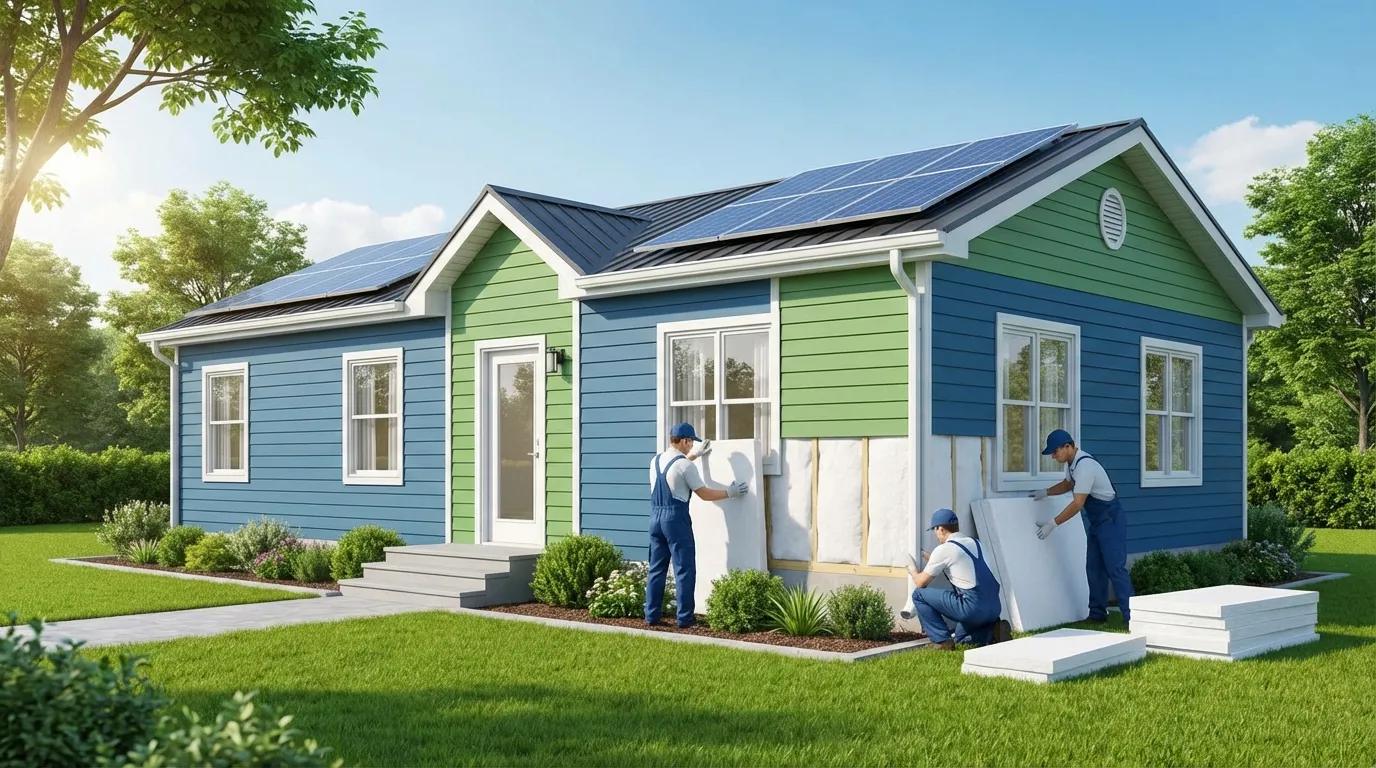
Manufactured homes lose heat 30-70% faster than site-built homes, leading to disproportionately high energy bills for their owners. This energy inefficiency isn't just a comfort issue; it's a direct financial drain, especially as utility costs continue to rise. So immediate action through insulation upgrades is the single most effective way to cut these costs, and rebate programs exist specifically to make these essential improvements affordable.
Where can manufactured home owners find insulation rebates by state and utility?
State energy offices, local utility providers, and the Database of State Incentives for Renewables & Efficiency (DSIRE) are the primary sources for manufactured home insulation rebates. These programs offer financial incentives, often up to $2,000, for specific insulation upgrades completed by approved contractors before 2025.
Homeowners can find these valuable programs by first checking their electric or gas utility's website for residential energy efficiency offers. And many states consolidate these opportunities through a central energy office or public service commission portal. The DSIRE website, funded by the U.S. Department of Energy, provides a comprehensive, searchable database of these programs, filterable by state and technology type. So finding a local program often starts with a simple search on one of these platforms. But remember that program availability and funding levels change annually. These incentives are designed to reduce the upfront cost of critical energy-saving measures, making a warmer home more accessible. Our comprehensive guide to insulation rebates covers programs for all home types.
What are the typical rebate amounts and eligible insulation types for manufactured homes?
Typical rebate amounts for manufactured home insulation range from $500 to over $2,500, covering specific upgrades like belly, roof, and wall insulation. Eligible materials include spray foam, fiberglass batts, and blown-in cellulose, with minimum R-value requirements often set at R-11 for floors and R-30 for ceilings.
The exact rebate amount often depends on the area being insulated and the total square footage. For instance, belly or floor insulation, a critical upgrade for manufactured homes, frequently receives rebates covering 50-75% of the project cost. So a $3,000 project gets a rebate of $1,500-$2,250. Roof or ceiling cavity insulation also qualifies for similar amounts, directly addressing the primary source of heat loss. But some programs offer a flat rate per square foot rather than a percentage of the cost. The key is that these programs target the most impactful areas for energy savings in a manufactured home's unique construction.
"Sealing air leaks around your home and adding insulation are two of the most cost-effective ways to improve energy efficiency and comfort in your home." — U.S. Department of Energy
Are there income limits or specific contractor requirements for manufactured home insulation rebates?
Many manufactured home insulation rebates are income-qualified, typically available to households earning at or below 80% of the Area Median Income (AMI). And these programs almost always mandate that work be completed by a licensed, insured, or program-certified contractor to ensure quality and safety standards are met.
These requirements exist to direct funds to residents who face the highest energy burdens. So applicants must often provide proof of income during the application process. The contractor requirement ensures the installation is done correctly to maximize energy savings and prevent issues like moisture buildup. But some utilities offer non-income-qualified rebates, though the incentive amounts are usually smaller. Using an uncertified contractor will automatically disqualify an otherwise eligible project from receiving a rebate. This rule protects both the homeowner and the program administrator by guaranteeing a professional-grade installation that delivers the promised energy savings of 15-25%.
How do I apply for insulation rebates and what are the current deadlines and funding statuses?
The application process for insulation rebates typically involves pre-approval, professional installation, and post-project submission of invoices and photos. Deadlines are often set for the end of the calendar year, but funding is finite and many programs close once all allocated money, often between $500,000 and $2 million, is distributed.
First, identify a program through your utility or state energy office. And then you submit an application for pre-approval, which sometimes includes a free or subsidized energy audit. After approval, you hire a program-approved contractor to perform the work. So once the insulation is installed, you submit the final invoice, project photos, and any other required documentation to the program administrator for payment. But because funding operates on a first-come, first-served basis, it's crucial to apply early in the year. Waiting until the fall means you risk finding out the program's funds for the year are already exhausted. (See also: insulation upgrade financing options.) (See also: attic insulation cost and savings.) (See also: whole home insulation upgrade rebates.) (See also: geothermal tax credit.)
Can I combine manufactured home insulation rebates with other energy efficiency programs?
Yes, homeowners can stack manufactured home insulation rebates with other local, state, and federal programs to increase total savings. This includes combining a utility rebate with federal energy tax credits, which cover 30% of the project cost up to $1,200 annually for insulation improvements.
This strategy, known as "stacking," maximizes your financial return on an energy efficiency investment. For example, a homeowner receives a $1,500 rebate from their local utility for belly insulation. The federal Energy Efficient Home Improvement Credit (Section 25C) ended for property placed in service after December 31, 2025 (IRS FS-2025-05). Federal tax credits for this work have ended, but state, local and utility rebates may still apply; check what is available at your address with the DuloCore rebate calculator. So if the total project cost was $4,000, the utility rebate reduces it to $2,500. This brings the final project cost down from $4,000 to just $1,750. In some cases, these incentives are also combined with other upgrades like heat pump rebates.
"DSIRE is the most comprehensive source of information on incentives and policies that support renewables and energy efficiency in the United States." — DSIREUSA.org
Manufactured Home Insulation Program Comparison
| Program / Incentive | Typical Rebate Amount | Eligibility Focus | Key Requirement |
|---|---|---|---|
| Utility Rebate Program | $500 - $2,500 | All customers, some income-tiered | Must use program-approved contractor |
| State Weatherization | 100% of cost covered | Low-income (e.g., <200% FPL) | Income verification required |
| Federal Tax Credit (25C (now expired, replaced by the Energy Efficient Home Improvement Credit)) | 30% of cost, up to $1,200 | All taxpayers | Must meet energy efficiency standards |
Related Reading: Learn more about Insulation Contractor Certification For Rebates and Insulation R-Value Requirements For Rebates.
Related Reading: Learn more about Insulation Rebates For Mobile Homes.
Frequently Asked Questions
What insulation upgrades qualify for rebates in manufactured homes?
Common qualifying upgrades include belly/floor insulation, roof/ceiling cavity insulation, and wall insulation. Programs often specify minimum R-value requirements for materials like fiberglass, cellulose, or spray foam to be eligible for the rebate.
How much can I save on insulation improvements for my manufactured home through rebates?
Savings typically range from $500 to over $2,500, depending on the program. Many incentives are designed to cover 50-75% of the total project cost, with some low-income programs covering 100% of the expense.
What is the process to apply for insulation rebates on a manufactured home?
The process generally involves finding an eligible program, submitting a pre-approval application, hiring a program-certified contractor to complete the work, and finally submitting the final invoice and required documentation to receive the rebate payment.
Are there specific deadlines for manufactured home insulation rebate programs?
Yes. Most programs run on an annual cycle with deadlines near the end of the calendar year (e.g., December 31). However, funding is limited, so programs often close earlier once all allocated funds are distributed on a first-come, first-served basis.
How do insulation rebates for manufactured homes compare to those for traditional homes?
Rebates for manufactured homes are often more targeted, focusing on specific areas like belly insulation that are unique to their construction. The incentive amounts are comparable, but eligibility is more frequently tied to income to assist residents with higher energy burdens.
Ready to see what you qualify for? Calculate Your Rebates
Ready to Save on Your Home Improvement?
Use our free rebate calculator to find every federal, state, and utility incentive you qualify for.
Updated on April 14, 2026. Fact-checked by DuloCore Editors. About our research team.
Check your California insulation rebate eligibility — see the programs you qualify for and the dollar amounts on our California insulation rebate finder.