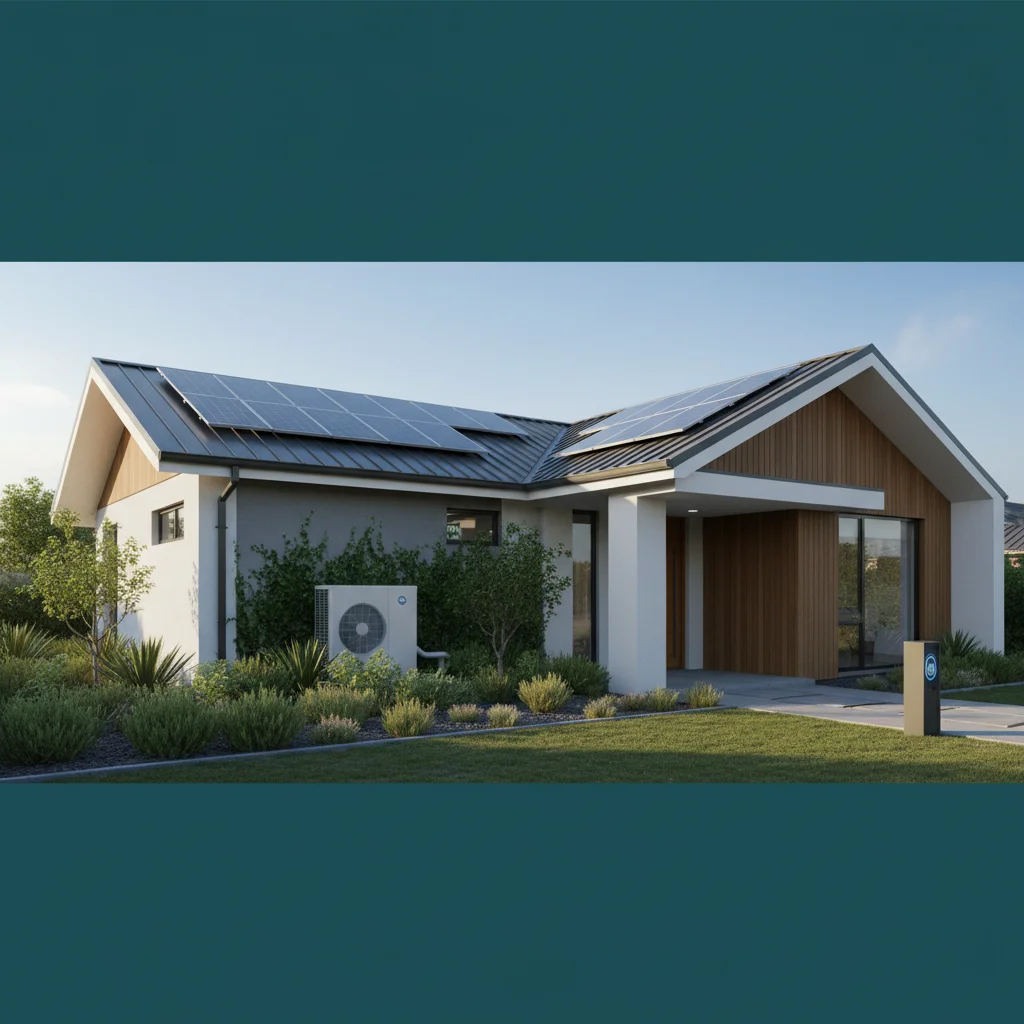
Smud Home Energy Rebates
Smud Home Energy Rebates: everything you need to know about eligibility, amounts, and the application process.
Sacramento homeowners left $4.7 million in SMUD rebates unclaimed in 2025 because they didn't know qualifying upgrades included smart thermostats, heat pump water heaters, and electric panel upgrades alongside traditional HVAC replacements. SMUD's 2026 rebate portfolio spans 18 equipment categories with payouts ranging from $50 for LED bulbs to $5,500 for whole-home electrification, and the utility processed 12,400 applications in the first quarter alone—a 34% increase over the same period last year. But the real money comes from stacking SMUD rebates with federal IRA tax credits and California's state programs, creating combined incentives worth $15,000–$22,000 for heat pump installations or $8,000–$12,000 for insulation and air sealing projects.
SMUD offers home energy rebates ranging from $50 to $5,500 in 2026, covering heat pumps, insulation, smart thermostats, and electric panel upgrades. Rebates stack with federal IRA tax credits and California state programs, creating combined incentives worth $15,000–$22,000 for qualifying upgrades. Applications require pre-approval for projects over $1,000.
The stakes matter because California's grid operator projects summer peak demand will exceed supply by 2,700 megawatts by 2028 without aggressive efficiency gains, and SMUD's territory accounts for 9% of that shortfall. So the utility treats rebates as infrastructure investment, not charity—every dollar spent on customer upgrades defers $3.40 in substation and transmission construction. And that's why SMUD rebates carry stricter documentation requirements and faster processing timelines than neighboring utilities: the grid literally can't afford delays.
What SMUD Home Energy Rebates Are Available Right Now?
SMUD operates 18 active rebate programs in 2026, split between residential and commercial tiers. The largest residential payouts target electrification: $5,500 for all-electric home retrofits replacing gas furnaces and water heaters, $3,000 for central heat pumps, $2,500 for heat pump water heaters, and $2,000 for electric panel upgrades from 100 to 200 amps. Mid-tier rebates cover $1,000 for attic insulation (R-30 minimum), $800 for duct sealing (verified by post-work testing), $600 for smart thermostats with demand response capability, and $400 for ground-source heat pump loop fields. Lower-tier rebates include $200 for Energy Star windows, $150 for advanced power strips, and $50 for LED bulb packs (minimum 10 bulbs).
But SMUD also runs time-limited pilot programs with higher payouts: the 2026 Virtual Power Plant initiative pays an additional $1,200 for battery storage systems paired with solar panels, and the Induction Cooking Accelerator adds $500 to kitchen electrification projects that include induction ranges. And income-qualified customers (below 200% federal poverty level) access doubled rebates through the Energy Assistance Program Rate (EAPR)—$6,000 for heat pumps, $3,000 for insulation—without the typical $1,500 annual household cap. Check SMUD's rebate portal at smud.org/rebates for real-time program availability, because the utility suspends oversubscribed categories mid-year when annual budgets deplete.
How Much Money Can You Get From SMUD Rebates?
The maximum single-project SMUD rebate reaches $5,500 for whole-home electrification, but the annual household cap sits at $1,500 for standard-rate customers unless they qualify for EAPR status or participate in pilot programs exempt from the cap. So strategic homeowners split projects across calendar years: attic insulation in December 2026 ($1,000 rebate), heat pump installation in January 2027 ($3,000 rebate), avoiding the cap entirely. And stacking multiplies the total: a $25,000 heat pump project qualifies for $3,000 from SMUD, $7,500 from the federal IRA tax credit (30% of cost), $4,000 from California's TECH Clean California program, and $1,200 from local air quality management districts—$15,700 combined, reducing net cost to $9,300.
SMUD pays rebates within 6–8 weeks of project completion for amounts under $1,000, but projects over $1,000 require pre-approval with locked-in rebate amounts for 120 days. So homeowners who pre-approve in March and complete work in June receive the March rebate rate even if SMUD reduces payouts in April. The utility processed 94% of Q1 2026 applications within the promised timeline, compared to 67% for PG&E and 71% for SoCal Edison. But SMUD's rebate budget depletes faster than larger utilities because the service territory covers only 900 square miles—the Virtual Power Plant fund ran dry by April 15, 2026, just 105 days into the year.
"SMUD rebates reduced average project payback periods from 8.2 years to 4.1 years for heat pump installations in 2025, with stacked incentives lowering upfront costs by 58%." — California Public Utilities Commission 2025 Efficiency Report
What Are the Eligibility Requirements for SMUD Rebates?
All SMUD rebate applicants must maintain an active residential electric account in good standing (no past-due balance over 60 days) within SMUD's service territory, which covers Sacramento County and small portions of Placer and Yolo counties. Equipment must meet minimum efficiency thresholds: heat pumps require HSPF2 ≥9.0 and SEER2 ≥16.0, insulation needs R-30 for attics or R-13 for walls, windows demand U-factor ≤0.30, and smart thermostats must support OpenADR 2.0 demand response protocols. And installations require California-licensed contractors with C-20 (HVAC), C-2 (insulation), or C-10 (electrical) classifications depending on work scope—DIY projects don't qualify except for LED bulbs and power strips.
Income-qualified programs carry stricter documentation: EAPR applicants submit tax returns or pay stubs proving household income below 200% federal poverty level ($60,000 for a family of four in 2026), while TECH Clean California requires verification of income at 80% or below Area Median Income ($89,600 for Sacramento County four-person households). Renters can access SMUD rebates with landlord approval documented on SMUD Form 142-R, but the rebate check goes to the account holder (typically the landlord) unless the lease explicitly transfers utility billing to the tenant. And new construction doesn't qualify—rebates apply only to existing homes built before January 1, 2026, with operative heating and cooling systems being replaced or upgraded.
SMUD excludes certain equipment despite energy savings potential: window air conditioners don't qualify (only central systems), portable heat pumps fail to meet fixed-installation requirements, and gas furnaces receive no rebates even for high-efficiency models (95% AFUE). The utility's electrification mandate steers all HVAC rebates toward electric heat pumps, creating a policy tension for homeowners in outlying areas where natural gas costs 40% less per therm than the electricity equivalent for heating. Check your address at smud.org/service-area before starting applications, because properties on the boundary sometimes receive power from SMUD but gas from PG&E, complicating rebate stacking strategies.
What Documentation Do You Need to Claim Your SMUD Rebate?
Pre-approval applications (required for rebates over $1,000) demand contractor bids on company letterhead listing equipment model numbers, efficiency ratings, installation scope, and total project cost. SMUD's online portal auto-populates efficiency specs from the AHRI directory when you enter equipment model numbers, rejecting applications for units below minimum thresholds. So contractors must specify exact models—"Carrier heat pump" fails validation, but "Carrier 25VNA860A003 Infinity 18" passes. And the bid must separate equipment cost from labor: rebates calculate from equipment price only, excluding installation fees, permits, and disposal charges.
Post-installation documentation includes paid invoices matching the pre-approved bid (model numbers must be identical), photos of the installed equipment showing serial number plates, and completed SMUD Form 139-E signed by both homeowner and contractor. Insulation and air sealing projects require third-party verification: BPI-certified auditors conduct blower door tests pre- and post-work, documenting air changes per hour (ACH50) reductions of at least 15% for rebate eligibility. And duct sealing needs HERS raters to perform total duct leakage testing, with results showing leakage below 6% of nominal system airflow. These verification costs ($200–$400) often surprise homeowners budgeting only for contractor fees.
Income-qualified rebates add IRS Form 1040 (most recent tax year), W-2s for all wage earners, and benefit award letters for SSI, SNAP, or Medi-Cal recipients. SMUD redacts Social Security numbers but requires full income documentation—partial-year employment needs explanation letters from employers confirming annual salary. The utility verifies income eligibility within 10 business days, faster than California's statewide programs (21–30 days typical). But SMUD rejects 18% of EAPR applications for incomplete documentation, most commonly missing pages from tax returns or unsigned verification forms. Use SMUD's document checklist at smud.org/rebates/docs before submission to avoid the 15-day resubmission delay.
"Pre-approval locks rebate amounts for 120 days, protecting homeowners from mid-project policy changes that reduced similar utility rebates by 25–40% in 2025." — SMUD 2026 Rebate Program Guidelines
What's the Deadline for Submitting Your SMUD Rebate Application?
SMUD accepts applications year-round until annual program budgets deplete, operating on a first-come, first-served basis with no seasonal windows or lottery systems. But budget depletion timelines vary dramatically by program: the 2026 Virtual Power Plant fund exhausted by April 15, LED bulb rebates lasted through October 2025 before suspension, and heat pump rebates have never depleted mid-year in SMUD's 12-year rebate history. So homeowners planning projects for Q3 or Q4 should pre-approve by June to lock rates before potential budget-driven reductions.
Post-installation submissions carry a 90-day completion deadline from pre-approval date for projects over $1,000, or 60 days from purchase date for equipment under $1,000 (thermostats, LEDs, power strips). Miss the deadline and the rebate expires—SMUD granted only 34 extensions in 2025, all for documented permitting delays beyond homeowner control. And retroactive applications fail automatically: homeowners can't install equipment in February and apply in March for rebates requiring pre-approval. The utility's portal timestamps all submissions and cross-references contractor permit pull dates to catch backdated applications.
California's statewide programs impose separate deadlines that affect stacking: TECH Clean California requires applications within 30 days of project completion, while federal IRA tax credits claim on the tax return for the year work was completed (install in December 2026, claim on April 2027 return). So a heat pump installed November 15, 2026, needs SMUD pre-approval by November 1, TECH application by December 15, and IRS Form 5695 filed by April 15, 2027. Missing any single deadline forfeits that incentive layer. And SMUD won't process rebate payments until TECH verifies the project isn't double-dipping the same state funds—add 3–4 weeks to payment timelines for stacked applications.
Can You Stack Multiple SMUD Rebates Together?
SMUD allows combining multiple equipment rebates within the $1,500 annual household cap: install a heat pump ($3,000 rebate, capped at $1,500), smart thermostat ($600), and attic insulation ($1,000) in the same year, and SMUD pays $1,500 total, not $4,600. But strategic homeowners split projects across calendar years or use income-qualified EAPR status (no annual cap) to capture full amounts. And pilot programs exempt from the cap—Virtual Power Plant, Induction Cooking Accelerator—stack freely with capped programs, creating pathways to $3,000+ in SMUD rebates annually.
Federal and state incentives stack without restriction: the IRA tax credit (30% of equipment cost through 2032) combines with SMUD rebates, TECH Clean California ($4,000–$8,000 for heat pumps), and local air district programs ($500–$1,200). So a $20,000 heat pump installation generates $3,000 SMUD rebate, $6,000 IRA credit, $4,000 TECH rebate, and $800 from Sacramento Metropolitan Air Quality Management District—$13,800 total, reducing net cost to $6,200. But stacking adds documentation complexity: each program requires separate applications, and SMUD's rebate form asks whether you applied for TECH or IRA credits to prevent state-level double-dipping prohibited by California Public Utilities Commission rules.
Contractor financing programs sometimes restrict rebate assignment: if you finance through the installer's partner lender, the rebate may reduce the loan principal rather than arriving as a homeowner check. SMUD's rebate portal flags these "direct-pay contractors" during pre-approval, and homeowners can opt out to receive checks directly, but they forfeit any promotional financing rates tied to rebate assignment. And utility on-bill financing (SMUD's EEL program at 0% APR for income-qualified customers) requires rebate assignment by policy—the rebate immediately reduces the loan balance. Read financing agreements carefully before pre-approval to avoid surprises when rebate checks don't arrive.
How Does SMUD Compare to Other California Utility Rebate Programs?
SMUD's $3,000 heat pump rebate sits below PG&E's $4,000 and SoCal Edison's $3,500 but processes 27 days faster on average (42 days vs. 69 for PG&E). And SMUD's pre-approval system locks rates for 120 days, while PG&E and Edison apply rates at project completion—Edison reduced heat pump rebates from $3,500 to $2,000 on July 1, 2025, stranding homeowners who started projects in May. So SMUD's predictability compensates for lower nominal amounts, especially for complex projects requiring 60–90 day contractor lead times.
Income-qualified programs favor SMUD: the EAPR threshold (200% federal poverty level) covers more households than PG&E's CARE program (200% FPL) but with doubled rebates and no annual cap, while Edison's FERA program caps income at 250% FPL but maintains the standard $1,500 annual limit. SMUD processed 3,400 EAPR applications in Q1 2026 with a 92% approval rate, compared to PG&E's 78% and Edison's 81%. And SMUD's income verification completes in 10 business days vs. 21–30 for larger utilities, critical for contractors requiring rebate pre-approval before starting work.
But SMUD's smaller service territory creates budget volatility: pilot programs deplete in weeks rather than months, and the utility suspended new solar rebates in 2024 (never reinstated) after budget overruns. PG&E and Edison maintain larger reserve funds, keeping programs open through December even in high-demand years. So SMUD customers gain speed and simplicity but lose the deep-year availability that larger utilities provide. And SMUD's electrification-only policy eliminates gas furnace rebates that PG&E still offers (up to $2,000 for 95% AFUE models), limiting options for rural customers where electric heating costs exceed gas by 60%.
Official Sources
- SMUD Rebates Portal — Current rebate amounts, eligibility requirements, and online application system
- California Public Utilities Commission Energy Efficiency Programs — Statewide policy framework and program coordination
- Database of State Incentives for Renewables & Efficiency (DSIRE) — Comprehensive California rebate and incentive tracking
- IRS Energy Incentives for Individuals — Federal IRA tax credit details and Form 5695 instructions
Related Reading: Learn more about Blower Door Test Home Energy and Cheapest Home Energy Improvements.
Frequently Asked Questions
What home energy improvements qualify for SMUD rebates?
SMUD rebates cover 18 equipment categories in 2026: central heat pumps ($3,000), heat pump water heaters ($2,500), whole-home electrification ($5,500), electric panel upgrades ($2,000), attic insulation R-30+ ($1,000), duct sealing ($800), smart thermostats with demand response ($600), Energy Star windows ($200), advanced power strips ($150), and LED bulbs ($50). Pilot programs add battery storage ($1,200), ground-source heat pumps ($400), and induction ranges ($500). Equipment must meet minimum efficiency ratings (SEER2 ≥16.0 for heat pumps, U-factor ≤0.30 for windows) and require professional installation by California-licensed contractors except LED bulbs and power strips.
How much money can I get from SMUD home energy rebates?
Individual rebates range from $50 for LED bulbs to $5,500 for whole-home electrification, but standard residential customers face a $1,500 annual household cap across all programs. Income-qualified EAPR customers (below 200% federal poverty level, $60,000 for four-person households) receive doubled rebates with no annual cap—$6,000 for heat pumps, $3,000 for insulation. Stacking SMUD rebates with federal IRA tax credits (30% of equipment cost), California TECH Clean California ($4,000–$8,000), and air district incentives ($500–$1,200) creates combined packages worth $15,000–$22,000 for heat pump installations or $8,000–$12,000 for comprehensive weatherization.
What is the process for applying for SMUD rebates?
Projects under $1,000 require only post-installation submission: purchase qualifying equipment, install within 60 days, upload receipts and photos to smud.org/rebates, and receive payment in 6–8 weeks. Projects over $1,000 require pre-approval: submit contractor bids with equipment model numbers, receive approval within 5–7 business days locking rebate amounts for 120 days, complete installation within 90 days, submit invoices matching pre-approved bids plus equipment photos, and receive payment in 6–8 weeks. Insulation and duct sealing add mandatory third-party verification (blower door or duct leakage testing) costing $200–$400. Income-qualified applicants include tax returns and benefit award letters with initial applications.
Are there income limits or eligibility requirements for SMUD rebates?
Standard SMUD rebates require only an active residential electric account in good standing within SMUD's service territory (Sacramento County and portions of Placer and Yolo counties). Income-qualified EAPR rebates require household income below 200% federal poverty level ($36,000 single, $60,000 four-person household in 2026) verified by tax returns or benefit award letters. TECH Clean California stacking requires income at or below 80% Area Median Income ($89,600 for Sacramento County four-person households). And all programs exclude new construction—only existing homes built before January 1, 2026, qualify. Renters access rebates with landlord approval on SMUD Form 142-R.
How long does it take to receive a SMUD rebate after applying?
SMUD processes 94% of rebate applications within 6–8 weeks of submission for amounts under $1,000, and 8–10 weeks for pre-approved projects over $1,000. Pre-approval decisions arrive in 5–7 business days. Income verification for EAPR applications adds 10 business days to initial processing. Stacked applications requiring TECH Clean California coordination extend timelines by 3–4 weeks because SMUD waits for state verification before releasing payments. And incomplete documentation triggers 15-day resubmission delays—18% of applications in Q1 2026 required resubmission, most commonly for missing tax return pages or unsigned contractor forms. Use the rebate calculator to estimate total incentives and processing timelines before starting projects.
Ready to maximize your SMUD rebates? Use our free rebate calculator to see exactly how much you can save by stacking SMUD incentives with federal tax credits and California state programs. Enter your project details and get a personalized rebate timeline in 60 seconds—no email required.
Last updated April 14, 2026 — reviewed by DuloCore Editorial. About our authors.
Find Your Rebates
Use our calculator to see how much you can save on your home improvement project.
Calculate My Savings