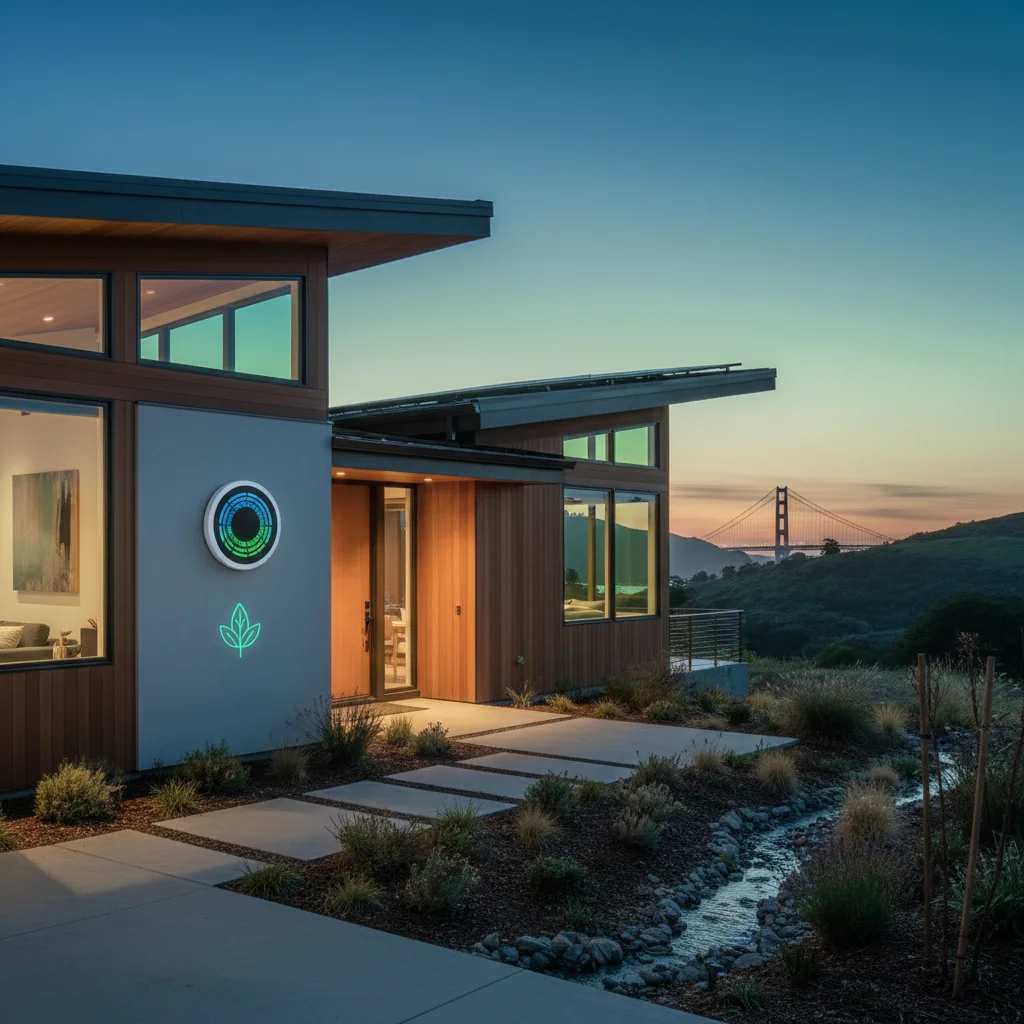
Bay Area homeowners upgraded 47,000 homes with smart thermostats in 2025, claiming $8.2 million in combined utility rebates and federal tax credits. And the savings stack higher in 2026: PG&E expanded its midstream rebate program to cover 12 additional ENERGY STAR models. The federal Energy Efficient Home Improvement Credit (Section 25C) ended for property placed in service after December 31, 2025 (IRS FS-2025-05).
What Smart Thermostat Rebates Are Available in the Bay Area Right Now?
PG&E offers $75 instant rebates through participating retailers for ENERGY STAR-certified smart thermostats in 2026. Bay Area Municipal Utility District (BAMUD) provides $50 mail-in rebates for residential customers who install qualifying models. Silicon Valley Clean Energy delivers $100 rebates for customers in Cupertino, Los Altos, Mountain View, and Sunnyvale. The federal Energy Efficient Home Improvement Credit (Section 25C) ended for property placed in service after December 31, 2025 (IRS FS-2025-05). Federal tax credits for this work have ended, but state, local and utility rebates may still apply; check what is available at your address with the DuloCore rebate calculator.
But these programs operate on first-come, first-served funding cycles. PG&E allocated $4.3 million for 2026 smart thermostat rebates, and Silicon Valley Clean Energy exhausted its 2025 budget by November 15. So homeowners who delay applications risk missing current-year funding.
How Much Money Can You Actually Save With Bay Area Smart Thermostat Rebates?
Bay Area homeowners save $127-$184 annually on heating and cooling costs after installing ENERGY STAR smart thermostats, according to Pacific Gas & Electric's 2025 evaluation study. A typical installation costs $220-$350 including the device and professional wiring. Stack a $75 PG&E rebate with a $100 Silicon Valley Clean Energy rebate, and the net cost drops to $45-$175.
And the payback period shortens to 3-14 months based on household size and climate zone. Homes in inland valleys like Livermore and San Ramon see faster returns because temperature swings demand more aggressive HVAC cycling. Coastal homes in San Francisco and Pacifica experience slower payback timelines due to milder year-round temperatures that require less heating and cooling intervention.
Use our free rebate calculator to estimate your combined savings based on your utility provider and installation details.
What Are the Eligibility Requirements and Documentation You'll Need?
PG&E requires proof of ENERGY STAR certification, a receipt showing purchase date and model number, and installation at a service address matching the account holder's billing records. Silicon Valley Clean Energy demands a completed rebate application submitted within 90 days of purchase, plus photographs of the installed thermostat showing the model label and wall placement. BAMUD requests a copy of the product UPC barcode and an electrician's invoice if professional installation was used.
Form 5695 only covers qualifying work completed by December 31, 2025 and claimed on a 2025 return; the federal 25C and 25D credits ended after that date (IRS FS-2025-05).
Renters face additional barriers: most utility rebate programs require the applicant to be the account holder of record, which excludes tenants whose landlords pay utility bills directly. Check your lease agreement and utility account status before purchasing equipment.
What's the Application Deadline and When Will You Receive Your Rebate?
PG&E accepts applications year-round until funds are exhausted, processing rebates within 6-8 weeks of approval. Silicon Valley Clean Energy imposes a December 15, 2026 deadline for all 2026 purchases, with checks mailed 8-10 weeks after application review. BAMUD requires applications within 180 days of purchase and processes payments quarterly—applications submitted January-March receive checks in May, April-June applications pay out in August.
But funding depletion creates urgency. PG&E exhausted its 2025 smart thermostat budget by October 18, leaving late-year applicants empty-handed. So homeowners who purchase equipment in Q4 2026 face higher risk of missing rebate windows even if they meet all eligibility criteria.
Can You Stack Multiple Rebates and Programs Together?
PG&E's $75 rebate combines with Silicon Valley Clean Energy's $100 rebate on the same installation; federal tax credits no longer apply (IRS FS-2025-05). But stacking multiple utility rebates requires serving customers of overlapping providers, which rarely occurs. Silicon Valley Clean Energy customers receive electricity from SVCE but gas service from PG&E, allowing dual rebate claims if both utilities fund smart thermostat programs in the same year.
And income-qualified programs prohibit stacking. PG&E's Energy Savings Assistance Program provides free smart thermostats for households earning below 200% of federal poverty guidelines, but participants forfeit eligibility for standard rebate programs. So families must choose between free equipment with installation included or self-funded purchases that generate smaller rebate refunds.
The federal Energy Efficient Home Improvement Credit (Section 25C) ended for property placed in service after December 31, 2025 (IRS FS-2025-05). Learn more about layering incentives in our guide to energy tax credits.
Do You Need Pre-Approval Before Installing Your Smart Thermostat?
PG&E, Silicon Valley Clean Energy, and BAMUD don't require pre-approval—homeowners purchase and install equipment first, then submit rebate applications with proof of purchase and installation. But skipping pre-purchase research creates risk: not all smart thermostats carry ENERGY STAR certification, and non-qualifying models forfeit rebate eligibility even if they offer identical features.
And some programs impose installer restrictions. Utility rebates may require licensed electrician invoices to prove compliance with local building codes. San Francisco requires electrical permits for hardwired thermostat installations in buildings constructed before 1985, adding $200-$350 in permit and inspection fees that reduce net savings.
So homeowners should verify model eligibility before purchasing. PG&E publishes a qualifying products list at pge.com/smartthermostat, updated quarterly to reflect new ENERGY STAR certifications. Silicon Valley Clean Energy maintains a separate approved models database that excludes some PG&E-qualifying devices. Cross-reference both lists before buying to ensure maximum rebate capture.
Official Sources
- ENERGY STAR Certified Smart Thermostats — Federal database of qualifying models and estimated savings
- DSIRE USA California Incentives — Comprehensive state and utility rebate program directory
- IRS Energy Incentives for Individuals — Federal tax credit guidance and Form 5695 instructions (note: the federal 25C and 25D credits ended for projects completed after December 31, 2025)
Related Reading: Learn more about Thermostat Rebates Bay Area.
Related Reading: Learn more about Smart Thermostat Incentives Bay Area.
Frequently Asked Questions
What smart thermostat models qualify for Bay Area rebates?
PG&E accepts all ENERGY STAR-certified smart thermostats including Nest Learning Thermostat (4th gen), Ecobee SmartThermostat Premium, Honeywell Home T9, Emerson Sensi Touch 2, and Lux Kono Smart. Silicon Valley Clean Energy maintains a narrower list of 12 approved models, excluding some Wi-Fi-only devices that lack occupancy sensors. And BAMUD requires thermostats with both remote access capability and 7-day programmable scheduling—basic programmable thermostats without smart features don't qualify even if they reduce energy consumption.
How much money can you get back from a smart thermostat rebate in the Bay Area?
Bay Area homeowners receive $50-$100 from utility providers; federal tax credits no longer apply (IRS FS-2025-05). A $250 thermostat with $75 professional installation generates $75 from PG&E and $100 from Silicon Valley Clean Energy (if eligible). Maximum combined savings reach $175 on a $325 installation, reducing net cost to $150.
Are smart thermostats eligible for federal tax credits in 2026?
Smart thermostats don't qualify for federal tax credits in 2026. Form 5695 only covers qualifying work completed by December 31, 2025 and claimed on a 2025 return; the federal 25C and 25D credits ended after that date (IRS FS-2025-05). The federal Energy Efficient Home Improvement Credit (Section 25C) ended for property placed in service after December 31, 2025 (IRS FS-2025-05). Review our heat pump rebates guide for bundling strategies. (Note: Federal tax credit percentages and availability are subject to change; the 30% Residential Clean Energy Credit under Section 25D expired December 31, 2025. Verify current incentives at energy.gov.)
What is the deadline to apply for Bay Area smart thermostat rebates?
Silicon Valley Clean Energy requires applications by December 15, 2026 for equipment purchased in 2026. PG&E accepts applications year-round until the $4.3 million annual budget is exhausted, typically in October or November. BAMUD demands applications within 180 days of purchase with no annual deadline. Form 5695 only covers qualifying work completed by December 31, 2025 and claimed on a 2025 return; the federal 25C and 25D credits ended after that date (IRS FS-2025-05).
Do I need an electrician to install a smart thermostat to get the rebate?
PG&E and BAMUD accept DIY installations for battery-powered smart thermostats that don't require hardwiring modifications. But hardwired installations in homes built before 1985 trigger San Francisco electrical permit requirements that mandate licensed electrician involvement. Silicon Valley Clean Energy requires professional installation invoices for rebates exceeding $75, disqualifying self-installed thermostats from full rebate amounts. Compare installation costs in our smart thermostat rebates overview.
Ready to claim your smart thermostat rebate? Use DuloCore's free rebate calculator to discover your total savings from utility programs and energy bill reductions. Enter your ZIP code and utility provider to see available rebates in under 60 seconds.
Last reviewed: April 14, 2026. Reviewed by DuloCore Energy Specialists. About the team.
Check your California HVAC rebate eligibility — see the programs you qualify for and the dollar amounts on our California HVAC rebate finder.