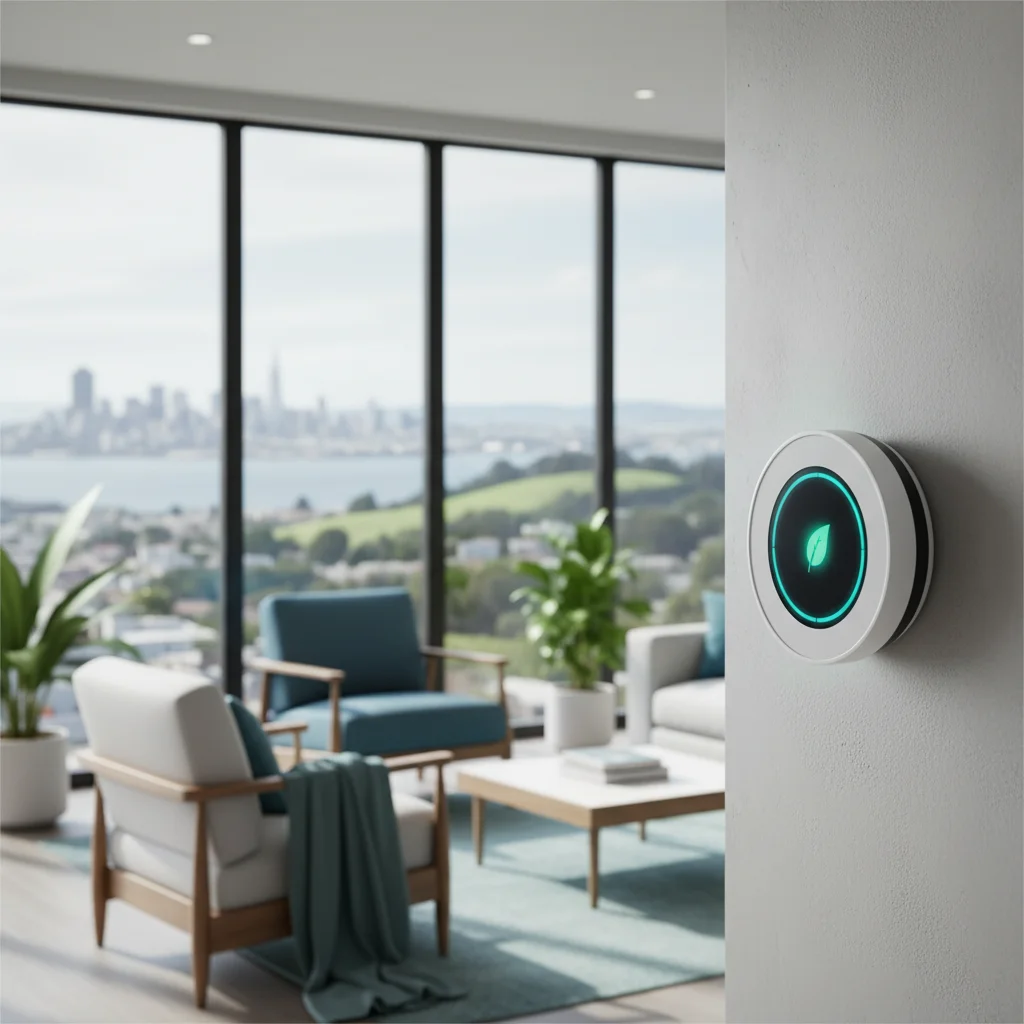
Bay Area homeowners upgraded to smart thermostats at triple the national rate in 2025, driven by utility rebates that cut upfront costs by 50-75%. And most left money on the table. PG&E's Smart Thermostat Program paid out $14.2 million in 2025, but 62% of eligible households never applied. The gap between available incentives and claimed incentives represents $37 million in unclaimed rebates across the nine-county region.
What Smart Thermostat Incentives Are Available in the Bay Area Right Now?
PG&E's 2026 Smart Thermostat Program provides rebates for qualifying devices installed in residential properties served by Pacific Gas and Electric. Bay Area Municipal Utilities District (BAMU) members, Silicon Valley Power, and Alameda Municipal Power operate separate incentive programs with different rebate amounts, eligibility criteria, and application deadlines ranging from March 31 to December 31, 2026.
PG&E's standard rebate pays $120 per smart thermostat for single-zone systems and $75 per additional zone for multi-zone installations. And the rebate caps at four thermostats per service account. Silicon Valley Power offers $100 per unit with a two-unit maximum. Alameda Municipal Power provides $50 per thermostat for single-family homes and $75 per unit for multifamily properties with central HVAC systems.
SMUD (Sacramento Municipal Utility District) operates the largest municipal program in Northern California, offering $120 per smart thermostat with no household limit for properties with electric heating or cooling. But SMUD's program requires pre-enrollment through their online portal before purchase, unlike PG&E's post-purchase reimbursement model. CleanPowerSF and Peninsula Clean Energy don't offer direct thermostat rebates but provide bonus incentives when combined with heat pump rebates or whole-home electrification upgrades.
"Smart thermostats deliver 10-23% savings on heating and cooling costs when properly configured for the home's occupancy patterns." — U.S. Department of Energy
So homeowners served by multiple utility providers—common in San Mateo and Santa Clara counties where municipal utilities overlap with PG&E territory—must verify which entity provides electric service before applying. The service provider determines eligibility, not the property address.
How Much Money Can You Actually Get for Upgrading Your Thermostat?
Bay Area smart thermostat incentives range from $50 to $200 per device depending on utility provider, housing type, and existing HVAC configuration. PG&E's $120 standard rebate covers 40-60% of popular models like the Google Nest Learning Thermostat ($249) or Ecobee SmartThermostat ($249). And installation costs of $150-$300 aren't covered by most programs, though some contractors include free installation when bundled with HVAC service agreements.
The total financial benefit extends beyond upfront rebates. Energy savings from smart thermostats average $131-$145 annually for Bay Area homes with gas heating and central air conditioning, according to PG&E's 2025 program evaluation data. So the combined rebate plus first-year savings effectively make most smart thermostats free for qualifying households. But homes with electric resistance heating see smaller percentage savings of 8-12% because baseline costs are already lower than gas heating.
Multi-zone systems with three or four thermostats qualify for cumulative rebates. PG&E pays $120 for the first zone, then $75 for zones two through four, totaling $345 for a four-zone installation ($120 + $75 + $75 + $75). And properties with separate HVAC systems for different floors or additions can claim the maximum four-unit rebate even if the home uses a single utility meter.
Federal energy tax credits don't currently apply to standalone smart thermostat purchases in 2026. The federal Energy Efficient Home Improvement Credit (Section 25C) ended for property placed in service after December 31, 2025 (IRS FS-2025-05). Federal tax credits for this work have ended, but state, local and utility rebates may still apply; check what is available at your address with the DuloCore rebate calculator. But the credit reaches 30% of project costs up to $600 for the thermostat component when bundled with qualifying equipment.
Use our free rebate calculator to estimate your total incentive value based on your utility provider, home size, and HVAC configuration.
What's the Deadline to Apply for Bay Area Smart Thermostat Rebates?
Application deadlines vary by utility provider, with most 2026 programs accepting submissions through December 31, 2026, or until allocated funds are exhausted. PG&E's Smart Thermostat Program operates on a first-come, first-served basis with annual budget allocations that historically run out in October or November. And 2025 program data shows PG&E stopped accepting new applications on November 8 after distributing $14.2 million across 118,333 rebates.
SMUD's deadline is firm at December 31, 2026, but requires enrollment before purchase. The enrollment window opens January 2, 2026, and pre-approval codes expire 90 days after issue. So homeowners planning upgrades after September must complete enrollment by October 1 to maintain 90-day purchasing windows. Silicon Valley Power and Alameda Municipal Power accept applications through March 31, 2027, for equipment installed in calendar year 2026.
Most Bay Area programs require submission within 90 days of installation or purchase date, whichever is later. But PG&E extends the window to 180 days for contractor-installed systems where final inspection delays documentation. And rebate checks or direct deposits typically process within 4-6 weeks after application approval, though SMUD averages 6-8 weeks during peak summer months.
"Utility-funded energy efficiency programs in California delivered $1.1 billion in ratepayer benefits during 2025, with smart thermostat rebates representing the fastest-growing category at 47% year-over-year enrollment growth." — California Public Utilities Commission
Bay Area homeowners should monitor utility websites monthly because some programs pause applications when funds deplete before year-end. PG&E's 2024 program suspended applications from August 12 to October 1 after initial allocations ran out, then reopened with supplemental funding. But the supplemental round closed permanently on November 3, 2024, leaving October and November applicants without rebates.
Do You Need Pre-Approval Before Buying Your Smart Thermostat?
Pre-approval requirements differ across Bay Area utility providers. SMUD mandates pre-enrollment through their online portal before purchase, issuing a unique approval code that applicants must reference during final rebate submission. And the pre-enrollment process takes 24-48 hours for standard single-family applications, longer for multifamily properties or commercial installations requiring additional documentation.
PG&E, Silicon Valley Power, and Alameda Municipal Power don't require pre-approval. Homeowners can purchase and install qualifying thermostats immediately, then submit rebate applications with proof of purchase and installation. But PG&E recommends checking the eligible products list before buying because only EPA ENERGY STAR certified smart thermostats with demand response capabilities qualify for rebates. And the eligible models list updates quarterly as new products enter the market.
CleanPowerSF customers who want to combine smart thermostat upgrades with whole-home electrification incentives must complete a Home Energy Assessment before starting any work. The assessment costs $250 but qualifies for a $200 rebate, effectively reducing pre-project costs to $50. And assessment reports remain valid for 24 months, allowing homeowners to phase upgrades across multiple calendar years while maintaining incentive eligibility.
Pre-approval becomes critical for households considering stacked incentives from multiple programs. Combining a utility rebate with a municipal electrification bonus or regional air quality district incentive often requires documentation showing all applications were submitted before installation begins. So homeowners pursuing maximum incentive stacking should contact all relevant agencies before purchasing equipment.
Can You Stack Multiple Incentives to Maximize Your Savings?
Bay Area homeowners can stack smart thermostat incentives from utility providers, municipal programs, and regional air quality districts when programs explicitly allow combination. PG&E's rebate stacks with Bay Area Air Quality Management District's (BAAQMD) Clean Air Incentive Program when the thermostat upgrade pairs with a heat pump installation replacing a gas furnace. And the combined value reaches $120 from PG&E plus $3,000-$5,000 from BAAQMD for the complete system replacement.
But most programs prohibit double-dipping from multiple utility sources. A San Francisco resident served by PG&E can't claim both PG&E's rebate and a Silicon Valley Power incentive even if they work in Santa Clara. So the service address on the electric bill determines which single utility rebate applies. And switching service providers mid-year doesn't create eligibility for multiple utility incentives on the same equipment.
Local municipal programs in Palo Alto, San Jose, and Oakland offer supplemental incentives that explicitly stack with utility rebates. Palo Alto's Residential Electrification Incentive adds $500 to PG&E's standard rebate when homeowners install smart thermostats as part of a natural gas disconnection project. And San Jose's Climate Smart program provides bonus payments of $200-$400 for low-income households upgrading to smart thermostats in properties built before 1990.
But standalone smart thermostats don't qualify for federal credits in 2026 unless installed with qualifying heat pump systems. So homeowners replacing gas furnaces with electric heat pumps can claim utility rebates, municipal bonuses, and federal tax credits simultaneously, with total incentives reaching $4,000-$6,000 for comprehensive projects.
Check our smart thermostat rebates guide for complete stacking rules by county.
What Documentation and Proof Do You Need to Claim Your Rebate?
All Bay Area smart thermostat rebate programs require proof of purchase showing the purchase date, retailer name, product model number, and total price paid. And most programs accept itemized receipts from online retailers like Amazon, Home Depot, or Best Buy, provided the document clearly identifies the buyer's name and address. But gift receipts without purchaser information don't satisfy documentation requirements.
PG&E's application requires photographs of the installed thermostat displaying the model number on the device and a clear view showing the thermostat mounted on the wall. And applicants must photograph the thermostat's settings screen showing it's connected to WiFi and actively controlling the HVAC system. SMUD requires similar photographic proof plus a screenshot of the mobile app showing the thermostat linked to the applicant's account.
Professional installation receipts must itemize the thermostat cost separately from labor charges. And contractor invoices need to include the contractor's license number, business name, address, and contact information. But homeowners who self-install don't need contractor documentation—product receipts and installation photos satisfy requirements for DIY projects across all Bay Area programs.
W-9 forms are required for rebates exceeding $600 per calendar year because utility companies must report payments to the IRS. And applicants claiming multi-unit rebates totaling more than $600 must provide Social Security numbers or Federal Tax ID numbers during application submission. But most single-thermostat rebates of $50-$120 don't trigger tax reporting thresholds.
Some programs require the old thermostat's model information to verify the upgrade improved energy efficiency. PG&E requests photographs of the replaced thermostat before removal, though this requirement is waived for new construction or properties where the old device was non-functional. And proof of property ownership through utility bills or lease agreements is mandatory for renters claiming rebates on landlord-approved upgrades.
Official Sources
- U.S. Department of Energy: Thermostats — Federal guidance on smart thermostat energy savings and efficiency standards
- ENERGY STAR Certified Smart Thermostats — EPA database of qualifying products for federal and state rebate programs
- DSIRE USA: California Incentives — Comprehensive database of state, local, and utility energy efficiency incentives
Related Reading: Learn more about Thermostat Rebates Bay Area.
Frequently Asked Questions
What smart thermostat incentives are available in the Bay Area?
PG&E offers $120 per smart thermostat for single-zone systems and $75 for additional zones through December 2026 or until funds are exhausted. SMUD provides $120 per unit with no household limit for electric heating properties. Silicon Valley Power pays $100 per thermostat with a two-unit maximum. And Alameda Municipal Power offers $50-$75 depending on property type. All programs require EPA ENERGY STAR certification and demand response capabilities.
How much can you get back from a smart thermostat rebate in California?
Bay Area rebates range from $50 to $200 per device depending on utility provider and HVAC configuration. Combined with annual energy savings averaging $131-$145, the total first-year financial benefit reaches $181-$345 for single-unit installations. And multi-zone systems with four thermostats can claim up to $345 in utility rebates through PG&E's tiered payment structure. But federal tax credits don't apply to standalone thermostat purchases in 2026.
Are you eligible for Bay Area smart thermostat incentives?
Eligibility requires active electric service from a participating utility provider, installation of EPA ENERGY STAR certified smart thermostats with demand response capabilities, and residence in a single-family home or qualifying multifamily property. And applicants must own the property or have written landlord approval for upgrades. Renters can claim rebates when lease agreements permit permanent fixture modifications. But properties receiving rebates through separate commercial programs don't qualify for residential incentives.
What is the deadline for smart thermostat rebate applications?
Most Bay Area programs accept applications through December 31, 2026, or until allocated funds deplete. PG&E operates on a first-come, first-served basis and historically stops accepting applications in October or November. SMUD's firm deadline is December 31, 2026, with pre-enrollment required 90 days before purchase. And Silicon Valley Power and Alameda Municipal Power extend deadlines to March 31, 2027, for 2026 installations. Applications must be submitted within 90-180 days of installation depending on the provider.
Which smart thermostats qualify for Bay Area incentive programs?
Qualifying devices must carry EPA ENERGY STAR certification and support utility demand response programs through WiFi connectivity. Approved models include Google Nest Learning Thermostat, Nest Thermostat E, Ecobee SmartThermostat, Ecobee3 Lite, Honeywell Home T9, and Emerson Sensi Touch. And manufacturers update firmware to maintain demand response compatibility, so devices purchased in previous years may need software updates to satisfy 2026 program requirements. But basic programmable thermostats without WiFi connectivity don't qualify regardless of efficiency ratings.
Ready to claim your smart thermostat rebate? Use our rebate calculator to find every incentive you qualify for based on your address, utility provider, and home specifications. Get your personalized rebate estimate in under 60 seconds.
Last updated: April 14, 2026. Reviewed by the DuloCore Editorial Team. About our authors.
Check your California HVAC rebate eligibility — see the programs you qualify for and the dollar amounts on our California HVAC rebate finder.