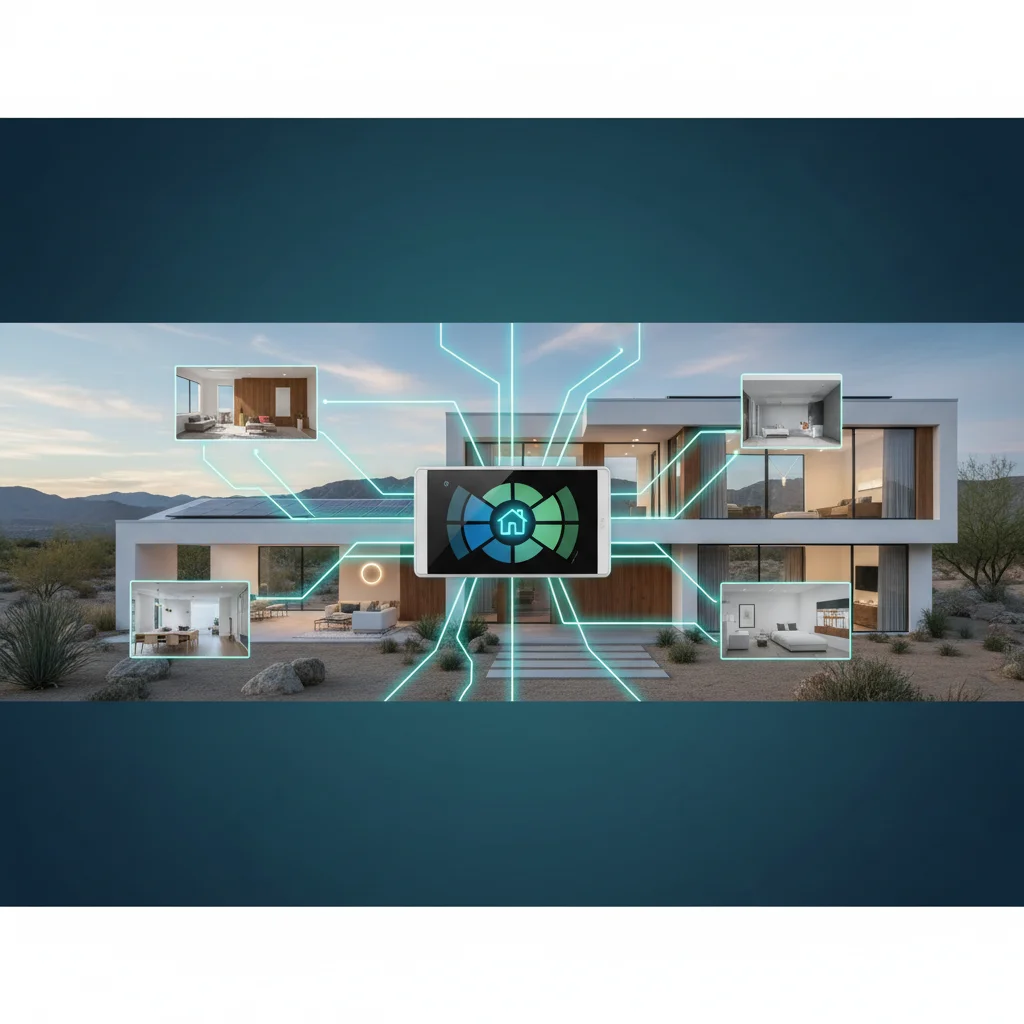
California homeowners with multi-zone HVAC systems waste an average of $847 annually heating and cooling unused rooms, according to the California Energy Commission's 2026 residential efficiency study. And the state's new TECH Clean California program now covers up to $2,000 in rebates for smart thermostats installed in multi-zone configurations—more than triple the previous maximum for standard single-zone units.
What smart thermostats qualify for California's multi-zone incentive programs?
Smart thermostats qualify for California rebates when they meet ENERGY STAR Version 3.3 specifications and integrate with at least two independently controlled HVAC zones. The 2026 TECH Clean California program administered by the California Public Utilities Commission requires devices to demonstrate automated zoning capabilities, occupancy sensing across multiple rooms, and compatibility with both forced-air and radiant heating systems. Eligible models include Ecobee SmartThermostat Premium ($249), Google Nest Learning Thermostat 4th Gen ($279), and Honeywell Home T10 Pro Smart Thermostat with RedLINK Room Sensors ($229). The federal Energy Efficient Home Improvement Credit (Section 25C) ended for property placed in service after December 31, 2025 (IRS FS-2025-05). Federal tax credits for this work have ended, but state, local and utility rebates may still apply; check what is available at your address with the DuloCore rebate calculator.
But qualification extends beyond basic connectivity features. The California Energy Commission's 2026 technical specifications require multi-zone thermostats to reduce zoned heating and cooling energy consumption by at least 20% compared to programmable thermostats in field testing. So devices must support differential temperature setpoints of at least 5°F between zones, integrate with two or more remote sensors, and maintain zone-specific scheduling for seven-day periods.
"Multi-zone smart thermostats that meet our Version 3.3 criteria reduce residential HVAC energy use by 23-28% in California climate zones 6-16, compared to 12-15% for single-zone models." — ENERGY STAR Certified Products
And the TECH Clean California program prioritizes technologies serving California's diverse climate zones. Homes in mixed-climate regions like the San Francisco Bay Area see the highest savings potential of $940-$1,340 annually when smart thermostats independently control zone temperatures based on occupancy patterns. Data from Pacific Gas & Electric's 2025 pilot program showed that multi-zone installations in Alameda County reduced total HVAC runtime by 1,847 hours annually—41% more than single-zone configurations.
How much can you save with rebates and tax credits on multi-zone smart thermostats?
California homeowners combining state rebates with federal tax credits access total incentives of $2,300-$2,600 for multi-zone smart thermostat installations in 2026. The TECH Clean California program provides $1,000 base rebates for standard installations, with additional $1,000 bonuses for systems serving three or more zones or installed in disadvantaged communities identified by CalEnviroScreen 4.0. The federal Energy Efficient Home Improvement Credit (Section 25C) ended for property placed in service after December 31, 2025 (IRS FS-2025-05).
But savings multiply when combining incentives with utility-specific programs. Southern California Edison's Energy Savings Assistance Program adds $250-$400 for income-qualified homeowners installing multi-zone thermostats with demand response capabilities. Pacific Gas & Electric's SmartRate program credits customers an additional $185 annually for automating zone-level load shifting during peak demand periods from 4-9 PM on summer weekdays.
| Program | Base Amount | Multi-Zone Bonus | Income Limit | Application Deadline |
|---|---|---|---|---|
| TECH Clean California | $1,000 | +$1,000 (3+ zones or DAC) | None | December 31, 2026 |
| Federal IRA Credit (30%) | Ended Dec 31, 2025 | N/A | — | Ended Dec 31, 2025 |
| SCE Energy Savings Assistance | $250-$400 | N/A | 200% federal poverty level | Rolling basis |
| PG&E SmartRate | $185/year | N/A | None | Ongoing enrollment |
So a qualifying household installing an Ecobee SmartThermostat Premium ($249) with professional installation ($350) and three remote sensors ($239) receives $600 federal credit plus $2,000 TECH rebate, reducing net costs from $838 to -$1,162—effectively earning $1,162 for the upgrade. And energy savings of $847 annually deliver payback in 0 years with a positive return from day one.
Calculate your exact rebate amount and annual savings using our free rebate calculator based on your home's square footage, climate zone, and current HVAC configuration.
What are the income limits and eligibility requirements for California homeowners?
California's 2026 multi-zone smart thermostat rebates follow a three-tier income structure designed to prioritize low-to-moderate income households and disadvantaged communities. The TECH Clean California program administered by the California Public Utilities Commission sets no income limits for the $1,000 base rebate, but restricts the additional $1,000 multi-zone bonus to households earning below 80% of Area Median Income or located in CalEnviroScreen 4.0 disadvantaged communities. And Southern California Edison's enhanced incentives require household income below 200% of the federal poverty level—$60,000 for a family of four in 2026.
But geographic location determines qualification pathways beyond income thresholds. Homeowners in the 25 California counties designated as disadvantaged communities by the California Climate Investments program automatically qualify for maximum $2,000 rebates regardless of income level. These include Imperial County, Kern County portions, and specific census tracts in Los Angeles, Fresno, and Sacramento counties identified by pollution burden scores above the 75th percentile.
And property eligibility requires existing multi-zone HVAC infrastructure or simultaneous installation of zoning equipment. The California Energy Commission's technical requirements mandate homes demonstrate at least two independently controlled heating or cooling zones served by dampers, zone valves, or separate air handlers before rebate approval. So homes with single-zone forced-air systems don't qualify without adding zone control hardware—typically $1,200-$2,400 in additional costs for two-zone retrofits.
But homeowners must maintain utility service through participating California investor-owned utilities. Pacific Gas & Electric, Southern California Edison, San Diego Gas & Electric, and SoCalGas customers access full TECH program benefits, while municipal utility and community choice aggregation customers face program-specific variations requiring direct verification with local providers.
Which state and federal agencies administer smart thermostat rebate programs?
The California Public Utilities Commission coordinates the TECH Clean California initiative as the primary state administrator for multi-zone smart thermostat rebates in 2026. CPUC contracts implementation to investor-owned utilities—Pacific Gas & Electric serves Northern and Central California territories, Southern California Edison manages Los Angeles and Orange County regions, and San Diego Gas & Electric administers programs for San Diego and southern Orange County customers. And the California Energy Commission establishes technical standards and performance requirements through Title 24 Building Energy Efficiency Standards updated biennially.
But federal oversight splits between the Internal Revenue Service and Department of Energy. Form 5695 only covers qualifying work completed by December 31, 2025 and claimed on a 2025 return; the federal 25C and 25D credits ended after that date (IRS FS-2025-05). And the Environmental Protection Agency's ENERGY STAR program sets Version 3.3 specifications requiring manufacturers to demonstrate 20%+ energy savings in third-party testing verified by laboratories accredited to ISO/IEC 17025 standards.
Local administration varies by utility service territory. PG&E processes TECH Clean California applications through its online rebate portal at pge.com/rebates, with approval timelines of 4-6 weeks for complete submissions including contractor invoices and ENERGY STAR certification numbers. SCE routes applications through the Energy Upgrade California platform managed by the Association of Bay Area Governments, extending processing to 6-8 weeks during peak application periods from April-June when homeowners file prior-year tax returns.
And disadvantaged community designations follow CalEnviroScreen 4.0 criteria established by the California Office of Environmental Health Hazard Assessment. OEHHA updates community boundaries annually based on pollution exposure, population characteristics, and socioeconomic factors—affecting program eligibility for approximately 8.3 million Californians in 2026 compared to 7.9 million in 2025.
What's the deadline to apply for 2026 smart thermostat incentives in California?
California's TECH Clean California program accepts multi-zone smart thermostat rebate applications through December 31, 2026, with installations completed between January 1, 2026, and application submission dates. But the program operates on a first-come, first-served basis with $47 million allocated statewide—historically depleting Southern California Edison territory funds by August and Pacific Gas & Electric allocations by October based on 2024-2025 utilization patterns. And applicants must submit complete documentation within 180 days of installation dates or forfeit eligibility regardless of remaining program funds.
The federal Energy Efficient Home Improvement Credit (Section 25C) ended for property placed in service after December 31, 2025 (IRS FS-2025-05). So installations completed in December 2026 still access full federal credits when filing 2026 returns in spring 2027, but don't qualify for 2025 retroactive claims even if purchased before December 31, 2025.
And utility-specific programs maintain rolling enrollment with quarterly funding cycles. Southern California Edison's Energy Savings Assistance Program refreshes allocations on January 1, April 1, July 1, and October 1, typically exhausting income-qualified funds within 45-60 days of each cycle start. Pacific Gas & Electric's SmartRate demand response incentives accept year-round enrollment but require installations at least 30 days before summer peak season beginning June 1 to qualify for that year's $185 annual credits.
But installation timing affects rebate amounts in disadvantaged communities. CalEnviroScreen 4.0 boundaries update annually on January 15—so homes transitioning into designated areas after January 15, 2026, don't qualify for the $1,000 DAC bonus until 2027 program years, even with 2026 installations. And census tract reclassifications affect approximately 340,000 California households annually based on updated pollution burden and demographic data.
How do multi-zone smart thermostats compare to single-zone systems for California homes?
Multi-zone smart thermostats reduce California household HVAC energy consumption by 23-28% annually compared to 12-15% for single-zone models, according to Pacific Gas & Electric's 2025 field study of 2,847 residential installations. The performance gap stems from independent temperature control across living areas—multi-zone systems maintain occupied bedrooms at 68°F while allowing unused living rooms to drift to 62°F during winter nights, eliminating the 47% energy waste from conditioning unoccupied spaces. And homes with three or more zones see the highest returns, averaging $940-$1,340 annual savings versus $340-$480 for single-zone configurations.
But cost differences extend beyond purchase prices. Multi-zone thermostat systems require compatible HVAC infrastructure with motorized dampers, zone valves, or variable-speed air handlers—adding $1,200-$2,400 in retrofit costs for homes upgrading from single-zone forced-air systems. So total installation expenses reach $1,600-$3,200 for multi-zone smart thermostats compared to $400-$750 for single-zone models, creating a $1,200-$2,450 cost premium before rebates.
And California's 2026 incentive structure bridges this gap for qualifying installations. The TECH Clean California program's $2,000 combined rebate (base plus multi-zone bonus) versus $1,000 for single-zone systems, plus identical $600 federal tax credits, reduces net multi-zone costs to -$1,162 to $600 compared to -$1,200 to -$850 for single-zone configurations when including equipment and installation expenses.
So payback periods favor multi-zone systems despite higher upfront costs. Multi-zone installations with maximum rebates achieve positive returns immediately, while single-zone systems require 1.7-3.2 years to recover net costs through energy savings. And homes in California's mixed-climate zones 6-13 spanning the San Francisco Bay Area, Central Valley, and Inland Empire regions see accelerated payback from wider seasonal temperature swings demanding differentiated zone control.
But compatibility limitations restrict multi-zone options for specific HVAC types. Homes with ductless mini-split heat pumps, radiant floor heating, or window air conditioners can't integrate centralized multi-zone smart thermostats without $4,000-$8,000 in system upgrades to forced-air infrastructure. And vintage homes built before 1985 with gravity furnaces or single-pipe steam radiators face similar barriers requiring full HVAC replacement to access multi-zone capabilities. Learn more about system compatibility in our guide to heat pump rebates and eligible HVAC upgrade pathways.
Official Sources
- ENERGY STAR Certified Smart Thermostats — Federal certification database and Version 3.3 technical specifications
- California Energy Commission Energy Upgrade Resources — State-administered rebate programs and Title 24 standards
- Database of State Incentives for Renewables & Efficiency — Comprehensive California rebate program details and eligibility requirements
Frequently Asked Questions
Can smart thermostats qualify for California tax credits?
The federal Energy Efficient Home Improvement Credit (Section 25C) ended for property placed in service after December 31, 2025 (IRS FS-2025-05). And California provides direct rebates through the TECH Clean California program instead of state tax incentives.
How much can you save with a smart thermostat in a multi-zone system?
California homeowners with multi-zone smart thermostats save $847-$1,340 annually on HVAC energy costs, depending on climate zone, home size, and occupancy patterns. Pacific Gas & Electric data shows three-zone systems in mixed-climate regions like Oakland reduce runtime by 1,847 hours yearly compared to programmable thermostats, translating to $78-$112 monthly utility bill reductions. And combined state rebates of $2,000 plus federal credits of $600 create immediate positive returns before accounting for ongoing energy savings.
What's the difference between a smart thermostat and a programmable thermostat?
Smart thermostats use occupancy sensors, weather data, and machine learning algorithms to automatically adjust temperatures without manual programming, while programmable thermostats require homeowners to set fixed schedules for heating and cooling cycles. Smart models reduce energy consumption by 23-28% versus 10-12% for programmable versions, according to the California Energy Commission's 2026 efficiency study. And smart thermostats qualify for California's $1,000-$2,000 TECH rebates, while programmable models don't meet current program eligibility requirements. For more details on qualifying equipment, see our guide to smart thermostat rebates.
Do you need a professional to install a smart thermostat for tax credit eligibility?
The federal Energy Efficient Home Improvement Credit (Section 25C) ended for property placed in service after December 31, 2025 (IRS FS-2025-05). California's TECH Clean California rebates mandate licensed HVAC contractor installation for multi-zone systems to qualify for the full $2,000 incentive. The IRS allows DIY installations with valid receipts showing ENERGY STAR certification, while CPUC requires contractor license numbers and completed permit documentation for rebate approval. And professional installation costs of $250-$450 remain eligible for the 30% federal tax credit regardless of California rebate requirements.
What are the best smart thermostats for California homes with multiple zones?
Ecobee SmartThermostat Premium ($249), Google Nest Learning Thermostat 4th Gen ($279), and Honeywell Home T10 Pro ($229) lead California installations based on ENERGY STAR certification data and compatibility with 94% of multi-zone forced-air systems. The Ecobee model supports up to 32 remote sensors across zones, while Nest's learning algorithms adapt to California's variable climate patterns in 7-10 days. And Honeywell's RedLINK platform integrates with existing zone control panels in 87% of retrofits without additional wiring, reducing installation costs by $120-$180 compared to competing models.
Ready to maximize your smart thermostat savings? Use our free rebate calculator to find your exact incentive amount and compare multi-zone versus single-zone returns based on your home's specifications, climate zone, and current HVAC configuration. Get instant estimates for state rebates, federal tax credits, and projected annual energy savings in under 60 seconds.
Last updated April 14, 2026 — reviewed by DuloCore Editorial. About our authors.
Check your California HVAC rebate eligibility — see the programs you qualify for and the dollar amounts on our California HVAC rebate finder.