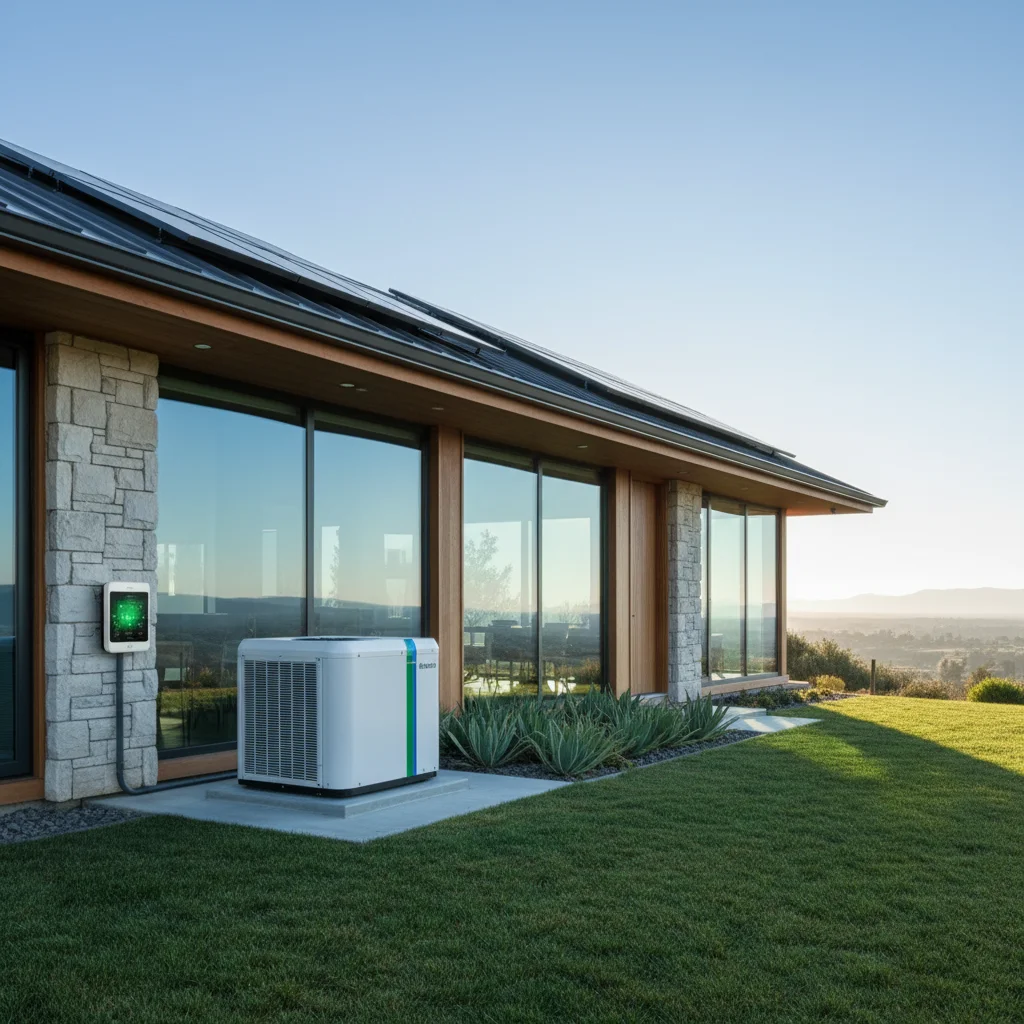
American households spend $29 billion annually on HVAC system failures, and 42% of those failures happen during peak summer months when replacement costs surge 18-23% above winter rates. Homeowners who wait until their system fails pay $2,400-$4,800 more than those who plan replacements during off-peak seasons.
How Much Does HVAC Replacement Cost in 2026?
Complete HVAC system replacement costs $5,200-$12,800 for most California homes in 2026, with central air conditioning units averaging $5,200-$8,400 and heat pump systems running $6,800-$12,800 installed. Equipment accounts for 60% of total cost, while labor, permits, and ductwork modifications make up the remaining 40%. Home size, existing ductwork condition, and efficiency ratings drive the widest price variations.
The Department of Energy reports system efficiency ratings determine long-term operating costs more than installation price. A 16 SEER central air conditioner costs $6,200 installed for a 2,000-square-foot home, while an 18 SEER model costs $7,400—but saves $180-$240 annually on energy bills.
"High-efficiency HVAC systems reduce home energy consumption by 20-40% compared to systems installed before 2006." — U.S. Department of Energy
And California's Title 24 building codes require minimum 14 SEER ratings for new installations, pushing average replacement costs 12% higher than national averages. But homes built before 1990 with outdated ductwork face additional $1,800-$3,200 in duct sealing and insulation upgrades to meet current efficiency standards.
So geography matters: coastal California homes average $6,400 for AC-only systems, while inland valley regions installing heat pumps for heating and cooling spend $9,200-$11,600. System size matters too—each additional ton of cooling capacity adds $800-$1,200 to equipment costs.
What's the Payback Period for a New HVAC System?
New HVAC systems deliver full cost recovery in 8-14 years through energy savings, with high-efficiency heat pumps in cold-winter regions achieving payback in 6-9 years and standard AC units in moderate climates taking 10-14 years. Annual energy savings of $480-$840 for heat pump upgrades and $280-$420 for AC replacements offset installation costs over the system's 15-20 year lifespan.
Energy Star certified heat pumps save California homeowners $540-$780 annually compared to electric resistance heating, shortening payback periods to 8-11 years for $8,400 installations. So a family replacing a 20-year-old furnace and AC with a $10,200 heat pump system sees monthly savings of $65-$85, recovering costs in year 10.
But homes with existing duct systems see faster returns than homes requiring new ductwork. A $6,800 heat pump installation with existing ducts pays back in 9 years, while a $10,400 installation with new ducts takes 13 years at identical energy savings rates.
And federal tax credits accelerate payback. The energy tax credits framework provides 30% back on qualifying systems through 2032, reducing a $9,000 heat pump installation to $6,300 out-of-pocket—shortening payback from 12 years to 8 years.
Or consider variable-speed systems. They cost $1,400-$2,200 more upfront but save an additional $180-$260 annually, adding 6-12 months to payback periods while extending comfort and system lifespan by 3-5 years.
How Does HVAC Replacement Compare to Repair Alternatives?
HVAC replacement costs $5,200-$12,800 while major repairs like compressor replacement ($1,800-$2,800) or evaporator coil replacement ($1,200-$2,400) provide 3-7 additional years of service, making replacement the cost-effective choice when systems exceed 12-15 years old or require repairs exceeding 50% of replacement cost. Annual maintenance costs of $180-$280 extend system life but don't prevent the 67% failure rate for systems over 15 years old.
The $5,000 Rule guides replacement decisions: if repair cost multiplied by system age in years exceeds $5,000, replacement delivers better value. So a 14-year-old system needing a $1,600 compressor repair (14 × $1,600 = $22,400) exceeds the threshold—replacement makes financial sense.
But efficiency considerations change the math. A 10 SEER system from 2005 costs $1,680-$2,240 annually to operate for a 2,000-square-foot home, while a new 16 SEER system costs $1,050-$1,400—saving $630-$840 yearly. So even a $3,200 repair on a working inefficient system loses money compared to $7,200 replacement when accounting for three years of energy savings.
"Systems over 10 years old lose 15-25% of their original efficiency, increasing operating costs by $240-$420 annually for typical residential installations." — Database of State Incentives for Renewables & Efficiency
And emergency replacements cost 18-23% more than planned replacements. A system failure in July costs $8,400-$9,800 for rush installation, while off-season replacement in March costs $6,800-$7,600 for identical equipment.
Learn more about system efficiency at HVAC efficiency.
How Long Will Your New HVAC System Last?
New HVAC systems last 15-20 years with proper maintenance, with heat pumps averaging 15-17 years, central air conditioners lasting 15-20 years, and gas furnaces running 20-25 years before requiring replacement. Annual maintenance extends lifespan by 3-5 years and prevents 85% of emergency failures, while coastal California environments reduce lifespan by 2-3 years due to salt air corrosion.
Air conditioning compressors—the most expensive component at $1,800-$2,800 to replace—fail most frequently between years 10-14. But variable-speed compressors last 2-4 years longer than single-stage units because they run at lower speeds 70% of the time, reducing wear.
So maintenance matters. Systems receiving annual tune-ups ($150-$220 per visit) average 18.2 years of service, while neglected systems average 12.4 years. The cost difference: $1,800 in maintenance over 18 years versus $5,200-$8,400 in premature replacement.
And installation quality affects longevity. Systems with properly sized ductwork and correct refrigerant charges last 3-5 years longer than improperly installed systems. Oversized systems cycle on-and-off frequently, reducing lifespan by 20-30%, while undersized systems run constantly, failing 4-6 years earlier than properly sized equipment.
But warranty coverage varies. Equipment warranties cover 5-10 years on parts, while labor warranties typically last 1-2 years. Extended warranties cost $400-$800 and cover parts and labor for 10 years, potentially saving $1,200-$2,400 on major repairs.
What Rebates and Tax Credits Are Available for HVAC Replacement?
The federal Energy Efficient Home Improvement Credit (Section 25C) ended for property placed in service after December 31, 2025 (IRS FS-2025-05). California utilities offer rebates of $200-$3,000 for high-efficiency HVAC replacements and low-income households qualify for additional $3,000-$6,500 in combined incentives through 2026 programs. Rebate amounts depend on system efficiency ratings, household income, and utility service territory.
The federal Energy Efficient Home Improvement Credit (Section 25C) ended for property placed in service after December 31, 2025 (IRS FS-2025-05). Federal tax credits for this work have ended, but state, local and utility rebates may still apply; check what is available at your address with the DuloCore rebate calculator. A $9,000 heat pump installation returns $2,000 at tax time, reducing out-of-pocket cost to $7,000. And the credit applies to primary residences only, not rental properties or second homes.
PG&E offers $400-$2,000 for ducted heat pumps meeting efficiency requirements, while SCE provides $500-$1,500 for qualifying systems. So a $10,400 heat pump installation in PG&E territory receives $2,000 federal + $1,500 utility = $3,500 in incentives, dropping net cost to $6,900.
But income-qualified programs deliver deeper savings. The California TECH Clean California initiative provides $3,000-$6,500 for low-income households installing heat pumps, covering 40-60% of installation costs. And some programs combine incentives—federal tax credits + utility rebates + income-qualified grants can reduce a $11,200 installation to $4,200 out-of-pocket.
Calculate your potential savings with our rebate calculator to see exactly what incentives apply to your home.
Or explore heat pump rebates for the most current program details and eligibility requirements.
What's the Installation Process and Timeline for HVAC Replacement?
HVAC replacement takes 1-3 days for most residential installations, with single-unit AC replacements completing in 4-8 hours and whole-system heat pump installations requiring 8-16 hours of labor over 2-3 days when ductwork modifications are necessary. Permit processing adds 3-10 business days to project timelines, while equipment availability extends timelines by 1-4 weeks during peak summer demand.
Day one includes old system removal (2-3 hours), new equipment positioning (1-2 hours), and refrigerant line installation (2-4 hours). Simple replacements with compatible ductwork complete in a single 6-8 hour visit, while complex installations continue to day two for electrical upgrades, thermostat installation, and system testing.
And permit requirements vary by jurisdiction. Most California cities require mechanical permits ($150-$380) and electrical permits ($120-$240) for HVAC replacements, with inspection scheduling adding 2-7 days after installation completes. Contractors typically handle permit applications, but homeowners should verify permit status before work begins.
So timing matters for availability and cost. Spring (March-May) and fall (September-November) offer the best combination of contractor availability, equipment selection, and competitive pricing. Summer installations face 2-4 week equipment delays and 18-23% price premiums during heat waves.
But emergency replacements skip the queue. Most contractors offer 24-48 hour emergency service for system failures, installing temporary units within hours and permanent systems within 3-5 days—at premium pricing of $1,800-$2,400 above standard rates.
Official Sources
- U.S. Department of Energy - Energy Saver — Federal energy efficiency guidance and current rebate program information
- Database of State Incentives for Renewables & Efficiency — Comprehensive state and utility rebate program database
- Energy Star HVAC Programs — Certified equipment lists and efficiency ratings
Related Reading: Learn more about Energy Audit Zero Cost Improvements and Free Hvac Replacement Program.
Related Reading: Learn more about Free Hvac Replacement Program and Home Energy Audit Cost.
Related Reading: Learn more about Hvac Duct Cleaning Cost.
Frequently Asked Questions
How much does HVAC replacement cost?
Complete HVAC replacement costs $5,200-$12,800 for California homes in 2026, with central air conditioning averaging $5,200-$8,400 and heat pump systems costing $6,800-$12,800 installed. Equipment represents 60% of total cost, while labor, permits, and ductwork modifications account for 40%. System size, efficiency ratings, and existing ductwork condition create the widest price variations between installations.
What factors affect the price of a new HVAC system?
Five factors drive HVAC replacement costs: system type (heat pump vs AC), efficiency rating (14-20+ SEER), home size (1,200-3,000+ square feet), ductwork condition (existing vs new), and installation timing (off-season vs peak summer). Heat pumps cost $1,600-$4,400 more than AC-only systems, while each SEER point above minimum 14 SEER adds $300-$600 to equipment cost. New ductwork adds $3,200-$5,800 to total project cost.
Are there rebates available for HVAC replacement?
The federal Energy Efficient Home Improvement Credit (Section 25C) ended for property placed in service after December 31, 2025 (IRS FS-2025-05). California utilities offer $200-$3,000 for high-efficiency systems in 2026. Income-qualified households receive additional $3,000-$6,500 through California TECH Clean California programs. Incentives stack—homeowners combining federal credits, utility rebates, and income-qualified programs reduce $10,400 installations to $4,200-$6,900 out-of-pocket.
How long does an HVAC replacement take?
HVAC replacement takes 1-3 days for residential installations, with simple AC replacements completing in 4-8 hours and complex heat pump installations requiring 8-16 hours over 2-3 days. Permit processing adds 3-10 business days before work begins, while equipment ordering extends timelines 1-4 weeks during peak summer demand. Most contractors complete single-day installations for homes with compatible existing ductwork.
What's the difference between HVAC repair and replacement costs?
Major HVAC repairs cost $1,200-$2,800 for components like compressors ($1,800-$2,800) or evaporator coils ($1,200-$2,400), providing 3-7 additional years of service, while replacement costs $5,200-$12,800 and delivers 15-20 years of reliable operation. The $5,000 Rule guides decisions: if repair cost multiplied by system age exceeds $5,000, replacement delivers better long-term value. Systems over 12-15 years old with major failures benefit most from replacement.
Ready to find out how much you can save? Use our free rebate calculator to discover federal tax credits, utility rebates, and income-qualified programs available for your HVAC replacement in 2026.
Last updated April 14, 2026 — reviewed by DuloCore Editorial. About our authors.
Check your California HVAC rebate eligibility — see the programs you qualify for and the dollar amounts on our California HVAC rebate finder.