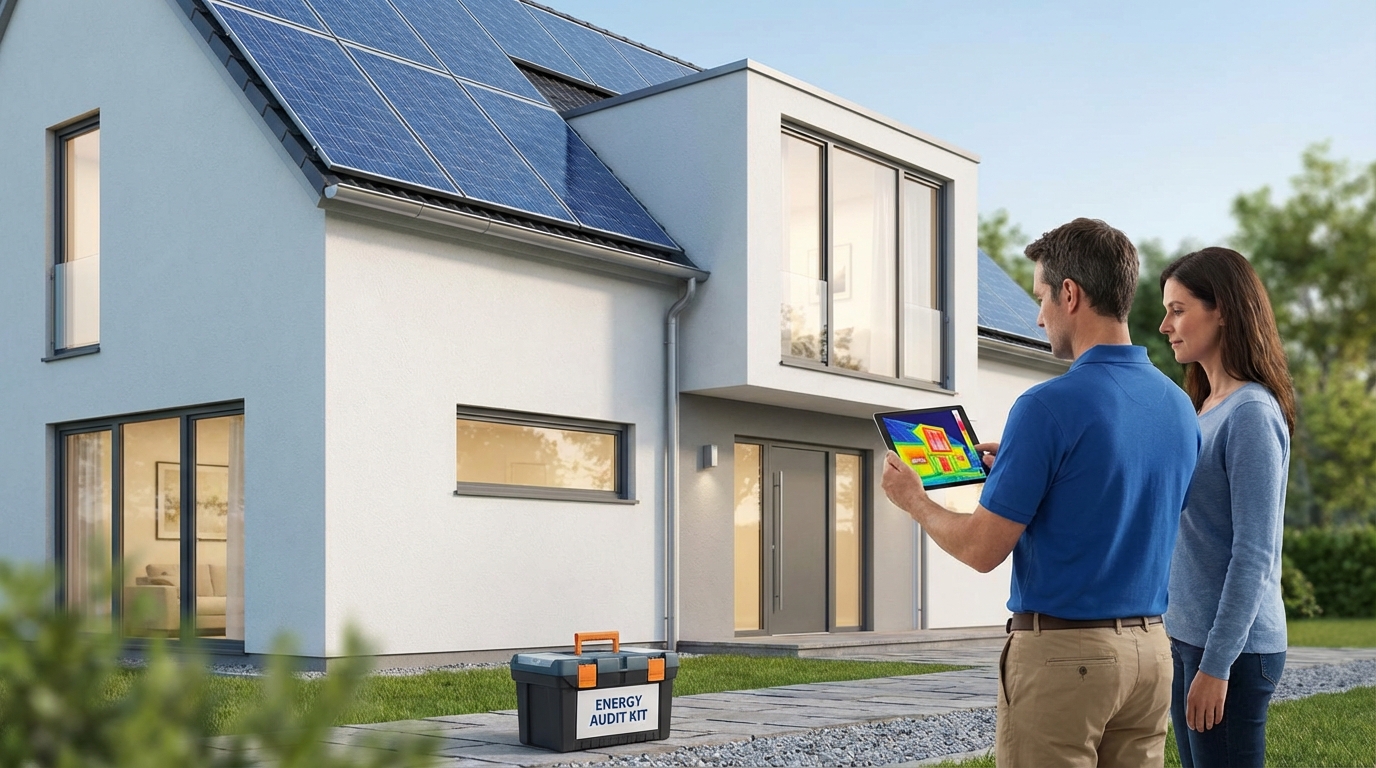
The average American home has enough air leaks to equal leaving a window open every day of the year. So that draft you feel isn't just uncomfortable; it's a constant drain on your wallet, silently siphoning hundreds of dollars annually through gaps in your walls, windows, and attic. Addressing this invisible waste starts with understanding its source, and that's where a professional energy audit becomes your most powerful tool.
What is the typical cost of a home energy audit, and what factors influence its price?
A professional home energy audit cost for 2026 ranges from $300 to $700. And this price is influenced by the home's square footage, the audit's complexity (including blower door tests and infrared thermography), and regional labor rates, with comprehensive audits in larger homes commanding higher fees.
The final price of a home energy audit is a direct reflection of its thoroughness. So a basic visual inspection costs less, around $250, but it won't pinpoint hidden air leaks with the precision of advanced diagnostic tools. But a comprehensive audit, often required for rebate eligibility, includes a blower door test to depressurize the house and reveal every crack and crevice. It also uses an infrared camera to visualize temperature differences, showing exactly where insulation is missing or failing. The U.S. Department of Energy states that these detailed assessments can help homeowners save between 5% and 30% on their energy bills by addressing the identified issues. And the size of your home is the biggest variable; a 3,000-square-foot house naturally takes more time to inspect than a 1,200-square-foot one, directly impacting the final invoice.
How can state and utility programs offer rebates on your home energy audit?
State and utility-sponsored rebate programs for 2026 directly reduce the home energy audit cost by offering point-of-sale discounts or mail-in rebates covering 50% to 100% of the service fee. So these incentives, often valued between $150 and $500, make professional energy assessments affordable for most homeowners.
These programs exist to encourage energy efficiency, which reduces strain on the electrical grid and helps meet state-level climate goals. So your local utility or state energy office funds these rebates to help you identify the most effective upgrades, from air sealing to insulation or new HVAC systems. And they effectively buy down the initial cost, transforming a $400 audit into a $200 or even a $0 expense.
But you must check the program requirements before scheduling. Many utilities mandate using one of their pre-approved contractors to qualify for the rebate. And these programs are very popular, so funding is often allocated on a first-come, first-served basis.
Am I eligible for home energy audit rebates based on income, location, or equipment requirements?
Eligibility for 2026 home energy audit rebates primarily depends on your location within a specific utility's service area and your status as a residential customer. And some programs offer enhanced rebates, covering up to 100% of the cost, for households meeting low-to-moderate income (LMI) guidelines.
Your ZIP code is the first gatekeeper for these incentives. So if you are a customer of a utility like Con Edison or PG&E, you are likely eligible for their specific rebate programs. But if your home is serviced by a smaller municipal utility, it will have its own separate set of offers. And many states have income-based tiers; households earning below 80% of the area median income (AMI) often qualify for free audits and increased rebates on subsequent upgrades. In many cases, completing a qualifying energy audit is a mandatory first step to unlock thousands more in energy tax credits and rebates for larger projects like insulation or new windows, making it a critical gateway to deeper savings.
What is the application process for energy audit rebates, and are there deadlines or funding limitations?
The 2026 application process for an energy audit rebate typically involves finding an approved contractor through your utility's online portal, scheduling the audit, and submitting the paid invoice with a rebate form. So homeowners must act quickly, as most programs have annual funding caps that are often exhausted by Q4.
Navigating the process is straightforward but requires attention to detail. First, visit your utility's website or a state database like DSIRE to find active programs. And you'll usually find a list of certified auditors you must choose from. After the audit is complete, the contractor provides a detailed report and an itemized invoice. You then submit these documents through an online portal or via mail. The key is to not delay. These funds are finite and awarded chronologically. Waiting until the end of the year often means the program's $5 million or $10 million budget for the year is already depleted. Use our free rebate calculator to find deadlines and funding status in your area.
Can you stack multiple rebates, and what are the requirements for qualified energy audit contractors?
Stacking multiple rebates for the same energy audit is generally not permitted; you can't claim both a state and a utility rebate for one audit. But, the audit rebate itself can be stacked with separate rebates for upgrades identified in the audit, like insulation or heat pump rebates.
The rule is one rebate per service. So you must choose the most valuable offer, whether it’s from your state energy office or your electric company. But this audit is often the key that unlocks other incentives. And to ensure quality, rebate programs require auditors to hold specific credentials. The most common are certifications from the Building Performance Institute (BPI) or the Residential Energy Services Network (RESNET).
"DSIRE is the most comprehensive source of information on incentives and policies that support renewables and energy efficiency in the United States." — DSIRE
These certifications guarantee the contractor is trained in advanced building science and can properly use diagnostic tools like blower doors and infrared cameras. So always verify your chosen contractor is on your utility's approved list before signing a contract.
Rebate Program Comparison for 2026
| Program Type | Typical Rebate Amount | Key Eligibility Requirement | Common Deadline |
|---|---|---|---|
| State Energy Office | $200 - $400 | Must be a state resident | December 31, 2026 |
| Major Utility Program | $150 - $500 (or 100% coverage) | Must be a customer of the utility | When annual funds are depleted (often Q4) |
| LMI Enhancement | 100% of audit cost (up to $700) | Income must be <80% of AMI | Program-specific, often year-round |
Official Sources
- ENERGY STAR — Federal guidance from the EPA on what to expect from a home energy audit.
- Database of State Incentives for Renewables & Efficiency (DSIRE) — A comprehensive database of state, local, utility, and federal incentives for energy efficiency.
Related Reading: Learn more about Diy Vs Professional Energy Audit Cost and Grid Interactive Home Energy Audit.
Related Reading: Learn more about Home Energy Audit Cost Los Angeles and Home Energy Audit Cost Riverside.
Related Reading: Learn more about Home Energy Audit Cost Sacramento and Infrared Thermography Home Audit.
Frequently Asked Questions
How much does a home energy audit typically cost?
A professional home energy audit in 2026 typically costs between $300 and $700. And the final price depends on your home's size and the complexity of the audit. So a more comprehensive assessment with blower door testing and infrared imaging will be at the higher end of that range, while a basic visual inspection costs less.
Are there rebates or programs to help cover home energy audit expenses?
Yes, numerous state and utility programs offer rebates that cover 50% to 100% of the home energy audit cost. So these incentives, often worth $150 to $500, are designed to make audits affordable. And some programs for low-to-moderate income households cover the entire expense, making the audit free for eligible homeowners.
What factors influence the final cost of a home energy audit?
The three primary factors influencing the cost are home size, audit scope, and geographic location. And a larger, 3,000 sq. ft. home costs more to audit than a 1,500 sq. ft. home. So a comprehensive audit with diagnostic tools like a blower door test is more expensive than a simple walk-through. And labor rates vary by region.
Is the investment in a home energy audit worth the potential energy savings?
Yes, the investment is almost always worthwhile. A professional audit can identify issues that, once fixed, can reduce your annual energy bills by 5% to 30%. With the average U.S. household spending over $2,000 per year on energy, the payback period for a $400 audit is often less than two years.
What services are included in the price of a professional home energy audit?
A standard professional audit includes a room-by-room inspection, a blower door test to measure air leakage, and infrared thermography to detect insulation gaps. So after the assessment, you receive a detailed report prioritizing recommended upgrades, their estimated costs, and projected energy savings—often between 5% and 30%.
Unlock Your Home's Energy Savings
Don't guess where your energy dollars are going. Find out exactly what rebates you qualify for with our instant, free-to-use calculator.
Calculate Your Savings NowLast updated April 14, 2026 — reviewed by DuloCore Editorial. About our authors.