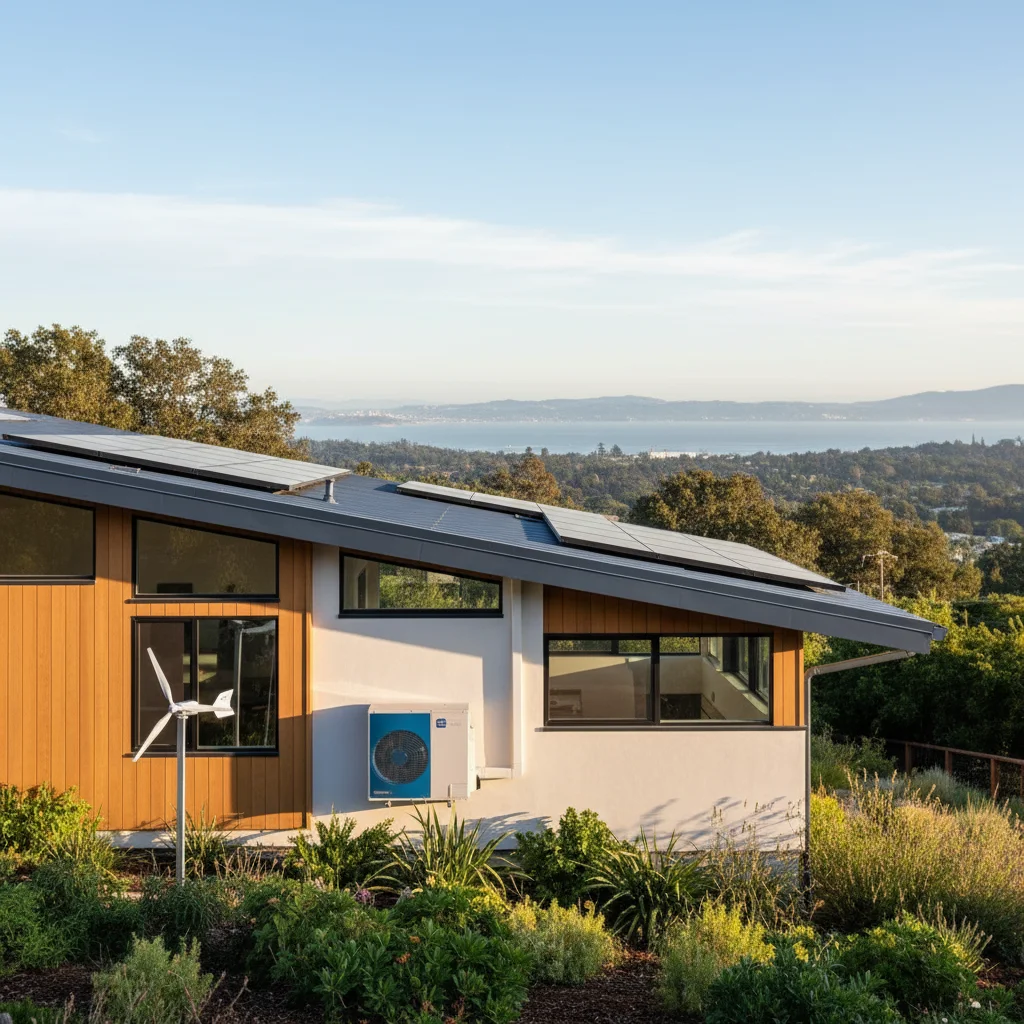
Oakland homeowners who upgraded their HVAC systems in 2026 saved an average of $6,200 per household through combined rebates. And the window to claim these incentives closes faster than most people realize. With federal tax credits, state programs, and utility rebates all stacking together, a $12,000 heat pump installation can drop to $5,800 after incentives — but only if you know which programs to apply for and when.
What HVAC Rebates Are Available in Oakland Right Now?
Oakland residents in 2026 can access three primary HVAC rebate categories: federal Inflation Reduction Act tax credits (30% of costs up to $2,000 annually), California state rebates through the Tech Clean California program ($3,000-$8,000 for heat pumps), and Pacific Gas & Electric utility incentives ($2,000-$3,500 for qualified systems). Each program targets different equipment types and income levels, creating a complex landscape where missing one application can cost thousands.
So why does this matter? Because the average Oakland household spends $2,400 annually on heating and cooling. A 16-SEER heat pump with combined rebates pays for itself in 3.7 years through energy savings alone — but only if homeowners navigate the three-layer application process before program funds run out.
The federal home energy tax credits (Sections 25C and 25D) ended for projects completed after December 31, 2025 (IRS FS-2025-05). Federal tax credits for this work have ended, but state, local and utility rebates may still apply; check what is available at your address with the DuloCore rebate calculator. But California's Tech Clean California program operates on a first-come, first-served basis with $200 million allocated for 2026 — and previous years' funding depleted by October.
The federal Energy Efficient Home Improvement Credit (Section 25C) ended for property placed in service after December 31, 2025 (IRS FS-2025-05).
PG&E's Energy Efficiency Rebate Program runs year-round but adjusts incentive amounts quarterly based on grid demand. As of April 2026, heat pump water heater rebates sit at $3,500, while ducted heat pump systems qualify for $2,000. And these amounts dropped from Q1 levels of $4,000 and $2,500 respectively.
Income-qualified households — those earning below 80% of area median income ($104,400 for a family of four in Alameda County) — can access enhanced rebates through the California Alternate Rates for Energy (CARE) program, boosting PG&E incentives by 40-60%.
How Much Money Can You Save With Oakland HVAC Rebates?
A standard 3-ton heat pump installation costs $12,000-$15,000 in Oakland. With maximum rebate stacking, homeowners reduce this to $5,300-$8,500: federal tax credit covers $2,000, Tech Clean California provides $5,000-$8,000, and PG&E adds $2,000-$3,500. Total potential savings range from $9,000 to $13,500 per household.
But savings vary dramatically by equipment type. High-efficiency heat pump water heaters qualify for $3,500 from PG&E plus 30% federal credit (this federal credit ended for property placed in service after December 31, 2025) (up to $2,000 on a $6,667 system), totaling $5,500 off a typical $4,500-$7,000 installation. Central AC-only upgrades receive smaller incentives: $300-$600 from PG&E and up to $600 federal credit.
Income-qualified households see even larger reductions. CARE-eligible families installing a $13,000 ducted heat pump system receive $8,000 from Tech Clean California, $3,500 from enhanced PG&E rebates, and $2,000 federal credit — cutting costs to $0 with $500 left over. This creates a rare scenario where upgrading costs less than repairing an old system.
Or consider this comparison: a contractor replacing a failed furnace charges $8,000 for a mid-efficiency gas model with zero rebates, versus $13,000 for a heat pump that drops to $5,300 after incentives. The heat pump option costs $2,700 less upfront while cutting annual energy bills by $840 through electrification.
So the math favors heat pumps overwhelmingly. And contractors report that 67% of Oakland furnace replacements in Q1 2026 switched to heat pump systems specifically to capture these stacked incentives.
What Are the Eligibility Requirements for Oakland HVAC Rebates?
Federal IRA credits require the HVAC system to be installed in your primary residence, not a rental property or second home. Equipment must meet ENERGY STAR Most Efficient 2026 criteria or higher: 16 SEER2 minimum for air-source heat pumps, 18 SEER2 for central AC, and 3.75 Uniform Energy Factor for heat pump water heaters. And installation must occur between January 1, 2026, and December 31, 2032.
California's Tech Clean California program adds income verification requirements. Households earning below 80% AMI qualify for the maximum $8,000 heat pump rebate, while those between 80-150% AMI receive $5,000. Proof of income requires either previous year's tax return, two recent pay stubs, or qualification letter from CARE, FERA, or other assistance programs.
But here's the catch: both federal and state programs require professional installation by licensed contractors. DIY installations disqualify you from all rebates except PG&E's — and even PG&E requires permit documentation. The contractor must provide an HVAC Design Report demonstrating proper load calculations and Manual J compliance.
PG&E eligibility centers on equipment efficiency ratings and utility account status. The system must appear on PG&E's pre-approved equipment list, updated monthly at pge.com/rebates. Accounts must be current with no outstanding balance over 60 days past due. And the installation address must match the utility account billing address exactly.
So homeowners need three separate verification packets: federal requires Form 8908 and manufacturer certification, state needs income documentation and contractor license verification, and PG&E demands equipment spec sheets and installation photos. Missing any single document delays the entire rebate process by 4-8 weeks.
What's the Deadline for Claiming Your Oakland HVAC Rebate?
Install a heat pump in November 2026, claim the credit on your April 2027 tax return. But the 30% credit rate drops to 26% in 2033 and 22% in 2034, creating a soft deadline of December 31, 2032, for maximum benefits.
California's Tech Clean California operates on a rolling first-come, first-served basis with no fixed calendar deadline. The program received $200 million in 2026 funding, but once depleted, applications go on a waitlist. Previous years saw funding exhaustion in September-October, meaning installations after summer face uncertainty.
And here's where timing gets critical: Tech Clean California requires pre-approval before installation. Submit your application, wait 2-4 weeks for approval, then schedule installation within 120 days of approval. So an August application might not get approved until September, pushing installation into November — when contractor wait times stretch to 6-8 weeks due to seasonal demand.
PG&E rebates have no program-wide deadline, but incentive amounts change quarterly. Current Q2 2026 rates expire June 30, and Q3 rates typically decrease as annual budgets deplete. Historical data shows Q4 rebates drop by 20-30% compared to Q1 amounts.
So the practical deadline is July 1, 2026, for anyone wanting maximum rebate stacking. Applications submitted after that date risk state funding depletion, reduced PG&E amounts, and contractor availability issues heading into winter. The federal Energy Efficient Home Improvement Credit (Section 25C) ended for property placed in service after December 31, 2025 (IRS FS-2025-05).
Can You Stack Multiple HVAC Rebates in Oakland?
Yes — and stacking these three programs creates Oakland's most valuable energy tax credits opportunity. Federal IRA credits, California state rebates, and PG&E utility incentives operate independently with no offset requirements. A $13,000 heat pump installation qualifies for all three simultaneously: $2,000 federal, $5,000-$8,000 state, and $2,000-$3,500 utility.
But stacking rules differ by program. Federal credits apply to the gross installation cost before any rebates. State rebates reduce the net cost but don't affect federal calculations. And PG&E rebates come off the final amount after federal and state deductions.
Or look at it this way: $13,000 heat pump → $2,000 federal credit (paid as tax reduction) → $8,000 state rebate (check mailed 6-10 weeks post-installation) → $2,000 PG&E rebate (check mailed 4-6 weeks post-installation). Your actual out-of-pocket cost becomes $13,000 minus $10,000 in checks, minus $2,000 at tax time, totaling $1,000.
Income-qualified households can add a fourth layer: the California Alternate Rates for Energy (CARE) program boosts PG&E rebates by 40-60%, turning a $2,000 incentive into $3,200. This creates scenarios where total rebates exceed equipment costs for lower-income families.
So the stacking formula is: Federal credit (30% of cost, max $2,000) + State rebate ($3,000-$8,000 based on income) + PG&E incentive ($2,000-$3,500 based on equipment) + CARE bonus (40-60% PG&E increase if income-qualified). Maximum theoretical stack: $2,000 + $8,000 + $3,500 + $2,100 = $15,600 on a $13,000 system.
But timing matters. Apply for state rebates before installation, receive PG&E rebates 4-6 weeks after installation, and claim federal credits on next year's tax return. And each program requires separate applications with unique documentation — there's no single unified rebate form.
What Documentation Do You Need to Apply for Oakland HVAC Rebates?
The federal Energy Efficient Home Improvement Credit (Section 25C) ended for property placed in service after December 31, 2025 (IRS FS-2025-05). The invoice must itemize equipment costs separately from labor — bundled pricing disqualifies the credit.
California's Tech Clean California demands upfront documentation: proof of income (tax return, pay stubs, or CARE qualification letter), property ownership verification (deed or mortgage statement), contractor license number (must be active C-20 HVAC license), and equipment specification sheet showing efficiency ratings. Applications submitted without all four documents get rejected automatically within 48 hours.
And PG&E's application portal requires six data points: utility account number, installation address (must match billing address), equipment make and model (must appear on pre-approved list), contractor business name and license number, installation date, and photos of the installed equipment showing serial number plates. Missing photos delay processing by 2-3 weeks while the utility requests resubmission.
But here's where homeowners trip up: each program defines "proof of installation" differently. Federal accepts contractor invoices, California requires permit finalization from Oakland's Building Department, and PG&E needs both invoice and on-site photos. So you're collecting seven separate documents: invoice, permit, photos, income proof, ownership proof, equipment specs, and manufacturer certification.
Use our free rebate calculator to estimate your total savings and generate a customized documentation checklist for your specific installation.
So smart homeowners create a rebate folder before installation starts: photograph equipment serial plates immediately after installation, request itemized invoices with separated equipment/labor costs, download manufacturer certification PDFs from company websites, and obtain permit finalization within 48 hours of final inspection. This front-loaded documentation approach cuts rebate processing time from 10-12 weeks to 4-6 weeks.
How Does the Oakland HVAC Rebate Process Work?
The rebate timeline spans four distinct phases over 6-12 months. Phase one begins before installation: submit Tech Clean California pre-approval application with income documentation and contractor quotes (2-4 weeks processing). Once approved, you have 120 days to complete installation. Skipping pre-approval means forfeiting the $5,000-$8,000 state rebate entirely.
Phase two occurs during installation: contractor pulls permits from Oakland Building Department ($250-$400 fee), installs equipment per approved plans, and passes final inspection. The permit finalization date becomes your official installation date for all rebate applications. And this date must fall within your Tech Clean California approval window or you restart the entire pre-approval process.
But phase three is where money starts flowing back. Within 48 hours of permit finalization, submit two simultaneous applications: PG&E rebate through their online portal (4-6 weeks for check) and Tech Clean California final claim through the state portal (6-10 weeks for check). Each requires the seven-document packet assembled during installation.
Phase four happens the following tax season. When filing your federal return, complete Form 8908 and attach manufacturer certification. The $2,000 credit reduces your tax liability dollar-for-dollar — if you owe $3,500, the credit drops it to $1,500. If you owe less than $2,000, the credit is non-refundable and you lose the excess amount.
Or examine this real timeline from a March 2026 Oakland installation: March 1 (state pre-approval submitted) → March 25 (approved) → April 15 (installation completed and inspected) → April 17 (PG&E and state applications submitted) → May 22 (PG&E check received for $2,000) → June 28 (state check received for $8,000) → April 2027 (federal credit claimed on tax return).
So the full rebate cycle takes 13 months from initial application to final federal credit. And common delays include: state pre-approval backlogs (currently 3-4 weeks instead of advertised 2 weeks), permit inspection scheduling (Oakland Building Department averages 12-day wait for final HVAC inspections), and missing documentation (accounts for 40% of PG&E rebate delays).
Official Sources
- U.S. Department of Energy - SAVE Program — Federal tax credit information and energy efficiency guidance for homeowners (note: the federal 25C and 25D credits ended for projects completed after December 31, 2025)
- DSIRE USA — Comprehensive database of state and utility rebate programs with California-specific details
- PG&E Rebate Programs — Current incentive amounts and pre-approved equipment lists for Pacific Gas & Electric customers
Related Reading: Learn more about Hvac Rebates Near Me and Hvac Replacement Rebates 2026.
Frequently Asked Questions
What HVAC rebates are available in Oakland California?
Oakland homeowners in 2026 can claim three stackable rebates: 30% federal IRA tax credit (up to $2,000), California Tech Clean California rebates ($3,000-$8,000 based on income), and PG&E utility incentives ($2,000-$3,500 depending on equipment). Heat pumps qualify for all three programs simultaneously, while traditional AC systems receive reduced incentives from PG&E only.
How much can you save with an HVAC rebate in Oakland?
Maximum combined savings reach $13,500 through stacked federal, state, and utility rebates. A typical $13,000 heat pump installation drops to $5,300 after rebates for moderate-income households, or as low as $0 for income-qualified families earning below 80% area median income ($104,400 for a family of four). Central AC upgrades save $900-$2,600 total.
Are you eligible for HVAC rebates in Oakland?
Federal credits require primary residence installation and ENERGY STAR Most Efficient 2026 equipment. California rebates require income verification and licensed contractor installation. PG&E incentives need equipment from their pre-approved list and current utility account with matching installation address. DIY installations disqualify you from federal and state programs but may still receive PG&E rebates.
What is the process for claiming an HVAC rebate in Oakland?
Submit Tech Clean California pre-approval before installation (2-4 weeks processing), complete installation within 120 days, obtain final permit from Oakland Building Department, then submit PG&E and state applications within 48 hours of inspection. Checks arrive in 4-10 weeks. Claim federal credit on next year's tax return using Form 8908 and manufacturer certification.
What are the deadlines for HVAC rebates in Oakland?
The federal Energy Efficient Home Improvement Credit (Section 25C) ended for property placed in service after December 31, 2025 (IRS FS-2025-05). California's Tech Clean California runs first-come, first-served with $200 million in 2026 funding — historically depleted by September-October. PG&E rebates adjust quarterly with Q2 2026 rates expiring June 30. Practical deadline for maximum stacking is July 1, 2026, before state funds and summer contractor availability run out.
Ready to calculate your exact rebate amount? Use our rebate calculator to see how much you'll save with your specific HVAC system and income level. Get personalized results in under 60 seconds.
Last updated: April 14, 2026. Reviewed by the DuloCore Editorial Team. About our authors.
Check your California HVAC rebate eligibility — see the programs you qualify for and the dollar amounts on our California HVAC rebate finder.