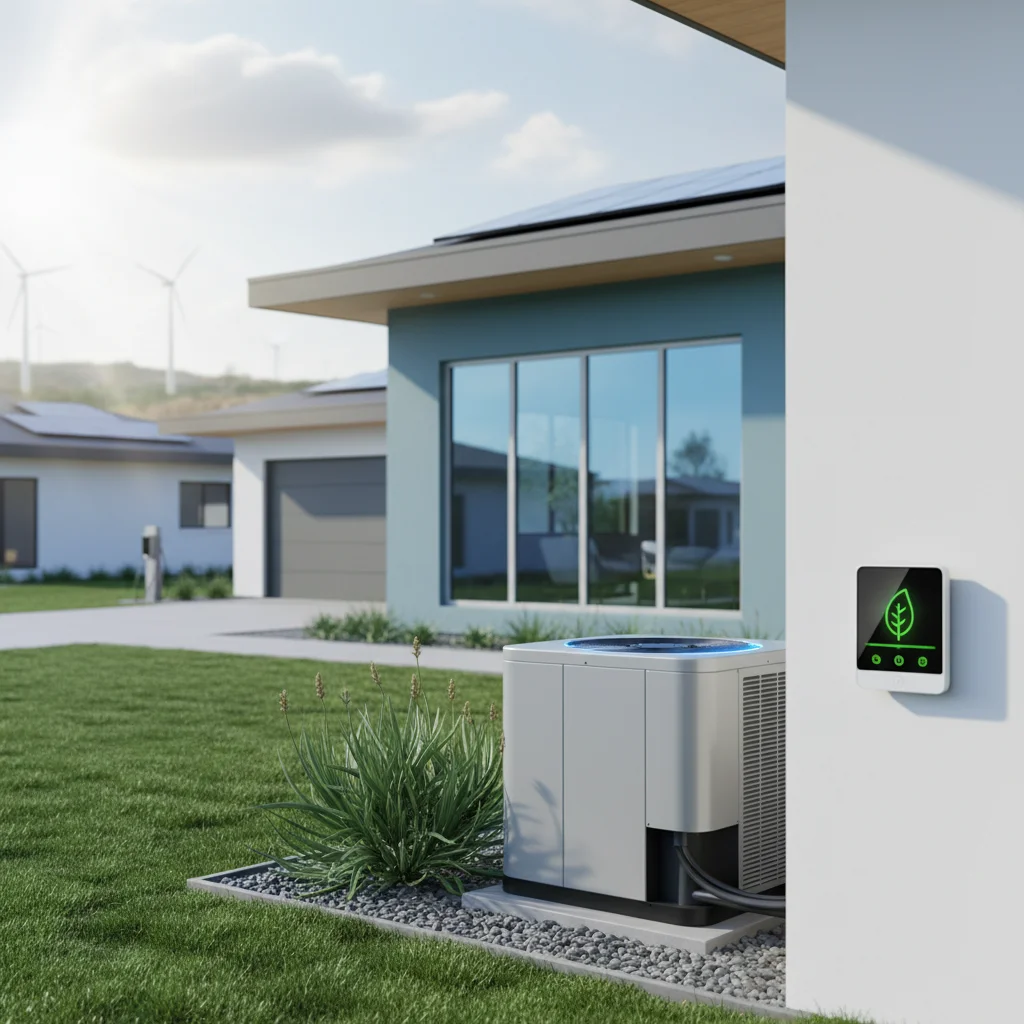
Homeowners across the U.S. left $10.4 billion in HVAC rebates unclaimed in 2025, primarily because they didn't know which programs existed in their ZIP code or how to navigate the application process. Federal rebates through the IRA's Home Efficiency Rebates program now cover up to $8,000 for heat pump installations, while state and utility incentives add another $2,000-$14,000 depending on location and income level.
How Much Can You Save With HVAC Rebates in Your State?
HVAC rebates in 2026 range from $2,000 to $22,000 per household, combining federal IRA credits, state programs, and utility incentives. Low-income households earning 80% or less of area median income qualify for the highest rebate tiers. And savings vary significantly by state—California offers up to $14,000 in state rebates alone, while Wyoming provides $500-$1,500.
The federal Home Efficiency Rebates program launched in January 2026 provides $8,000 for heat pump installations and $4,000 for heat pump water heaters. But these amounts drop to $4,000 and $1,750 for moderate-income households earning 80-150% of area median income. So a family in Denver earning $65,000 annually could stack a $6,000 federal rebate with Colorado's $4,500 state incentive and Xcel Energy's $2,500 utility rebate for a total of $13,000 in savings on a $16,000 cold-climate heat pump installation.
"The Home Efficiency Rebates program prioritizes low- and moderate-income households with rebates covering 50-100% of project costs." — U.S. Department of Energy
State programs operate independently with varying budgets and timelines. And New York's Clean Heat program offers $10,000-$14,000 for heat pumps, while Texas provides $2,000-$3,000. Oregon's High-Efficiency Electric Home Rebate program adds $6,000 for ducted heat pumps and $3,500 for ductless mini-splits.
What HVAC Equipment Qualifies for Rebates Near You?
Federal and state HVAC rebates prioritize electric heat pumps, smart thermostats, and high-efficiency air source systems that meet ENERGY STAR Most Efficient 2026 criteria. Equipment must achieve minimum SEER2 ratings of 16 for air conditioners and 15.2 HSPF2 for heat pumps. The federal Residential Clean Energy Credit (Section 25D) ended for expenditures made after December 31, 2025, and the IRS treats an expenditure as made when installation is completed (IRS FS-2025-05). Federal tax credits for this work have ended, but state, local and utility rebates may still apply; check what is available at your address with the DuloCore rebate calculator.
The IRA Home Efficiency Rebates cover air-to-air heat pumps, air-to-water heat pumps, and heat pump water heaters. But gas furnaces, traditional air conditioners, and propane systems don't qualify. So homeowners replacing gas heating with electric heat pumps receive the highest rebate amounts, while those upgrading from one electric system to another may receive lower incentives. (Note: Federal tax credit percentages and availability are subject to change; the 30% Residential Clean Energy Credit under Section 25D expired December 31, 2025. Verify current incentives at energy.gov.)
Smart thermostats qualify for $150-$300 rebates when installed with heat pump systems. And electrical panel upgrades needed to support heat pump loads receive up to $4,000 in federal rebates plus $600-$2,500 from state programs. Ductwork modifications and weatherization improvements bundled with heat pump installations add another $1,600 in federal rebates.
Utility companies often require pre-approval before equipment purchase. And Pacific Gas & Electric (PG&E) in California mandates contractor certification and equipment verification before issuing the $3,000-$5,500 heat pump rebates. Check your utility's qualified equipment list—some programs exclude specific brands or models despite meeting federal ENERGY STAR standards.
Do You Meet the Income Requirements for HVAC Rebate Programs?
Income limits for HVAC rebates divide into three tiers: low-income (up to 80% AMI), moderate-income (80-150% AMI), and above-moderate (150%+ AMI). Federal rebates provide maximum amounts to the lowest income tier, with reduced amounts or zero coverage for households earning above 150% of area median income. And AMI varies by county—a family of four in San Francisco with $120,000 annual income qualifies as low-income, while the same income in rural Montana exceeds moderate-income thresholds.
The federal program requires tax returns or pay stubs from the past 12 months as income verification. But some state programs accept self-attestation for households under 80% AMI. So California's Tech Clean program allows applicants to check a box confirming income eligibility without submitting documentation, while New York requires W-2 forms and 1040s for all applicants.
| Income Tier | Federal Rebate (Heat Pump) | California Add-On | New York Add-On |
|---|---|---|---|
| ≤80% AMI | $8,000 | $14,000 | $14,000 |
| 80-150% AMI | $4,000 | $5,000 | $6,000 |
| >150% AMI | $0 (tax credit only) | $0 | $0 |
Tribal communities receive separate allocations with relaxed income requirements. And 58 tribes across 14 states now administer HVAC rebate programs with income limits up to 200% AMI, allowing more households to qualify than federal or state programs permit.
What's the Step-by-Step Process to Apply for HVAC Rebates?
HVAC rebate applications follow a four-stage process: pre-approval, contractor selection, installation verification, and payment processing. Most programs require pre-approval before equipment purchase, with 15-45 day review periods. And skipping pre-approval results in automatic rejection—homeowners who install systems before approval lose access to rebates entirely.
Start by visiting your state energy office website or utility provider portal. And submit household income documentation, property ownership proof, and existing HVAC system details. Massachusetts requires a home energy assessment ($50-$150, often rebated) before approving heat pump rebates. Oregon accepts applications without assessments but prioritizes assessed homes in funding allocation.
After approval, select a contractor from your program's approved list. And federal rebates require contractors with BPI Building Analyst certification or equivalent credentials. Installation timelines affect rebate amounts—some utilities offer bonus payments for installations completed within 60 days of approval.
Post-installation, contractors submit photos, equipment serial numbers, and electrical permit documentation. And state programs conduct random inspections on 10-25% of installations to verify compliance. Payment arrives 30-90 days after approval, issued as direct deposit or mailed check. So total timeline from application to payment spans 60-180 days depending on program volume.
Use the free rebate calculator to estimate your specific savings based on location, income, and equipment type.
When Are HVAC Rebate Deadlines and How Do You Check Funding Status?
Federal IRA rebate funding runs through September 2031, but state allocations operate on annual or biannual cycles with earlier depletion dates. California's $300 million allocation for 2026 reached 78% commitment by February 2026, while Vermont's $18 million fund remains at 23% utilization. And programs switch to waitlists when funds deplete—Connecticut added 4,200 households to waitlists in 2025 after exhausting $45 million in four months.
Check funding status on DSIRE databases or state energy office dashboards. And most programs update availability weekly with color-coded indicators: green (open), yellow (limited), red (waitlist). Oregon publishes real-time funding dashboards showing dollars remaining per county.
Application deadlines fall into three categories: rolling acceptance (no deadline), annual cycles (typically December 31), and first-come funding exhaustion. And utility programs often close applications in November to process remaining funds before fiscal year-end. So applying between January-March maximizes approval odds when budgets refresh.
Some states reserve funding for priority populations. And Massachusetts holds back 40% of rebate dollars exclusively for households under 60% AMI, preventing higher-income applicants from depleting funds. New York's funding resets quarterly with separate allocations for each income tier.
Can You Stack Multiple HVAC Rebates and Incentives?
Stacking federal rebates, state incentives, utility rebates, and IRA tax credits is permitted with specific restrictions. Federal rebates cannot exceed 100% of project costs when combined with other programs. And the 30% federal tax credit for heat pump (this federal credit ended for property placed in service after December 31, 2025)s (separate from rebates) applies to out-of-pocket costs after rebates reduce the base amount.
A typical stacking scenario: $18,000 heat pump installation receives $8,000 federal rebate, $5,000 state rebate, and $2,000 utility rebate. The federal Energy Efficient Home Improvement Credit (Section 25C) ended for property placed in service after December 31, 2025 (IRS FS-2025-05). Total savings: $15,900, leaving $2,100 out-of-pocket cost.
But some states prohibit stacking. And Florida utility rebates explicitly exclude homes receiving federal rebates, forcing homeowners to choose one program. Texas allows stacking up to 80% of project costs, rejecting additional rebates beyond that threshold. So verify stacking rules with each program before applying.
Contractor discounts and manufacturer rebates generally don't affect government rebate eligibility. And Carrier's $500 dealer discount stacks with all public rebates. Low-interest financing programs (0-2.99% APR) through utilities or state green banks combine with rebates—Massachusetts offers $25,000 loans at 0% APR for 7 years alongside rebates.
For details on related incentives, see heat pump rebates and energy tax credits.
What Contractor Requirements Apply to HVAC Rebate Programs?
Federal and state HVAC rebate programs mandate contractor licensing, certification, and insurance verification before approving installations. Contractors must hold active HVAC licenses in their jurisdiction, BPI Building Analyst or RESNET HERS Rater certifications, and $1-2 million general liability insurance. And programs maintain approved contractor directories—homeowners who hire unlisted contractors forfeit rebate eligibility.
The federal Home Efficiency Rebates require contractors to complete DOE-approved training modules covering heat pump sizing, load calculations, and refrigerant handling. And contractors submit proof of training completion during program enrollment. Some states add requirements—California mandates HERS Rater verification for all heat pump installations, while Oregon requires Quality Installation Verification (QIV) inspections by third-party verifiers.
"Proper heat pump sizing and installation directly impacts rebate eligibility and long-term efficiency performance." — ENERGY STAR
Contractor workmanship warranties of 1-2 years are standard requirements. And New York's Clean Heat program demands 2-year labor warranties and 10-year equipment warranties from manufacturers. Contractors who receive complaints or fail inspections lose program eligibility—Massachusetts removed 14 contractors in 2025 for improper installations.
Payment structures vary: some programs pay contractors directly, while others reimburse homeowners who pay contractors upfront. And direct-pay programs reduce homeowner out-of-pocket costs but extend contractor payment timelines to 60-90 days. Check HVAC rebates for contractor selection guidance.
Official Sources
- U.S. Department of Energy - Energy Saver — Federal HVAC rebate programs and Home Efficiency Rebates details
- DSIRE Database — Comprehensive state, utility, and federal incentive listings with real-time funding status
- ENERGY STAR — Qualified equipment lists and contractor certification requirements
Frequently Asked Questions
What HVAC rebates are available in my area?
Federal Home Efficiency Rebates provide $4,000-$8,000 for heat pumps based on income, available in all 50 states starting 2026. State programs vary—California offers up to $14,000, New York up to $14,000, and Texas $2,000-$3,000. And utility companies add $500-$5,500 in local incentives. Visit your state energy office website or DSIRE to identify programs by ZIP code.
How much can I save with HVAC rebates?
Combined savings range from $2,000 to $22,000 depending on location, income, and equipment type. Low-income households receive the highest amounts—up to $8,000 federal plus $14,000 state in California or New York. And moderate-income households typically save $6,000-$12,000 total. Calculate your specific savings using a rebate calculator with your ZIP code and income data.
Am I eligible for HVAC rebates?
Eligibility requires household income at or below 150% of area median income for federal rebates. State and utility programs set independent limits—some accept households up to 200% AMI. And property owners or renters with landlord permission qualify. You must install ENERGY STAR certified equipment meeting minimum efficiency standards and use approved contractors.
What is the deadline to apply for HVAC rebates?
Federal rebates accept applications through September 2031, but state allocations operate on annual cycles with earlier depletion. California's 2026 funding is 78% committed as of February, while Vermont remains at 23%. And most programs use first-come funding exhaustion rather than fixed deadlines. Apply between January-March when budgets refresh to maximize approval odds.
How do I claim HVAC rebates from my utility company?
Contact your utility provider to confirm rebate availability and pre-approval requirements. Submit an application with income verification, property details, and equipment specifications. And select an approved contractor from the utility's directory. After installation, the contractor submits verification documents and photos. Payment arrives 30-90 days later via direct deposit or check.
Ready to find your exact HVAC rebate amount? Use our rebate calculator to get a personalized estimate based on your location, income, and equipment type. Enter your ZIP code and see available federal, state, and utility rebates in under 60 seconds.
Last reviewed: April 14, 2026. Reviewed by DuloCore Energy Specialists. About the team.
Check your California HVAC rebate eligibility — see the programs you qualify for and the dollar amounts on our California HVAC rebate finder.