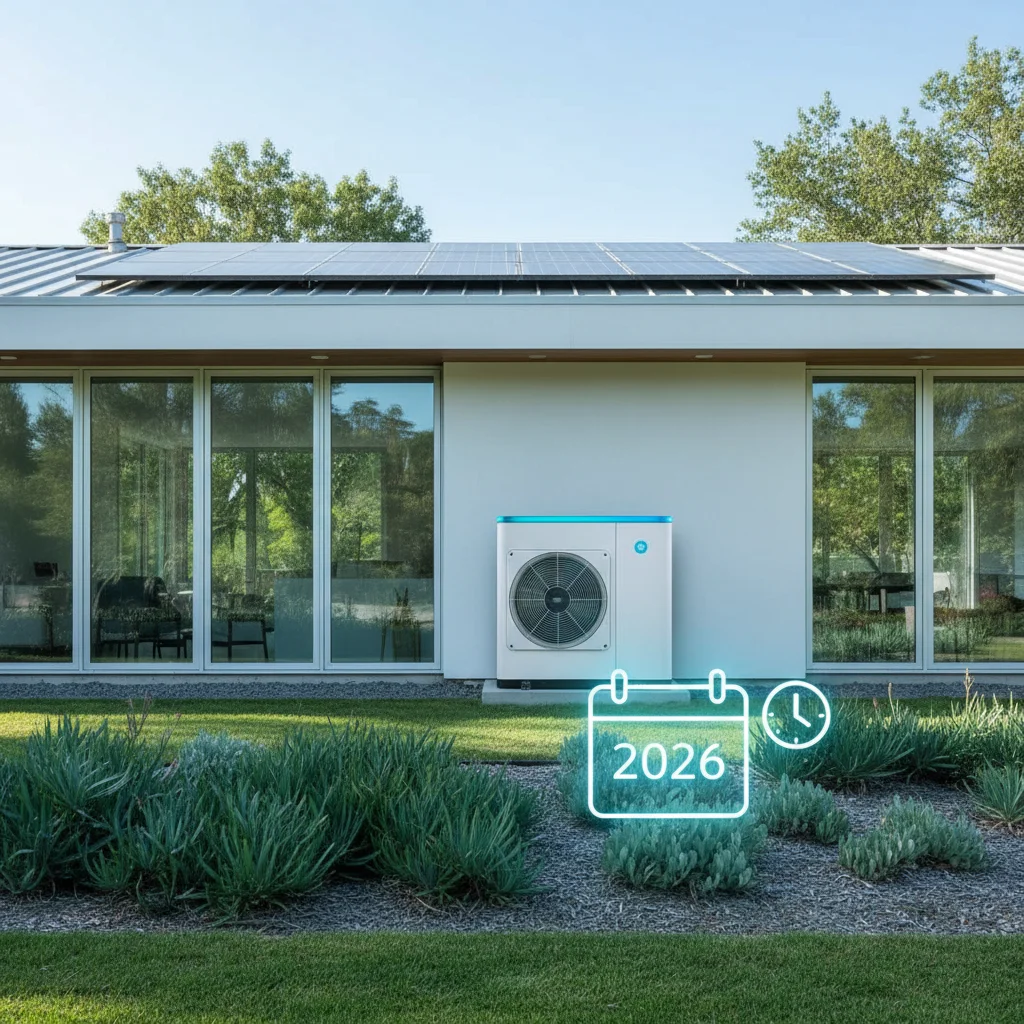
Federal funding for 2026 HVAC rebates hit a critical threshold in March when the Department of Energy announced that 38 states had exhausted more than 60% of their initial IRA allocations within the first fiscal quarter. California burned through $421 million of its $598 million Home Efficiency Rebate allocation in just 87 days, forcing program administrators to implement waitlists and stricter qualifying criteria for heat pump and central air conditioning installations.
What Is the HVAC Rebate Deadline for 2026?
The 2026 HVAC rebate deadline varies by funding source and state. Federal IRA rebates operate on a first-come, first-served basis with no fixed expiration date, but funds deplete when state allocations run out. California's Home Efficiency Rebate program stopped accepting new applications on March 15, 2026 after exhausting its initial allocation. Texas extended its deadline to December 31, 2026 but reduced maximum rebate amounts from $8,000 to $5,000 starting in July. Utility company rebates typically run on fiscal year cycles ending September 30 or December 31, 2026.
Answer Capsule: Federal HVAC rebates in 2026 don't have fixed expiration dates but operate on depleting state allocations that seven states exhausted by Q1 2026, while utility rebates typically expire September 30 or December 31 based on fiscal year cycles and remaining program budgets.
So homeowners face a timing paradox: no official deadline exists, yet real availability shrinks daily as neighbor installations drain state coffers. And the stakes run higher than rebate amounts alone—delayed applications in California now carry 6-12 month waitlist penalties that push installations into 2027 when rebate structures may change entirely.
What's Your Current Funding Status for Available Rebates?
Funding status determines application viability more than published deadlines. The DOE Home Efficiency Rebate Dashboard shows real-time allocation depletion across all 50 states and territories. California, New York, Massachusetts, Oregon, and Washington entered "critical allocation status" on March 12, 2026 when remaining funds dropped below 35% of initial awards. Arizona and Nevada implemented hybrid queuing systems that accept applications but delay approval until quarterly fund replenishment occurs. And Colorado shifted to a lottery-based system on February 1, 2026 after receiving 47,000 applications for 12,000 available rebate slots.
Check your state's current allocation status at energy.gov/scep before starting any HVAC project. Oregon's allocation dropped from $187 million to $41 million between January 1 and March 31, 2026—a 78% depletion rate that caught contractors and homeowners off-guard. But Texas, Florida, and Illinois maintain allocation levels above 70% through March 2026, offering more reliable rebate access for mid-year installations.
Utility company programs operate on separate budgets. Pacific Gas & Electric allocated $89 million for 2026 HVAC rebates and had depleted only 31% by March 31. Southern California Edison maintains $143 million with 42% utilization through Q1. Homeowners in utility service territories with lower depletion rates face less deadline pressure than those relying solely on state-administered IRA funds.
How Much Can You Save With 2026 HVAC Rebates?
Federal Home Efficiency Rebates provide up to $8,000 for heat pump installations when household income falls below 80% of area median income (AMI). Households between 80-150% AMI qualify for rebates up to $4,000. Central air conditioning systems qualify for $1,600-$3,200 depending on efficiency ratings and income thresholds. The federal Energy Efficient Home Improvement Credit (Section 25C) ended for property placed in service after December 31, 2025 (IRS FS-2025-05). Federal tax credits for this work have ended, but state, local and utility rebates may still apply; check what is available at your address with the DuloCore rebate calculator.
California's state rebate stacks on top of federal programs. The Tech Clean California initiative added $2,500-$4,500 for ductless mini-split heat pumps through March 2026 before fund depletion paused new applications. Oregon's High Efficiency Electric Homes program combines federal and state funds to deliver total rebates reaching $12,000-$15,000 for whole-home heat pump upgrades. But these stacked programs exhaust funding fastest, creating tighter effective deadlines than single-source rebates.
Utility rebates layer additional savings. PG&E offers $3,000-$5,500 for qualifying heat pump installations. Con Edison in New York provides $3,000-$12,000 depending on system capacity and efficiency. Use our free rebate calculator to find your exact savings across all available federal, state, and utility programs based on your location and income level.
What Documentation Do You Need to Claim Your Rebate?
Income verification represents the primary documentation requirement for federal Home Efficiency Rebates. Applicants submit IRS Form 1040 from the most recent tax year, W-2 forms, and pay stubs covering the last 60 days. Self-employed applicants provide Schedule C or Form 1099 documentation. And households without traditional income documentation submit alternative proof through Social Security benefits statements, pension distributions, or unemployment compensation records.
Equipment specifications require manufacturer model numbers, AHRI certificates showing SEER2 ratings and HSPF2 performance metrics, and contractor invoices itemizing equipment costs separately from labor charges. California requires CEE Tier 3 qualification for heat pumps, while Massachusetts demands Cold Climate Heat Pump certification for installations in climate zones 5-7. Oregon mandates Residential Energy Conservation Ordinance (RECO) inspection reports for homes built before 1985.
Contractor licensing documentation includes state license numbers, liability insurance certificates with minimum $1 million coverage, and worker's compensation insurance verification. Most state programs require contractors to register as approved rebate providers before homeowners can submit applications. And photographic documentation showing equipment serial numbers, installed location, and thermostat settings has become standard since 2026 program updates aimed at reducing fraudulent claims.
Property ownership verification through recent property tax bills, deed records, or mortgage statements confirms applicant eligibility. Rental property owners qualify for commercial rebate programs with different requirements and lower rebate amounts. The documentation checklist varies by state but typically includes 8-12 separate items that applications require for approval processing.
Do You Need Pre-Approval Before Installing Your HVAC System?
Pre-approval requirements depend on state program design. California, Oregon, Washington, Massachusetts, and New York mandate pre-approval applications before homeowners purchase or install equipment. Applications submitted after installation face automatic rejection in these states—a policy that caught 11,000 California applicants off-guard in January 2026 when post-installation claims totaling $87 million were denied. Texas, Florida, Arizona, and Nevada accept post-installation applications within 90 days of project completion, offering more flexibility but creating uncertainty about fund availability.
The pre-approval process takes 14-45 business days depending on state processing capacity and application volume. California's processing time ballooned from 18 days in January 2026 to 39 days by March as application volume exceeded projections by 340%. Oregon implemented expedited processing with 10-day turnaround for applications submitted by certified contractors who handle documentation submission. And Massachusetts introduced a parallel fast-track system that approves applications within 5 business days when contractors guarantee equipment specifications meet program requirements.
Pre-approval locks in rebate amounts even if program changes occur before installation. Homeowners who received pre-approval in January 2026 maintained $8,000 rebate eligibility despite California's March reduction to $6,000 for new applications. But pre-approval typically expires after 120-180 days, requiring installation completion within that window to avoid reapplication requirements.
Utility rebates generally don't require pre-approval but recommend it for projects exceeding $5,000 in rebate value. PG&E processes post-installation applications within 30 days but offers 7-day pre-approval processing that contractors prefer for project planning and financing arrangements.
How Does the 2026 HVAC Rebate Process Compare to Previous Years?
The 2026 rebate landscape shifted dramatically from the 2024-2025 transition period when Section 25C and 25D tax credits ended and IRA programs launched. Income verification requirements tightened after 2025 audits revealed $210 million in improperly claimed rebates across 12 states. California implemented fraud detection systems that cross-reference applications against property records, prior rebate claims, and contractor licensing databases—adding 8-12 days to processing times but reducing fraudulent approvals by 68%.
State allocation depletion rates in 2026 run 3-4 times faster than 2025 projections anticipated. The DOE allocated funds assuming 18-24 month program lifecycles, but actual 2026 depletion suggests 6-9 month exhaustion timelines in high-demand states. And this accelerated spending forced mid-year program modifications that 2025 guidelines didn't account for—waitlists, reduced rebate amounts, and stricter qualifying criteria emerged as real-time responses to overwhelming demand.
"2026 Home Efficiency Rebate applications exceeded DOE projections by 280% in Q1, forcing 15 states to implement queue systems, reduced rebate amounts, or temporary application pauses to manage fund depletion and ensure equitable distribution through year-end." — Database of State Incentives for Renewables & Efficiency
Contractor registration requirements expanded in 2026. States now mandate background checks, bonding requirements reaching $50,000-$100,000, and completion of fraud prevention training before approving rebate provider status. Oregon disqualified 127 contractors between January and March 2026 for documentation violations or suspicious application patterns. But these enhanced requirements improved claim accuracy from 73% in 2025 to 89% by Q1 2026.
The 2026 process also introduces real-time allocation tracking that didn't exist in 2025. Homeowners and contractors check state dashboards showing remaining funds, current processing times, and estimated application approval rates. This transparency helps homeowners make informed timing decisions but also creates application surges when depletion warnings appear—California saw 12,000 applications submitted in the 48 hours after its March allocation warning, overwhelming processing systems.
Federal energy tax credits continue through 2032 with 30% cost coverage, providing more stability than state rebates. But the tax credit requires sufficient tax liability to claim, limiting accessibility for lower-income households that benefit most from direct rebates. Combined federal tax credit and state rebate programs deliver maximum savings but require careful coordination of application timing, documentation, and installation scheduling.
Official Sources
- DOE Home Efficiency Rebates — Federal rebate program guidance, state allocation tracking, and application resources
- DSIRE Database — Comprehensive state and utility rebate program directory with current funding status
- ENERGY STAR HVAC Guide — Equipment efficiency requirements and qualifying specifications
Related Reading: Learn more about Home Energy Monitor Devices 2026 and Hvac Rebate Program.
Frequently Asked Questions
What is the HVAC rebate deadline for 2026?
Federal IRA rebates don't have fixed expiration dates but operate on first-come, first-served state allocations. Seven states exhausted initial funding by March 2026, creating de facto deadlines. California stopped accepting applications March 15, 2026. Texas extends through December 31, 2026 but reduced amounts in July. Utility rebates typically expire September 30 or December 31, 2026 based on fiscal year cycles.
How much can I save with an HVAC rebate in 2026?
Federal rebates provide $1,600-$8,000 depending on equipment type and income level. The federal Energy Efficient Home Improvement Credit (Section 25C) ended for property placed in service after December 31, 2025 (IRS FS-2025-05). State programs add $2,500-$5,500 in California and Oregon. Utility rebates contribute $3,000-$12,000. Combined savings reach $16,000-$24,000 for qualifying heat pump installations when stacking federal, state, and utility programs.
Am I eligible for federal HVAC rebates in 2026?
Homeowners with income below 150% of area median income (AMI) qualify for federal Home Efficiency Rebates. Households under 80% AMI receive up to $8,000 for heat pumps. Those between 80-150% AMI get up to $4,000. Property ownership verification, equipment efficiency requirements (SEER2 ratings), and contractor licensing documentation determine final eligibility. Rental properties don't qualify for residential rebates.
What's the difference between federal and state HVAC rebates?
Federal rebates operate through state-administered programs using IRA funds with standardized income thresholds and equipment requirements. State rebates use separate allocations with unique eligibility criteria, equipment specifications, and application processes. Federal programs provide $1,600-$8,000 based on income and equipment. States add $2,500-$5,500. Federal programs maintain consistent rules nationwide while state programs vary significantly in requirements and funding availability.
Do I need to install my HVAC system before the rebate deadline?
Installation timing requirements vary by state. California, Oregon, Washington, Massachusetts, and New York require pre-approval before purchase or installation—post-installation applications face automatic rejection. Texas, Florida, Arizona, and Nevada accept applications within 90 days after installation completion. Pre-approval locks in rebate amounts despite subsequent program changes and prevents application rejection from fund depletion during installation delays.
Ready to maximize your HVAC rebate savings? Our rebate calculator analyzes all available federal, state, and utility programs based on your location, income level, and equipment specifications. Get your personalized savings estimate in under 2 minutes and receive a comprehensive documentation checklist for your application. Start your calculation now and lock in 2026 rebate amounts before your state allocation runs out.
Updated on April 14, 2026. Fact-checked by DuloCore Editors. About our research team.
Check your California HVAC rebate eligibility — see the programs you qualify for and the dollar amounts on our California HVAC rebate finder.