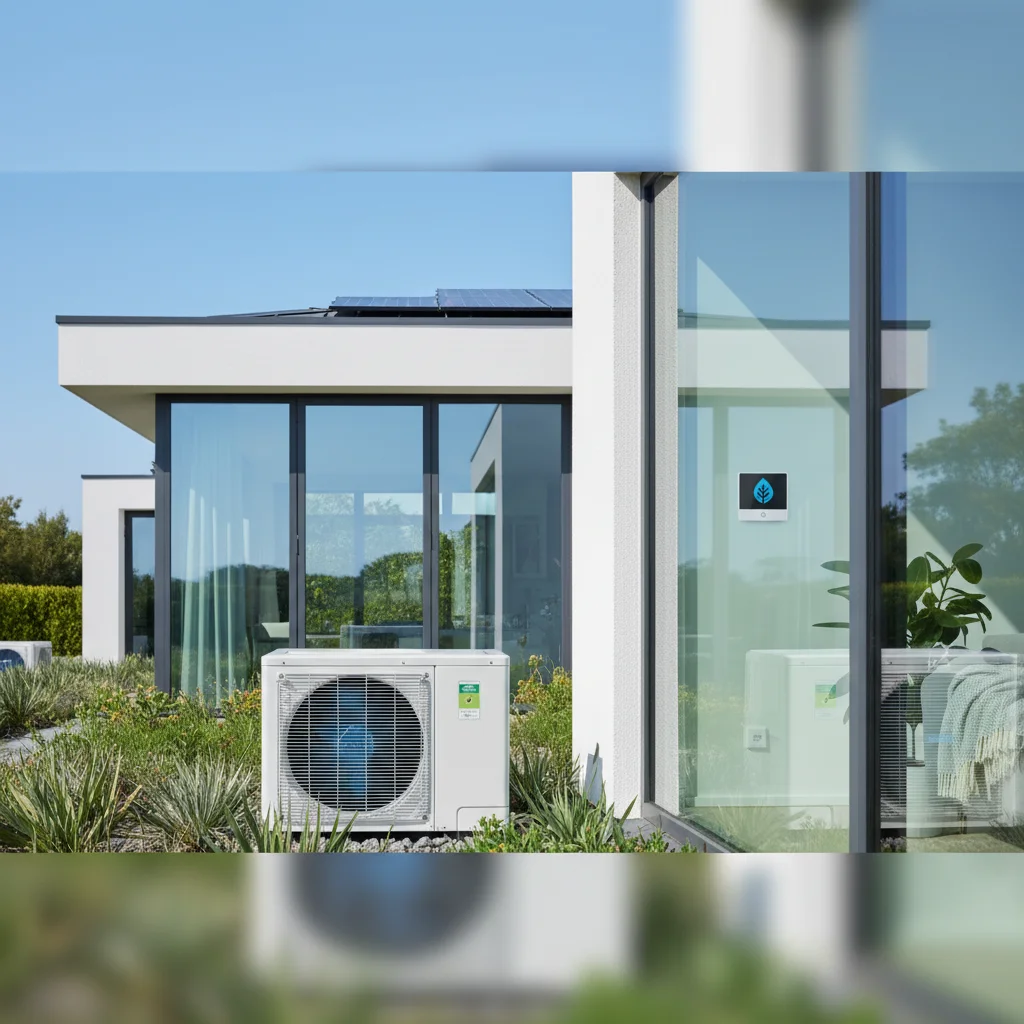
Homeowners waste $500-900 annually on inefficient HVAC systems—a total that climbs to $1,200+ in poorly sealed homes with outdated equipment. And most of that loss happens without anyone noticing until the utility bill arrives. The typical American household spends $2,200 per year on energy costs, with heating and cooling accounting for 50-70% of that total. But simple HVAC energy savings strategies can cut those costs by 20-40% while qualifying households for federal tax credits and state rebates worth $2,000-8,000.
How Long Does It Take to Recoup Your Investment in Energy-Saving HVAC Upgrades?
HVAC energy savings tips in 2026 combine no-cost maintenance habits with equipment upgrades that pay for themselves through reduced utility bills. The federal home energy tax credits (Sections 25C and 25D) ended for projects completed after December 31, 2025 (IRS FS-2025-05). Federal tax credits for this work have ended, but state, local and utility rebates may still apply; check what is available at your address with the DuloCore rebate calculator. California homeowners access additional rebates through utility programs and state initiatives, with combined incentives reaching $8,000-14,000 for comprehensive upgrades.
So what's actually at stake here? The average HVAC system operates at 60-70% efficiency after 10 years, meaning 30-40% of heating and cooling energy escapes through duct leaks, poor insulation, and equipment wear. That translates to $660-880 in wasted energy costs annually for a household spending $2,200 on utilities. And the gap widens each year as equipment ages and seals deteriorate.
Payback periods for HVAC efficiency upgrades range from immediate returns to 5-12 years depending on the intervention. Programmable thermostat installation costs $100-250 and saves $180 annually, recovering costs in 7-14 months. Air sealing and duct repair averages $1,000-2,500 with annual savings of $300-500, yielding a 2-5 year payback. High-efficiency heat pump systems cost $4,000-8,000 after federal credits but save $600-1,200 annually, paying for themselves in 3-7 years.
"Heating and cooling account for about half of a home's total energy use, making them the largest energy expense for most homes." — U.S. Department of Energy
| Upgrade Type | Cost After Incentives | Annual Savings | Payback Period |
|---|---|---|---|
| Programmable Thermostat | $100-250 | $180 | 7-14 months |
| Air Sealing & Duct Repair | $1,000-2,500 | $300-500 | 2-5 years |
| High-Efficiency Heat Pump | $4,000-8,000 | $600-1,200 | 3-7 years |
| Geothermal System | $15,000-25,000 | $1,500-2,500 | 6-10 years |
What's the Payback Period for Different HVAC Efficiency Improvements?
Different HVAC improvements deliver varying returns based on upfront cost and energy savings potential. No-cost interventions like filter changes every 1-3 months, cleaning outdoor condenser coils, and clearing vents yield immediate returns. Annual professional maintenance costs $150-300 but prevents 95% of avoidable HVAC failures and maintains peak efficiency, saving $200-400 annually through optimized performance and avoided emergency repairs.
Mid-range upgrades include programmable or smart thermostats ($100-300), ceiling fans ($50-150 per room), and window treatments ($100-500). Smart thermostats learn household patterns and adjust temperatures automatically, reducing heating and cooling costs by 10-23%. But the savings depend on existing usage patterns—households that already maintain tight temperature control see smaller benefits than those currently heating or cooling empty homes.
Equipment replacement offers the longest payback but highest total savings. A 16 SEER air conditioner costs $3,500-6,000 installed and saves $300-500 annually compared to a 10 SEER unit. Heat pump systems cost $4,000-8,000 after federal credits and save $600-1,200 annually by providing both heating and cooling at 300-400% efficiency. Geothermal systems require $15,000-25,000 after incentives but deliver 400-600% efficiency with $1,500-2,500 in annual savings.
Or consider ductless mini-split systems at $2,000-5,000 per zone. These eliminate duct losses of 20-30% and allow room-by-room temperature control, reducing wasted heating and cooling in unused spaces. Homes with three zones save $400-700 annually compared to traditional forced-air systems.
Calculate your specific savings potential and available incentives with the rebate calculator to identify which upgrades deliver the fastest payback for your home.
How Do HVAC Upgrades Compare to Other Home Energy Savings Methods?
HVAC efficiency improvements compete with insulation, windows, and solar panels for home energy investment dollars. But HVAC upgrades deliver faster payback periods than most alternatives. Attic insulation costs $1,500-3,500 and saves $200-400 annually with a 4-9 year payback. Window replacement runs $8,000-15,000 for an average home with $300-500 in annual savings, yielding a 16-30 year payback that exceeds typical window lifespan.
Solar panels cost $15,000-25,000 after federal tax credits and save $1,000-2,000 annually, paying for themselves in 8-13 years. And solar requires sufficient roof space, southern exposure, and strong sunlight hours—limitations that don't apply to HVAC upgrades. Combining solar with HVAC efficiency maximizes total savings since efficient systems reduce the required solar array size and cost.
Water heater replacement costs $1,200-3,500 for heat pump models that save $300-500 annually, yielding a 2-7 year payback. LED lighting conversion costs $200-600 and saves $150-300 annually with a 1-2 year payback. So the optimal strategy sequences investments by payback period—start with lighting and programmable thermostats, then progress to HVAC equipment and insulation.
The Database of State Incentives for Renewables & Efficiency tracks 1,200+ programs across all 50 states. California homeowners access utility rebates through PG&E, SCE, and SDG&E plus statewide programs like the Self-Generation Incentive Program. Federal energy tax credits through the Inflation Reduction Act provide 30% cost coverage for qualified improvements through 2032.
Which Energy-Saving HVAC Alternatives Offer the Best Long-Term Value?
Heat pumps deliver the highest efficiency ratings among residential HVAC systems at 300-400% efficiency compared to 80-98% for gas furnaces. Cold-climate heat pumps maintain performance at temperatures down to -15°F, making them viable across all California climate zones. Air-source heat pumps cost $4,000-8,000 after incentives while ground-source geothermal systems run $15,000-25,000.
Geothermal systems achieve 400-600% efficiency by transferring heat to or from the stable 50-60°F ground temperature rather than outdoor air. But installation requires sufficient land area for horizontal loops or permits for vertical drilling. So single-family homes with yards accommodate geothermal systems while townhomes and condos typically can't.
Ductless mini-split systems eliminate the 20-30% energy loss from leaky ductwork by delivering conditioned air directly to each room. Installation costs $2,000-5,000 per zone with multiple indoor units connecting to a single outdoor compressor. Three-zone systems cost $6,000-15,000 but allow precise temperature control and eliminate heated or cooled air flowing through unconditioned attics and crawlspaces.
Variable-speed HVAC systems adjust output continuously rather than cycling on and off, maintaining more consistent temperatures while using 20-40% less energy than single-speed equipment. Variable-speed air handlers cost $800-1,500 more than standard models but qualify for federal tax credits and deliver superior humidity control plus quieter operation.
"ENERGY STAR certified heat pumps can reduce your heating and cooling costs by as much as 20 percent." — ENERGY STAR
How Long Will Your New HVAC System Last and What Does That Mean for ROI?
HVAC system lifespan directly impacts return on investment since longer-lasting equipment spreads the initial cost over more years of energy savings. Standard air conditioners last 15-20 years while furnaces operate for 15-30 years depending on fuel type and maintenance quality. Heat pumps have a 15-20 year lifespan for air-source units and 20-25 years for geothermal systems.
Annual professional maintenance extends equipment life by 5-10 years and maintains efficiency within 95% of original performance. Homes that skip maintenance see efficiency decline by 5% annually and face equipment failure at 10-12 years instead of 15-20. So the $150-300 annual maintenance cost prevents $4,000-8,000 in premature replacement expenses.
Geothermal ground loops last 50+ years while heat pumps and indoor components require replacement at 20-25 years. That means the underground infrastructure remains viable through multiple equipment cycles, reducing future replacement costs to $3,000-6,000 for heat pump components only. And federal tax credits apply to replacement equipment, not just initial installations.
System lifespan affects total cost of ownership calculations significantly. A $6,000 heat pump saving $900 annually and lasting 18 years delivers $16,200 in total savings minus the initial cost for a $10,200 net benefit. But if poor maintenance shortens lifespan to 12 years, total savings drop to $10,800 with a $4,800 net benefit—reducing ROI by 52%.
What's the Total Cost of Ownership When You Factor in HVAC Lifespan and Efficiency Gains?
Total cost of ownership includes purchase price, installation, annual maintenance, repairs, energy consumption, and replacement timing. Gas furnaces cost $2,500-6,000 installed with $800-1,500 in annual heating costs and $150-300 in maintenance. Over a 20-year lifespan, total cost reaches $21,500-36,000.
Heat pumps cost $4,000-8,000 after federal credits with $400-900 in annual heating and cooling costs and $150-300 in maintenance. Twenty-year total cost runs $12,000-24,000—saving $9,500-12,000 compared to separate furnace and air conditioner systems. And heat pumps eliminate the need for two separate systems plus two maintenance schedules.
Geothermal systems cost $15,000-25,000 initially but only $200-500 annually in energy costs with $150-300 maintenance. Over 25 years, total cost reaches $24,750-33,000—competitive with gas furnace costs despite the higher upfront investment. But geothermal systems then operate for another 25 years with only heat pump replacement needed at $3,000-6,000.
Energy cost inflation affects total ownership cost significantly. If electricity rates increase 3% annually, a heat pump's $700 annual operating cost grows to $1,265 by year 20. But efficiency improvements offset some inflation impact—a 16 SEER unit maintains lower costs than a 10 SEER system even as rates climb.
Homes with poor insulation, leaky ducts, or inadequate air sealing see 20-40% higher energy costs regardless of HVAC system efficiency. So comprehensive HVAC efficiency improvements deliver better returns than equipment upgrades alone.
Official Sources
- U.S. Department of Energy - Energy Saver — Federal guidance on home energy efficiency improvements and available rebate programs
- ENERGY STAR HVAC Guide — Certification standards and efficiency ratings for residential HVAC equipment
- DSIRE USA — Comprehensive database of state incentives for renewables and efficiency improvements
Related Reading: Learn more about Caulking And Sealing Energy Savings and Chimney Damper Energy Savings.
Related Reading: Learn more about Chimney Damper Energy Savings and Cool Roof Energy Savings.
Frequently Asked Questions
What are the most effective HVAC energy saving tips for homeowners?
The most effective no-cost HVAC energy savings tips include changing air filters every 1-3 months, setting thermostats to 68°F in winter and 78°F in summer, closing vents in unused rooms, and clearing debris from outdoor condenser units. Programmable thermostats save $180 annually by automatically adjusting temperatures when homes are empty. Annual professional maintenance costs $150-300 but prevents efficiency decline and extends equipment life by 5-10 years. Sealing duct leaks saves $300-500 annually by eliminating 20-30% of conditioned air loss.
How much money can you save by improving your HVAC system efficiency?
HVAC efficiency improvements save $300-2,500 annually depending on current system condition and upgrades performed. Programmable thermostats save $180 per year. Air sealing and duct repair saves $300-500. High-efficiency heat pump replacement saves $600-1,200 annually compared to older furnace and air conditioner systems. Geothermal systems save $1,500-2,500 annually. Combined improvements—air sealing, duct repair, heat pump installation, and smart thermostat—can reduce total heating and cooling costs by 40-60%, lowering a $2,200 annual energy bill to $900-1,300.
Is your home eligible for HVAC energy efficiency rebates or tax credits?
The federal home energy tax credits (Sections 25C and 25D) ended for projects completed after December 31, 2025 (IRS FS-2025-05). The credit caps at $2,000 annually for air-source heat pumps and has no maximum for geothermal systems. State and utility rebates add $500-6,000 depending on income level and equipment type. Income-qualified households access enhanced rebates up to $8,000 for heat pump installations. All homes qualify for federal credits regardless of income, but rebate amounts vary by utility territory and program funding availability.
What is the difference between regular maintenance and energy-saving HVAC upgrades?
Regular maintenance preserves existing system efficiency through filter changes, coil cleaning, refrigerant checks, and component inspection costing $150-300 annually. Energy-saving upgrades improve efficiency beyond original specifications through equipment replacement, duct sealing, insulation improvements, or smart controls costing $1,000-25,000. Maintenance prevents efficiency decline from 100% to 70% over 10 years. Upgrades increase baseline efficiency from 80% to 95-98%. Both are necessary—maintenance protects upgrade investments by ensuring new equipment operates at peak performance throughout its 15-25 year lifespan.
How long does it take to recoup the cost of HVAC energy saving improvements?
Payback periods range from 7 months to 10 years depending on improvement type and energy savings magnitude. Programmable thermostats pay for themselves in 7-14 months. Air sealing and duct repair recovers costs in 2-5 years. High-efficiency heat pumps break even in 3-7 years. Geothermal systems require 6-10 years to recoup initial investment. Federal tax credits and state rebates reduce upfront costs by 30-50%, shortening payback periods proportionally. Homes with older equipment, poor insulation, or extreme climates see faster payback than well-maintained homes in moderate climates.
Ready to find out how much you can save on HVAC upgrades? Use the rebate calculator to discover available federal tax credits, California rebates, and utility incentives for your home—plus get personalized payback period estimates based on your current energy costs.
Last updated April 14, 2026 — reviewed by DuloCore Editorial. About our authors.
Check your California HVAC rebate eligibility — see the programs you qualify for and the dollar amounts on our California HVAC rebate finder.