Update (2026): The federal Energy Efficient Home Improvement Credit (Section 25C) expired December 31, 2025, following the passage of the OBBBA. Check state and local programs for current incentives.
A standard dark roof can reach temperatures of 150°F or more on a hot summer day, radiating that heat directly into your home and forcing your air conditioner to work overtime. This intense heat absorption is a primary driver of peak energy demand in residential areas, leading to strained power grids and unnecessarily high utility bills for millions of homeowners. So addressing this single point of failure offers a direct path to lower energy consumption.
How Much Can Cool Roofs Save You, and What Rebates Are Available in Your State and Through Your Utility?
Cool roof rebates in 2026 provide homeowners with direct savings from $0.20 to $1.00 per square foot, varying by specific state and utility programs. These incentives directly lower the upfront installation cost, which averages between $8,000 and $15,000 for a typical residential roof replacement.
Cool roofs reduce surface temperatures by over 50°F, directly translating into a 10-15% reduction in annual cooling costs for a typical single-family home. So for a household spending $2,000 annually on cooling, this amounts to $200-$300 in savings each year. The core financial tension is the higher initial cost of cool roof materials versus the long-term energy savings and available incentives. But state and utility rebates are designed to bridge this gap. For instance, California's programs offer up to $1.00 per square foot, while some Arizona utilities provide a flat $300 rebate for qualifying installations. The total financial benefit combines these direct rebates with federal energy tax credits, which cover 30% of the project cost up to $1,200 annually. These stacked incentives make the return on investment period as short as 5-7 years.
What Specific Cool Roof Equipment Qualifies, and Are There Income Limits for These Rebates?
Qualifying cool roof equipment for 2026 rebates must meet specific Solar Reflectance Index (SRI) values, typically 78 for low-slope roofs and 25 for steep-slope roofs. Eligible products include factory-coated metal, reflective asphalt shingles, and specialized tile or membrane systems listed by the Cool Roof Rating Council (CRRC).
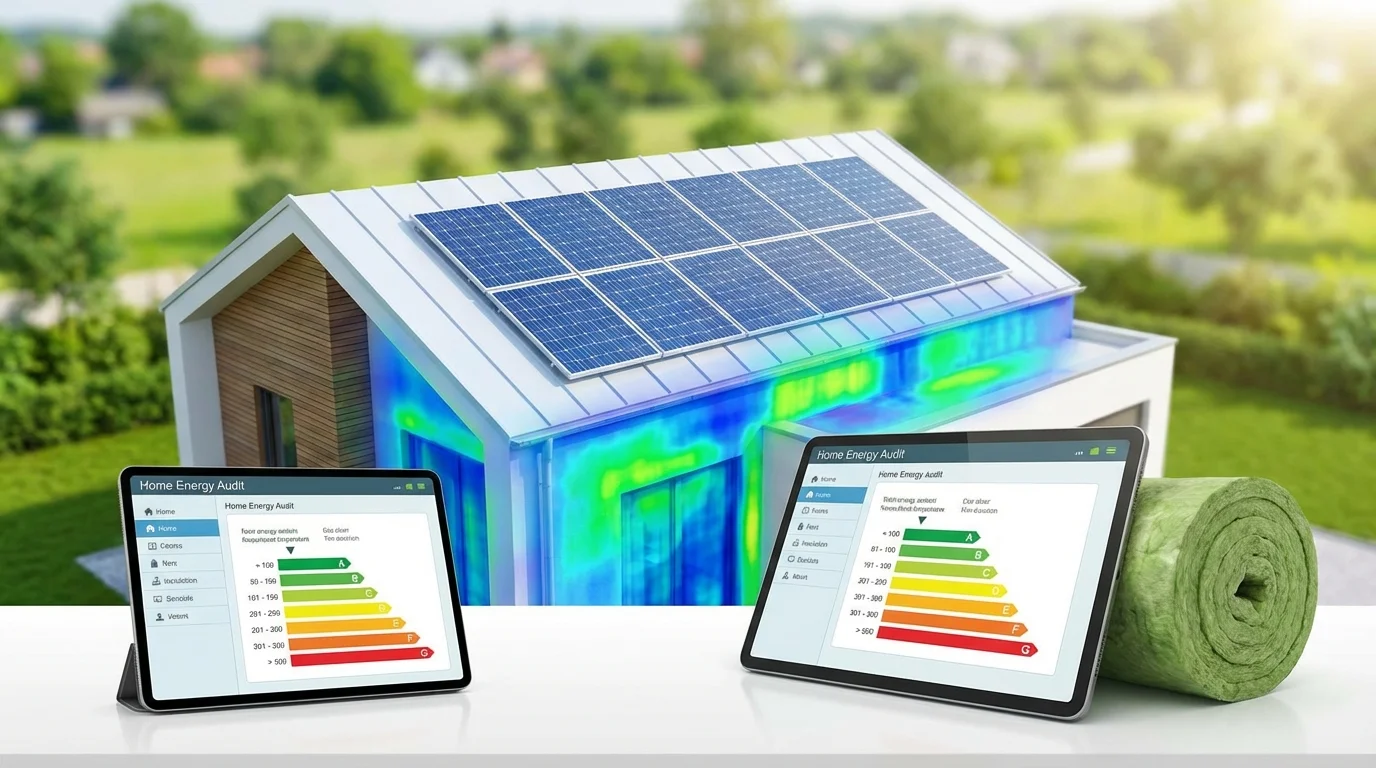
Most 2026 state and utility cool roof rebate programs don't have specific income limits for standard rebates, making them accessible to a broad range of homeowners. But some enhanced, income-based programs exist for low-to-moderate-income (LMI) households, offering increased rebate amounts or covering up to 100% of the installation cost. For example, a standard utility rebate provides $0.50/sq. ft., while the LMI version offers $1.25/sq. ft. And products must be on the CRRC Rated Products Directory to be eligible. So homeowners must verify their chosen material's SRI and CRRC ID number before purchase. A complete home energy audit often identifies cool roofs as a priority upgrade, and the report can be used to support rebate applications.
"To be considered a cool roof, a roofing product must have high solar reflectance and high thermal emittance." — U.S. Department of Energy
What Is the Application Process for Cool Roof Rebates, and Are There Specific Contractor Requirements?
The application process for 2026 cool roof rebates typically involves a pre-approval step, followed by post-installation submission of invoices and product specification sheets. Many programs require the use of a licensed, program-approved contractor to ensure the installation meets quality standards and CRRC guidelines.
Applying for a cool roof rebate begins before the project starts. So homeowners first identify their local utility or state program and submit a reservation application, often online. And this step confirms funding availability. After the project is complete, the homeowner or contractor submits the final invoice, proof of purchase for the CRRC-rated materials, and photos of the completed roof. But some utilities mandate that only contractors from their pre-approved network perform the work, so it's critical to verify this requirement upfront. For example, the SMUD utility program in Sacramento requires contractors to be part of their Contractor Network. The rebate check is typically mailed 6-8 weeks after the final application is approved. Use our free rebate calculator to find your savings.
What Are the Deadlines and Current Funding Status for Cool Roof Incentive Programs?
Most 2026 state and utility cool roof rebate programs operate on an annual cycle with application deadlines typically falling on December 31, 2026. Funding is allocated on a first-come, first-served basis, and popular programs often exhaust their budgets by the third or fourth quarter.
Program deadlines and funding status are the most critical variables for homeowners to track. So it's essential to check the program's official website for real-time funding levels before committing to a project. And many programs that run out of funds in a given year will replenish their budgets on January 1 of the following year. For example, the Los Angeles Department of Water and Power's cool roof program frequently reaches its funding cap by October. The federal Inflation Reduction Act tax credits, however, don't have a funding cap and are available for all qualifying installations placed in service through December 31, 2025. But state and local incentives are not guaranteed and require prompt action to secure.
Can You Stack Cool Roof Rebates with Other Energy Efficiency Incentives?
Homeowners can stack cool roof rebates with other incentives, including federal tax credits and rebates for attic insulation or new HVAC systems. This strategy maximizes total savings, often reducing the net project cost by 40-60% when combining a utility rebate, state incentive, and federal credit.
Stacking incentives is a powerful financial strategy. For instance, a homeowner in 2026 can receive a $500 utility rebate for a cool roof installation. The federal home energy tax credits (Sections 25C and 25D) ended for projects completed after December 31, 2025 (IRS FS-2025-05). Federal tax credits for this work have ended, but state, local and utility rebates may still apply; check what is available at your address with the DuloCore rebate calculator. If they also upgrade their attic insulation at the same time, they can claim an additional rebate for that measure. So the key is to ensure each program's rules allow for stacking; most do. This approach is particularly effective when combining a cool roof with new, high-efficiency heat pump rebates, as the reduced cooling load from the roof allows for a smaller, less expensive HVAC unit. Verifying eligibility for each program separately is the first step.
"Many utilities and state or local governments offer rebates or other incentives for energy-efficient products and improvements. DSIRE is the most comprehensive source of information on these incentives." — DSIRE
Cool Roof Incentive Program Comparison (2026)
| Program Name | Rebate/Credit Amount | Key Eligibility Requirements |
|---|---|---|
| Federal IRA Tax Credit | Ended Dec 31, 2025 | — |
| California COOLCal Program | Up to $1.00 per sq. ft. | Must meet Title 24 SRI requirements |
| Austin Energy (TX) Rebate | $0.35 per sq. ft. | Minimum SRI of 75; pre-approval required |
Official Sources
- ENERGY STAR Roof Products — Official list of qualifying cool roof products and technical specifications.
- DSIRE Database — A comprehensive, searchable database of state, local, and utility renewable energy and efficiency incentives.
- IRS Home Energy Credits — Detailed guidance from the IRS on claiming federal tax credits for energy-efficient home improvements. (note: the federal 25C and 25D credits ended for projects completed after December 31, 2025)
Related Reading: Learn more about Energy Star Appliances Savings Guide and Home Automation Energy Savings.
Related Reading: Learn more about Radiant Barrier Energy Savings.
Related Reading: Learn more about Attic Insulation Energy Savings.
Frequently Asked Questions
How much can I expect to save on my energy bills with a cool roof?
A cool roof reduces annual cooling costs by 10-15% on average. For a home with a $2,000 yearly cooling bill, this translates to $200-$300 in savings. So in hotter climates like Arizona or Florida, the savings can exceed $400 per year, as the roof reduces heat transfer into the home by up to 50°F.
What types of cool roofs are eligible for energy saving rebates?
Eligible cool roofs for 2026 rebates include products with high solar reflectance, such as factory-coated metal, reflective asphalt shingles, and certain tile and membrane systems. Products must be listed on the Cool Roof Rating Council (CRRC) directory and meet specific Solar Reflectance Index (SRI) values, typically 78 for low-slope and 25 for steep-slope roofs.
What is the process to apply for cool roof energy saving incentives?
The application process generally involves four steps: 1) Confirm eligibility with your local utility or state program. 2) Obtain pre-approval before work begins. 3) Hire a licensed contractor, if required by the program. 4) Submit the final invoice and product specification sheets post-installation to receive your rebate, typically within 6-8 weeks.
Are there specific deadlines to claim cool roof energy savings?
Yes, most state and utility rebate programs for 2026 have a deadline of December 31, 2026, and funding is first-come, first-served. Federal tax credits under the IRA are available through December 31, 2025. But local programs can exhaust their annual budget as early as Q3, so applying early in the year is crucial.
How do cool roof energy savings compare to other home insulation upgrades?
Cool roof savings of 10-15% on cooling costs are comparable to attic insulation upgrades, which can save 10-20% on total heating and cooling bills. And combining a cool roof with attic insulation is a highly effective strategy, as the roof reduces initial heat gain while the insulation prevents any remaining heat from entering the living space.
Find Every Cool Roof Rebate You Qualify For
Don't leave money on the table. Our tool scans thousands of federal, state, and utility programs in seconds to find the maximum savings for your project.
Calculate Your Savings NowLast updated April 14, 2026 — reviewed by DuloCore Editorial. About our authors.