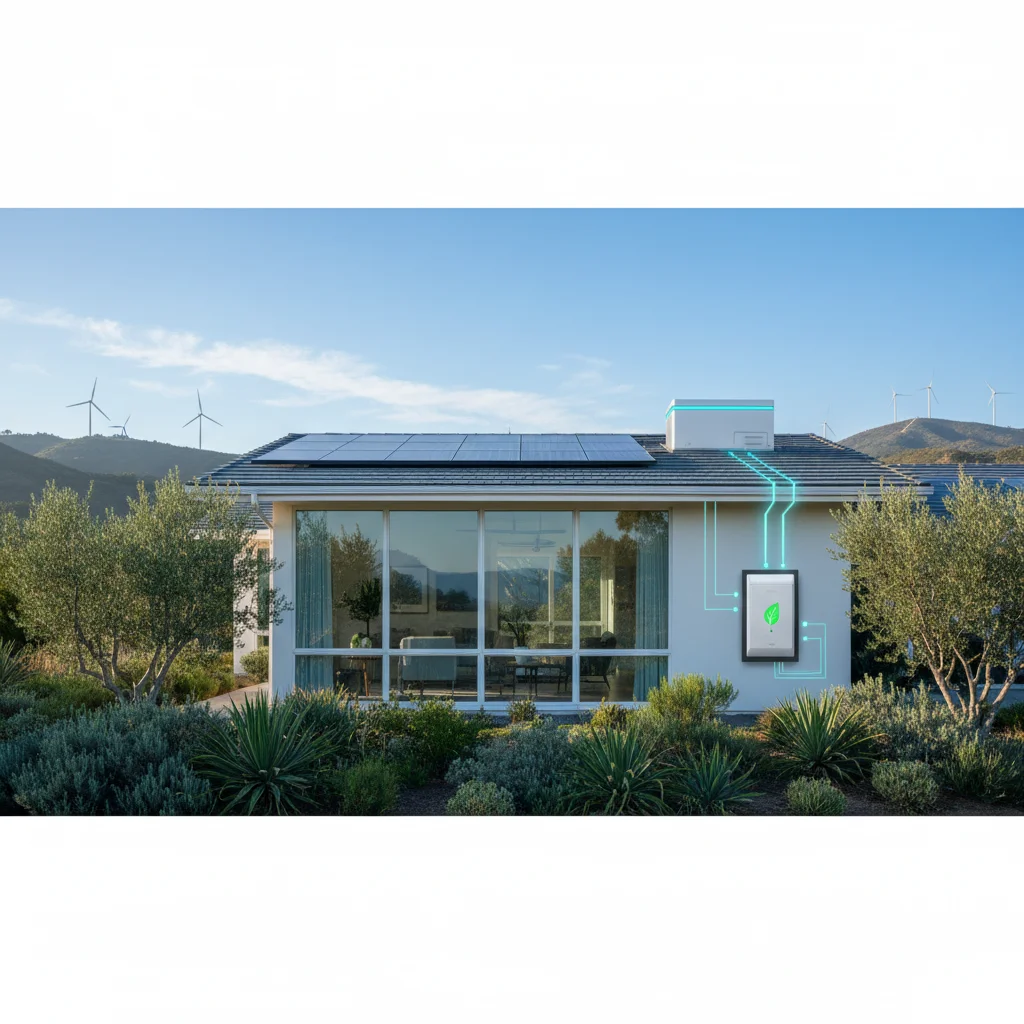
California's grid operators warned utilities in December 2025 to prepare for peak summer demand exceeding 52,000 megawatts—a 7% jump from 2024—forcing homeowners to confront HVAC costs that can spike 40% during heat waves. The federal Energy Efficient Home Improvement Credit (Section 25C) ended for property placed in service after December 31, 2025 (IRS FS-2025-05). Federal tax credits for this work have ended, but state, local and utility rebates may still apply; check what is available at your address with the DuloCore rebate calculator.
What HVAC systems are most efficient in California for 2026?
Heat pump systems achieve 300-400% efficiency in California's mild climate zones 1-16, converting each kilowatt of electricity into 3-4 kilowatts of heating or cooling by moving heat rather than generating it. The federal Energy Efficient Home Improvement Credit (Section 25C) ended for property placed in service after December 31, 2025 (IRS FS-2025-05).
Variable-speed compressors in modern heat pumps adjust output in 1% increments rather than cycling on-off, cutting electricity consumption 20-30% versus single-stage units. Geothermal heat pumps extract stable 55-65°F ground temperatures year-round, delivering 400-600% efficiency but requiring $15,000-$25,000 upfront investment for horizontal loops covering 400-600 square feet per ton of capacity. So coastal homes in zones 3-6 with moderate cooling needs prioritize SEER2 ratings above 16, while inland areas facing 105°F+ summers target 18+ SEER2 and 10+ HSPF2 ratings.
"ENERGY STAR certified central air conditioners have higher seasonal energy efficiency (SEER and SEER2) and energy efficiency ratio (EER and EER2) ratings, using 8% less energy than conventional new models." — ENERGY STAR
But California's Title 24 building code mandates minimum 15 SEER2 for split systems and 14 SEER2 for package units installed after January 1, 2023, automatically disqualifying older 13 SEER inventory. Smart thermostats compatible with utility demand-response programs unlock $50-$125 annual bill credits by pre-cooling homes before 4-9 PM peak pricing, shifting 30-40% of HVAC runtime to off-peak hours when electricity costs drop 60%.
How do HVAC efficiency ratings compare across different brands and models?
Carrier Infinity 26 air-source heat pumps reach 26 SEER2 and 13.5 HSPF2 ratings, topping residential efficiency charts with variable-speed compressors and 2-stage scroll technology that modulates output across 15 capacity steps. Lennox SL28XCV models deliver 28 SEER2 in cooling mode using SunSource solar panels that offset 30-50% of daytime HVAC electricity, though $12,000-$18,000 installed costs limit adoption to premium builds.
Mitsubishi Hyper-Heat ductless systems maintain 100% heating capacity down to 5°F outdoor temperatures—irrelevant for most California climates but critical for mountain zones 14-16 where winter lows hit 20-30°F. Trane XV20i TruComfort units achieve 22 SEER2 with ComfortLink II controls that sync with Nest and Ecobee thermostats, enabling predictive algorithms that reduce cycling waste by 18-22%. And Rheem Prestige Series heat pumps offer 20.5 SEER2 at $8,500-$11,000 installed, undercutting Carrier pricing 15-20% while sacrificing 2-3 SEER2 points.
Budget Goodman GSX16 units deliver 17 SEER2 at $5,500-$7,000 installed, meeting Title 24 minimums without premium features like variable-speed fans or advanced diagnostics. So the efficiency gap between entry-level 16 SEER2 and premium 26 SEER2 systems translates to $180-$320 annual electricity savings on a typical 2,000-square-foot home consuming 3,500 kWh for cooling, assuming $0.32 per kWh average California rates.
What's the typical lifespan of high-efficiency HVAC systems in California?
Variable-speed heat pumps with sealed scroll compressors last 15-18 years in California's coastal zones 1-6, where mild 60-80°F temperatures reduce thermal stress and limit annual runtime to 1,200-1,800 hours compared to 2,500-3,500 hours in desert climates. Inland zone 13-15 installations face 12-15 year lifespans due to 105-115°F summer peaks forcing compressors to operate at maximum capacity 40-60 days annually, accelerating refrigerant breakdown and seal degradation.
Geothermal heat pumps exceed 20-25 year operational life because underground loops eliminate exposure to UV radiation, temperature swings, and debris that degrade air-source condensers. But ground loop piping carries 50-year warranties, making the heat pump unit the limiting component requiring replacement at year 20-25 while reusing existing earth connections. And ductless mini-splits in low-use guest rooms or home offices stretch to 18-22 years when annual runtime stays below 800 hours, avoiding the mechanical fatigue that shortens heavily-cycled equipment.
Annual professional maintenance—refrigerant level checks, coil cleaning, electrical connection tightening—extends lifespan 2-4 years by catching $150-$400 repairs before they cascade into $2,500-$4,500 compressor failures. So a $180 yearly tune-up preventing one premature replacement delivers 8:1 ROI over a system's lifetime. But California's Title 24 requires HVAC contractors to verify airflow within 15% of manufacturer specs during installation, reducing early failures from undersized ducts or incorrect refrigerant charge that account for 30% of premature replacements.
How much can you save on energy bills with a more efficient HVAC system?
Upgrading from a 10 SEER air conditioner installed in 2010 to an 18 SEER2 heat pump cuts cooling costs 44% for a 2,000-square-foot Sacramento home consuming 4,200 kWh annually for climate control. At California's $0.32 per kWh average residential rate, that translates to $592 annual savings—a 7.4-year simple payback on a $4,400 net installation cost after federal IRA credits cover 30% of the $6,300 base price.
Coastal Los Angeles homeowners running legacy 12 SEER systems 900 hours per year see smaller $240-$320 annual savings upgrading to 16-18 SEER2 units because moderate 68-78°F summers limit baseline consumption to 1,800-2,200 kWh. But time-of-use electricity plans charging $0.48-$0.52 per kWh during 4-9 PM peaks amplify savings to $380-$480 when paired with smart thermostats that pre-cool homes 2-3°F before peak windows, shifting 35% of runtime to $0.18-$0.22 off-peak hours.
Variable-speed systems operating at 40-60% capacity during mild spring and fall months consume 28-35% less electricity than single-stage units that cycle on at 100% output, wastefully overshooting thermostat setpoints by 2-4°F. And ducted heat pumps replacing natural gas furnaces eliminate $480-$720 annual gas bills for heating while adding $180-$260 in electric heating costs, netting $300-$540 yearly savings as California utility rates favor electricity over gas for space heating in all climate zones except mountain regions.
Check your potential savings with our free rebate calculator to see federal and state incentives available for your address and income level.
What California rebates and tax credits are available for HVAC upgrades in 2026?
The federal Energy Efficient Home Improvement Credit (Section 25C) ended for property placed in service after December 31, 2025 (IRS FS-2025-05). Geothermal heat pumps qualify for 30% credits without dollar caps, covering ground loop installation costs that typically reach $18,000-$28,000 for horizontal systems or $22,000-$35,000 for vertical bores in space-constrained lots.
California's TECH Clean California initiative offers $3,000-$7,000 point-of-sale rebates for income-qualified homeowners replacing gas furnaces with ducted heat pumps, stacking with federal credits to reduce net costs by 50-70%. And the Bay Area Air Quality Management District provides $3,000 rebates for heat pump installations replacing gas heating in nine-county region covering San Francisco, Oakland, and San Jose, available regardless of income through December 31, 2026.
Southern California Edison customers qualify for $2,500-$3,500 rebates on 16+ SEER2 heat pumps through the Energy Efficiency Rebate Program, while PG&E's Energy Upgrade California offers $1,500-$2,000 for central AC-to-heat-pump conversions. But rebate budgets deplete mid-year during 2025-2026, requiring applications within 90 days of installation to secure funding before program caps trigger waitlists.
Low-income households earning below 80% area median income—$83,200 for four-person households in Los Angeles County—access enhanced federal credits covering 100% of heat pump costs up to $8,000 through the High-Efficiency Electric Home Rebate Act (HEEHRA) administered by the California Energy Commission. Applications open in Q3 2026 pending final state implementation rules, with funding allocated on a first-come basis until the $246 million California allocation exhausts.
Learn more about heat pump rebates and how they combine with federal energy tax credits to maximize savings.
What's the process for upgrading to an efficient HVAC system in California?
California contractors must conduct Manual J heat load calculations sizing HVAC capacity within 15% of actual thermal requirements, preventing oversized units that short-cycle and waste 15-25% efficiency. Installers input home square footage, insulation R-values, window area, and occupancy to determine precise tonnage—typically 400-600 square feet per ton in coastal zones or 300-450 square feet per ton in hot inland areas.
Duct testing under Title 24 mandates verifies leakage below 6% of total airflow, sealing gaps that otherwise lose 20-30% of conditioned air into attics and crawlspaces. And refrigerant charge must fall within 5% of manufacturer specifications, requiring digital manifold gauges and superheat calculations that catch undercharging responsible for 15% efficiency losses. So permit inspections validate compliance before releasing final approval, adding 7-14 days to installation timelines versus unpermitted work that voids warranties and rebates.
Electrical panel upgrades accommodating 30-60 amp heat pump circuits cost $1,200-$2,400 when existing 100-amp service lacks spare breaker slots, though federal IRA credits cover 30% of electrical work necessary for HVAC installation. Smart thermostats compatible with utility demand-response programs add $150-$300 but unlock $50-$125 annual bill credits, delivering 2-3 year payback through automated load shifting.
Contractor selection prioritizes NATE-certified technicians completing 50+ heat pump installations annually, avoiding 15-20% efficiency losses from improper commissioning that plague one-time installers. And obtaining 3-5 written quotes exposes pricing spreads of 25-40% between high-volume contractors leveraging bulk equipment discounts and boutique firms charging premium labor rates without performance advantages.
Official Sources
- ENERGY STAR HVAC Information — Federal efficiency standards and certified product directory
- U.S. Department of Energy - Save Money and Energy — Federal IRA tax credits and heat pump guidance (note: the federal 25C and 25D credits ended for projects completed after December 31, 2025)
- DSIRE USA — Comprehensive state and utility rebate database
Related Reading: Learn more about High Efficiency Furnace Rebates California and Hvac Efficiency Rating Seer Explained.
Frequently Asked Questions
What HVAC efficiency upgrades qualify for California rebates in 2026?
Ducted air-source heat pumps meeting 15+ SEER2 and 8.1+ HSPF2 standards qualify for $1,500-$3,500 utility rebates from major California IOUs including PG&E, SCE, and SDG&E. Geothermal heat pumps qualify for unlimited federal IRA credits covering 30% of total installation costs without the $2,000 annual cap applied to air-source equipment. And ductless mini-splits require ENERGY STAR certification with 16+ SEER2 ratings to access $2,000-$4,000 TECH Clean California rebates when replacing gas heating systems.
How much can you save with California HVAC rebates?
Federal IRA credits deliver $1,890-$2,000 on qualifying $6,300-$8,500 heat pump installations, while California utility rebates add $1,500-$3,500 for combined savings of $3,390-$5,500. Low-income households access HEEHRA rebates covering 100% of costs up to $8,000, eliminating out-of-pocket expenses for efficiency upgrades. And stacking TECH Clean California's $3,000-$7,000 point-of-sale rebates with federal credits reduces net installation costs 60-75%, shortening payback periods to 3-5 years from electricity savings alone.
What is the California HVAC rebate application process?
Utility rebate applications require pre-approval before equipment purchase, submitting contractor quotes and Manual J calculations to verify sizing compliance within 15% of thermal load. Installation photos documenting outdoor unit model numbers, indoor air handler labels, and thermostat wiring prove equipment matches approved specifications, with Title 24 permit inspection reports confirming duct leakage and refrigerant charge. But TECH Clean California rebates apply automatically at point-of-sale when contractors enroll in the program, eliminating homeowner paperwork while processing payments within 6-8 weeks.
Are there income limits for California HVAC efficiency rebates?
HEEHRA rebates covering 100% of heat pump costs up to $8,000 require household income below 80% area median income—$83,200 for four-person households in Los Angeles County or $97,000 in San Francisco Bay Area as of 2026. TECH Clean California enhanced rebates of $5,000-$7,000 serve households under 80% AMI, while standard $3,000 rebates apply regardless of income. And utility programs from PG&E, SCE, and SDG&E impose no income restrictions, offering $1,500-$3,500 rebates to all residential customers meeting equipment efficiency thresholds.
What is the difference between federal and California HVAC rebates?
Form 5695 only covers qualifying work completed by December 31, 2025 and claimed on a 2025 return; the federal 25C and 25D credits ended after that date (IRS FS-2025-05). California utility rebates deliver point-of-sale discounts or mailed checks within 6-10 weeks, requiring no tax filing and stacking with federal credits for combined savings. But federal credits require sufficient tax liability to claim the full amount, while California rebates function as instant discounts regardless of tax situation—making state programs more valuable for retirees and low-income households with minimal annual tax bills.
Ready to upgrade your HVAC system? Use our free rebate calculator to discover exactly how much you can save with federal tax credits and California utility rebates. Get your personalized estimate in 60 seconds—no email required.
Last updated: April 14, 2026. Reviewed by the DuloCore Editorial Team. About our authors.
Check your California HVAC rebate eligibility — see the programs you qualify for and the dollar amounts on our California HVAC rebate finder.