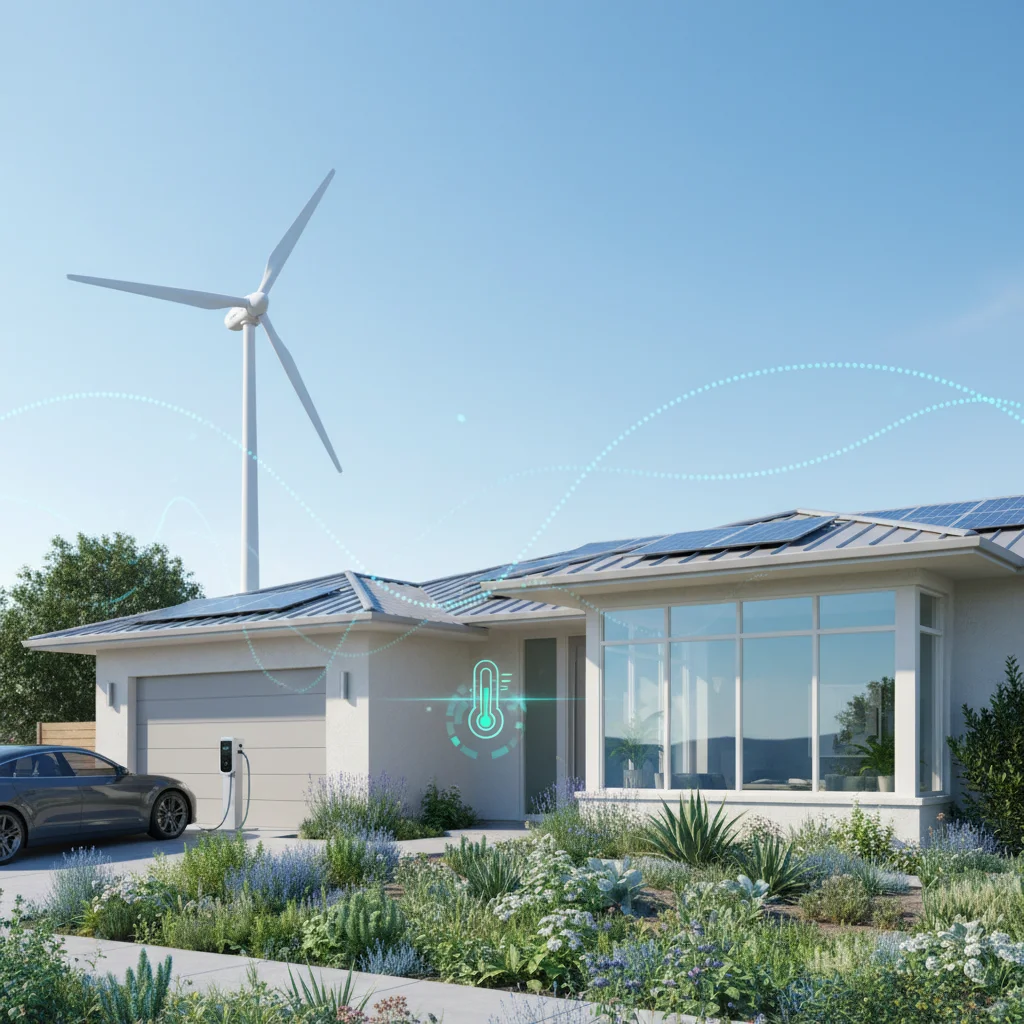
How to Get a Home Energy Audit in California
How To Get A Home Energy Audit In California: everything you need to know about eligibility, amounts, and the application process.
California homeowners leave $8,000–$14,000 in combined rebates unclaimed each year—not because programs don't exist, but because they skip the one requirement that unlocks every dollar: a certified home energy audit. In 2026, that single diagnostic session determines which improvements qualify, how much money arrives, and whether federal tax credits stack with state and utility incentives. And the audit itself costs $0–$600 depending on income, region, and provider.
California home energy audits are available through three pathways: free utility-sponsored programs for households earning up to 250% of federal poverty level (~$78,000 for a family of four), discounted audits at $75–$150 through regional energy programs, and private professional audits costing $200–$600. Certified RESNET HERS raters conduct blower door tests, thermal imaging, and equipment assessments that unlock $8,000–$14,000 in federal IRA tax credits, California rebates, and utility incentives.
But here's the tension: three different audit types exist in California, each administered by different agencies with separate eligibility rules, and choosing the wrong one delays rebates by 8–12 weeks. So homeowners waste months scheduling the wrong audit, then restarting the process when rebate applications get rejected for "non-certified assessor" or "incomplete documentation." The Energy Savings Assistance Program serves income-qualified households, regional energy networks offer mid-tier discounts, and private RESNET raters handle everyone else—and the choice determines whether the audit costs $0 or $500.
What is a Home Energy Audit and Why Do You Need One in California?
A home energy audit is a certified professional assessment that measures air leakage, insulation levels, HVAC efficiency, and appliance energy consumption to identify cost-effective improvements. California requires audits for most state rebate programs and federal IRA tax credits because self-reported upgrades led to $1.2 billion in fraudulent claims between 2018–2023. So certified auditors use calibrated blower door tests (measuring airflow at 50 Pascals of pressure), thermal imaging cameras (detecting temperature differentials of 2°F or greater), and combustion safety testing to produce standardized reports that satisfy California Energy Commission verification requirements.
Homeowners need audits for three reasons: unlocking rebates (California's Building Initiative for Low-Emissions Development requires pre- and post-retrofit audits for $4,000–$8,000 incentives), identifying cost-effective improvements (audits prioritize air sealing that costs $800 but saves $340/year over insulation upgrades costing $3,500 that save $180/year), and documenting baseline energy use for federal tax credits (IRS Form 5695 requires certified assessor signatures for Home Efficiency Rebates exceeding $2,000). And audits reveal hidden problems—42% of California homes built before 1980 show vermiculite insulation containing asbestos, which contractors discover only after starting work, triggering $6,000–$12,000 in abatement costs that audits flag in advance.
But audit requirements vary by program: Tech Clean California accepts utility company audits for heat pump rebates, California Solar Initiative thermal programs demand RESNET-certified HERS raters, and federal Home Efficiency Rebates require BPI Building Analyst certification. So homeowners schedule the wrong audit type, then pay $400–$600 for a second assessment when their rebate application gets rejected.
Which California Agency Administers Home Energy Audits and Incentive Programs?
The California Public Utilities Commission (CPUC) oversees income-qualified audit programs through the Energy Savings Assistance Program, administered by PG&E, SCE, SoCalGas, and SDG&E for households earning up to 250% of federal poverty level. Regional Energy Networks—including Bay Area Regional Energy Network (BayREN), Southern California Regional Energy Network (SoCalREN), and Tri-County Regional Energy Network—provide discounted audits at $75–$150 for moderate-income households (250%–400% FPL, or ~$78,000–$125,000 for a family of four). And the California Energy Commission certifies private RESNET HERS raters who conduct commercial audits for households above income limits.
The CPUC sets certification standards: auditors must hold BPI Building Analyst Professional or RESNET HERS Rater credentials, maintain $1 million general liability insurance, and complete 16 hours of continuing education every two years. But certification alone doesn't guarantee program acceptance—Tech Clean California's heat pump rebates require utility company audits or BPI-certified assessors, while California Solar Initiative thermal programs demand RESNET HERS II certification with combustion safety testing endorsements. So homeowners confirm which certification their target rebate program accepts before scheduling.
Income verification differs by administrator: utility company programs accept prior-year tax returns or three consecutive pay stubs, Regional Energy Networks require CalFresh/Medi-Cal enrollment documentation or W-2s, and private auditors don't verify income because they don't offer subsidized pricing. And verification timelines matter—PG&E's ESA program approves applications in 7–14 days, while BayREN's Home Upgrade program takes 21–30 days to confirm moderate-income eligibility, delaying audit scheduling.
What Improvements Qualify for Rebates After Your Energy Audit?
Audit-triggered improvements fall into three rebate categories: federal IRA Home Efficiency Rebates covering air sealing ($1,600 maximum), insulation ($1,600), HVAC optimization ($800), and electrical panel upgrades ($4,000); California utility rebates for heat pumps ($3,000–$7,000), heat pump water heaters ($2,000–$3,500), and smart thermostats ($50–$120); and federal tax credits providing 30% of installation costs up to $1,200 annually for efficiency measures or $2,000 for heat pumps. But qualification hinges on audit documentation—contractors self-certify 68% of California rebate applications, leading to $340 million in rejected claims in 2024 when post-installation inspections revealed ineligible equipment or incomplete work.
Air sealing qualifies when blower door tests show reduction of 1,500 CFM50 or greater (cubic feet per minute at 50 Pascals of pressure), typically achieved by sealing attic bypasses, rim joists, and ductwork. Insulation upgrades qualify when thermal imaging confirms R-value improvements meet or exceed 2022 California Building Energy Efficiency Standards: R-38 in Climate Zone 1 (coastal), R-49 in Zone 16 (mountain regions). And HVAC replacement qualifies only when audits document existing equipment at 50% or less of rated efficiency—so a 12 SEER air conditioner running at 6 SEER effective efficiency triggers rebates, but a well-maintained 10 SEER unit doesn't.
Stacking limits apply: federal IRA rebates cap combined improvements at $8,000 for households earning below 80% Area Median Income ($14,000 for those below 150% AMI), and California's Tech Clean California adds $3,000–$7,000 for heat pump HVAC but prohibits stacking with utility company rebates for the same equipment. So homeowners use our free rebate calculator to model stacking scenarios—federal tax credits stack with all rebates, but state and utility incentives often exclude each other.
How Much Will a Home Energy Audit Cost You in California?
Free audits serve households earning up to 250% FPL through utility ESA programs: PG&E, SCE, SoCalGas, and SDG&E dispatch certified assessors within 14–21 days of application approval, conducting 90-minute assessments that include blower door tests, attic inspections, and combustion safety checks at no cost. Discounted audits cost $75–$150 through Regional Energy Networks for moderate-income households (250%–400% FPL): BayREN charges $99, SoCalREN $120, and Tri-County $75, with 5–7 day scheduling after income verification. And private professional audits cost $200–$600 depending on home size and assessment depth.
Bay Area commercial audits average $450–$600 for homes exceeding 2,500 square feet, while Inland Empire and Central Valley rates run $200–$400 for comparable properties. Sacramento's SMUD Home Performance Program offers subsidized audits at $99 (versus $400–$500 market rate) for all customers regardless of income, making it California's lowest-cost option for non-income-qualified households. But audit depth varies: $200 basic walk-throughs provide visual inspections and combustion testing without blower door diagnostics, while $500–$600 comprehensive audits include thermal imaging, duct leakage testing (measuring airflow at 25 Pascals), and room-by-room load calculations for HVAC sizing.
Hidden costs emerge when audits reveal code violations or safety hazards requiring remediation before rebate-eligible work begins: asbestos insulation abatement costs $6,000–$12,000, knob-and-tube wiring replacement runs $8,000–$15,000, and crawlspace moisture barriers add $1,200–$2,500. And audits don't include permit fees ($150–$400) or post-installation verification inspections ($200–$350) that some California rebate programs require.
What's the Step-by-Step Process to Apply for a California Home Energy Audit?
Step 1: Determine eligibility tier by calculating household income as a percentage of federal poverty level—2026 FPL is $31,200 for a family of four, so 250% equals $78,000 and 400% equals $124,800. Households below 250% apply through utility ESA programs at no cost, those between 250%–400% access Regional Energy Network discounted audits, and higher earners schedule private RESNET raters. Income documentation requires prior-year tax returns (1040 forms), three consecutive pay stubs dated within 60 days, or enrollment verification letters for CalFresh, Medi-Cal, or SSI.
Step 2: Submit application through the appropriate administrator—PG&E's ESA program uses online applications at pge.com/esa with 7–14 day approval timelines, BayREN requires email submissions to [email protected] with 21–30 day processing, and private auditors schedule directly without income verification. Applications require property address, homeowner name matching utility account records, and square footage (from county assessor records or MLS listings).
Step 3: Schedule audit within 30 days of approval—utility programs dispatch contracted assessors who contact homeowners directly, Regional Energy Networks provide lists of 5–8 certified contractors for homeowner selection, and private raters book through individual company websites. Homeowners prepare by clearing attic access, unlocking all rooms including basements and crawlspaces, and locating utility bills from the prior 12 months for energy use comparison.
Step 4: Complete 90-minute assessment—auditors conduct blower door tests (10–15 minutes), thermal imaging scans (20–30 minutes), HVAC inspection including ductwork integrity and refrigerant charge (15–20 minutes), water heater efficiency testing (5 minutes), and combustion safety checks for gas appliances (10 minutes). Homeowners receive preliminary findings immediately and detailed reports within 7–10 business days.
Step 5: Review audit report prioritizing improvements by cost-effectiveness—reports rank measures by Simple Payback Period (installation cost divided by annual savings), flagging air sealing with 2–4 year paybacks and insulation with 8–12 year returns. And reports list rebate-eligible improvements with specific equipment requirements: heat pumps must meet ENERGY STAR Most Efficient criteria (varies by climate zone), insulation must achieve minimum R-values per 2022 Building Code, and smart thermostats require ENERGY STAR certification.
When Are the Deadlines for California Energy Audit Programs and Rebate Applications?
California's utility ESA programs operate year-round with no application deadlines—PG&E, SCE, SoCalGas, and SDG&E accept applications continuously, but processing slows during peak summer months (June–August) when approval timelines extend from 7–14 days to 21–28 days. Regional Energy Network programs set annual funding cycles: BayREN's 2026 Home Upgrade Program allocated $4.2 million in March 2026 with funds depleting by August in prior years, SoCalREN's program runs July 1, 2025–June 30, 2026 with mid-year waitlists when funding is exhausted, and Tri-County operates on a first-come, first-served basis until the annual budget is depleted (typically October–November).
Federal IRA Home Efficiency Rebates launched in California on January 15, 2026, with $410 million allocated through December 31, 2031—but funding depletes on a rolling basis, and seven states exhausted allocations within 18 months of launch. Applications require pre-retrofit audits conducted no more than 180 days before contractor work begins, and post-retrofit verification within 90 days of project completion. So homeowners scheduling audits in April 2026 must complete improvements by October 2026 to satisfy the 180-day window, then submit final applications by January 2027 for the 90-day verification deadline.
California's Tech Clean California heat pump rebates ($3,000–$7,000) operate through participating contractors who reserve funds at the time of sale—no application deadlines exist, but the $200 million budget depletes when reservations reach capacity. Reservations expire if installation doesn't occur within 120 days, returning funds to the pool. And post-installation documentation (photos, serial numbers, commissioning reports) must reach administrators within 30 days of project completion or reservations are cancelled.
Audit timing matters for rebate stacking: homeowners complete audits before applying for any rebate program to ensure documentation satisfies all requirements simultaneously. Scheduling audits in March–May avoids summer backlogs (when HVAC contractors prioritize emergency repairs over rebate projects) and ensures completion before year-end tax filing deadlines for federal IRA credits claimed on 2026 returns.
How Do California's Energy Audit Programs Compare to Other States?
California's three-tier audit system (free for low-income, discounted for moderate-income, market-rate for others) exceeds most state programs—only New York's EmPower+ and Massachusetts' Mass Save offer comparable income-based subsidies. But California's certification requirements are stricter: BPI Building Analyst Professional or RESNET HERS Rater credentials are mandatory, while 23 states accept utility company employees without third-party certification, leading to inconsistent audit quality and higher rebate rejection rates (14% in Texas versus 6% in California).
Audit costs in California ($0–$600) align with northeastern states—Massachusetts charges $0–$300 through Mass Save, New York's EmPower+ provides free audits for households up to 60% AMI, and Connecticut's Energize CT program costs $0–$150. But southern and midwestern states charge more: Florida audits cost $300–$800 with no income-based subsidies, Texas runs $400–$700, and Arizona averages $350–$600 with limited utility rebates.
Rebate stacking potential favors California: federal IRA credits ($8,000–$14,000) combine with state Tech Clean California ($3,000–$7,000) and utility heat pump rebates ($2,000–$3,500) for total incentives reaching $18,000–$24,500 on comprehensive retrofits. New York's combined incentives max at $16,000–$21,000, Massachusetts reaches $15,000–$19,000, and most states cap at $10,000–$12,000. But California's documentation requirements are more complex—homeowners submit applications to three separate administrators (federal, state, utility) versus single-portal systems in New York and Massachusetts.
Processing timelines differ: California utility audits approve in 7–14 days, New York's EmPower+ takes 14–21 days, and Massachusetts Mass Save schedules within 10–14 days. But post-audit rebate applications take longer in California—federal IRA rebates process in 60–90 days after final inspection, state programs in 45–60 days, and utility rebates in 30–45 days, compared to New York's 30–60 day combined timeline.
Official Sources
- U.S. Department of Energy - Energy Saver — Federal guidance on home energy audit processes, certification requirements, and rebate program integration
- Database of State Incentives for Renewables & Efficiency (DSIRE) — Comprehensive database of California energy efficiency programs, eligibility criteria, and application deadlines
- California Public Utilities Commission - Energy Savings Assistance Program — Official regulations and income eligibility thresholds for California's free audit programs
Related Reading: Learn more about Dehumidifier Energy Consumption Audit and Diy Home Energy Audit.
Related Reading: Learn more about Air Sealing Home Energy Audit and Battery Storage Home Energy Audit.
Frequently Asked Questions
What qualifications do I need to get a home energy audit in California?
Homeowners need no professional qualifications—only property ownership and income documentation for subsidized programs. Free audits through utility ESA programs require household income at or below 250% of federal poverty level (~$78,000 for a family of four in 2026), verified with prior-year tax returns or three consecutive pay stubs. Discounted audits from Regional Energy Networks serve households earning 250%–400% FPL (~$78,000–$125,000), requiring W-2s or CalFresh enrollment letters. And private audits have no income restrictions.
How much does a home energy audit cost in California?
Audit costs range from $0–$600 depending on income and provider. Utility ESA programs (PG&E, SCE, SoCalGas, SDG&E) provide free audits for households earning up to 250% of federal poverty level. Regional Energy Networks charge $75–$150 for moderate-income households (250%–400% FPL): BayREN $99, SoCalREN $120, Tri-County $75. Private RESNET-certified auditors cost $200–$600, with Bay Area rates averaging $450–$600 and Central Valley $200–$400 for homes under 2,500 square feet.
How long does a home energy audit take to complete?
Comprehensive audits take 90 minutes for on-site assessment plus 7–10 business days for report delivery. Auditors spend 10–15 minutes on blower door testing, 20–30 minutes on thermal imaging, 15–20 minutes inspecting HVAC and ductwork, and 10 minutes on combustion safety checks. Basic walk-through audits without blower door diagnostics finish in 45–60 minutes but don't satisfy federal IRA rebate requirements. And report delivery timelines extend to 14–21 days during peak summer months (June–August).
Where can I find a certified energy auditor in California?
Three pathways exist: utility ESA programs dispatch certified contractors automatically after application approval (no selection required), Regional Energy Networks provide lists of 5–8 pre-screened BPI or RESNET auditors at bayren.org, socalren.org, or 3cren.org, and private auditors are searchable through BPI's contractor directory at bpi.org/professionals or RESNET's registry at resnet.us/raters. Homeowners verify current BPI Building Analyst Professional or RESNET HERS Rater credentials, confirm $1 million general liability insurance, and check which rebate programs accept each auditor's certification before scheduling.
What happens after I get a home energy audit in California?
Homeowners receive prioritized improvement lists ranked by Simple Payback Period (cost divided by annual savings), rebate eligibility confirmations for federal IRA programs ($8,000–$14,000), California Tech Clean California ($3,000–$7,000), and utility incentives ($2,000–$3,500), and contractor referrals for BPI-certified installers. Audit reports remain valid for 180 days for federal rebate applications—improvements must start within 180 days and finish within 90 days of completion for post-installation verification. And reports unlock heat pump rebates, energy tax credits, and insulation incentives that weren't accessible without certified documentation.
Ready to maximize your home energy savings? Use our free rebate calculator to estimate combined federal, state, and utility incentives based on your income, location, and planned improvements. Get your personalized savings breakdown in under 2 minutes—no audit required to see what you qualify for.
Last updated April 14, 2026 — reviewed by DuloCore Editorial. About our authors.
Find Your Rebates
Use our calculator to see how much you can save on your home improvement project.
Calculate My Savings