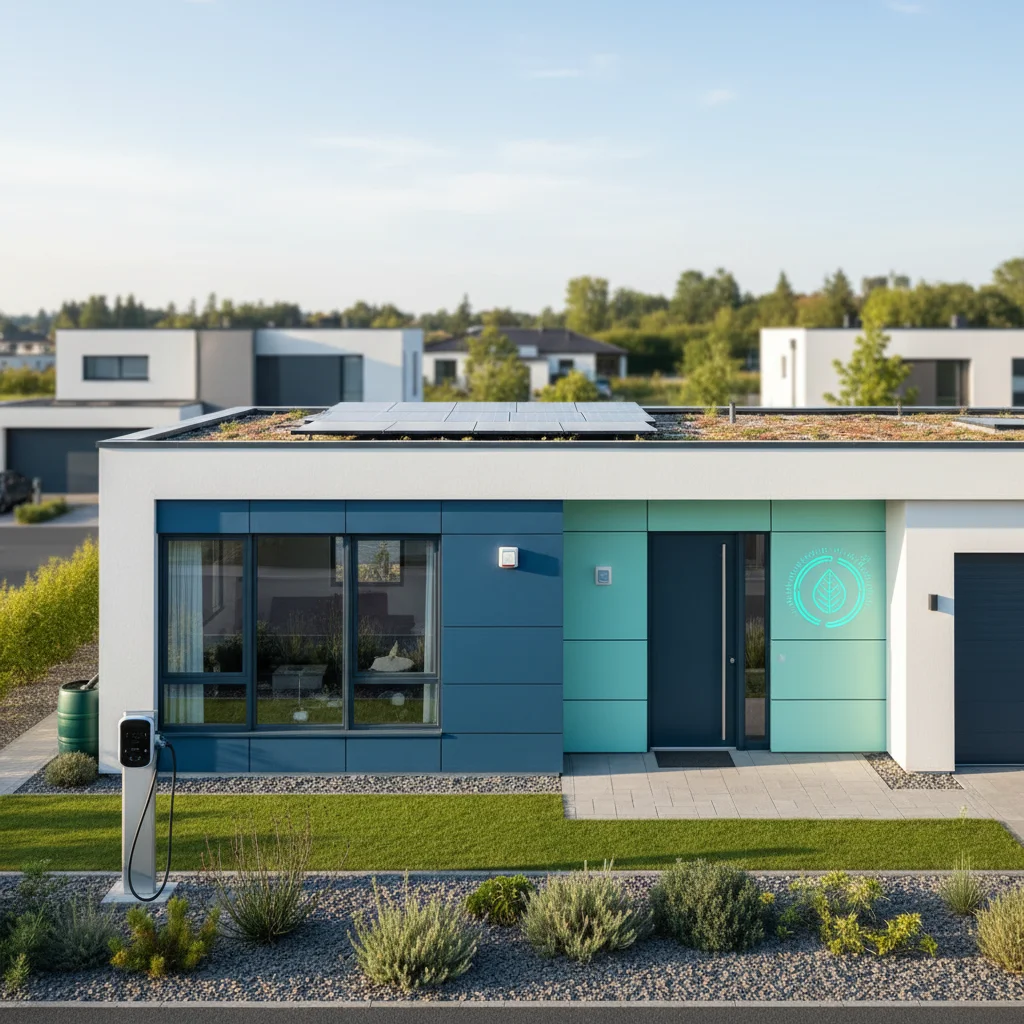
California homeowners who skip a professional energy assessment leave an average of $2,400 in annual utility savings on the table, according to 2026 data from the California Public Utilities Commission. The gap between what homes consume and what they could consume with targeted upgrades has widened as heating and cooling costs climbed 18% since 2024, yet only 12% of single-family homeowners in California complete a formal energy audit before renovating.
A home energy efficiency assessment is a certified professional inspection that identifies cost-effective upgrades, costs $200–$600 for comprehensive evaluations, and unlocks access to $8,000–$14,000 in combined federal IRA tax credits, state rebates, and utility incentives available through 2026 programs.
What Is a Home Energy Efficiency Assessment and Why Do You Need One?
A home energy efficiency assessment combines blower door testing, infrared thermal imaging, and appliance analysis to create a prioritized list of upgrades ranked by return on investment. Certified RESNET HERS raters measure air leakage at 50 pascals of pressure, identify thermal bridges in wall cavities, and calculate annual energy consumption across heating, cooling, water heating, and lighting systems. The assessment costs $200–$600 for single-family homes under 2,500 square feet and $450–$600 for larger properties in high-cost regions like the Bay Area.
So what separates a DIY walkthrough from a professional assessment? The professional version qualifies homeowners for income-based rebate programs, satisfies federal IRA tax credit documentation requirements, and provides the baseline HERS Index score required for California Title 24 compliance on major renovations. And homeowners who complete assessments before upgrading capture combined incentives averaging $11,200 across federal, state, and utility programs, compared to $3,800 for those who upgrade first and apply retroactively.
But the assessment itself doesn't trigger rebates. The report serves as documentation for post-upgrade applications, proving that installed equipment meets efficiency thresholds and was recommended by a certified professional. Most programs require the assessment within 12 months of the upgrade installation date.
California's three largest utilities—PG&E, SCE, and SDG&E—offer free or discounted assessments for income-qualified households earning up to 250% of federal poverty level (approximately $78,000 for a family of four in 2026). So low-to-moderate income homeowners access the same certified professional evaluations at $0–$75 that market-rate customers pay $400–$550 to receive.
"A comprehensive home energy assessment identifies opportunities to save 20–40% on annual utility bills through cost-effective improvements." — U.S. Department of Energy
How Do I Apply for an Energy Efficiency Assessment in My Area?
Application processes split into three tiers based on household income and utility provider. Income-qualified households apply directly through utility company programs like PG&E's Energy Savings Assistance or SCE's Energy Efficiency Education Program by calling customer service or submitting online applications with proof of income from the past 12 months. Moderate-income households earning 250–400% of federal poverty level access discounted assessments through regional programs like SMUD's Home Performance Program in Sacramento or BayREN's Single Family Program in the Bay Area.
Market-rate applicants schedule directly with certified RESNET HERS raters, home performance contractors, or through utility referral lists. And approval timelines range from 5–10 business days for income verification to same-week scheduling for market-rate commercial services.
Most programs require: - Proof of home ownership (deed, mortgage statement, or property tax bill) - Recent utility bill showing 12-month energy usage - Household income documentation (W-2s, tax returns, or pay stubs for income-qualified programs) - Photo ID matching the property address
Regional variations matter. Sacramento's SMUD offers $99 assessments year-round with no income restrictions, while Bakersfield's PG&E territory restricts free assessments to ESA-eligible households. Check your rebate calculator to identify available assessment programs by ZIP code.
What Documentation Will I Need to Provide for My Assessment?
Certified assessors require access to all conditioned spaces, including attics, crawlspaces, basements, and mechanical rooms. Homeowners provide 12 months of utility bills showing monthly kilowatt-hour consumption and therms of natural gas usage, permits for any HVAC or insulation work completed in the past five years, and product specification sheets for existing heating and cooling equipment.
But documentation extends beyond the assessment day. Federal IRA tax credits require the auditor's RESNET ID number, the property's pre-upgrade HERS Index score, and a signed certification that recommended upgrades meet or exceed ENERGY STAR Most Efficient tier specifications. State programs like TECH Clean California demand contractor license verification and proof that installers completed required training modules.
Complete documentation checklist
- **Utility bills**: 12 consecutive months (paper or digital) - **Equipment manuals**: HVAC, water heater, appliances - **Permit records**: Past 5 years of building permits - **Square footage**: County assessor records or appraisal - **Insulation history**: Installation dates and R-values if known - **HVAC maintenance logs**: Filter changes, tune-ups, repairs - **Home age and construction type**: From original builder or county recordsAnd homeowners who bundle assessments with immediate upgrades need pre- and post-installation HERS ratings. The pre-upgrade assessment establishes the baseline Index score (typically 95–130 for California homes built before 2000), and the post-upgrade verification confirms the improvement achieved Index reductions of 10+ points required by some rebate tiers.
Most assessors photograph equipment nameplates, measure insulation depth in attics and walls, and document air sealing defects like gaps around recessed lighting or plumbing penetrations. So homeowners don't need to gather serial numbers in advance—the auditor captures those details during the 2–4 hour site visit.
Do I Need Pre-Approval Before Scheduling My Energy Efficiency Assessment?
Income-qualified programs require pre-approval through utility customer service portals. PG&E's Energy Savings Assistance, SCE's ESA, and SDG&E's Energy Education Program verify household income against federal poverty guidelines before scheduling an in-home visit. And approval timelines run 7–14 business days from application submission to scheduled assessment, with delays stretching to 3–4 weeks during peak summer demand.
But market-rate commercial assessments require no pre-approval. Homeowners call certified RESNET HERS raters directly, schedule within 5–10 business days, and pay the $400–$600 fee at time of service or within 30 days of receiving the detailed report.
Pre-approval becomes critical when assessments are bundled with equipment rebates. California's TECH Clean California heat pump program requires homeowners to reserve rebate funds before purchasing equipment, and the reservation process demands proof of a completed energy assessment showing the existing heating system's age and efficiency. So homeowners who skip pre-approval and buy equipment first forfeit rebates averaging $3,000–$7,000 per heat pump installation.
| Program | Pre-Approval Required | Timeline | Documentation Needed |
|---|---|---|---|
| PG&E ESA (free audit) | Yes | 7–14 days | Income verification, utility bill |
| SMUD Home Performance ($99) | No | 3–5 days | Home ownership proof, utility account |
| TECH Clean California | Yes (for rebate reservation) | 10–15 days | Assessment report, contractor quote |
| Federal IRA Tax Credits | — | N/A | — |
Moderate-income programs like BayREN fall in between—no formal pre-approval, but homeowners submit an eligibility form and wait 5–7 days for discounted pricing codes before scheduling with participating contractors.
What Are the Key Deadlines and Application Windows for Energy Assessments?
The federal home energy tax credits (Sections 25C and 25D) ended for projects completed after December 31, 2025 (IRS FS-2025-05). Federal tax credits for this work have ended, but state, local and utility rebates may still apply; check what is available at your address with the DuloCore rebate calculator. California state programs operate on fiscal year cycles (July 1–June 30), and utility rebates reset annually on January 1 with funds distributed first-come, first-served until budgets deplete.
But timing strategy matters. PG&E's ESA program exhausts free assessment slots by September in high-demand territories like the Central Valley, forcing late applicants into 2027 waitlists. And TECH Clean California's heat pump rebates historically run dry by October, meaning homeowners who delay assessments past June risk losing access to $3,000–$7,000 in state incentives.
So the optimal assessment window runs February–May. Assessors face lighter scheduling demand, state and utility budgets are fully funded, and homeowners capture 8–10 months to complete recommended upgrades before year-end tax credit deadlines.
Regional deadlines vary: - Sacramento (SMUD): Year-round availability, but discounted $99 slots limited to 2,000 per year (typically filled by November) - Bay Area (BayREN): No hard deadlines, but rebate funds historically exhausted by Q4 - Southern California (SCE/SDG&E): ESA applications close when annual budgets hit 95% utilization (usually August–September)
And homeowners who miss state deadlines still qualify for federal IRA credits. The 30% tax credit (this federal credit ended for property placed in service after December 31, 2025) for heat pumps, insulation, and air sealing carries no annual cap and no assessment deadline, though certified professional documentation strengthens audit defense if IRS questions the claimed efficiency levels.
"Energy audits provide a roadmap for achieving 20–30% energy savings through a combination of behavioral changes and cost-effective improvements." — ENERGY STAR
Can I Stack Energy Efficiency Assessments With Other Home Improvement Programs?
Assessment costs qualify as eligible expenses under several rebate programs, creating compound savings. Federal IRA tax credits cover 30% of assessment fees when bundled with qualified upgrades like heat pumps or insulation, effectively reducing a $500 audit to $350 net cost. And California's TECH Clean California includes assessment reimbursement up to $250 when homeowners complete heat pump installations within 120 days of the audit.
But stacking rules prohibit double-dipping on the same expense. Homeowners claim either the federal tax credit or the state assessment reimbursement—not both. So optimal stacking layers: 1. Free or discounted utility-sponsored assessment (if income-qualified) 2. TECH Clean California assessment reimbursement ($250) 3. The federal home energy tax credits (Sections 25C and 25D) ended for projects completed after December 31, 2025 (IRS FS-2025-05). 4. Utility rebates for specific measures (insulation, air sealing, duct testing)
And the assessment itself unlocks access to bundled rebate programs. BayREN's Home Upgrade Program requires a certified assessment to access $4,000–$6,000 in combined rebates for multiple measures like attic insulation + duct sealing + heat pump upgrades. Homeowners who skip the assessment forfeit eligibility for the bundled tier and revert to lower single-measure rebates.
Stacking extends to financing. PACE programs (Property Assessed Clean Energy) in 38 California counties cover assessment costs within project financing, allowing homeowners to fold the $400–$600 audit fee into 20-year property tax repayment at 6.5–8.5% APR. Calculate your stacking potential with our rebate calculator to identify the highest-value combination.
Maximum stacking example: Bay Area heat pump installation
- **Free PG&E assessment**: $0 (income-qualified household) - **TECH Clean California heat pump rebate**: $7,000 - **BayREN additional rebate**: $2,000 - **Federal IRA tax credit**: 30% of $18,000 installation = $5,400 - **Total incentives**: $14,400 on an $18,000 project - **Net cost**: $3,600Which Utility Company Rebates and Incentives Can I Use After My Assessment?
PG&E offers $2,000–$3,000 for whole-home air sealing and duct testing through its Energy Efficiency Rebate Program, plus $100 per 1,000 square feet of attic insulation upgraded to R-38 or higher. SCE provides $750–$1,200 for central AC replacement with SEER2 16+ models and $1,500 for heat pump water heaters meeting Uniform Energy Factor 3.0+ standards. And SDG&E bundles rebates into its Home Energy Efficiency Survey program, offering $3,500–$5,000 for comprehensive packages that include insulation, air sealing, and HVAC upgrades.
Municipal utilities operate separate programs. Sacramento's SMUD pays $1,800 for heat pump installations plus $500 for attic insulation, while Los Angeles Department of Water and Power (LADWP) offers $6,000 for ducted heat pumps in all-electric home conversions. And Riverside Public Utilities provides $300 for smart thermostats when installed alongside qualifying HVAC upgrades.
But rebate stacking rules differ by utility. PG&E allows combining its air sealing rebate with BayREN's Home Upgrade Program incentives, while SCE prohibits stacking its HVAC rebates with California's TECH Clean California program on the same equipment. So homeowners maximize value by prioritizing the highest single rebate rather than attempting to layer conflicting programs.
Post-assessment eligibility depends on measure-specific requirements: - Insulation: Minimum R-value improvements (typically R-11 to R-38 in attics) - Air sealing: Verified leakage reduction of 15%+ via blower door testing - HVAC: ENERGY STAR Most Efficient tier or higher - Water heaters: Heat pump models with UEF 3.0+ - Duct sealing: Post-installation testing showing <6% total leakage
And assessments don't expire for rebate purposes within the same program year. Homeowners who complete PG&E assessments in February 2026 qualify for rebates on upgrades installed through June 30, 2027 (end of utility fiscal year). Learn more about energy tax credits for additional federal savings opportunities.
Official Sources
- U.S. Department of Energy Home Energy Audits — Federal guidance on professional assessment standards and DIY audit tools
- DSIRE California Incentive Programs — Comprehensive database of state, utility, and federal energy rebates updated quarterly
- ENERGY STAR Home Energy Assessment — Professional certification standards and savings estimates
Related Reading: Learn more about Demand Response Home Energy and Electric Vehicle Home Energy Impact.
Related Reading: Learn more about Blower Door Test Home Energy and Cheapest Home Energy Improvements.
Frequently Asked Questions
What qualifies as an energy efficient home improvement?
Energy efficient improvements meet or exceed ENERGY STAR Most Efficient specifications or achieve minimum performance thresholds set by federal IRA tax credit requirements. Qualifying measures include heat pumps with HSPF2 8.1+/SEER2 16+ ratings, insulation upgrades to R-38+ in attics or R-13+ in walls, air sealing achieving 15% leakage reduction via blower door testing, ENERGY STAR certified windows with U-factor 0.27 or lower, and heat pump water heaters with Uniform Energy Factor 3.0 or higher. And improvements must be installed in existing primary residences—new construction and rental properties face separate rules.
How much can I save with a home energy efficiency assessment?
California homeowners save $1,800–$3,200 annually on utility bills after implementing assessment recommendations, with median payback periods of 3–5 years for comprehensive upgrade packages costing $8,000–$15,000. Assessments identify low-cost measures like air sealing that deliver immediate 8–12% bill reductions for $300–$600 in materials and labor, plus high-impact equipment upgrades like heat pumps that cut heating costs by 40–50% in cold-climate zones. But actual savings depend on home age, existing equipment efficiency, and climate zone—coastal homes see smaller HVAC savings than inland desert properties where cooling loads dominate.
Do I need a professional energy audit or can I do it myself?
DIY audits using online calculators and visual inspections identify obvious deficiencies like missing insulation or single-pane windows, but professional assessments using calibrated blower door equipment, infrared cameras, and combustion safety testing are required for income-based rebate programs, federal IRA tax credit documentation, and California Title 24 compliance on major renovations. And only audits performed by certified RESNET HERS raters or Building Performance Institute (BPI) professionals generate the HERS Index scores and measure-specific savings calculations that utilities demand for rebate approval. So DIY audits work for prioritizing personal upgrades, but professionals are mandatory for accessing $8,000–$14,000 in combined incentives.
What is the difference between an energy assessment and an energy audit?
Industry terminology treats "assessment" and "audit" as interchangeable for comprehensive professional evaluations, but some programs distinguish between walk-through assessments (visual inspection, equipment age verification, basic recommendations) costing $150–$250 and diagnostic audits (blower door testing, thermal imaging, combustion analysis, detailed modeling) costing $400–$600. California utility programs use "assessment" for free or discounted services and "audit" for market-rate comprehensive evaluations, though both meet RESNET HERS or BPI certification standards. And federal tax credit documentation accepts either term as long as the professional holds current certification and provides a written report with measure-specific savings estimates.
How long does a home energy efficiency assessment take to complete?
Professional assessments require 2–4 hours on-site for single-family homes under 3,000 square feet, with an additional 3–5 business days for the auditor to generate the detailed report containing prioritized recommendations, cost estimates, and projected savings. Larger homes above 4,000 square feet or properties with complex systems like geothermal loops or solar battery storage extend on-site time to 4–6 hours. And income-qualified utility assessments often include same-day installation of free direct-install measures like LED bulbs, low-flow showerheads, and smart power strips, adding 30–60 minutes to the visit. Schedule assessments when all household members can provide access to locked spaces and answer questions about comfort issues in specific rooms.
Ready to maximize your energy savings? Use our free rebate calculator to discover which assessments, rebates, and tax credits you qualify for based on your home's location, age, and current equipment. Get your personalized savings estimate in under 60 seconds.
Updated on April 14, 2026. Fact-checked by DuloCore Editors. About our research team.