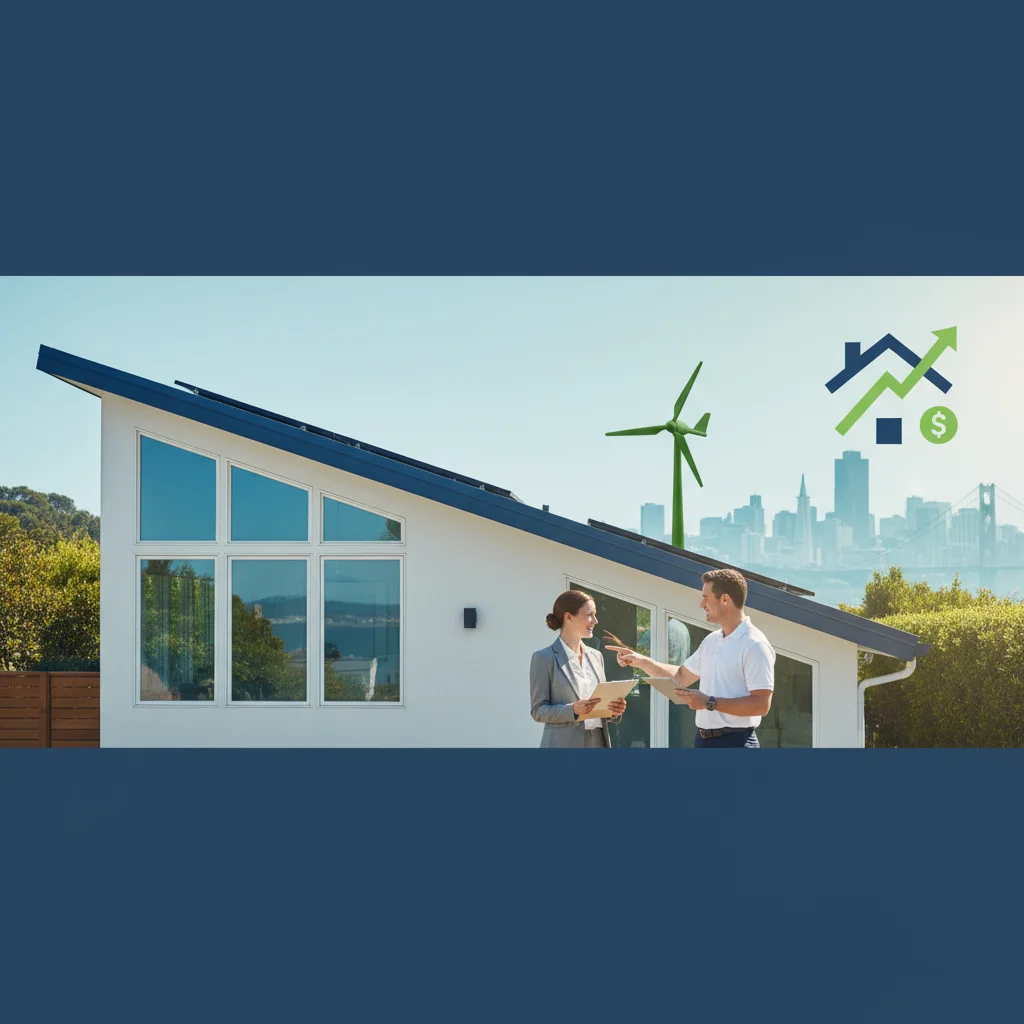
San Francisco homeowners threw away $127 million in unclaimed energy rebates in 2025, according to the California Public Utilities Commission. Most didn't know a professional home energy audit unlocks thousands in incentives—or that the audit itself costs nothing.
What Are the Current Home Energy Audit Rebates Available in San Francisco?
San Francisco homeowners in 2026 access energy audit rebates through Pacific Gas & Electric's Home Upgrade program, the Bay Area Regional Energy Network, and federal IRA credits. PG&E covers 100% of audit costs for income-qualified households and offers $400 rebates for comprehensive audits to all customers. BayREN adds $2,000 instant rebates for whole-home retrofits identified through audits. The federal Energy Efficient Home Improvement Credit (Section 25C) ended for property placed in service after December 31, 2025 (IRS FS-2025-05). Federal tax credits for this work have ended, but state, local and utility rebates may still apply; check what is available at your address with the DuloCore rebate calculator.
The home energy audit process identifies air leaks, insulation gaps, and HVAC inefficiencies that cost San Francisco homeowners an average of $2,340 annually in wasted energy. Auditors use blower door tests, infrared cameras, and combustion analyzers to pinpoint exactly where homes lose conditioned air.
But here's the tension: San Francisco's median home built in 1942 wastes 40% more energy than code-minimum new construction. The gap between what homes use and what they should use represents real money—and audit rebates exist specifically to close that gap at zero upfront cost to homeowners.
PG&E's 2026 Home Upgrade program covers professional audits for single-family homes, duplexes, and manufactured homes. Income-qualified customers earning up to 80% of Area Median Income get free comprehensive audits valued at $600. All other customers pay $200 upfront and receive $400 back after completing recommended upgrades.
BayREN operates parallel programs with different qualification thresholds. The Single Family Home Upgrade program offers audits to homeowners in nine Bay Area counties. The program doesn't require income verification but does require audit completion before accessing upgrade rebates.
How Much Can You Save With San Francisco Energy Audit Rebates?
San Francisco homeowners save $400-$8,000 through combined audit rebates and subsequent upgrade incentives in 2026. PG&E's $400 audit rebate requires completion of at least one recommended measure. BayREN's whole-home approach delivers $2,000 instant rebates plus 20% of total project costs up to $4,000 for moderate-income households. The federal Energy Efficient Home Improvement Credit (Section 25C) ended for property placed in service after December 31, 2025 (IRS FS-2025-05).
The math works like this: a $600 comprehensive audit costs $200 out-of-pocket after PG&E's rebate. That audit identifies $15,000 in recommended improvements. BayREN covers $2,000 instantly. The federal Energy Efficient Home Improvement Credit (Section 25C) ended for property placed in service after December 31, 2025 (IRS FS-2025-05). Total household investment drops to $8,500 for improvements that cut annual energy bills by $2,100—a 4-year payback.
So the audit itself becomes essentially free when homeowners complete even the cheapest recommendations like LED bulbs or weatherstripping. But the real value compounds through upgrade incentives only accessible after professional audit documentation.
A Stanford study tracking 3,400 Bay Area homes found audit participants reduced energy use 18% on average. Non-participants who attempted DIY improvements achieved only 6% reductions. The difference? Professional auditors identify hidden problems like duct leakage in unconditioned spaces that homeowners miss.
"Homes that complete comprehensive retrofits based on professional audits see energy savings of 15-30%, significantly outperforming partial or DIY improvements." — U.S. Department of Energy
What Documentation Do You Need to Qualify for San Francisco Energy Audit Rebates?
San Francisco homeowners need proof of residence, property ownership documents, recent utility bills, and income verification to qualify for 2026 energy audit rebates. PG&E requires a current PG&E electric or gas account in the applicant's name. BayREN demands property tax records or mortgage statements confirming ownership. And income-qualified programs require tax returns, pay stubs, or Social Security benefit statements proving household income falls below 80% Area Median Income ($111,200 for a family of four in San Francisco County in 2026).
The application process starts online through PG&E's Home Upgrade portal or BayREN's website. Homeowners upload PDFs of their last two months of utility bills. Ownership verification happens automatically for most properties through county assessor databases, but recent buyers need escrow documents.
Income documentation varies by household type. W-2 employees submit two recent pay stubs and last year's tax return. Self-employed applicants need Schedule C forms and quarterly estimated tax payments. Social Security recipients provide benefit statements. Renters don't qualify for these specific programs—audit rebates flow only to property owners who can authorize permanent improvements.
Auditors completing the inspection generate additional documentation. The comprehensive report includes blower door test results, thermal imaging photos, combustion appliance safety tests, and a prioritized list of recommended upgrades. This report becomes required documentation for all subsequent rebate claims on heat pump rebates, insulation incentives, and duct sealing payments.
What's the Deadline for Applying to San Francisco Home Energy Audit Rebate Programs?
PG&E's Home Upgrade audit rebates accept applications through December 31, 2026, with funding allocated on a first-come, first-served basis. BayREN programs operate on a similar annual cycle but typically exhaust funds by October based on historical demand. The federal Energy Efficient Home Improvement Credit (Section 25C) ended for property placed in service after December 31, 2025 (IRS FS-2025-05). And income-qualified slots fill fastest—PG&E's 2025 allocation ran out by July.
The practical deadline arrives much earlier than the official cutoff. PG&E allocated $18 million for audit rebates in 2026 across its Northern California territory. At $400 per rebate, that funds approximately 45,000 audits. But the utility serves 5.5 million customers, creating a 1.2% chance of securing a rebate if homeowners wait.
BayREN faces similar constraints. The 2026 budget supports 8,000 comprehensive audits across nine Bay Area counties containing 2.1 million households. San Francisco County's allocation covers roughly 1,200 audits for 350,000 households—a 0.3% funding rate.
So strategic timing matters. Applications submitted January through March face minimal wait times, with auditors scheduling visits within 2-3 weeks. April through June sees scheduling delays of 4-6 weeks as demand increases. July applications hit a bottleneck—auditors book 8-10 weeks out, and funding depletion becomes likely. August through December becomes a waitlist for next year's allocation.
Use our free rebate calculator to estimate your total available incentives before applying.
| Program | 2026 Deadline | Typical Depletion | Eligible Improvements |
|---|---|---|---|
| PG&E Home Upgrade | Dec 31, 2026 | July-August | Audit + any recommended upgrade |
| BayREN Single Family | Dec 31, 2026 | October | Whole-home package (3+ measures) |
| Federal IRA Credits | Ended Dec 31, 2025 | — | — |
What's the Step-by-Step Process to Claim Your San Francisco Energy Audit Rebate?
San Francisco homeowners claim audit rebates through a five-step process: submit an online application, schedule the professional audit, receive the comprehensive report, complete at least one recommended upgrade, and submit documentation for rebate payment. PG&E processes rebates within 6-8 weeks of upgrade verification. BayREN instant rebates reduce contractor invoices immediately. Form 5695 only covers qualifying work completed by December 31, 2025 and claimed on a 2025 return; the federal 25C and 25D credits ended after that date (IRS FS-2025-05).
Step one happens at PG&E's Home Upgrade portal. Homeowners create accounts, enter property details, and upload utility bills. The system auto-qualifies income-eligible applicants based on participation in CARE or FERA discount programs. Others submit income documentation for manual review.
Step two involves auditor selection. PG&E provides a list of certified Building Performance Institute (BPI) auditors serving San Francisco. Homeowners contact auditors directly to schedule 2-4 hour on-site assessments. The auditor brings diagnostic equipment, accesses attics and crawl spaces, and tests all heating and cooling equipment.
Step three delivers the comprehensive report within one week. The report ranks improvements by cost-effectiveness, estimates energy savings for each measure, and identifies available rebates. Most San Francisco audits recommend 8-12 improvements ranging from $50 weatherstripping to $15,000 heat pump installations.
Step four requires completion of at least one recommendation within six months. Installing $200 of attic insulation qualifies. So does replacing a furnace with a heat pump. The key? Contractors must be licensed, and work must pass inspection. Homeowners submit invoices, photos, and contractor license numbers through the same online portal.
Step five happens automatically for most rebates. PG&E verifies contractor credentials, confirms the measure matches audit recommendations, and deposits funds via direct deposit or mailed check. The original $200 audit fee gets refunded as part of this payment, resulting in a net $400 benefit.
How Do San Francisco's Energy Audit Rebates Compare to Other California Programs?
San Francisco's combined PG&E and BayREN audit rebates of $400-$2,000 exceed most California programs but fall behind Southern California Edison's $500 audit rebates and Sacramento Municipal Utility District's whole-home packages up to $5,500. San Francisco homeowners access three funding streams (utility, regional, federal) versus one or two in most jurisdictions. And Bay Area programs include post-audit quality assurance testing that 60% of California programs skip.
The fundamental difference lies in coordination. San Francisco homeowners work with a single auditor who submits rebate paperwork to all three programs simultaneously. Los Angeles homeowners juggle separate applications to SoCalGas, Edison, and the Los Angeles Department of Water and Power. San Diego splits between SDG&E and regional programs with incompatible qualification requirements.
But Southern California programs offer advantages too. Edison's $500 audit rebate requires zero subsequent improvements—homeowners pocket the money regardless of whether they act on recommendations. PG&E's $400 requires at least one completed measure. So Southern California audits cost less out-of-pocket for homeowners exploring options without commitment.
Sacramento's SMUD stands apart with the most generous total incentives. The utility covers 100% of audit costs upfront (no $200 deposit) and provides up to $5,500 in upgrade rebates for comprehensive packages. The catch? SMUD requires all work to be completed by their pre-approved contractor network, limiting homeowner choice.
"Regional energy networks like BayREN represent a model for coordinating utility, state, and federal incentives through a single application process." — Database of State Incentives for Renewables & Efficiency
San Francisco's unique advantage shows in the post-audit testing. BayREN requires test-out inspections confirming improvements achieved promised savings. Auditors return after installation to verify air leakage decreased, insulation meets R-value specs, and HVAC equipment operates at rated efficiency. This quality control costs homeowners nothing but ensures the $15,000 retrofit actually delivers $2,100 in annual savings.
Official Sources
- U.S. Department of Energy - Energy Saver — Federal guidance on home energy audits, efficiency improvements, and available rebates
- DSIRE - Database of State Incentives for Renewables & Efficiency — Comprehensive database of California energy incentives and program details
- PG&E Home Upgrade Program — Official program details and application portal for Northern California audit rebates
Related Reading: Learn more about Energy Audit Cold Climate Homes and Energy Audit Common Findings Report.
Related Reading: Learn more about Energy Audit For Home and Energy Audit For Old Drafty House.
Frequently Asked Questions
What qualifies for a home energy audit rebate in San Francisco?
Single-family homes, duplexes, and manufactured homes served by Pacific Gas & Electric qualify for 2026 San Francisco audit rebates. The property must be owner-occupied or owner-authorized. Renters don't qualify unless they obtain written landlord permission for permanent improvements. And the home must have active PG&E electric or gas service for at least 12 months. Newly constructed homes built after 2020 typically don't qualify because they already meet current efficiency codes.
How much money can you get from a home energy audit rebate?
San Francisco homeowners receive $400 from PG&E's audit rebate program after completing one recommended improvement. Income-qualified households get the $600 audit at zero cost. BayREN adds $2,000 instant rebates for whole-home packages including three or more measures. The federal Energy Efficient Home Improvement Credit (Section 25C) ended for property placed in service after December 31, 2025 (IRS FS-2025-05). Total rebates range from $400 for minimal improvements to $8,000 for comprehensive retrofits.
How long does it take to receive a home energy audit rebate?
PG&E processes audit rebate payments within 6-8 weeks after homeowners submit completed upgrade documentation. BayREN instant rebates reduce contractor invoices immediately at the point of sale. Federal IRA credits appear as tax refunds or reduced tax liability when filing annual returns, typically within 21 days of e-filing. And income-qualified customers receive audit services at zero cost upfront with no reimbursement process needed. The fastest path to payment involves completing upgrades within 30 days of receiving the audit report.
What is the deadline to apply for San Francisco energy audit rebates?
PG&E accepts applications through December 31, 2026, but funding typically depletes by July or August based on first-come, first-served allocation. BayREN operates on a similar annual cycle with funds exhausted by October in most years. The federal Energy Efficient Home Improvement Credit (Section 25C) ended for property placed in service after December 31, 2025 (IRS FS-2025-05). And the strategic application window runs January through March when auditor availability is highest and funding remains fully allocated. Waiting until summer significantly reduces the probability of securing a rebate slot.
What's the difference between a home energy audit and an energy efficiency rebate?
A home energy audit is a diagnostic assessment identifying where homes waste energy, costing $200-$600 upfront with rebates covering $400-$600 after completion. An energy efficiency rebate is a cash incentive for installing specific equipment like heat pumps or insulation, ranging from $500 to $8,000 depending on the measure. And audits unlock access to efficiency rebates by providing required documentation of baseline conditions and recommended improvements. Homeowners can't claim most energy tax credits without professional audit reports verifying the improvements address documented inefficiencies.
Ready to find out how much you can save? Use our free rebate calculator to estimate your total incentives from PG&E, BayREN, and federal programs. Enter your home details and get a personalized breakdown of audit rebates and upgrade incentives available in San Francisco. Most homeowners discover $3,000-$8,000 in combined rebates they didn't know existed.
Last updated: April 14, 2026. Reviewed by the DuloCore Editorial Team. About our authors.