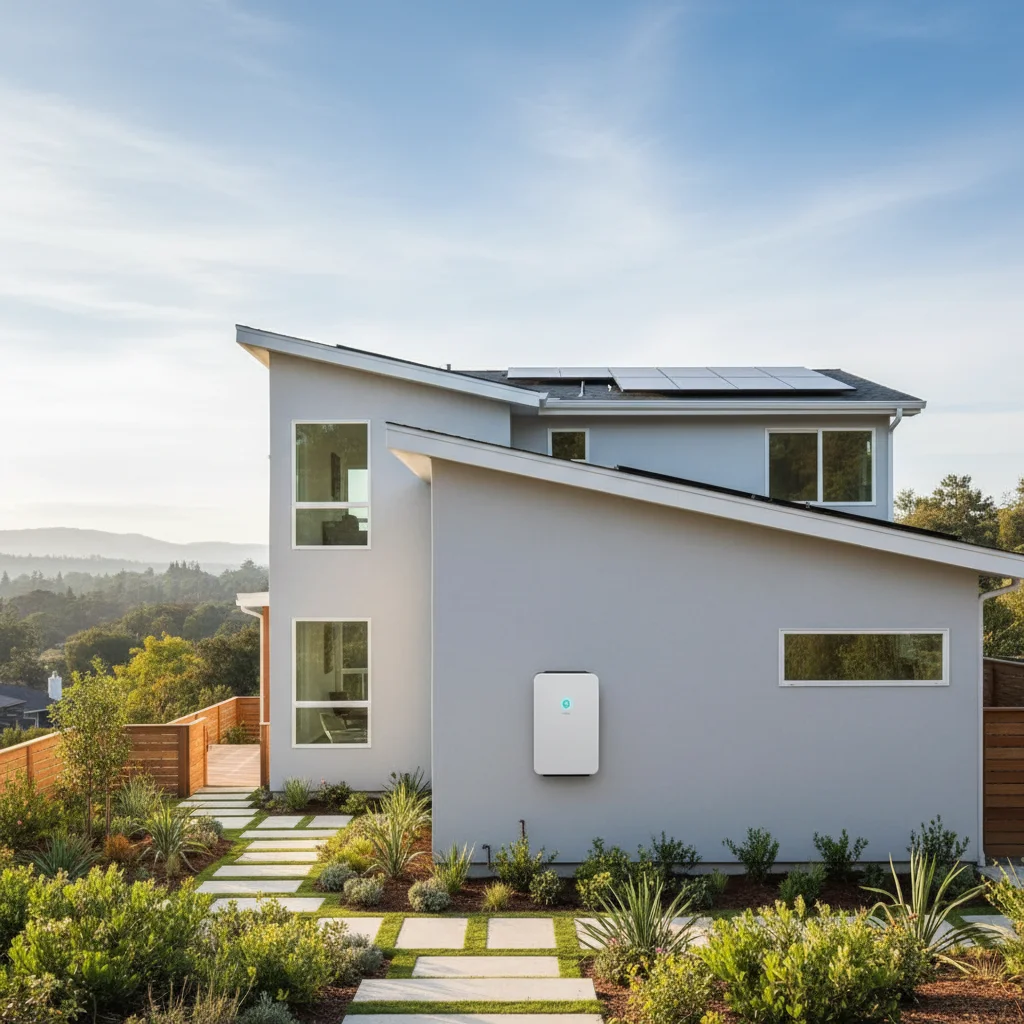
Oakland homeowners replaced over 3,200 gas furnaces with electric heat pumps in 2025, driven by a record $14,000 in combined rebate and tax credit incentives. And with natural gas rates climbing 18% since January 2024, the economics of electrification have shifted dramatically in the Bay Area's favor.
What are the current heat pump rebate amounts available in Oakland?
Oakland residents qualify for $8,000 through California's TECH Clean California program for ducted heat pump systems installed in 2026. And the federal IRA Home Efficiency Rebate adds up to $8,000 for income-qualified households. So total rebates reach $16,000 before factoring in the 30% federal tax credit that continues through 2032.
The California program operates on a first-come, first-served basis with $120 million allocated statewide for 2026. But funding depletes rapidly—the 2025 allocation exhausted by October. So early application in Q1 or Q2 maximizes approval odds.
BayREN (Bay Area Regional Energy Network) offers an additional $3,000 for Alameda County residents who combine heat pump installation with weatherization upgrades. And Pacific Gas & Electric provides $500-$2,000 through its Energy Efficiency Rebate Program for ENERGY STAR certified systems exceeding 16 SEER2 ratings.
"Heat pump rebates under the Inflation Reduction Act prioritize low- and moderate-income households with enhanced rebate caps up to $14,000 for equipment and installation." — U.S. Department of Energy
Who is eligible for Oakland heat pump rebates in 2026?
California TECH Clean California rebates require primary residences built before 2023 where the heat pump replaces an existing gas furnace or resistance heating system. And household income must fall below 400% of the federal poverty level—$120,000 for a family of four in Alameda County.
Federal IRA Home Efficiency Rebates use tiered income limits: households earning less than 80% of area median income ($78,000 for Oakland in 2026) qualify for $8,000, while those between 80-150% AMI ($146,000) receive $4,000. But homeowners above 150% AMI access only the federal tax credit, not direct rebates.
The system must meet minimum efficiency standards: 16 SEER2 for central ducted heat pumps or 9 HSPF2 heating seasonal performance factor. And installation requires a certified contractor listed in the TECH Clean California database—over 200 qualified installers serve the Oakland metro area.
Renters don't qualify for homeowner rebates, but landlords can claim incentives for rental property upgrades with tenant income verification. So multi-unit buildings with 1-4 units receive the same per-unit rebate caps as single-family homes.
What documentation do you need to apply for Oakland heat pump rebates?
Applications require proof of income through recent tax returns or pay stubs covering the last 3 months. And W-2 forms from 2025 satisfy the income verification requirement for most programs. But self-employed applicants must submit Schedule C alongside Form 1040.
The contractor provides equipment specifications including AHRI certification number, SEER2 rating, and BTU capacity. And before-installation photos showing the existing heating system establish baseline conditions. So inspectors can verify the replacement claim during post-installation audits conducted on 15% of projects.
Utility bills from the 12 months preceding installation demonstrate natural gas usage patterns. And Pacific Gas & Electric account numbers link rebate applications to service addresses for automatic processing. So households without 12-month billing history submit lease agreements or property tax records instead.
Building permits issued by Oakland's Building Services Division appear on all applications—unpermitted work disqualifies rebates retroactively. And final electrical inspection approval confirms code compliance before rebate disbursement. So the typical documentation timeline spans 4-6 weeks from application to approval.
What is the deadline for submitting Oakland heat pump rebate applications?
TECH Clean California accepts applications through December 15, 2026, or until the $120 million state allocation exhausts. And 2025 funding ran out on October 3, processing only 68% of submitted applications. So contractors recommend submitting by August 31 to guarantee review.
Federal IRA Home Efficiency Rebates operate on a rolling basis without hard deadlines, but California's $342 million allocation covers approximately 28,000 installations. And the State Energy Office estimates current application velocity will deplete funds by November 2026. So earlier submissions receive priority processing within the 30-day review window.
The 30% federal tax credit has no annual cap or application deadline through 2032, then phases down to 26% in 2033 and 22% in 2034. But homeowners must claim credits on tax returns for the year installation occurred—2026 installations appear on 2027 tax filings submitted by April 15, 2027.
BayREN's $3,000 weatherization bonus requires completion by June 30, 2026, for projects initiated after January 1. And Pacific Gas & Electric processes rebates within 6-8 weeks of application, accepting submissions year-round until program budgets reset each January.
How do Oakland heat pump rebates compare to federal and state incentives?
The federal Energy Efficient Home Improvement Credit (Section 25C) ended for property placed in service after December 31, 2025 (IRS FS-2025-05). Federal tax credits for this work have ended, but state, local and utility rebates may still apply; check what is available at your address with the DuloCore rebate calculator. And a $25,000 ducted system installation generates a $2,000 credit regardless of household income. So high-income households above IRA rebate thresholds still capture significant value through tax benefits.
California's $8,000 TECH rebate exceeds the federal direct rebate maximum of $8,000, but combining both programs isn't permitted under IRS anti-stacking rules. And households must choose the higher-value incentive—typically the state rebate for income-qualified residents. So optimal strategy involves claiming California's $8,000 rebate plus the 30% federal tax credit on remaining costs.
A $20,000 heat pump installation nets $8,000 from TECH Clean California, reducing taxable costs to $12,000. And the 30% federal credit (this federal credit ended for property placed in service after December 31, 2025) applies to this reduced amount, adding $3,600. So total incentives reach $11,600—a 58% cost reduction before utility rebates. (Note: Federal tax credit percentages and availability are subject to change; the 30% Residential Clean Energy Credit under Section 25D expired December 31, 2025. Verify current incentives at energy.gov.)
Pacific Gas & Electric rebates stack with both state and federal programs, adding $500-$2,000 depending on system efficiency. And BayREN's $3,000 weatherization bonus combines freely with all other incentives. So Oakland homeowners access up to $14,600 in direct rebates plus $3,600 in tax credits for a comprehensive $25,000 installation.
Use our free rebate calculator to model your specific incentive combination based on income, system size, and efficiency ratings.
"ENERGY STAR certified heat pumps deliver 300% efficiency compared to 95% for high-efficiency gas furnaces, converting every dollar of electricity into three dollars of heating value." — ENERGY STAR
What is the step-by-step process to claim your Oakland heat pump rebate?
Start by scheduling home energy assessments with BayREN-approved contractors who evaluate heating loads and recommend appropriately sized systems between 18,000-60,000 BTU for typical Oakland homes. And contractors submit pre-approval applications to TECH Clean California within 72 hours of site visits. So approval confirmation arrives within 10 business days.
Purchase equipment only after receiving pre-approval confirmation emails containing unique project identification numbers. And contractors must use these numbers on all permit applications and final invoices. So equipment purchased before approval disqualifies the entire rebate claim.
Installation requires city building permits obtained through Oakland's online permit portal at aca.accela.com. And inspectors verify proper refrigerant charge, ductwork sealing, and thermostat installation before signing completion certificates. So projects without final inspection approval can't submit rebate claims.
Submit final applications within 90 days of installation completion through the TECH Clean California portal at tech.com. And required uploads include final invoices, paid receipts, post-installation photos, completed W-9 forms, and inspection certificates. So incomplete applications return to contractors for revision, adding 2-3 weeks to processing time.
Rebate checks arrive 4-6 weeks after application approval via direct deposit or paper check mailed to service addresses. Form 5695 only covers qualifying work completed by December 31, 2025 and claimed on a 2025 return; the federal 25C and 25D credits ended after that date (IRS FS-2025-05). So keep all documentation for 7 years to satisfy IRS audit requirements.
Learn more about heat pump rebates available across California and how they integrate with federal energy tax credits.
Official Sources
- U.S. Department of Energy - SAVE — Federal guidance on IRA rebates and tax credits for home energy upgrades (note: the federal 25C and 25D credits ended for projects completed after December 31, 2025)
- ENERGY STAR Heat Pumps — Efficiency standards and certified product directory
- DSIRE USA — Comprehensive database of state and federal energy incentives
Related Reading: Learn more about Heat Pump Rebates Bakersfield and Spray Foam Insulation Rebates.
Frequently Asked Questions
What qualifies for a heat pump rebate in Oakland?
Ducted central heat pump systems replacing existing gas furnaces or electric resistance heating in primary residences built before 2023 qualify for California TECH rebates. And systems must achieve minimum 16 SEER2 efficiency ratings with installation by certified contractors listed in the state database. So ductless mini-split systems under 36,000 BTU receive reduced rebates of $3,000-$4,000 depending on income tier.
How much can you get from Oakland heat pump rebates?
Total incentives reach $14,600 through combined TECH Clean California ($8,000), BayREN weatherization bonus ($3,000), Pacific Gas & Electric efficiency rebate ($2,000), and utility-specific programs ($1,600). And the 30% federal tax credit adds $3,600 on a $20,000 system after rebates. So comprehensive incentive stacking reduces net costs from $20,000 to $5,400—a 73% reduction.
What is the process to apply for a heat pump rebate?
Schedule contractor assessments, receive pre-approval from TECH Clean California within 10 days, obtain Oakland building permits, complete installation with final inspection, and submit applications within 90 days through the state portal. And applications require income documentation, equipment specifications, photos, invoices, and inspection certificates. So processing spans 4-6 weeks from submission to rebate disbursement via direct deposit.
When do heat pump rebates expire in Oakland?
TECH Clean California accepts 2026 applications through December 15 or until the $120 million allocation exhausts—2025 funding depleted by October 3. And federal IRA rebates continue until California's $342 million allocation runs out, estimated for November 2026 at current application rates. So contractors recommend submitting by August 31 to guarantee funding availability before year-end rushes.
How do Oakland heat pump rebates compare to federal tax credits?
California's $8,000 TECH rebate can't combine with the $8,000 federal IRA rebate due to anti-stacking rules. The federal Energy Efficient Home Improvement Credit (Section 25C) ended for property placed in service after December 31, 2025 (IRS FS-2025-05). And state rebates provide immediate cost reduction while tax credits reduce liability on following year's tax returns. So income-qualified households choose TECH rebates for faster cash flow, while high-income homeowners rely solely on tax credits delivering $2,000 maximum benefit.
Ready to calculate your heat pump savings? Use our free rebate calculator to discover exactly how much you can save with Oakland's heat pump rebates, federal tax credits, and utility incentives. Get your personalized estimate in under 60 seconds.
Last updated April 14, 2026 — reviewed by DuloCore Editorial. About our authors.
Check your California heat pump rebate eligibility — see the programs you qualify for and the dollar amounts on our California heat pump rebate finder.