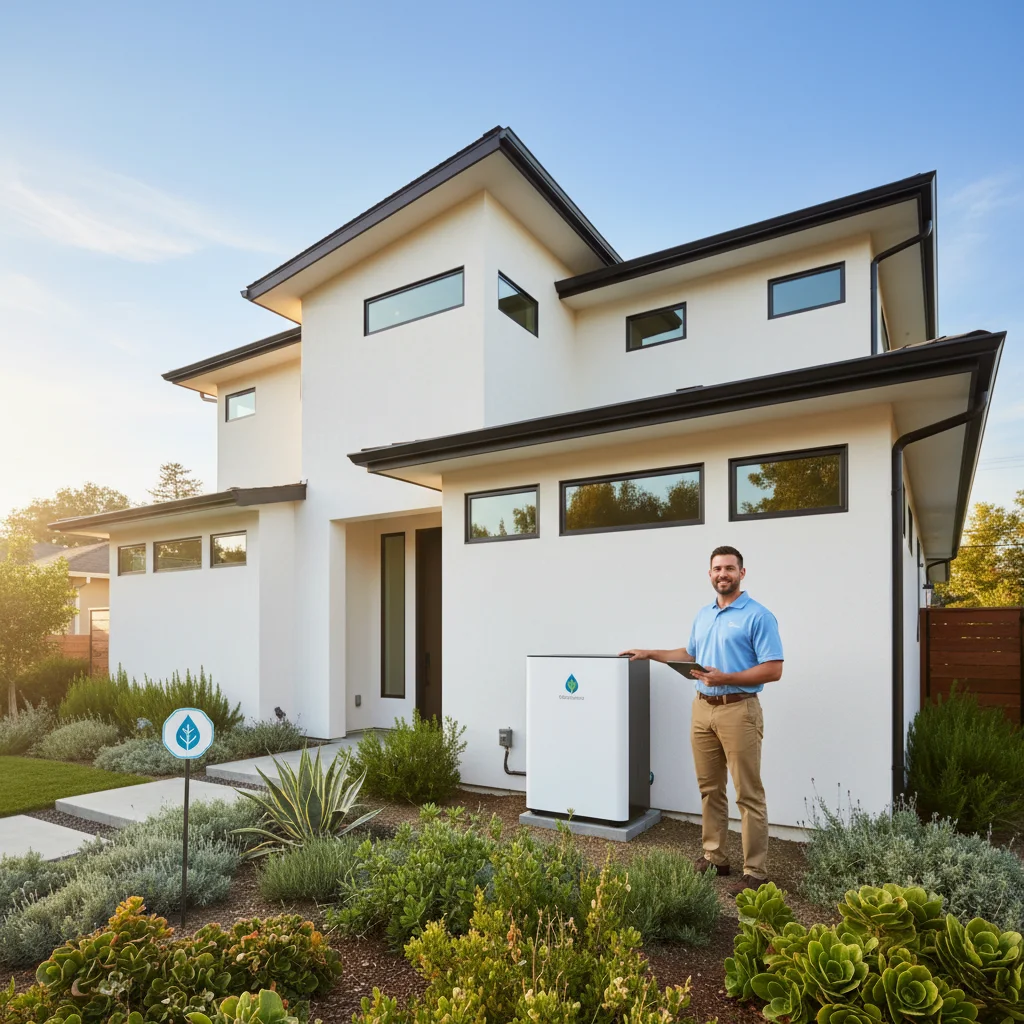
Oakland's building stock is about to get expensive. The city's aging HVAC infrastructure—78% of heating systems are over 10 years old—faces a collision with California's 2029 ban on gas furnace installations in new construction and major renovations. And homeowners who wait until the mandate hits will pay premium prices when contractor availability drops and equipment costs spike 15-20% during the transition rush.
What's the realistic ROI and payback period for a heat pump installation in Oakland?
Oakland heat pump installations deliver 8-12 year payback periods with $14,000-$28,000 total system costs offset by $3,000-$8,000 in combined rebates and tax credits. Annual operating savings range from $800-$1,400 compared to gas furnaces paired with central air, varying by home size and electricity rates under PG&E's tiered pricing structure.
So here's the tension: Oakland's mild winters make heat pumps 300% more efficient than resistance heating, but the upfront cost creates a financial hurdle that traps homeowners in a pattern of reactive replacements. The difference between planned installations in 2026 and emergency replacements in 2029 represents $4,000-$6,000 in lost rebate opportunities and contractor premium pricing.
A 2,000-square-foot Oakland home switching from a 15-year-old gas furnace and AC system to a ducted heat pump sees annual energy cost drops of $960-$1,320. But payback calculations shift dramatically based on installation complexity. Homes with existing ductwork average 9-year payback periods. Properties requiring new duct runs extend payback to 12-14 years due to $8,000-$12,000 added labor costs.
The IRA federal tax credit covers 30% of total installation costs through 2032, capped at $2,000 annually for heat pump equipment. And California's TECH Clean California program adds $3,000-$4,000 for income-qualified households replacing gas systems. But these programs operate on first-come funding that historically exhausts 6-8 months into each program year.
Energy cost savings compound over time as gas rates increase 4-6% annually while PG&E's electricity rates rise 2-3% under regulatory caps. Oakland homeowners installing heat pumps in 2026 lock in current efficiency ratios of 3.5-4.5 COP (Coefficient of Performance), avoiding the financial exposure of aging gas equipment facing carbon pricing policies projected for 2030-2035.
How do heat pumps compare to traditional furnaces, air conditioners, and other heating alternatives?
Heat pumps replace both furnace and AC systems with one unit delivering 97-99% heating efficiency in Oakland's climate zone 3, compared to 80-95% AFUE ratings for gas furnaces and separate 14-18 SEER air conditioners. Annual operating costs run $720-$1,080 for heat pumps versus $1,200-$1,800 for gas furnace plus AC combinations.
Traditional forced-air gas furnaces deliver consistent heat output in extreme cold but waste 5-20% of energy through combustion losses and duct leakage. Oakland's winter lows averaging 42-48°F fall well within the optimal range for modern cold-climate heat pumps rated to -15°F outdoor temperatures. And dual-fuel systems pairing heat pumps with backup gas heat add $2,500-$4,000 in equipment costs for capacity Oakland rarely needs.
Ductless mini-split heat pumps offer targeted zone control that central systems can't match, reducing energy waste in unused rooms by 20-30%. But installation costs run $4,500-$6,500 per indoor zone, making whole-home coverage for 3-4 zones more expensive than ducted systems at $14,000-$18,000 total.
Resistance heating from baseboard or wall units delivers 100% electrical efficiency but costs 3-4 times more to operate than heat pumps moving thermal energy rather than generating it. Oakland homes heated by electric resistance average $2,400-$3,200 annual heating costs compared to $720-$1,080 for heat pump systems serving identical square footage.
The comparison shifts when factoring air quality benefits. Heat pumps eliminate combustion byproducts, reducing indoor NO₂ concentrations by 80-95% compared to gas furnaces. California's building health codes increasingly mandate mechanical ventilation in homes with gas appliances, adding $1,200-$2,400 in fresh air system costs that heat pump installations avoid.
For more details on available incentives, check the heat pump rebates guide.
How long do heat pumps last, and what's the typical lifespan in Oakland's climate?
Oakland heat pump systems last 15-20 years with proper maintenance, matching or exceeding the 15-18 year average lifespan of gas furnaces while eliminating the 12-15 year replacement cycle for separate AC units. The Bay Area's mild marine climate extends compressor life 2-3 years beyond installations in extreme temperature zones.
Compressor longevity depends on cycling frequency more than runtime hours. Oakland's narrow temperature swings of 20-25°F daily reduce on/off stress that degrades components in climates with 40-50°F daily variations. And inverter-driven variable-speed compressors in modern units operate at 40-80% capacity most hours, avoiding the thermal shock of fixed-speed systems running at 100% then shutting down completely.
Manufacturer warranties cover compressors for 10-12 years and parts for 5-7 years, but extended labor warranties add $800-$1,500 to installation costs. Annual maintenance runs $150-$250 for filter replacement, coil cleaning, and refrigerant level checks—services that prevent 70% of premature failures according to HVAC industry data.
Coastal proximity accelerates corrosion on outdoor units unless installers apply anti-corrosion coatings adding $300-$500 to project costs. Oakland's fog belt neighborhoods within 3 miles of the bay see outdoor unit lifespans reduced 12-18 months without protective treatment, particularly on aluminum fins exposed to salt-laden air.
Refrigerant type affects longevity projections. Systems using R-410A refrigerant face phase-out pressures as the industry transitions to R-32 and R-454B alternatives with 68-78% lower global warming potential. But Oakland installations in 2026 will access R-410A service and parts through 2040-2045 based on current regulatory timelines.
What are the upfront costs and available rebates for Oakland heat pump contractors?
Oakland heat pump installation costs range from $14,000-$28,000 depending on system capacity, ductwork requirements, and electrical service upgrades, with $3,000-$8,000 available in combined federal, state, and utility rebates reducing net costs to $11,000-$20,000 for most residential projects.
Central ducted systems for 1,800-2,500 square foot homes run $16,000-$22,000 installed, covering 3-4 ton capacity units, ductwork modifications, thermostat upgrades, and electrical panel updates. Ductless mini-split systems cost $4,500-$6,500 per indoor zone, with whole-home coverage for 3 zones totaling $13,500-$19,500.
The federal IRA tax credit provides 30% back on total installation costs capped at $2,000 through 2032, dropping to 26% in 2033 and 22% in 2034. And the $2,000 cap applies per year, not per project—homeowners installing heat pumps plus other qualified upgrades face aggregate limits requiring multi-year planning.
"The Energy Efficient Home Improvement Credit under Section 25C allows up to $2,000 annually for qualified heat pump costs through 2032." — IRS Energy Incentives (note: the original Section 25C/25D credits expired December 31, 2025; they were replaced by updated credits under the Inflation Reduction Act)
California's TECH Clean California program offers $3,000-$4,000 for income-qualified households replacing gas heating with heat pumps, but funding depletes 6-8 months into each program year. And PG&E's Energy Savings Assistance program provides no-cost installations for households under 200% of federal poverty guidelines—$60,000 for a family of four in 2026.
Electrical service upgrades add $2,000-$5,000 when 100-amp panels require expansion to 200-amp capacity for heat pump loads. Oakland's housing stock includes 40% of homes built before 1960 with undersized electrical infrastructure, making panel upgrades common in retrofit scenarios.
Calculate your potential savings with the rebate calculator to see exact amounts for your home.
What's the installation process and timeline when hiring a local heat pump contractor?
Oakland heat pump installations take 2-5 days from equipment delivery to final commissioning, with 3-6 weeks of lead time for permits, HERS testing, and utility coordination in typical residential projects. Homes requiring ductwork modifications or electrical upgrades extend timelines to 5-10 days of active construction.
The process starts with Manual J load calculations determining exact heating and cooling capacity requirements based on square footage, insulation levels, window area, and orientation. Undersized units run continuously without reaching target temperatures. Oversized equipment cycles on and off excessively, reducing efficiency by 15-25% and shortening compressor life by 3-5 years.
Oakland's building permit requirements include HERS (Home Energy Rating System) verification for systems over 3 tons, adding $400-$600 in testing fees and 1-2 weeks to approval timelines. And Title 24 energy code compliance mandates duct leakage testing on any modifications, enforcing 6% or less leakage rates that older duct systems rarely meet without $1,500-$3,000 in sealing work.
Equipment installation follows permit approval, with outdoor unit placement requiring 24-30 inches of clearance for airflow and service access. Indoor air handler installations in attics, basements, or closets connect to existing or new ductwork with insulated supply and return runs. Refrigerant line sets connecting indoor and outdoor units run through exterior walls with penetrations sealed to Title 24 air sealing standards.
Electrical work includes dedicated 240-volt circuits sized for peak amperage draws of 25-40 amps depending on unit capacity. Oakland contractors coordinate with PG&E for service disconnects during electrical tie-ins, requiring 3-5 business days of utility scheduling. And smart thermostat installations integrate with time-of-use rate optimization, shifting non-critical cooling loads to off-peak hours saving 12-18% on electricity costs.
Final commissioning includes refrigerant charge verification, airflow balancing, and control sequence testing. HERS raters return for post-installation verification, submitting compliance documentation to the city within 30 days of project completion.
Are you eligible for federal tax credits, state rebates, or utility incentives in Oakland?
Oakland homeowners qualify for the federal IRA tax credit covering 30% of heat pump installation costs up to $2,000 annually through 2032, with no income restrictions or primary residence requirements for individual taxpayers filing 1040 returns with sufficient tax liability to absorb the nonrefundable credit.
California's TECH Clean California program provides $3,000-$4,000 rebates for income-qualified households replacing gas heating systems with electric heat pumps, using area median income thresholds of 80% AMI—$89,600 for a family of four in Alameda County in 2026. And the program requires certified contractor installation with equipment meeting ENERGY STAR specifications and HERS verification.
PG&E's Energy Savings Assistance program delivers no-cost heat pump installations for households under 200% federal poverty level ($60,000 for family of four in 2026), covering equipment, installation, electrical upgrades, and duct modifications at zero out-of-pocket cost. But waitlists run 4-8 months in high-demand service territories including Oakland.
"ENERGY STAR certified heat pumps use 50% less energy than standard models and qualify for federal tax credits and utility rebates." — ENERGY STAR Heat Pumps
Additional incentives layer on top of base programs. Oakland's Equitable Climate Action Plan allocates $2.5 million annually for residential electrification rebates in environmental justice communities, identified by census tracts with CalEnviroScreen scores above 75th percentile. And Bay Area Air Quality Management District offers $3,000 incentives for replacing wood-burning fireplaces with heat pumps, though program funding varies annually.
Tax credit eligibility requires equipment meeting ENERGY STAR Most Efficient specifications with SEER2 ratings of 16 or higher and HSPF2 ratings of 9 or higher. And IRS Form 5695 claims the credit on annual returns, requiring manufacturer certification statements and contractor invoices documenting qualifying costs.
For complete details on current programs, see energy tax credits and verify 2026 funding status.
Official Sources
- DOE Energy Saver — Federal guidance on heat pump efficiency, costs, and rebate programs
- ENERGY STAR Heat Pumps — Certified product directory and performance specifications
- DSIRE California — Comprehensive database of state and utility energy incentives
Related Reading: Learn more about Pool Pump Energy Audit Savings.
Frequently Asked Questions
Can you find a certified heat pump contractor in Oakland?
Oakland hosts 47 HVAC contractors with North American Technician Excellence (NATE) certification in heat pump installation, searchable through the NATE technician locator database. California's C-20 Warm-Air Heating, Ventilation and Air-Conditioning license requirements mandate 4 years of journeyman experience and passing scores on trade exams covering refrigeration, electrical, and building codes. And TECH Clean California maintains approved contractor lists for rebate-eligible installations.
What qualifications should a heat pump contractor have in Oakland?
Oakland heat pump contractors require California C-20 HVAC contractor licenses, NATE certification in heat pump installation, and HERS rater relationships for Title 24 compliance verification. Installers should demonstrate Manual J load calculation experience, refrigerant handling EPA 608 certification, and manufacturer training on specific equipment brands. And contractor references from 5-10 recent Oakland installations provide verification of local permit knowledge and PG&E coordination experience.
How much does a heat pump installation cost in Oakland?
Oakland heat pump installations cost $14,000-$28,000 for central ducted systems and $13,500-$19,500 for whole-home ductless mini-split coverage, with $3,000-$8,000 in available rebates reducing net costs to $11,000-$20,000 for most projects. Ductwork modifications add $2,500-$5,000, electrical panel upgrades cost $2,000-$5,000, and HERS testing runs $400-$600 for Title 24 compliance.
Are there rebates available for heat pump contractors in Oakland?
Oakland heat pump rebates include the federal IRA tax credit ($2,000 cap), TECH Clean California ($3,000-$4,000 for income-qualified households), PG&E Energy Savings Assistance (no-cost installs under 200% poverty level), and BAAQMD fireplace replacement incentives ($3,000). Combined rebates reduce $18,000 average installation costs to $10,000-$13,000 net after incentives for most residential projects in 2026.
What is the difference between a heat pump contractor and an HVAC contractor?
Heat pump contractors specialize in refrigerant-cycle heating and cooling systems using vapor compression technology, while HVAC contractors may focus on combustion heating (gas furnaces), forced-air systems, or ventilation without heat pump expertise. California C-20 licenses cover all mechanical heating and cooling, but NATE heat pump certification and manufacturer training differentiate contractors qualified for modern variable-speed inverter systems and refrigerant transition compliance. And heat pump specialists understand building electrification rebate programs that traditional HVAC contractors often don't track.
Ready to calculate your heat pump rebates? Use our free rebate calculator to get personalized estimates based on your home size, current system, and income qualification. See exact federal, state, and utility incentive amounts in under 2 minutes—no email required.
Last updated: April 14, 2026. Reviewed by the DuloCore Editorial Team. About our authors.
Check your California heat pump rebate eligibility — see the programs you qualify for and the dollar amounts on our California heat pump rebate finder.