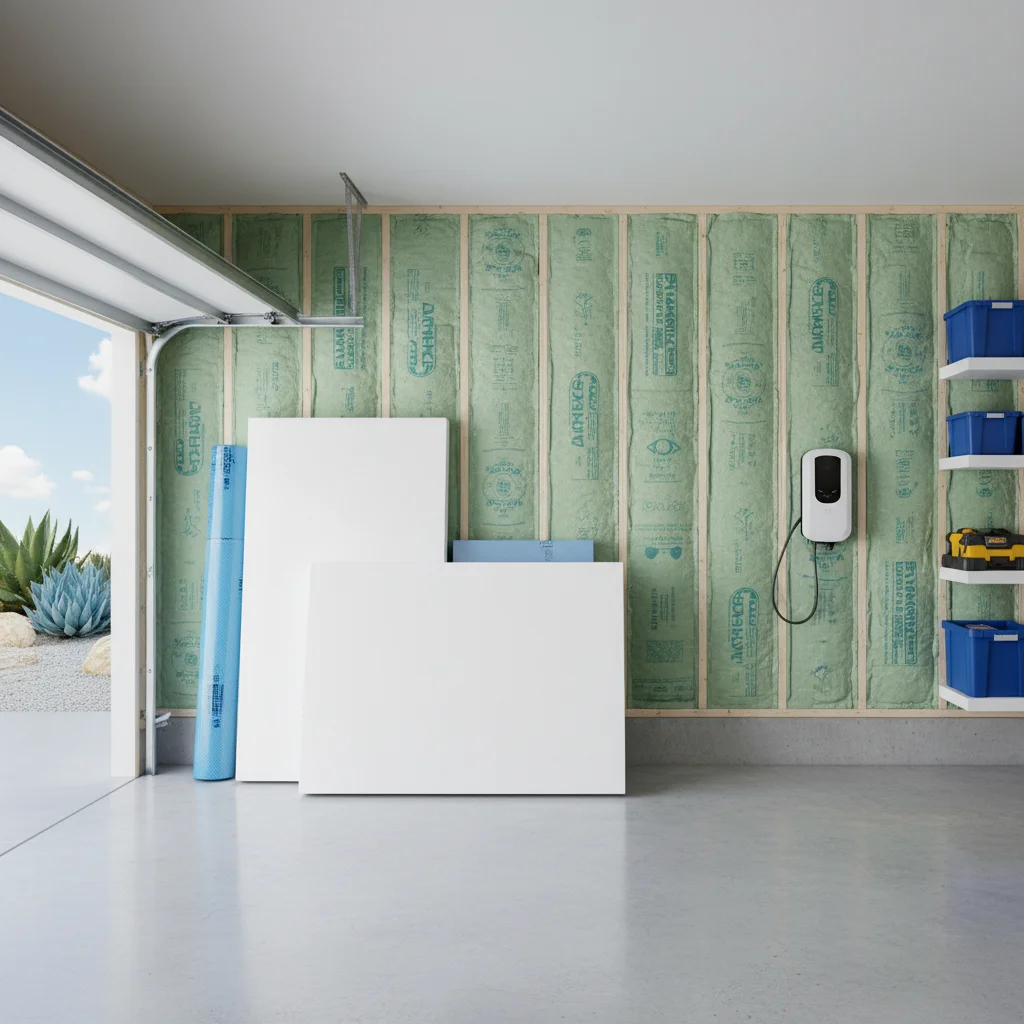
California garage insulation costs jumped 18% between 2024 and 2026, driven by tighter building codes in Climate Zones 6-16 and new R-value minimums under Title 24. And the average 400-square-foot garage now runs $1,200-$3,800 to insulate, depending on climate zone and material type.
How Much Does Garage Insulation Cost in California by Climate Zone?
Garage insulation costs in California range from $1,200 to $3,800 for a standard 400-square-foot detached garage, with Climate Zones 12-16 requiring R-30 ceiling and R-19 wall insulation that costs 40-60% more than coastal zones. Material choice drives the spread: fiberglass batts cost $1.50-$2.50 per square foot installed, while spray foam runs $3.50-$6.00 per square foot in 2026.
Climate Zone 1 (Arcata) and Zone 6 (Los Angeles) permit R-19 ceiling insulation, costing $800-$1,400 for a 400-square-foot garage with fiberglass batts. But Zone 14 (China Lake) and Zone 16 (Mount Shasta) mandate R-30 ceilings and R-19 walls, pushing total costs to $2,800-$3,800 with spray foam or rigid foam boards.
And Title 24 2023 updates require air sealing in all climate zones, adding $300-$600 to baseline insulation costs. Contractors now perform blower door tests post-installation to verify <3 ACH50 (air changes per hour at 50 pascals) in new construction and major renovations.
So homeowners in inland valleys (Zones 12-14) face the steepest bills: $2,200-$3,400 for full garage insulation with R-30 ceiling, R-19 walls, and air sealing. Coastal zones (1-6) average $1,200-$1,800 for the same 400-square-foot space with lower R-value requirements.
Which Garage Insulation Specs Qualify for California Rebates?
California garage insulation has no standalone rebates for garage-only projects in 2026; federal tax credits no longer apply (IRS FS-2025-05). The IRA Home Efficiency Rebates (HOMES program) reimburse $2,000-$8,000 based on modeled energy savings, but garage insulation alone rarely meets the 20% threshold without attic, wall, or HVAC upgrades.
R-value minimums for rebate eligibility match Title 24 requirements: R-19 ceiling in Zones 1-11, R-30 in Zones 12-16, and R-13 walls in all zones. But HOMES rebates require HERS verification, adding $400-$800 in rater fees that eat into savings. And the program prioritizes low-to-moderate income households earning ≤80% AMI (Area Median Income), who qualify for 100% cost coverage up to $8,000 versus 50% coverage for higher earners.
"The HOMES Rebate Program focuses on whole-home energy savings measured through HERS ratings, not individual component upgrades." — U.S. Department of Energy
California utility rebates through PG&E, SCE, and SDG&E exclude garage insulation from their 2026 residential programs, focusing instead on attic insulation ($0.15-$0.30 per square foot) and air sealing ($50-$150 per project). So homeowners chasing rebates must bundle garage work with qualifying attic or wall insulation to meet program thresholds. Use our free rebate calculator to model combined upgrade savings.
What's the ROI and Payback Period for Garage Insulation in California Homes?
Garage insulation delivers 8-14 year payback periods in California, with ROI varying by climate zone and garage usage. Homeowners in Climate Zones 12-16 who use garages as conditioned workspace see 8-10 year payback through reduced HVAC runtime, while coastal zones (1-6) stretch to 12-14 years due to milder temperature swings and lower baseline energy costs.
A $2,400 garage insulation project in Fresno (Zone 13) saves $240-$320 annually when the garage connects to central HVAC, driven by 18-22% reduction in cooling loads during 100°F+ summer days. But the same $2,400 investment in San Francisco (Zone 3) saves just $150-$200 annually, extending payback to 12-16 years.
And detached garages without HVAC connections see 20+ year payback periods, making insulation a poor standalone investment unless planned for future conversion to living space or workshop. Attached garages with shared walls deliver faster returns: every 1°F reduction in garage temperature cuts whole-home cooling costs by 2-3% in hot inland zones.
So ROI peaks when garage insulation pairs with other efficiency upgrades like attic insulation, air sealing, or heat pump installation. Combined projects unlock utility rebates that standalone garage work misses; federal energy tax credits no longer apply (IRS FS-2025-05).
Garage Insulation vs. Other Cooling Solutions: Which Is Best for Your Climate?
Garage insulation competes with radiant barriers, ventilation fans, and mini-split heat pumps for temperature control, with optimal solutions varying by climate zone and usage pattern. Radiant barriers cost $0.50-$1.20 per square foot and block 90% of radiant heat in Climate Zones 12-16, but provide zero benefit in coastal zones (1-6) where summer temperatures rarely exceed 85°F.
Ventilation fans ($300-$800 installed) move air but don't reduce conductive heat transfer through walls and ceilings, making them inferior to insulation in extreme climates. And mini-split heat pumps ($2,500-$4,500 for 12,000 BTU units) actively cool spaces but cost 3-5x more than insulation while adding $40-$80 monthly to electric bills in heavy-use scenarios.
But insulation plus radiant barriers deliver the best value in Zones 12-16: $2,800-$3,600 combined cost reduces garage temperatures by 15-25°F versus 8-12°F from insulation alone. And pairing insulation with passive ventilation (roof or gable vents) costs just $150-$400 extra while preventing moisture buildup that degrades R-value over time.
So Climate Zones 1-6 benefit most from basic insulation ($1,200-$1,800) without radiant barriers or active cooling. Zones 12-16 justify combined approaches when garages serve as workshops or gyms requiring sub-85°F temperatures during summer. Explore heat pump rebates if active cooling becomes necessary for converted living spaces.
How Long Does Garage Insulation Last and What Maintenance Does It Need?
Fiberglass batt insulation lasts 80-100 years in dry California garages, while spray foam maintains R-value for 50+ years with zero maintenance required. But moisture intrusion from leaking garage doors or roof damage compresses fiberglass, reducing R-19 to R-12 within 5-10 years if left unaddressed.
Annual inspections cost nothing and take 15 minutes: check for water stains on ceiling insulation, compressed batts in wall cavities, and gaps around garage door frames. And re-sealing garage door weatherstripping every 3-5 years ($40-$80 in materials) prevents air leakage that bypasses insulation and drives up heating costs by 8-12% in Climate Zones 12-16.
Spray foam requires no maintenance but can't be easily replaced if damaged, making it risky in garages with roof leak history. Rigid foam boards (R-6 to R-10 per inch) split the difference: 40+ year lifespan, removable panels for repairs, and $2.00-$3.50 per square foot installed cost that undercuts spray foam by 30-40%.
So maintenance costs stay under $100 annually for all insulation types, mostly weatherstripping replacement and visual checks. But neglecting roof repairs in rainy Northern California zones destroys fiberglass insulation within 3-5 years, requiring full $1,200-$2,400 replacement that erases any initial cost savings versus spray foam.
What's the Installation Process and Timeline for California Garage Insulation?
Professional garage insulation takes 1-3 days depending on size and material choice, with fiberglass batts requiring 6-8 hours for a 400-square-foot garage versus 8-12 hours for spray foam application and curing. Permits cost $150-$400 in most California cities and add 2-4 weeks to project timelines, though some jurisdictions exempt garage-only insulation from permitting when R-values match Title 24 minimums.
Day 1: contractors remove wall coverings if present, air seal gaps around electrical boxes and door frames with canned foam ($80-$150 in materials), and install vapor barriers in Climate Zones 1, 5, and 16 where condensation risk exceeds 20% during winter months. And electrical outlets require code-compliant boxes rated for insulation contact, adding $25-$40 per outlet in retrofit projects.
Day 2-3: insulation installation proceeds ceiling-first to prevent batts from falling during wall work, with spray foam requiring 24-hour cure time before garage use resumes. Inspections occur within 5-7 business days in most jurisdictions, focusing on R-value verification, vapor barrier placement, and fire-rated drywall in attached garages per IRC R302.5.
So total project timelines run 3-5 weeks from permit application to final inspection, with actual installation consuming just 1-3 days. DIY installations cut labor costs by 40-60% but risk failed inspections: 22% of self-installed garage insulation projects in California failed first inspection in 2025 due to improper vapor barrier placement or incomplete air sealing.
Official Sources
- U.S. Department of Energy - Energy Saver — Federal guidance on home insulation, rebates, and energy efficiency programs
- DSIRE USA — Database of state and utility energy efficiency incentives and rebate programs
- California Energy Commission - Title 24 — California building energy codes and climate zone requirements
Related Reading: Learn more about Fiberglass Insulation Cost Per Square Foot and Insulation Contractors Near Me.
Related Reading: Learn more about Garage Insulation Cost.
Related Reading: Learn more about Attic Insulation Cost.
Frequently Asked Questions
How much does garage insulation cost in California?
Garage insulation costs $1,200-$3,800 for a 400-square-foot space in California as of 2026, with fiberglass batts at the lower end ($1.50-$2.50 per square foot) and spray foam at the upper end ($3.50-$6.00 per square foot). Climate Zones 12-16 require R-30 ceiling insulation that costs 40-60% more than R-19 requirements in coastal zones. And air sealing adds $300-$600 to baseline costs under Title 24 2023 updates.
What rebates are available for garage insulation in California?
No standalone rebates exist for garage-only insulation in California in 2026, but the IRA HOMES program reimburses $2,000-$8,000 when garage insulation contributes to 20% whole-home energy reduction verified by HERS raters. PG&E, SCE, and SDG&E exclude garage insulation from utility rebate programs. And low-to-moderate income households earning ≤80% AMI qualify for 100% cost coverage up to $8,000 versus 50% for higher earners.
Is garage insulation eligible for California energy tax credits?
The federal Energy Efficient Home Improvement Credit (Section 25C) ended for property placed in service after December 31, 2025 (IRS FS-2025-05). And HERS verification costs $400-$800, reducing net savings unless bundled with attic, wall, or HVAC improvements that meet the 20% threshold independently.
How long does it take to get a garage insulation rebate in California?
HOMES rebate processing takes 90-120 days from project completion and HERS verification submission, with payment delays extending to 6-9 months in high-volume periods reported in early 2026. And utility programs that exclude garage insulation offer no reimbursement timelines. So homeowners should budget for 4-6 months between final inspection and rebate receipt for qualifying whole-home projects.
Should I insulate my garage walls or ceiling first?
Ceiling insulation delivers 60-70% of total thermal benefit in California garages due to heat rising and radiant transfer through roof surfaces, making it the priority in budget-limited projects. But attached garages with shared walls benefit from wall insulation that prevents heat transfer to living spaces, adding 15-20% cooling cost reduction in Climate Zones 12-16. So detached garages prioritize ceilings, while attached garages insulate both simultaneously for maximum ROI and faster 8-10 year payback periods.
Ready to calculate your garage insulation savings and rebate eligibility?
Use our free rebate calculator to model costs, energy savings, and available incentives for your California climate zone. Get a personalized estimate in under 2 minutes.
Last reviewed: April 14, 2026. Reviewed by DuloCore Energy Specialists. About the team.
Check your California insulation rebate eligibility — see the programs you qualify for and the dollar amounts on our California insulation rebate finder.