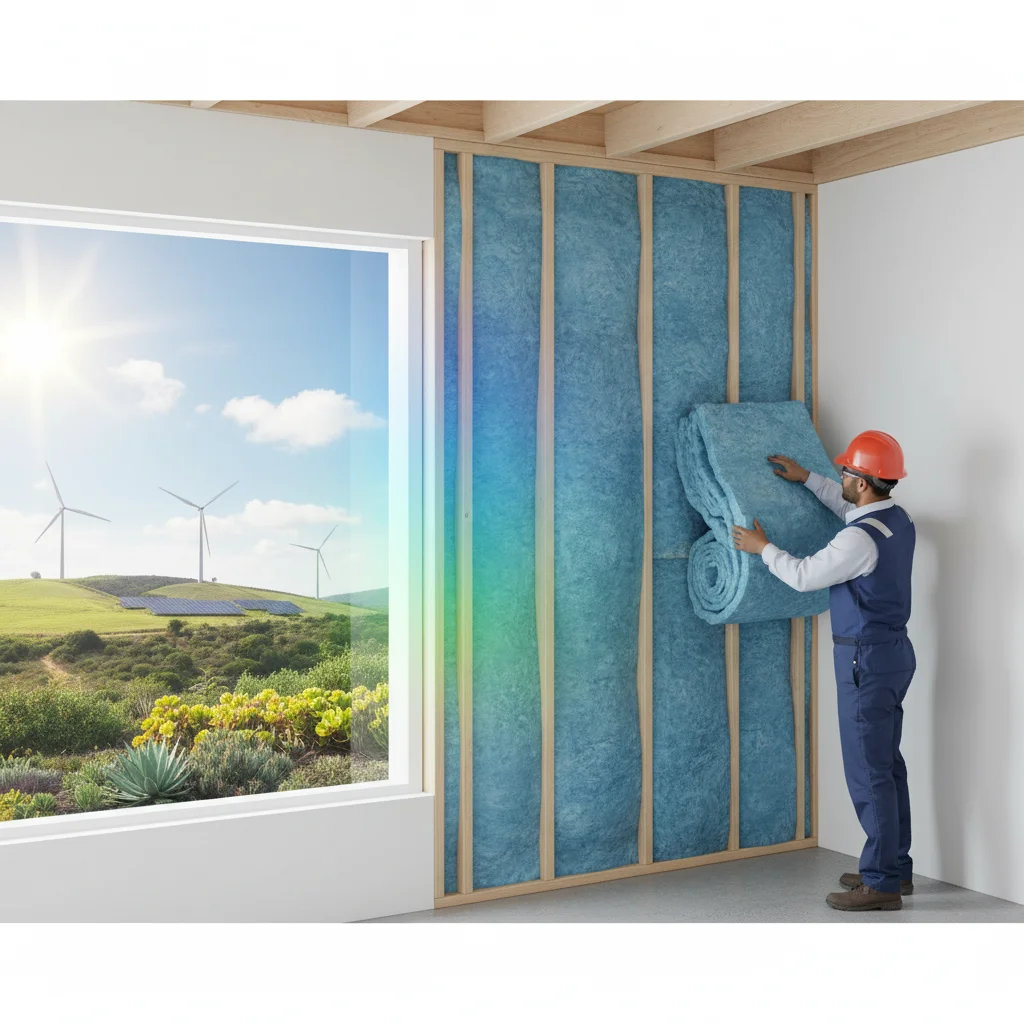
California homeowners spent $1.8 billion on insulation upgrades in 2025, and fiberglass insulation accounted for 64% of those installations. In 2026, material costs dropped 11% from their 2024 peak, making fiberglass the most cost-effective insulation option per R-value dollar. And rebates from California utilities now cover $800-$2,400 of installation costs.
How Much Does Fiberglass Insulation Cost in California in 2026?
Fiberglass insulation costs $0.64-$1.37 per square foot installed in California in 2026, depending on R-value and installation complexity. Attic blown-in fiberglass averages $1,850 for 1,500 square feet at R-38, while wall batt insulation runs $2.10-$3.20 per square foot for R-15 with drywall removal and replacement.
Material prices fell 11% since 2024 due to increased domestic manufacturing capacity. Owens Corning and Johns Manville expanded California production facilities in late 2025, reducing shipping costs and lead times. Labor costs rose 6% year-over-year as certified installers remain in short supply across the Central Valley and Inland Empire regions.
Attic insulation projects for a 1,500-square-foot home cost $1,600-$2,400 for blown-in fiberglass at R-38 to R-49. Wall insulation runs $3,800-$5,200 for a full exterior wall retrofit, including batt installation and drywall replacement. Crawl space insulation averages $1.20-$1.85 per square foot, with higher costs in moisture-prone coastal areas requiring vapor barriers.
But installation complexity drives the widest price variance. Accessible attics with standard joist spacing cost 30-40% less than cathedral ceilings or spaces requiring old insulation removal. Homes built before 1980 often need asbestos testing before work begins, adding $400-$600 to project costs.
"Proper attic insulation can reduce cooling costs by 15-25% in California's hot inland climates." — U.S. Department of Energy
What's the ROI and Payback Period for Fiberglass Insulation in California?
Fiberglass insulation ROI in California ranges from 107-189% over 30 years, with payback periods of 3.2-7.8 years depending on climate zone and existing insulation levels. Homes in Fresno and Bakersfield see the fastest payback at 3.2-4.1 years due to extreme summer cooling loads.
Energy savings vary by climate zone and baseline conditions. Upgrading from R-11 to R-38 attic insulation saves $420-$680 annually in cooling and heating costs in Climate Zone 13 (Fresno), while coastal homes in Zone 6 (Los Angeles) save $180-$290 yearly. Insulation reduces HVAC runtime by 22-35%, extending equipment lifespan by an average of 3.4 years.
So a $2,200 attic insulation project in Sacramento pays for itself in 4.7 years at $470 annual savings. Over the 30-year lifespan of fiberglass insulation, homeowners save $14,100 in energy costs, delivering a 541% return on investment before accounting for rebates or increased home value.
Property value increases add to ROI calculations. Homes with documented energy efficiency upgrades sell for 2.7-4.1% more than comparable properties, according to California Association of Realtors data. A $400,000 home gains $10,800-$16,400 in resale value from comprehensive insulation upgrades.
Use our free rebate calculator to estimate your specific savings and payback period based on your home's characteristics and local utility rates.
How Long Does Fiberglass Insulation Last and What's Its Lifespan?
Fiberglass insulation lasts 80-100 years in dry, undisturbed conditions, maintaining 97% of its original R-value after 50 years. California's low-humidity climate extends insulation lifespan compared to southeastern states, where moisture degrades performance 15-20% faster.
Attic insulation maintains peak performance longest due to stable conditions and minimal physical disturbance. Wall insulation experiences settling in the first 2-3 years, losing 3-8% of R-value as fibers compact. Properly installed blown-in fiberglass settles less than batts, maintaining density and thermal resistance more effectively.
But moisture exposure dramatically shortens lifespan. Roof leaks, plumbing failures, or condensation from inadequate ventilation compress fiberglass and reduce R-value by 40-60%. Once wet, fiberglass doesn't fully recover its insulating properties even after drying. So attic ventilation and leak prevention directly impact insulation longevity.
Insulation installed before 1990 often contains degraded paper backing or outdated vapor barriers that reduce effectiveness. Homes built in the 1970s-1980s frequently have R-11 to R-19 attic insulation, well below current California Title 24 requirements of R-38 minimum.
"Fiberglass insulation products maintain thermal performance indefinitely when installed correctly and kept dry." — Oak Ridge National Laboratory
What Maintenance Does Fiberglass Insulation Require Over Time?
Fiberglass insulation requires zero routine maintenance in dry, properly ventilated spaces, but annual attic inspections prevent 85% of performance-degrading issues. Homeowners should check for moisture stains, pest intrusion, and compression from stored items every 12-18 months.
Annual visual inspections take 15-20 minutes and identify problems before they cause significant R-value loss. Look for darkened or matted areas indicating moisture exposure, gaps around recessed lights or ductwork, and signs of rodent nesting. Pest infestations damage fiberglass by compressing fibers and creating air channels that bypass insulation.
Attic ventilation maintenance preserves insulation performance. Soffit vents and ridge vents should remain clear of debris year-round. Blocked ventilation causes condensation that saturates insulation, reducing R-value by 50% or more. And inadequate ventilation raises attic temperatures to 150-160°F in summer, increasing cooling loads despite proper insulation.
Sealing air leaks around penetrations maintains insulation effectiveness. Gaps around recessed lights, bathroom fans, and attic hatches account for 15-30% of heat loss in California homes. Caulking and weatherstripping these openings costs $80-$150 and improves insulation performance without adding material.
After roof repairs or plumbing work, inspect affected insulation areas. Water-damaged fiberglass must be replaced immediately to prevent mold growth and structural damage. Roofers and plumbers often compress or displace insulation during repairs, creating cold spots that increase energy costs.
How Do Fiberglass Insulation Costs Compare to Other Types in California?
Fiberglass costs 40-55% less than spray foam and 18-25% less than cellulose per R-value in California, making it the most economical option for attic and wall applications. R-38 fiberglass insulation averages $1.22 per square foot installed versus $2.18 for cellulose and $3.85 for closed-cell spray foam.
Spray foam delivers superior air sealing and moisture resistance but costs $3.40-$5.20 per square foot for R-30 equivalent coverage. Foam works best in crawl spaces and rim joists where air infiltration matters more than R-value alone. But whole-house spray foam projects run $8,500-$14,200 for a 2,000-square-foot home, versus $2,800-$4,100 for equivalent fiberglass coverage.
Cellulose insulation costs $1.48-$1.89 per square foot for R-38 attic coverage, positioning it between fiberglass and spray foam. Cellulose settles 15-20% in the first five years, requiring higher initial installation to maintain target R-values. And cellulose absorbs moisture more readily than fiberglass, making it less suitable for California coastal regions with marine layer exposure.
Mineral wool insulation costs $1.95-$2.60 per square foot, offering superior fire resistance and sound dampening. Contractors recommend mineral wool for garage ceilings and shared walls in multifamily homes, but fiberglass delivers better cost-per-R-value for standard attic applications.
So fiberglass dominates California's residential insulation market with 64% market share due to its combination of low cost, proven performance, and contractor familiarity. Spray foam captures 18% of new construction and high-end retrofit projects, while cellulose holds 12% of the market primarily in northern California.
Are There Tax Credits or Rebates Available for Fiberglass Insulation in California?
California utilities offer $800-$2,400 in insulation rebates through 2026 energy efficiency programs. The federal Energy Efficient Home Improvement Credit (Section 25C) ended for property placed in service after December 31, 2025 (IRS FS-2025-05). Combined incentives reduce net project costs by 40-65% for qualifying installations.
The federal Energy Efficient Home Improvement Credit (Section 25C) ended for property placed in service after December 31, 2025 (IRS FS-2025-05). Federal tax credits for this work have ended, but state, local and utility rebates may still apply; check what is available at your address with the DuloCore rebate calculator. Qualifying installations must meet or exceed 2021 IECC standards and include a vendor certification statement. So a $3,600 insulation project generates a $1,080 federal tax credit (30% of $3,600).
California utility rebate programs vary by service territory. Pacific Gas & Electric offers $800-$1,500 for whole-house insulation upgrades that reduce energy consumption by 15% or more. Southern California Edison provides $1,000-$2,000 for attic insulation reaching R-38 or higher in Climate Zones 10-15. San Diego Gas & Electric pays $0.15-$0.20 per square foot for insulation improvements verified through Home Upgrade program inspections.
The federal Energy Efficient Home Improvement Credit (Section 25C) ended for property placed in service after December 31, 2025 (IRS FS-2025-05).
And income-qualified homeowners access enhanced rebates through California's CARE and FERA programs. Households earning below 200% of federal poverty level receive 100% rebate coverage for insulation projects, eliminating out-of-pocket costs. Low-income programs funded through investor-owned utility Public Purpose Programs served 47,000 California households in 2025.
Rebate processing times average 4-8 weeks for utility programs and require pre-approval inspections. Form 5695 only covers qualifying work completed by December 31, 2025 and claimed on a 2025 return; the federal 25C and 25D credits ended after that date (IRS FS-2025-05). Calculate your potential energy tax credits based on your income and planned improvements.
Official Sources
- U.S. Department of Energy - Energy Saver — Federal energy efficiency guidance and rebate information
- DSIRE USA — Database of state and federal incentives for renewable energy and efficiency
- California Energy Commission — State building standards and Title 24 compliance requirements
Related Reading: Learn more about Fiberglass Insulation Cost Per Square Foot and Insulation Cost Vs Savings Analysis.
Frequently Asked Questions
How much does fiberglass insulation cost in California in 2026?
Fiberglass insulation costs $0.64-$1.37 per square foot installed in California in 2026, with attic projects averaging $1,600-$2,400 for 1,500 square feet at R-38. Wall insulation runs $2.10-$3.20 per square foot including drywall work. Material costs dropped 11% from 2024 peaks due to expanded domestic manufacturing, while labor costs rose 6% due to installer shortages.
What rebates are available for fiberglass insulation in California?
California utilities offer $800-$2,400 in 2026 insulation rebates depending on service territory and project scope. PG&E provides $800-$1,500, SCE offers $1,000-$2,000, and SDG&E pays $0.15-$0.20 per square foot. Income-qualified homeowners receive 100% rebate coverage through CARE and FERA programs. Processing takes 4-8 weeks after post-installation inspection.
Is fiberglass insulation eligible for California tax credits?
The federal Energy Efficient Home Improvement Credit (Section 25C) ended for property placed in service after December 31, 2025 (IRS FS-2025-05). California doesn't offer state tax credits for insulation, but utility rebates reduce net costs by $800-$2,400. Combined federal and utility incentives cut total project costs by 40-65%.
How long does it take to get a fiberglass insulation rebate in California?
California utility rebates process in 4-8 weeks after completing post-installation inspection and submitting required documentation. PG&E averages 5.2 weeks, SCE processes in 4-6 weeks, and SDG&E takes 6-8 weeks. Form 5695 only covers qualifying work completed by December 31, 2025 and claimed on a 2025 return; the federal 25C and 25D credits ended after that date (IRS FS-2025-05).
What is the difference between fiberglass and cellulose insulation cost in California?
Cellulose costs 18-25% more than fiberglass at $1.48-$1.89 per square foot for R-38 coverage versus $1.22 for fiberglass. Cellulose settles 15-20% in five years, requiring higher initial installation to maintain R-values. And cellulose absorbs moisture more readily, making fiberglass more suitable for coastal California applications. Both qualify for identical rebates and tax credits.
Ready to lower your energy bills? Use our free rebate calculator to find exactly how much you'll save on insulation upgrades and which incentives apply to your home. Get your personalized savings estimate in under 2 minutes.
Last updated: April 14, 2026. Reviewed by the DuloCore Editorial Team. About our authors.
Check your California insulation rebate eligibility — see the programs you qualify for and the dollar amounts on our California insulation rebate finder.