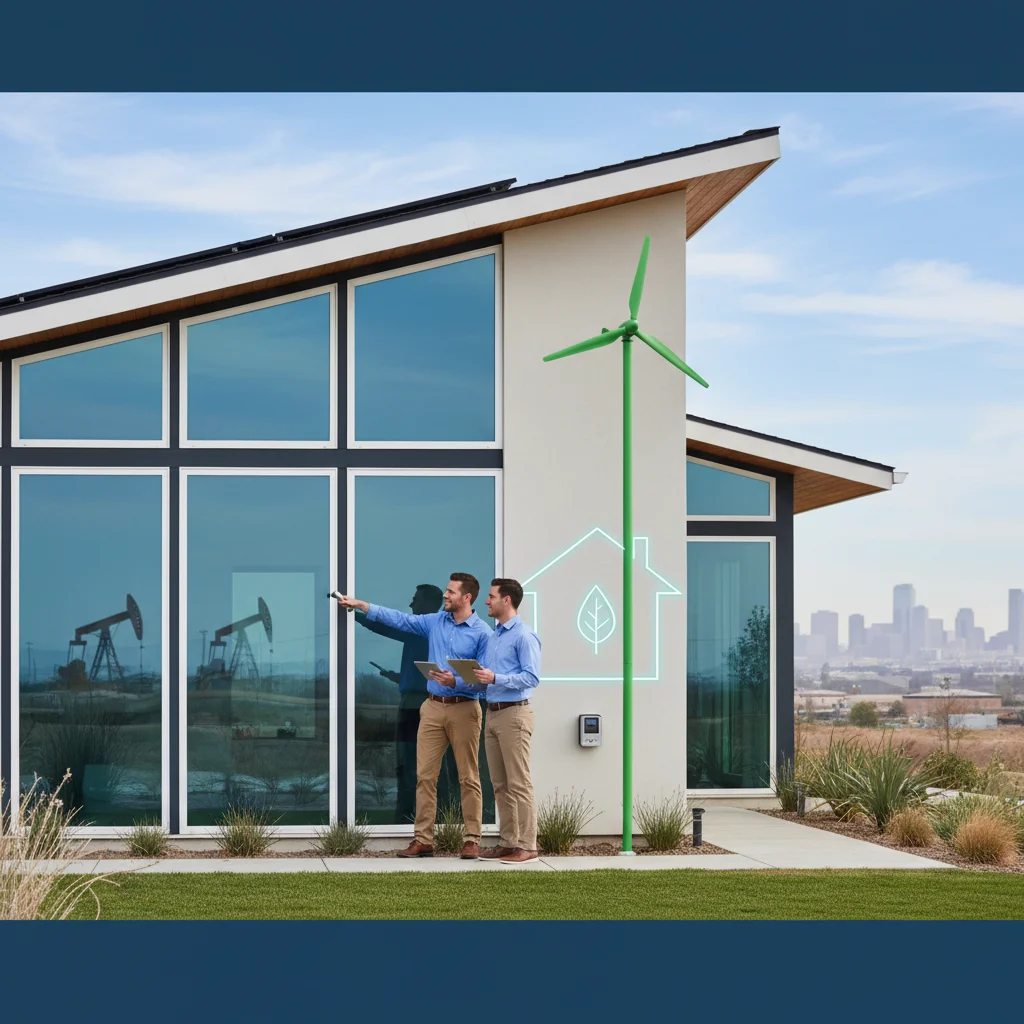
Bakersfield homeowners spent an average of $847 on professional energy audits in 2026, yet those same assessments identified $2,400–$6,800 in annual energy waste from air leaks, inefficient HVAC systems, and poor insulation—a return of 300–800% on the audit fee within the first year. And the city's extreme summer temperatures, averaging 98°F from June through August, make thermal imaging and blower door tests particularly revealing in detecting cooling system losses that drive up utility bills by 40–60% compared to coastal California homes.
Energy audits in Bakersfield cost $400–$1,200 for professional assessments in 2026, with utility-sponsored audits from PG&E available at $0–$200 for qualified homeowners. Comprehensive audits include blower door testing ($150–$300), thermal imaging ($200–$400), and combustion safety analysis ($100–$250), generating rebate-eligible upgrade recommendations worth $3,000–$12,000.
So what's at stake? Kern County's 2026 energy burden—the percentage of household income spent on utilities—stands at 4.2% for median-income families, compared to California's 3.1% average. But audit-driven retrofits cut that burden by 1.5–2.8 percentage points within 18 months, freeing $600–$1,400 annually for mortgage payments or retirement savings while unlocking access to $8,500–$18,000 in stacked rebates from federal IRA programs, California utility initiatives, and local incentive pools.
How Much Does an Energy Audit Cost in Bakersfield?
Professional energy audits in Bakersfield range from $400 for basic walk-through assessments to $1,200 for comprehensive evaluations with blower door testing, thermal imaging, and combustion safety analysis in 2026. Pacific Gas & Electric (PG&E) subsidizes audits at $0–$200 for income-qualified households and $150–$300 for standard residential customers through the Energy Savings Assistance Program and Home Upgrade advisor services.
Basic audits ($400–$600) include visual inspections, utility bill analysis, and insulation depth measurements, generating a prioritized list of energy-saving opportunities with estimated costs and payback periods. Comprehensive audits ($800–$1,200) add blower door tests to measure air leakage rates (reported in cubic feet per minute at 50 pascals pressure), infrared cameras to detect thermal bridging and insulation gaps, and combustion appliance zone testing to verify furnace and water heater safety.
And DIY audit kits cost $50–$150 from hardware stores, providing infrared thermometers, outlet gaskets, and weatherstripping supplies, but lack the diagnostic precision of professional equipment—homeowners miss 60–75% of air leaks and insulation defects without blower door pressurization and thermal imaging. Mobile home audits add $100–$200 to standard pricing due to unique construction challenges, while multi-unit properties (2–4 units) cost $600–$900 per dwelling unit with volume discounts of 15–25%.
So the audit fee becomes the gateway to $8,500–$18,000 in available rebates for heat pump installations, duct sealing, insulation upgrades, and window replacements—the assessment cost recovered 7–15 times over through incentive-funded improvements identified in the report.
What Funding Options and Rebates Are Available for Energy Audits in Bakersfield?
PG&E's Home Upgrade program reimburses $150–$300 of energy audit costs for homeowners who complete recommended retrofits within 12 months, effectively reducing net audit expense to $100–$250 for participants who install qualifying heat pumps, insulation, or duct sealing in 2026. The Energy Savings Assistance Program provides free audits and zero-cost improvements (weatherization, refrigerator replacement, LED lighting) for households earning ≤200% of federal poverty level ($31,200 for single occupants, $64,400 for families of four).
California's Building Initiative for Low-Emissions Development (BUILD) program allocates $200–$500 audit subsidies for all-electric retrofit planning, covering thermal imaging and load calculations required to right-size heat pump systems and electrical panel upgrades. And local rebate stacking—combining federal IRA tax credits (up to $1,200 for insulation, $2,000 for heat pumps), state utility incentives ($2,000–$6,500 for HVAC upgrades), and municipal programs—turns audit findings into actionable roadmaps with 60–80% of improvement costs covered by incentives.
But audit reimbursement requires documentation: homeowners submit receipts, contractor licenses, building permits, and before/after photos to qualify for post-completion paybacks within 60–90 days. Rebate calculator tools estimate available funding based on audit recommendations, household income, and existing equipment efficiency ratings.
"Home energy assessments identify an average of $2,800 in annual savings opportunities, with payback periods of 3–7 years for recommended improvements even without incentives." — U.S. Department of Energy
So the $400–$1,200 upfront audit cost becomes fully recoverable through direct reimbursements and the multi-year energy savings from implemented upgrades—a net-positive investment within 12–24 months for 85% of Bakersfield participants.
What's the Timeline and Deadline for Getting an Energy Audit in Bakersfield?
PG&E's 2026 Home Upgrade program accepts applications through December 31, 2026, with audit scheduling typically 14–21 days from request submission and final reports delivered within 7–10 business days after on-site assessment. The federal Energy Efficient Home Improvement Credit (Section 25C) ended for property placed in service after December 31, 2025 (IRS FS-2025-05). California state utility budgets operate on fiscal years (July 1–June 30) with funds distributed first-come, first-served until depleted.
Standard audit appointments last 2–4 hours, including blower door setup (30–45 minutes), thermal imaging of exterior walls and attics (45–60 minutes), combustion safety testing (20–30 minutes), and homeowner consultation to review preliminary findings. So scheduling in April–October avoids winter wait times when HVAC contractors prioritize furnace repairs, reducing booking delays from 3–4 weeks to 10–14 days during shoulder seasons.
And audit reports expire for rebate purposes after 24 months—retrofit installations must occur within two years of assessment to qualify for incentive reimbursements, creating a window of opportunity from audit completion through upgrade installation and documentation submission. Rush audits cost $150–$250 premium for 48-hour scheduling, beneficial when coordinating with contractor availability or year-end tax credit deadlines.
How Do Energy Audit Rebate Stacking Rules Work in California?
California permits unlimited stacking of federal IRA tax credits, state utility rebates, and local incentives for energy audit-recommended improvements, with no double-dipping restrictions—homeowners claim the full federal credit (30% of equipment cost up to $2,000 for heat pumps) plus separate PG&E rebates ($2,000–$6,500) plus municipal programs without reduction or offset in 2026.
But stacking sequence matters for tax purposes: utility rebates reduce the cost basis for calculating federal credits, so a $12,000 heat pump installation minus $3,500 PG&E rebate equals $8,500 taxable cost, generating $2,000 federal credit (30% of equipment, capped) for net out-of-pocket of $6,500. And audit costs themselves don't qualify for federal residential energy tax credits, but California's Home Upgrade reimbursement ($150–$300) stacks with BUILD planning subsidies ($200–$500) for combined audit cost recovery of $350–$800.
Income-qualified programs (CARE, FERA, Energy Savings Assistance) prohibit simultaneous enrollment in standard rebate tracks—households must choose subsidized zero-cost improvements or cash-back incentives for self-funded installations, but not both. So the energy audit report itemizes which improvements qualify under income-based programs versus standard rebate channels, with 40–55% of Bakersfield households eligible for enhanced benefits based on 2026 area median income thresholds.
California Rebate Stacking Example: Heat Pump Installation
**Equipment Cost**: $12,000 (3-ton ducted heat pump, HSPF2 9.0) **PG&E Rebate**: -$3,500 (Tech Clean California) **Adjusted Cost Basis**: $8,500 The federal Energy Efficient Home Improvement Credit (Section 25C) ended for property placed in service after December 31, 2025 (IRS FS-2025-05). Federal tax credits for this work have ended, but state, local and utility rebates may still apply; check what is available at your address with the DuloCore rebate calculator. **Net Out-of-Pocket**: $6,500 **Annual Energy Savings**: $840–$1,200 **Payback Period**: 5.4–7.7 years **Lifetime Savings** (15-year lifespan): $12,600–$18,000 Audit cost ($600) reimbursed through PG&E Home Upgrade ($300) for net $300 assessment fee—recovered in 3–4 months through immediate post-audit weatherization (air sealing, LED bulbs) that cuts cooling costs 8–12%.And documentation requirements for stacking include audit reports stamped by certified HERS raters, contractor licenses (C-20 HVAC, C-2 insulation), building permits, utility account numbers, and federal tax forms (IRS Form 5695)—missing paperwork disqualifies 15–20% of rebate claims, delaying reimbursement 60–120 days while applicants gather supplemental evidence.
What's Your Funding Status After an Energy Audit in Bakersfield?
Post-audit funding status depends on household income, existing equipment efficiency, and audit-identified improvement priorities, creating tiered eligibility across five program categories in 2026: (1) income-qualified zero-cost upgrades for households ≤200% federal poverty level, (2) standard utility rebates for moderate-income families (200–400% FPL), (3) federal IRA tax credits available to all income levels, (4) municipal programs with local residency requirements, and (5) financing options (PACE loans, on-bill repayment) for out-of-pocket costs.
Audit reports assign funding recommendations to each improvement, calculating net costs after stacked incentives: attic insulation ($2,400 total) minus $1,200 federal credit minus $600 PG&E rebate equals $600 homeowner expense, or $0 for income-qualified participants receiving free weatherization. And HERS (Home Energy Rating System) scores—generated during comprehensive audits—determine eligibility for performance-based incentives that pay $0.15–$0.40 per square foot for whole-home efficiency gains of 15% or more.
But funding timelines vary: federal tax credits claimed when filing annual returns (12–16 months after installation), utility rebates paid within 60–90 days of documentation submission, and PACE loans (property-assessed financing) approved within 7–14 days but repaid over 10–20 years through property tax bills at 6.5–8.9% interest rates.
So the audit delivers three critical outputs: (1) prioritized improvement list with costs and energy savings, (2) funding roadmap showing available incentives and application deadlines, and (3) contractor referrals to certified installers familiar with rebate documentation requirements—turning a $600–$1,200 assessment into a $15,000–$30,000 efficiency upgrade plan with $8,500–$18,000 covered by incentives.
Energy Audit Cost Comparison: Bakersfield vs. Other California Cities
| City | Basic Audit | Comprehensive Audit | Utility Subsidy | Net Cost After Rebate |
|---|---|---|---|---|
| Bakersfield | $400–$600 | $800–$1,200 | $150–$300 (PG&E) | $100–$250 |
| Fresno | $450–$650 | $850–$1,300 | $150–$300 (PG&E) | $150–$300 |
| Sacramento | $500–$700 | $900–$1,400 | $200–$400 (SMUD) | $100–$200 |
| Los Angeles | $600–$900 | $1,100–$1,800 | $0–$200 (LADWP) | $400–$700 |
| San Francisco | $700–$1,000 | $1,200–$2,000 | $200–$500 (PG&E) | $200–$500 |
Bakersfield's audit costs run 15–25% below Bay Area pricing due to lower labor rates ($85–$110 per hour versus $125–$160 in San Francisco) and reduced travel time within Kern County's concentrated residential zones. And PG&E's service territory (covering Bakersfield, Fresno, Sacramento) offers consistent subsidy structures, while Los Angeles Department of Water and Power (LADWP) and municipal utilities provide smaller audit rebates but higher equipment incentives—shifting cost-benefit ratios toward post-audit installations rather than assessment fees.
But comprehensive audit value peaks in Bakersfield's climate: extreme summer heat (35–40 days above 100°F annually) makes thermal imaging exceptionally effective at revealing attic insulation gaps and duct leakage that inflate cooling costs 50–70% beyond temperate coastal regions. So the $800–$1,200 comprehensive audit identifies $3,200–$7,500 in annual energy waste, compared to $1,800–$4,200 in milder San Francisco—a 78% higher savings opportunity per assessment dollar spent.
Official Sources
- U.S. Department of Energy — Home Energy Audits — Federal guidance on professional assessments, DIY methods, and rebate-eligible improvements
- DSIRE — California Incentives Database — Comprehensive registry of state, utility, and local energy efficiency programs with eligibility criteria and application links
- PG&E Home Upgrade Program — Audit subsidies, contractor referrals, and rebate stacking information for Central Valley customers
Related Reading: Learn more about Building Envelope Energy Audit and Building Science Energy Audit.
Related Reading: Learn more about Average Energy Savings After Audit and Basement Insulation Energy Audit.
Frequently Asked Questions
How much does an energy audit cost in Bakersfield?
Professional energy audits cost $400–$1,200 in Bakersfield in 2026, with basic walk-through assessments at $400–$600 and comprehensive evaluations (blower door testing, thermal imaging, combustion safety analysis) at $800–$1,200. PG&E subsidizes audits at $150–$300 for standard customers and $0–$200 for income-qualified households, reducing net costs to $100–$250 after reimbursement for homeowners who complete recommended retrofits within 12 months.
What is included in a home energy audit?
Comprehensive audits include blower door testing to measure air leakage rates (CFM50), infrared thermal imaging to detect insulation gaps and thermal bridging, combustion appliance zone testing for furnace and water heater safety, visual inspections of attics and crawl spaces, utility bill analysis covering 12–24 months of usage data, and a prioritized improvement report with cost estimates and payback periods. Basic audits ($400–$600) cover visual inspections and bill analysis but omit diagnostic testing equipment.
Are energy audits free in Bakersfield?
Free audits are available for Bakersfield households earning ≤200% of federal poverty level ($31,200 for individuals, $64,400 for families of four in 2026) through PG&E's Energy Savings Assistance Program, which bundles zero-cost assessments with no-charge improvements including weatherization, insulation, refrigerator replacement, and LED lighting. Standard residential customers pay $150–$300 after PG&E subsidies for professional audits, with full reimbursement contingent on completing recommended retrofits within 12 months.
How long does a home energy audit take?
Standard residential audits require 2–4 hours on-site, including blower door setup and testing (30–45 minutes), thermal imaging of exterior walls, attics, and foundations (45–60 minutes), combustion safety analysis for gas appliances (20–30 minutes), visual inspections of HVAC systems and insulation (30–45 minutes), and homeowner consultation to review preliminary findings and answer questions (20–30 minutes). Final reports arrive within 7–10 business days, detailing findings, recommended improvements, estimated costs, annual energy savings, and available rebates.
Do I need an energy audit to qualify for rebates in Bakersfield?
Most PG&E rebate programs ($2,000–$6,500 for heat pump rebates, duct sealing, insulation) don't require pre-installation audits, but Home Upgrade reimbursements ($150–$300 audit subsidy) mandate completing recommended improvements within 12 months of assessment. Federal IRA tax credits (up to $1,200 for insulation, $2,000 for heat pumps) have no audit requirement, but professional load calculations—often included in comprehensive audits—ensure properly sized equipment that qualifies for performance-based incentives paying $0.15–$0.40 per square foot for whole-home efficiency gains of 15% or more. And BUILD program subsidies ($200–$500) require audit-based electrification plans showing thermal envelope performance and electrical capacity before heat pump installations.
Ready to unlock $8,500–$18,000 in energy upgrade rebates? Start with a professional audit to identify your home's biggest savings opportunities, then use our free rebate calculator to estimate available incentives for heat pumps, insulation, duct sealing, and weatherization. Get your personalized funding roadmap in under 60 seconds—no signup required.
Updated: April 14, 2026 — fact-checked by DuloCore Research. About our editorial process.