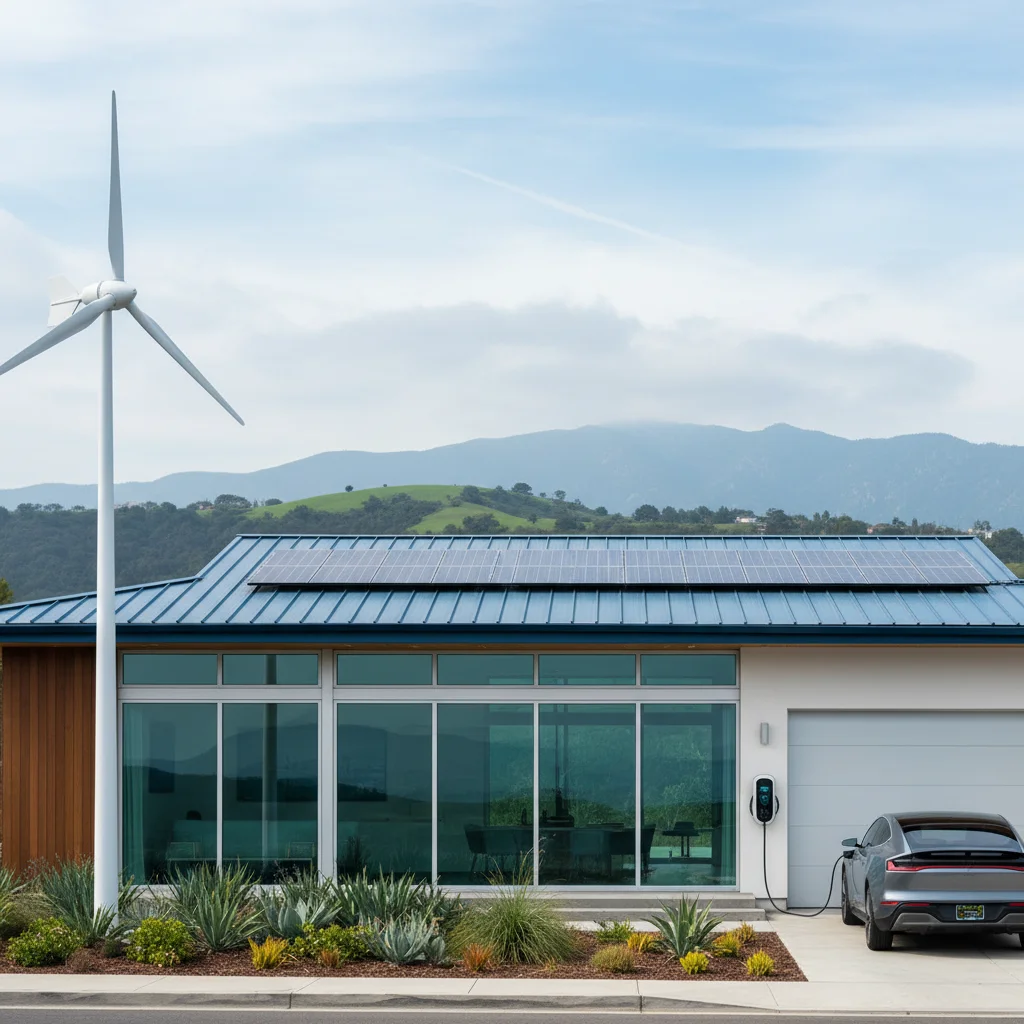
California State Energy Rebates 2026
California State Energy Rebates 2026: everything you need to know about eligibility, amounts, and the application process.
California homeowners left $847 million in unclaimed energy rebates on the table in 2025, according to California Energy Commission data. And 2026's programs carry even larger funding pools—$1.2 billion allocated across state utility districts—but stricter documentation requirements mean many applicants get denied for missing a single form.
California offers multiple state energy rebate programs in 2026, including the Building Initiative for Low-Emissions Development (BUILD) program with rebates up to $7,000 for heat pumps, the Tech Clean California initiative providing $4,000-$6,000 for HVAC upgrades, and utility-specific programs through PG&E, SCE, SDG&E, and SoCalGas offering $500-$3,000 per qualifying improvement. Rebates stack with federal IRA tax credits but require pre-approval and certified contractor installation.
The stakes matter because California's 2026 energy rebate landscape shifted dramatically. The old federal Section 25C and 25D credits expired January 1, 2026, replaced by IRA-framework programs with different income caps and equipment standards. So homeowners who relied on last year's playbook now face rejected applications and lost savings of $3,000-$10,000 per project.
But the upside rewards those who navigate the new system correctly. A typical California household completing a heat pump installation, attic insulation upgrade, and smart thermostat installation in 2026 receives $8,200-$14,500 in combined state rebates and federal credits—cutting project costs by 35-48%.
What Are California's Energy Rebates Available in 2026?
California administers energy rebates through four primary channels in 2026: statewide programs managed by the California Energy Commission, utility-specific programs through investor-owned utilities, regional programs from municipal utilities and community choice aggregators, and income-qualified programs targeting moderate-to-low income households. The BUILD program remains the flagship offering with $520 million in 2026 funding, while Tech Clean California added $180 million specifically for HVAC modernization. And utility programs received $412 million in aggregate funding across PG&E, SCE, SDG&E, and SoCalGas territories.
California's 2026 energy rebate programs provide $500-$7,000 per qualifying improvement depending on equipment type, household income, and utility service territory, with statewide BUILD program rebates ranging from $3,000 for central heat pumps to $7,000 for ground-source systems, and utility programs offering additional $500-$3,000 incentives that stack with state and federal benefits.
Each program operates independent application portals and deadlines. So homeowners must determine which programs cover their service address and equipment type before starting any installation work. Pre-approval remains mandatory for rebates exceeding $1,000—retrofit work completed before approval results in automatic denial regardless of equipment eligibility.
"California's 2026 energy upgrade incentives represent the largest single-year investment in residential decarbonization in state history, with combined federal and state benefits reaching $15,000-$25,000 for comprehensive whole-home retrofits." — California Energy Commission 2026 Climate Investment Plan
Which Home Improvements Qualify for State Energy Rebates?
Eligible improvements fall into five equipment categories with specific performance thresholds. Heat pump systems qualify when meeting ENERGY STAR Most Efficient 2026 standards or HSPF2 ratings of 9.0+ for air-source units and EER ratings of 18+ for ground-source installations. Insulation projects receive rebates when achieving R-38 minimum for attics, R-19 for walls, and R-30 for floors in climate zones 1-5. Weatherization work including air sealing and duct sealing qualifies when performed by BPI-certified contractors and documented with blower door testing showing 25%+ reduction in air leakage. Water heater replacements qualify for heat pump water heaters with Uniform Energy Factor (UEF) ratings of 3.0+ or solar water heating systems meeting OG-300 certification. And smart thermostats require ENERGY STAR certification plus integration with demand response programs through the homeowner's utility provider.
Qualifying improvements include heat pumps ($3,000-$7,000 rebates), insulation upgrades ($500-$2,000), weatherization services ($300-$1,200), heat pump water heaters ($1,500-$3,500), smart thermostats ($50-$150), electric panel upgrades ($2,000-$4,000 for income-qualified households), and electric vehicle chargers ($500-$1,000), with all equipment requiring ENERGY STAR certification or California Energy Commission approval plus installation by licensed contractors.
But not all energy improvements qualify. Standard HVAC maintenance, cosmetic upgrades, DIY installations, and equipment purchases without professional installation get excluded from all state rebate programs. Or projects completed at properties held in commercial or rental LLC ownership structures face different program requirements through California's multifamily and commercial rebate tracks.
Contractors must hold active C-20 (HVAC), C-2 (insulation), or C-10 (electrical) licenses depending on work type. And installations require city or county building permits with final inspection sign-off before rebate applications get processed—unpermitted work triggers automatic denial even when equipment meets technical specifications.
Check the official state rebates database for the complete equipment eligibility matrix across all 2026 California programs.
How Much Money Can You Get Back From California Energy Rebates?
Rebate amounts vary by program tier, household income, and equipment type. The BUILD program provides base rebates of $3,000 for qualifying air-source heat pumps, $4,500 for cold-climate heat pumps rated for operation below 5°F, and $7,000 for ground-source geothermal systems. And income-qualified tiers increase those amounts by 50-100% for households at or below 80% Area Median Income (AMI)—a family of four in Los Angeles County with income under $91,300 receives $4,500-$10,500 for the same equipment that provides $3,000-$7,000 to higher-income households. Utility programs add $500-$3,000 on top of state rebates depending on service territory and equipment efficiency ratings.
Maximum rebate amounts reach $7,000 for individual improvements through BUILD, $10,500 for income-qualified heat pump installations, $4,000 for electric panel upgrades, $3,500 for heat pump water heaters, and $25,000-$30,000 for comprehensive whole-home electrification packages combining multiple improvements, with utility incentives providing additional $1,500-$4,000 in stackable benefits.
So a Fresno homeowner installing a $12,000 cold-climate heat pump receives $4,500 from BUILD, $1,200 from PG&E's Energy Upgrade California program, and qualifies for 30% federal IRA tax credits worth $3,600—total incentives of $9,300 reducing net cost to $2,700 or 77% savings. But rebates can't exceed actual equipment and installation costs. A $5,000 heat pump installation receiving $6,500 in combined incentives gets capped at $5,000 total payout.
Income qualification matters significantly. Households under 80% AMI access enhanced rebates, fee waivers, and zero-interest financing through programs like TECH Clean California's moderate-income track. And tribal households on federally recognized reservation land receive additional incentives through the California Indian Energy Program with rebates reaching 95% of total project costs for qualifying improvements.
Use our free rebate calculator to estimate your specific incentive amounts based on your zip code, income level, and planned improvements.
What Documentation Do You Need to Claim Your Rebate?
Applications require seven core documentation categories with zero tolerance for missing items. Proof of property ownership requires a recorded deed, property tax bill, or title insurance document dated within 12 months. Income verification demands federal tax returns for the most recent filing year, W-2 forms for all household members, or participation letters from CalFresh, Medi-Cal, or other qualifying assistance programs for income-qualified tiers. Equipment documentation needs manufacturer specification sheets, model numbers, AHRI certification numbers for HVAC equipment, and ENERGY STAR certificate codes. Contractor credentials require copies of active C-20, C-2, or C-10 license numbers, general liability insurance certificates with $1 million minimum coverage, and workers compensation verification. Installation verification demands itemized invoices showing labor and materials separately, building permit numbers, final inspection approval from local building departments, and dated photographs of installed equipment with visible model numbers. Pre-approval confirmation requires the application number and approval email from the program administrator. And payment proof needs canceled checks, credit card statements, or bank transfer confirmations matching invoice amounts.
Required documentation includes property ownership proof, income verification (tax returns or qualifying program participation), contractor license verification, itemized invoices, building permits with final inspection approval, equipment specification sheets with ENERGY STAR or AHRI certification numbers, pre-approval confirmation, and payment receipts, with applications rejected for any missing document regardless of equipment eligibility.
But documentation timelines matter as much as completeness. Pre-approval applications need submission before any equipment purchase or installation work begins—signed contracts or equipment delivery prior to approval result in automatic disqualification. And final rebate claims require submission within 90-180 days post-installation depending on the program, with late applications forfeiting all rebate amounts even when documentation proves complete.
Scan all documents to PDF format at 300 DPI minimum resolution. Applications with illegible scans, missing pages, or documents in non-PDF formats get rejected and sent back for resubmission, adding 30-60 day processing delays.
So homeowners should create a documentation checklist during the pre-approval phase and verify contractor submission of all required items before making final payment. The heat pump rebates guide includes a downloadable documentation checklist covering all California program requirements.
What Are the Deadlines for Applying to California Energy Rebate Programs in 2026?
Application deadlines operate on fiscal year cycles and funding depletion triggers rather than fixed calendar dates. The BUILD program's 2026 fiscal year runs July 1, 2025 through June 30, 2026, with applications accepted on a rolling basis until funding exhaustion—historically occurring in March-April for the highest-demand equipment categories like heat pumps and heat pump water heaters. Tech Clean California operates on calendar year cycles with 2026 applications opening January 15 and closing December 15 or when the $180 million allocation depletes. Utility programs vary by provider: PG&E accepts applications year-round, SCE operates quarterly funding cycles with deadlines March 31, June 30, September 30, and December 31, SDG&E uses monthly funding allocations, and SoCalGas maintains rolling applications with 45-day processing windows.
Pre-approval applications for 2026 California energy rebates must be submitted before equipment purchase or installation begins, with final rebate claims due 90-180 days post-installation depending on program, and funding depletion deadlines typically occurring in March-April for high-demand categories, making winter and early spring the optimal application windows before allocations exhaust.
And deadline extensions don't happen. The California Energy Commission operates under strict legislative budget cycles—once fiscal year funding depletes, no additional allocations occur until the next budget year beginning July 1. So the 2025 BUILD program closed to new applications on April 12, 2025 after depleting $487 million in heat pump rebates, leaving 11,000+ homeowners with approved pre-applications unable to claim rebates because they missed the 180-day installation deadline.
Processing timelines add to deadline pressure. Pre-approval applications take 15-30 business days for review and approval. Installation scheduling adds 30-90 days depending on contractor availability and permit processing. And final rebate claim review takes 45-60 days before payment issuance. So homeowners starting the process in May-June risk funding depletion before completing the installation and claim process.
Start applications in January-February for the best funding availability and contractor scheduling options. Or monitor the California Energy Commission rebate portal for real-time funding status updates showing remaining allocation percentages by program and equipment category.
How Do California State Rebates Compare to Federal Tax Credits?
State rebates and federal IRA tax credits differ fundamentally in structure, payment timing, and income qualification. California state rebates provide upfront point-of-sale discounts or post-installation direct payments of $500-$7,000 per improvement with income caps at 80-150% AMI depending on program tier. Federal IRA credits offer 30% of total project costs as tax credits applied to the following year's tax return with no income caps for most programs, reaching maximum credits of $3,200 annually for efficiency improvements under IRC Section 25C successor provisions and unlimited amounts for renewable energy installations under Section 25D successor programs. And the federal credits phase down to 26% in 2033 and 22% in 2034 before expiring, while California state programs operate on annual legislative appropriations subject to funding availability.
California state rebates deliver $500-$7,000 immediate payments per improvement with income qualification requirements and funding caps, while federal IRA tax credits provide 30% of total project costs claimed on tax returns with higher maximum amounts ($3,200-unlimited) but delayed payment timing and no income restrictions, allowing strategic stacking of both benefits for total savings of 35-55% on qualifying projects.
So the optimal strategy stacks both benefit types. A San Diego household installing a $15,000 ground-source heat pump system receives $7,000 from BUILD, $1,500 from SDG&E, and $4,500 in federal tax credits (30% of $15,000)—total incentives of $13,000 reducing net cost to $2,000 or 87% savings. But sequencing matters: claim state rebates first to reduce net out-of-pocket costs, then calculate federal tax credits on the pre-rebate equipment cost for maximum benefit.
Income-qualified households under 80% AMI access enhanced benefits on both sides. California increases rebate amounts by 50-100% for lower-income tiers. And the federal government added new income-qualified provisions in 2026 allowing households under 150% federal poverty level ($45,000 for a family of four) to receive credits as direct payment rebates rather than tax credits—eliminating the barrier of needing tax liability to claim benefits.
Or consider energy tax credits interactions with other California programs like SGIP (Self-Generation Incentive Program) for battery storage, which provides $150-$1,000 per kWh in rebates that stack with both state energy rebates and federal credits for combined savings reaching $20,000-$40,000 on whole-home solar-plus-storage-plus-electrification projects.
What's the Step-by-Step Process to Apply for Your Rebate?
The application process follows eight mandatory sequential steps with specific timing requirements. Step one involves determining program eligibility by entering your service address in the California Energy Commission's rebate finder tool to identify which state, utility, and local programs cover your location—taking 5-10 minutes with immediate results. Step two requires creating user accounts on applicable program portals (BUILD, Tech Clean California, utility provider websites) and gathering baseline documentation including property ownership proof and income verification—1-2 hours for account setup and document collection. Step three demands obtaining contractor quotes from licensed C-20, C-2, or C-10 professionals with itemized pricing for equipment and installation labor, comparing at least three bids—1-2 weeks for quote collection and contractor vetting. Step four involves submitting pre-approval applications with equipment specifications, contractor information, and property details through the program portal—15-30 business days for agency review and approval decision. Step five requires scheduling installation after receiving pre-approval confirmation, ensuring contractor pulls building permits and completes work within program timelines—30-90 days depending on contractor availability. Step six demands final inspection by local building department with signed approval on permit documentation—1-7 days post-installation. Step seven involves submitting final rebate claim with invoice copies, payment receipts, permit documentation, installation photos, and inspection approval within 90-180 days of installation completion—45-60 business days for rebate processing. And step eight delivers rebate payment via check or direct deposit to the homeowner or contractor depending on program structure—immediate to 10 business days after approval.
Applying for California energy rebates requires eight steps: verify program eligibility (5-10 minutes), create portal accounts and gather documents (1-2 hours), obtain three contractor quotes (1-2 weeks), submit pre-approval application (15-30 days processing), schedule installation after approval (30-90 days), pass building inspection (1-7 days), submit final claim with documentation (45-60 days processing), and receive payment (immediate-10 days), with total timeline of 90-180 days from application start to rebate receipt.
But process failures occur most frequently at three steps. Pre-approval denials happen when homeowners submit applications after signing contractor agreements or purchasing equipment—the "before work begins" requirement means before any financial commitment, not just before physical installation. Installation timeline violations occur when construction delays, permit issues, or contractor scheduling problems push completion beyond the pre-approval validity window (typically 120-180 days), requiring homeowners to reapply and risk funding depletion. And final claim rejections result from missing documentation, illegible scans, or invoices lacking required detail like separate labor and materials line items.
So successful applicants build buffer time into every step. Apply for pre-approval in January-February even for installations planned in May-June. Select contractors with documented experience processing California energy rebate claims—contractor familiarity with documentation requirements reduces rejection rates by 60-75%. And submit final claims immediately after inspection approval rather than waiting until the 180-day deadline, allowing time for correction requests if documentation issues arise.
Track application status through program portals showing real-time processing stage updates. Or contact program administrators directly via phone for status inquiries—wait times average 15-45 minutes but provide definitive answers on approval status and documentation requirements.
Official Sources
- California Energy Commission — State agency administering BUILD and Tech Clean California rebate programs with eligibility tools and application portals
- ENERGY STAR Rebate Finder — Federal database of state, utility, and local rebate programs searchable by zip code and improvement type
- DSIRE California — Comprehensive database of California energy incentives, rebates, and policies updated monthly with program changes
Related Reading: Learn more about Energy Star Appliance Rebates Near Me and Energy Star Rebates 2026.
Frequently Asked Questions
What California state energy rebates are available in 2026?
California offers the BUILD program ($3,000-$7,000 for heat pumps), Tech Clean California ($4,000-$6,000 for HVAC), utility-specific programs through PG&E, SCE, SDG&E, and SoCalGas ($500-$3,000), and income-qualified enhancements (additional 50-100% for households under 80% AMI). Programs cover heat pumps, insulation, weatherization, heat pump water heaters, smart thermostats, and electric panel upgrades. Applications require pre-approval before installation and close when funding depletes—historically in March-April for heat pumps.
How do I check if I'm eligible for California energy rebates?
Enter your service address in the California Energy Commission's rebate finder tool at energy.ca.gov to identify applicable programs. Eligibility depends on property location, utility service provider, equipment type, household income, and property ownership status. Most programs require single-family or multifamily residential properties (1-4 units), homeowner occupancy or landlord participation, licensed contractor installation, and ENERGY STAR or CEC-approved equipment. Income-qualified tiers need verification of income at or below 80-150% Area Median Income via tax returns or qualifying assistance program participation.
What is the maximum rebate amount for California home energy improvements?
Maximum rebates reach $7,000 for individual ground-source heat pump installations through BUILD, $10,500 for income-qualified heat pump installations, $4,000 for electric panel upgrades, $3,500 for heat pump water heaters, and $25,000-$30,000 for comprehensive whole-home electrification packages combining multiple improvements. Utility programs add $500-$3,000 in stackable incentives. Combined with 30% federal IRA tax credits, total benefits reach 35-55% of project costs, or $9,000-$15,000 for typical heat pump (currently available through December 2032 under the Inflation Reduction Act) installations costing $12,000-$18,000. (Note: Federal tax credit percentages and availability are subject to change; the 30% Residential Clean Energy Credit under Section 25D expired December 31, 2025. Verify current incentives at energy.gov.)
What is the deadline to apply for California energy rebates in 2026?
Pre-approval applications must be submitted before equipment purchase or installation begins, with no fixed deadline but funding depletion typically occurring in March-April for high-demand categories like heat pumps. The BUILD program operates on fiscal years (July 1-June 30) with rolling applications. Tech Clean California accepts applications January 15-December 15, 2026. Final rebate claims are due 90-180 days post-installation depending on program. Starting applications in January-February provides the best funding availability before allocations exhaust.
How long does it take to receive a California energy rebate?
Total timeline from pre-approval application to rebate payment averages 90-180 days. Pre-approval processing takes 15-30 business days. Installation scheduling adds 30-90 days. Final rebate claim processing takes 45-60 business days after submission. Payment arrives via check or direct deposit within 10 business days of claim approval. Delays occur from incomplete documentation, missing permits, or high application volume during peak season (February-May). Expedited processing isn't available, so homeowners should plan project timelines with 120-150 day buffer from application to payment receipt.
Ready to find your exact rebate amount? Use our free rebate calculator to see how much you can save on your specific home improvements. Enter your zip code, income level, and planned upgrades to get instant estimates of combined state, utility, and federal incentives available for your property in 2026.
Updated on April 14, 2026. Fact-checked by DuloCore Editors. About our research team.
Find Your Rebates
Use our calculator to see how much you can save on your home improvement project.
Calculate My Savings