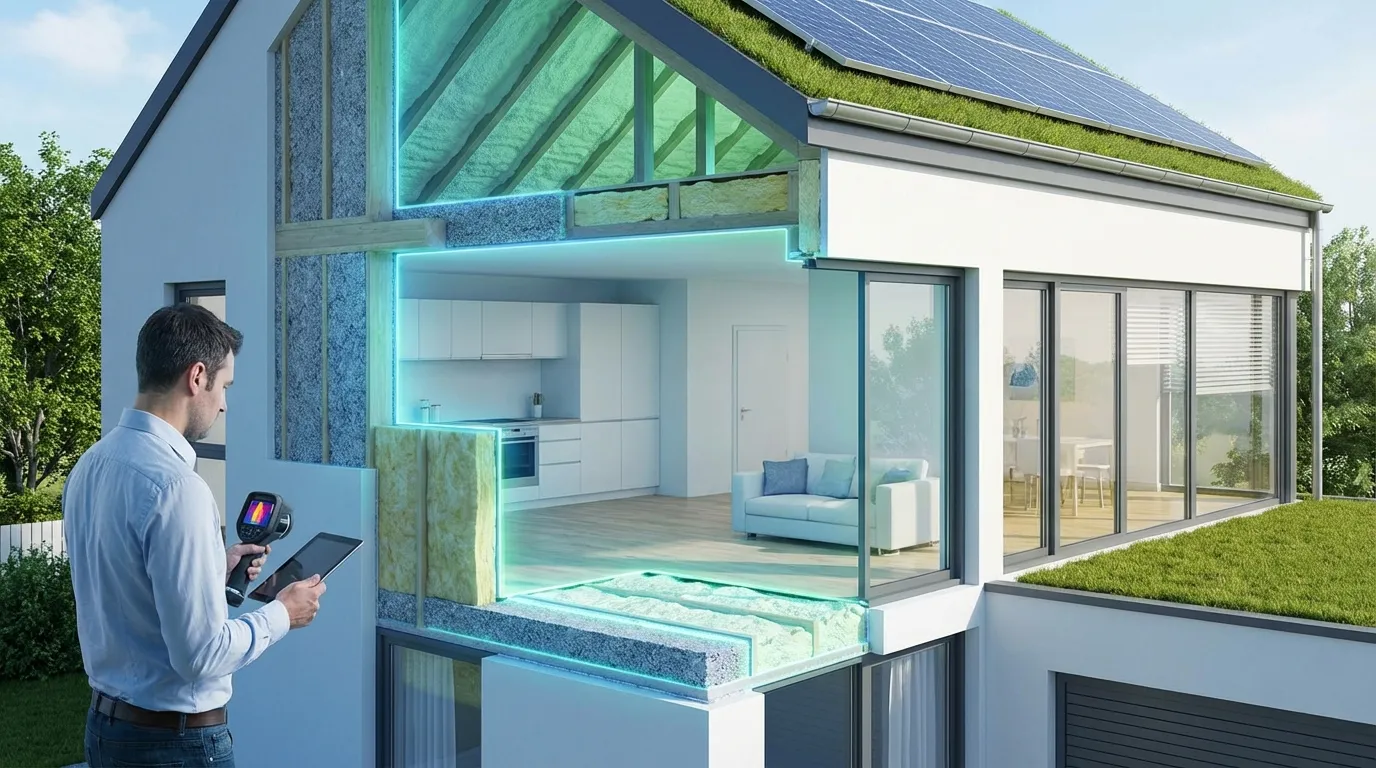
Up to 90% of U.S. homes are under-insulated, causing homeowners to overspend on energy bills by an average of 15% each year. This isn't just a comfort issue; it's a direct financial drain that new government and utility rebates are designed to fix immediately. So correcting this deficit with the right insulation not only lowers your monthly costs but also unlocks thousands in direct cash back and tax credits.
What Specific Insulation Types Qualify for Rebates and How Much Can I Save?
Eligible insulation materials for federal and state rebates include spray foam, fiberglass, cellulose, and rigid foam board that meet specific R-value requirements. The federal Energy Efficient Home Improvement Credit (Section 25C) ended for property placed in service after December 31, 2025 (IRS FS-2025-05). State programs offer direct rebates often exceeding $2,000.
The most common insulation types qualifying for financial incentives are those that create a complete air seal and meet regional R-value targets. So spray foam, with its high R-value of R-6 per inch, is a top contender for maximum rebate amounts. And fiberglass batts and blown-in cellulose are also widely accepted, provided they are installed to meet the 2021 International Energy Conservation Code (IECC) standards for your climate zone. The federal 25C (now expired, replaced by the Energy Efficient Home Improvement Credit) tax credit offers 30% of the project cost back, capped at $1,200 per year. But state-level insulation rebates often provide direct cash back, sometimes up to $4,000 for comprehensive air sealing and insulation projects. The key is documenting that the chosen material and installation method meet or exceed program-specific energy efficiency benchmarks, which are always detailed in the rebate application forms.
The core tension for homeowners is the upfront cost of a proper insulation upgrade versus the long-term, guaranteed savings and immediate rebate payouts. Leaving your home under-insulated is like leaving a window open all winter; the Department of Energy estimates that air leaks from poor insulation are responsible for up to 40% of a home's heating and cooling energy loss. So inaction directly translates to wasting nearly half of every dollar spent on climate control.
Am I Eligible for Insulation Rebates Based on My Income, State, and Utility Provider?
Eligibility for insulation rebates is determined by income level, geographic location, and your specific utility company's programs. Federal tax credits are available to all homeowners, but state-level rebates often have income caps, typically targeting households at or below 150% of the Area Median Income (AMI).
Your eligibility hinges on several intersecting factors. The federal energy tax credits have no income restrictions, making them accessible to nearly all homeowners. But state-administered programs, like those funded by the Inflation Reduction Act, are income-dependent. And households earning less than 80% of the Area Median Income (AMI) often qualify for 100% of the project cost, up to a specified cap. So those earning between 80% and 150% of AMI typically qualify for 50% of the cost. Utility provider programs add another layer; they are funded by ratepayers and offer rebates to customers within their service territory, often without income limits but with strict equipment and contractor requirements. You must check your state's energy office and local utility's website to confirm specific criteria before starting any work.
"Many state and local governments offer energy efficiency incentives. In addition, many utility companies offer incentives to their customers." — U.S. Department of Energy
What is the Step-by-Step Application Process for Insulation Rebates?
The application process for insulation rebates typically involves four key steps: a pre-installation energy audit, hiring a qualified contractor, submitting the paid invoice with project details, and a final verification. This structured process ensures the project meets the program's energy-saving standards before funds are disbursed.
First, most programs require a home energy audit to identify areas for improvement and establish a baseline for energy savings. So this step is non-negotiable for many state-level rebates. And after the audit, you must select a licensed and insured contractor, who often needs to be certified or listed on a program-approved network. But the contractor performs the work, providing a detailed invoice that specifies the insulation type, R-value, and total square footage installed. You then submit this invoice along with the completed rebate application form, usually through an online portal. The final step is a review and potential post-installation inspection by the program administrator to verify the work was completed to standard before they issue the rebate check or bill credit, a process that takes 6-12 weeks.
What are the Deadlines and Current Funding Status for Insulation Rebate Programs?
The federal Energy Efficient Home Improvement Credit (Section 25C) ended for property placed in service after December 31, 2025 (IRS FS-2025-05). Federal tax credits for this work have ended, but state, local and utility rebates may still apply; check what is available at your address with the DuloCore rebate calculator. However, state and utility rebate programs operate on annual budgets and are subject to fund depletion, making their deadlines and availability much more time-sensitive and variable.
The federal Energy Efficient Home Improvement Credit (Section 25C) ended for property placed in service after December 31, 2025 (IRS FS-2025-05). But state-run programs, such as those under the Home Electrification and Appliance Rebate (HEAR) programs, have a different structure. And their funding is allocated in blocks and distributed on a first-come, first-served basis. So once a state's annual funding allocation is exhausted, the program closes to new applicants until the next funding cycle begins. This makes it critical to monitor your state energy office's website for announcements on program launches and funding status. Utility rebates operate similarly, with budgets that reset annually. Acting early in the calendar year often increases your chances of securing a rebate before the funds run out. (See also: best insulation for energy savings.) (See also: attic insulation rebate programs.) (See also: insulation rebates for veterans.) (See also: geothermal tax credit.) (See also: best geothermal heat pump brands.)
"DSIRE is the most comprehensive source of information on incentives and policies that support renewables and energy efficiency in the United States." — DSIRE
Can I Combine Insulation Rebates, and Are There Specific Contractor Requirements?
Homeowners can combine or "stack" the federal tax credit with state and utility rebates for the same insulation project, maximizing total savings. Most rebate programs mandate the use of licensed, insured, and sometimes program-certified contractors to ensure quality installation and verify project eligibility.
Stacking incentives is a powerful strategy for reducing project costs by 50% or more. For example, you can claim the 30% federal tax credit (up to $1,200) on your out-of-pocket costs after a state or utility rebate has been applied. And this combination dramatically lowers the net expense. So if a $5,000 insulation project receives a $2,000 state rebate, you can then claim a 30% tax credit (this federal credit ended for property placed in service after December 31, 2025) on the remaining $3,000, saving an additional $900. But a critical requirement is contractor eligibility. Programs like Mass Save or NYSERDA maintain a list of approved contractors who are trained on program standards. Using a non-approved installer will automatically disqualify your project from receiving a rebate, regardless of the materials used. It's essential to verify contractor credentials through the program's official portal before signing any contracts. You can often find similar programs for heat pump rebates.
Insulation Rebate Program Comparison (See also: best insulation for old homes.)
| Program Feature | Federal 25C Tax Credit | State Rebate (Typical) | Utility Rebate (Typical) |
|---|---|---|---|
| Max Amount | 30% of cost, up to $1,200/year | $1,000 - $4,000 | $200 - $1,500 |
| Income Limit | None | Yes, often <150% AMI | Often none |
| Application | File with federal taxes (Form 5695) | Online portal via state energy office | Online portal via utility website |
| Deadline | December 31, 2032 | Annually, until funds are depleted | Annually, until funds are depleted |
Frequently Asked Questions
Eligible insulation types for rebates typically include fiberglass, cellulose, spray foam, and rigid foam, provided they meet specific R-value and air-sealing standards. High-performance materials like closed-cell spray foam often yield the highest rebate values due to their superior thermal resistance and air-sealing capabilities.
What insulation types are eligible for energy efficiency rebates?
Fiberglass batts, blown-in cellulose, spray foam (both open and closed-cell), and rigid foam boards (like XPS and polyiso) are all commonly eligible. The key requirement is that the material must meet the minimum R-value specified by the rebate program for your specific application (attic, walls, foundation).
Which insulation material offers the highest rebate value?
Closed-cell spray foam insulation often qualifies for the highest rebate values. Its high R-value per inch (R-6 to R-7) and its ability to act as an air and vapor barrier mean it delivers the greatest energy savings, which rebate programs are designed to incentivize.
Does the R-value of insulation impact rebate eligibility or the amount received?
Yes, R-value is a primary factor. Rebate programs set minimum R-value thresholds based on climate zone and installation location (e.g., R-49 for an attic in a cold climate). Meeting these minimums is required for eligibility, and some tiered programs offer higher rebate amounts for exceeding the minimum R-value.
Are there specific insulation brands or installation methods required for rebates?
Rebate programs are typically brand-agnostic. They focus on performance metrics like R-value and proper air sealing rather than specific manufacturers. However, they almost always require installation by a licensed and insured professional to ensure the work is done correctly and safely.
How do different insulation types compare for rebate approval and maximum savings?
Spray foam offers the highest potential savings and rebate amounts due to its superior performance but has the highest upfront cost. Fiberglass and cellulose are more affordable and widely approved for rebates, offering a faster return on investment for many homeowners. The best choice depends on your budget and the specific requirements of local rebate programs.
Ready to see exactly how much you can save? Calculate Your Rebates
Ready to Save on Your Home Improvement?
Use our free rebate calculator to find every federal, state, and utility incentive you qualify for.
Official Sources
Last updated: April 14, 2026. Reviewed by the DuloCore Editorial Team. About our authors.
Check your California insulation rebate eligibility — see the programs you qualify for and the dollar amounts on our California insulation rebate finder.