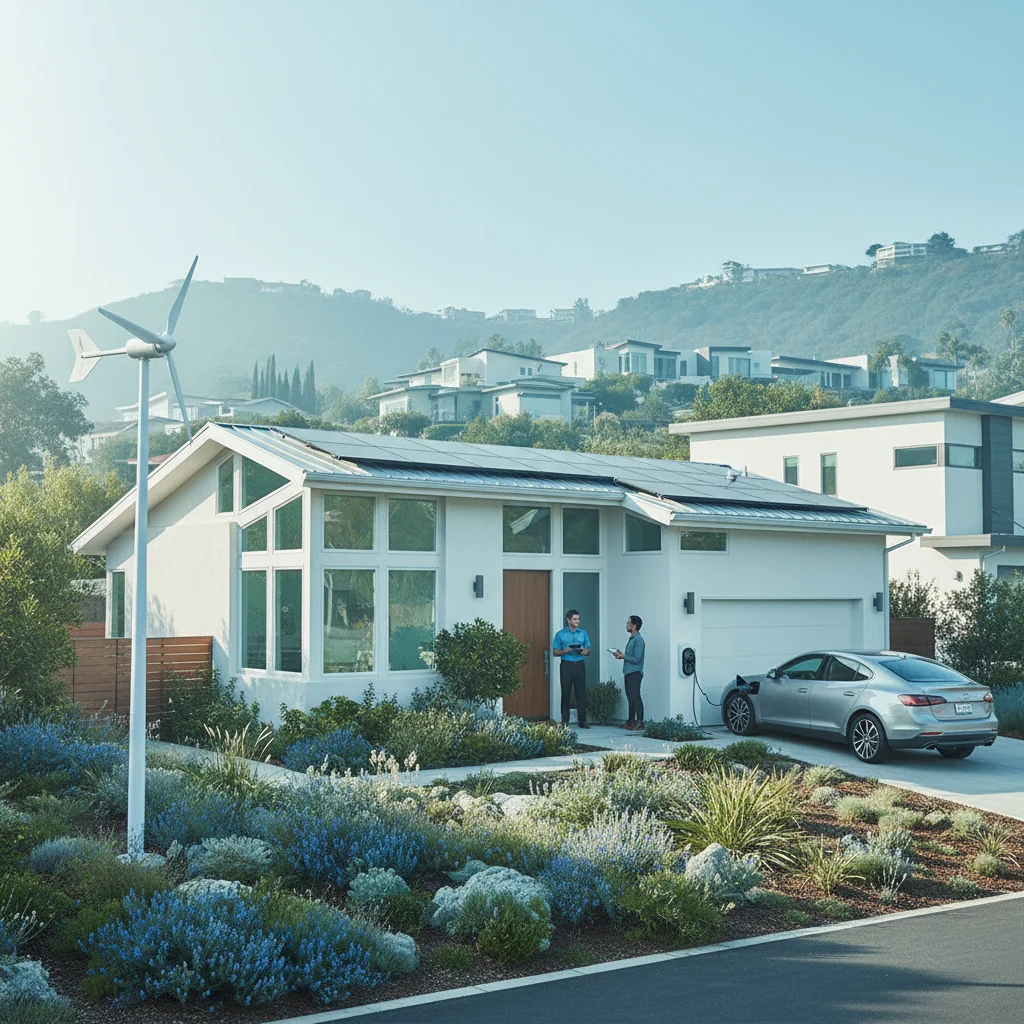
San Jose homeowners collectively waste $847 million annually on preventable energy loss, according to the California Energy Commission's 2026 residential efficiency report. And a professional energy audit — the diagnostic service that identifies exactly where your home bleeds heat, air, and money — now qualifies for up to $500 in direct rebates through California's updated TECH Clean California program, stacking with federal IRA tax credits that cover 30% of efficiency upgrades identified during the audit.
What Income Limits Apply to Home Energy Audits in San Jose?
California's TECH Clean California program and BayREN's Home Upgrade Program apply income tiers that determine rebate amounts for San Jose energy audits. Households earning below 80% of Area Median Income ($108,800 for a family of four in Santa Clara County in 2026) qualify for full audit cost coverage up to $500. Moderate-income households (80-120% AMI, or $108,800-$163,200) receive partial coverage of $250-$400. And higher-income households still access standard utility incentives through PG&E's energy assessment programs, though at reduced reimbursement rates of $150-$200.
BayREN specifically targets multifamily properties and moderate-income single-family homes, with stricter verification requirements that mandate W-2 forms, tax returns, or self-certification affidavits submitted before audit scheduling. So pre-qualification through the BayREN portal saves time and prevents audit costs from falling on homeowners who don't meet income thresholds. But PG&E's Home Energy Checkup program operates without income restrictions, offering flat-rate subsidized audits ($75-$150 out-of-pocket) to all customers regardless of earnings.
The California Public Utilities Commission requires annual AMI recalculation based on HUD data, meaning 2026 thresholds differ from 2025 limits by an average of 4.2%. Families who didn't qualify in 2025 may now meet 2026 criteria due to stagnant wage growth relative to adjusted median income benchmarks.
Are There Deadlines for Getting a Home Energy Audit Before Incentives Expire?
TECH Clean California funding operates on annual allocation cycles, with the current $120 million pool covering audits and upgrades through December 31, 2026. BayREN's Home Upgrade Program extends through June 2027 under existing CPUC authorization, but fund depletion triggers early closure — the 2025 allocation exhausted 73 days before the December deadline. The federal Energy Efficient Home Improvement Credit (Section 25C) ended for property placed in service after December 31, 2025 (IRS FS-2025-05). Check current state, local and utility incentives for your address with the DuloCore rebate calculator.
PG&E's subsidized Home Energy Checkup program runs continuously but caps annual participation at 45,000 households statewide. San Jose's allocation fills by September in typical years, forcing late applicants into the next calendar year queue. So scheduling audits between January and May maximizes rebate availability and ensures upgrade work completes before year-end tax credit filing.
The California Energy Commission requires all state-funded audit programs to spend 70% of allocated funds by September 30 each year or face reallocation to other districts. This creates a summer rush period (June-August) when auditor availability drops and wait times extend from 2-3 weeks to 6-8 weeks.
What Funding Is Available to Cover San Jose Home Energy Audits?
San Jose homeowners access four primary funding streams for professional energy audits in 2026. TECH Clean California provides $500 full-cost coverage for income-qualified households and $250-$400 for moderate earners. BayREN's Home Upgrade Program offers identical $500 audit rebates but requires enrollment in their full upgrade pathway, meaning homeowners commit to implementing at least $2,500 in recommended improvements within 180 days of audit completion.
PG&E's Home Energy Checkup reduces audit costs to $75-$150 through direct subsidies, with no income requirements or upgrade commitments. And the federal Inflation Reduction Act allows homeowners to claim 30% of audit costs (up to $150) as a tax credit when filing 2026 returns, stacking with state rebates for combined savings of $650 on a $500 audit for qualifying households.
"California's stacked incentive approach allows eligible homeowners to receive energy audits at zero net cost while accessing additional tax benefits for implemented upgrades." — California Energy Commission
The California Alternative Rates for Energy (CARE) program provides additional audit subsidies for households at or below 200% of federal poverty level ($62,400 for a family of four in 2026), reducing PG&E audit costs to $25-$50. But CARE enrollment requires separate application and income verification through PG&E's customer portal 14-21 days before audit scheduling.
Can You Stack Multiple Energy Audit Programs and Incentives Together?
California explicitly permits stacking of federal IRA tax credits with state TECH Clean California rebates and utility-sponsored audit programs. A qualifying San Jose homeowner can combine $500 from TECH Clean California, $150 federal tax credit (30% of audit cost), and PG&E's subsidized pricing to achieve net-zero audit costs. But BayREN and TECH Clean California cannot stack — homeowners must choose one state program, not both.
The prohibition stems from CPUC double-dipping rules that prevent duplicate state funding sources for identical services. However, federal and state incentives draw from separate budgets, making that combination permissible. And PG&E's subsidies technically operate as reduced-cost services rather than rebates, so they pair with any state or federal program without restriction.
Audit rebates also stack with downstream upgrade incentives identified during the audit process. A homeowner receiving a free audit through TECH Clean California then qualifies for separate rebates on recommended improvements: $8,000 for heat pump installation, $840 for insulation upgrades, and $1,600 for electrical panel modifications. Use our free rebate calculator to estimate total savings across stacked programs.
What Documentation Do You Need for a Home Energy Audit in San Jose?
Income-qualified programs require documentation submitted 7-14 days before audit appointment. TECH Clean California accepts three verification methods: prior-year tax returns (Form 1040 with all schedules), two consecutive pay stubs covering a 30-day period, or self-certification affidavits for households without formal income documentation. BayREN adds property ownership verification (deed, mortgage statement, or property tax bill dated within 90 days) and utility account numbers matching the audit address.
PG&E's subsidized Home Energy Checkup requires only account number and service address — no income verification. The IRS rejects claims missing auditor credentials or showing generic "energy assessment" descriptions without specific testing protocols listed.
Multifamily properties (2-4 units) require additional landlord authorization forms when tenants request audits, plus utility billing history covering 12 consecutive months to establish baseline consumption. And homes built before 1978 need lead-based paint disclosures signed before auditors conduct blower door tests or attic inspections that might disturb painted surfaces.
How Much Do Professional Energy Auditors Cost in San Jose?
Unsubsidized comprehensive energy audits in San Jose range from $450-$750 for single-family homes under 2,500 square feet. Audits include blower door testing (measuring air infiltration), thermal imaging (identifying insulation gaps), combustion safety testing (checking furnace and water heater efficiency), and detailed improvement reports prioritizing upgrades by ROI. Larger homes (2,500-4,000 square feet) cost $650-$950, and properties exceeding 4,000 square feet or with complex systems (geothermal, solar, multiple HVAC zones) reach $1,100-$1,500.
Certification levels affect pricing. Building Performance Institute (BPI) certified auditors charge 15-25% more than non-certified contractors, but BPI certification is mandatory for accessing TECH Clean California and BayREN rebates. RESNET-certified auditors (required for HERS ratings and new construction) price similarly to BPI professionals. And basic walk-through assessments offered by some contractors for $150-$250 don't qualify for any rebate programs because they lack required diagnostic testing equipment.
With subsidies, San Jose homeowners pay $0-$150 out-of-pocket for identical comprehensive audits. TECH Clean California covers the full cost for income-qualified households. PG&E's program reduces costs to $75-$150 for all customers. So unsubsidized audits make financial sense only for homeowners exceeding income limits and unwilling to use PG&E's subsidized option — less than 8% of San Jose audit customers according to CPUC's 2025 participation data.
Official Sources
- TECH Clean California — State incentive program for energy audits and electrification upgrades
- Database of State Incentives for Renewables & Efficiency — Comprehensive rebate and tax credit search tool for California programs (note: the federal 25C and 25D credits ended for projects completed after December 31, 2025)
- Energy.gov Save Energy, Save Money — Federal guidance on energy efficiency tax credits and home performance improvements (note: the federal 25C and 25D credits ended for projects completed after December 31, 2025)
Related Reading: Learn more about Energy Audit Mobile Home and Energy Audit Old Home Pre-1970.
Related Reading: Learn more about Energy Audit Old Home Pre-1970 and Energy Audit Ranch Style Home.
Frequently Asked Questions
How do I find a certified energy auditor in San Jose?
Search the BPI Professional Directory at bpi.org/professionals or the RESNET registry at resnet.us/raters to find certified auditors serving Santa Clara County. And TECH Clean California maintains a pre-qualified contractor list at tech-clean-ca.com/contractors with auditors who've completed program training and meet insurance requirements. PG&E's Home Energy Checkup program assigns auditors directly — homeowners don't select providers. Verify certification status by requesting auditor credential numbers and cross-checking against BPI or RESNET databases before scheduling, as expired certifications disqualify rebate claims.
What qualifications should a home energy auditor have?
California's rebate programs require BPI Building Analyst certification (Professional or later) or RESNET HERS Rater credentials. BPI certification involves 80 hours of training, field exams covering diagnostic equipment operation, and written tests on building science principles. RESNET certification focuses on new construction but qualifies for existing home audits. And auditors must carry $1 million general liability insurance plus $500,000 professional liability coverage to participate in state programs. Independent certifications like Certified Energy Manager (CEM) or LEED credentials don't satisfy TECH Clean California or BayREN requirements without BPI or RESNET certification.
How much does a home energy audit cost in San Jose?
Unsubsidized comprehensive audits cost $450-$750 for typical single-family homes, but San Jose homeowners pay $0-$150 after subsidies. TECH Clean California provides $500 rebates that cover full audit costs for income-qualified households (below 80% AMI). PG&E's Home Energy Checkup reduces costs to $75-$150 for all customers regardless of income. The federal Energy Efficient Home Improvement Credit (Section 25C) ended for property placed in service after December 31, 2025 (IRS FS-2025-05). Stacking state rebates with federal credits achieves zero net cost for most qualifying homeowners.
How long does a home energy audit typically take?
Comprehensive BPI-certified energy audits require 2.5-4 hours for single-family homes under 2,500 square feet. Auditors spend 45-60 minutes on blower door testing, 30-45 minutes conducting thermal imaging scans, 20-30 minutes testing combustion appliances, and 60-90 minutes inspecting insulation, ductwork, and mechanical systems. Larger homes (3,000+ square feet) or properties with multiple HVAC zones extend to 4-6 hours. And report preparation adds another 2-3 hours of off-site analysis before homeowners receive prioritized improvement recommendations, typically delivered within 5-7 business days after the on-site visit completes.
What's the difference between a professional energy audit and a DIY energy assessment?
Professional BPI-certified audits use calibrated diagnostic equipment — blower doors measuring air leakage at 50 Pascals pressure, infrared cameras detecting thermal bridging, and combustion analyzers testing furnace efficiency. DIY assessments rely on visual inspection and utility bill analysis without quantified measurements. And only professional audits qualify for TECH Clean California rebates, BayREN incentives, or federal tax credits. DIY assessments cost nothing but miss 60-70% of efficiency opportunities according to Lawrence Berkeley National Laboratory's 2025 comparison study, while professional audits identify issues worth an average of $2,400 in annual energy savings.
Comparison Table: San Jose Energy Audit Programs 2026
| Program | Audit Cost After Rebate | Income Limit | Upgrade Commitment Required |
|---|---|---|---|
| TECH Clean California | $0 (≤80% AMI) / $100-$250 (80-120% AMI) | 80-120% AMI ($108,800-$163,200 family of 4) | No, but additional rebates available |
| BayREN Home Upgrade | $0 (≤80% AMI) / $100-$250 (80-120% AMI) | 80-120% AMI | Yes — minimum $2,500 in upgrades within 180 days |
| PG&E Home Energy Checkup | $75-$150 | None | No |
| Federal IRA Tax Credit | Ended Dec 31, 2025 | — | Ended Dec 31, 2025 |
Ready to start saving? Professional energy audits identify an average of $2,400 in annual energy waste for San Jose homeowners. Calculate your potential savings and find eligible rebates with our free rebate calculator — get your personalized home efficiency roadmap in under 2 minutes.
Last updated April 14, 2026 — reviewed by DuloCore Editorial. About our authors.