Update (2026): The federal Energy Efficient Home Improvement Credit (Section 25C) expired December 31, 2025, following the passage of the OBBBA. Check state and local programs for current incentives.
Manufactured homes lose up to 30% more heat than site-built homes, primarily through their unique ductwork, thin walls, and exposed underbellies. This constant energy leakage translates directly into utility bills that are 50% higher for every square foot of living space. So addressing these vulnerabilities isn't just about comfort; it's a direct financial counter-attack against wasted energy and inflated costs that disproportionately affect the 22 million Americans living in mobile homes.
Why Should I Get an Energy Audit for My Mobile Home?
An energy audit for a mobile home is a diagnostic assessment that identifies specific sources of energy loss, quantifies their impact on utility bills, and provides a prioritized roadmap for cost-effective upgrades. For 2026, these audits pinpoint issues like poor belly wrap insulation, leaky crossover ducts, and inefficient windows.
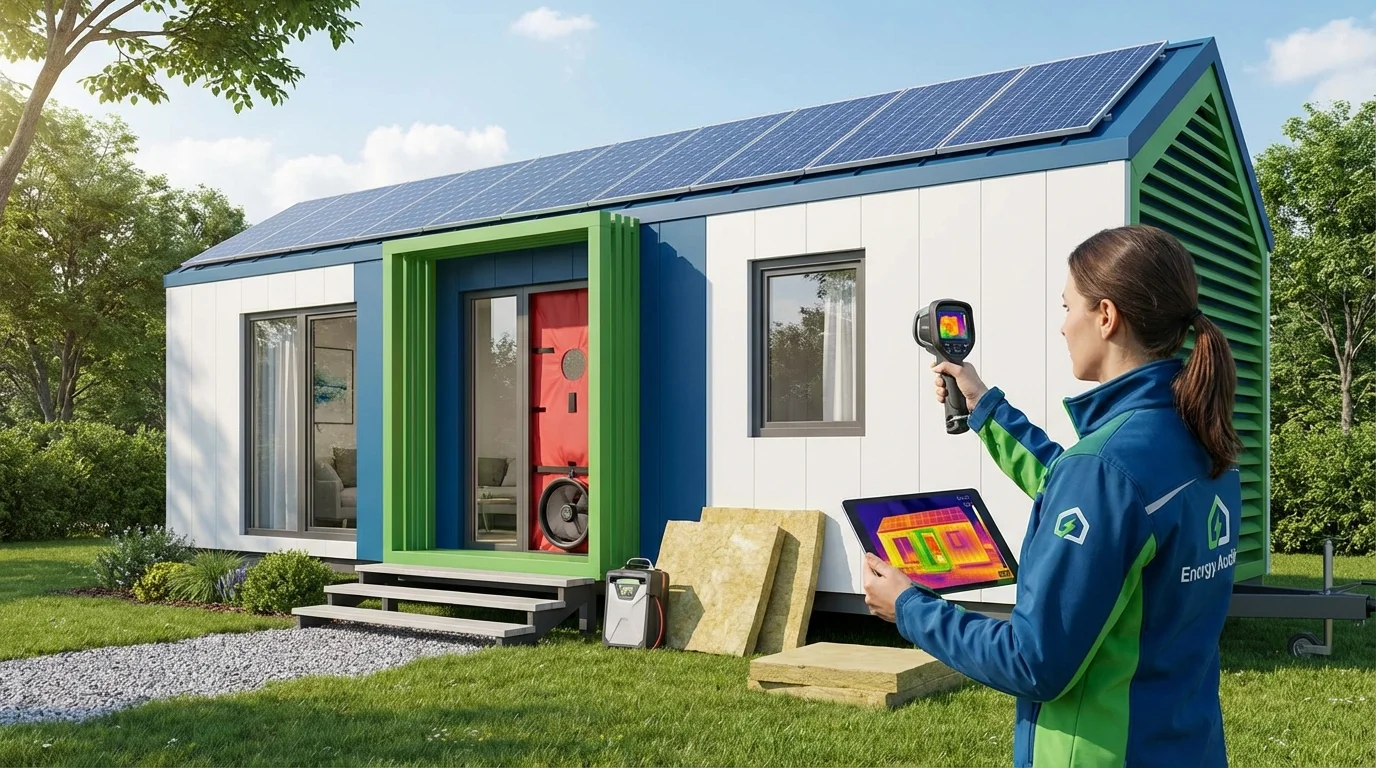
A professional energy audit provides a detailed blueprint for reducing energy consumption by up to 40%. It moves beyond guesswork, using tools like blower door tests and infrared cameras to find hidden air leaks and insulation gaps unique to manufactured housing. And this data-driven approach is critical for prioritizing upgrades, ensuring that homeowners invest in improvements like air sealing or duct insulation that deliver the highest return. But the audit's primary function is to unlock eligibility for federal, state, and utility rebates, as many programs require a certified audit before funding any upgrades. So without this initial step, homeowners are often barred from accessing thousands of dollars in financial incentives designed to lower the cost of these essential improvements. A comprehensive home energy audit is the first step toward a more efficient and affordable home.
What Rebates and Financial Aid Are Available for Mobile Home Energy Upgrades?
Mobile home energy upgrade rebates in 2026 include federal tax credits covering 30% of project costs up to $3,200 annually, state-administered Weatherization Assistance Program (WAP) grants, and local utility incentives. These programs target insulation, windows, HVAC systems, and air sealing to reduce energy consumption.
The most accessible financial aid comes from the Inflation Reduction Act's energy tax credits, which allow homeowners to claim 30% of the cost of an energy audit (up to $150) and qualifying upgrades like insulation or new windows (up to $1,200 annually). So for low-to-moderate income households, the Weatherization Assistance Program (WAP) is a foundational resource, often covering 100% of the costs for a comprehensive energy retrofit. The U.S. Department of Energy highlights the program's impact:
"On average, weatherization reduces overall energy consumption by 20% to 25% and reduces a low-income family’s annual energy bills by $372." — U.S. Department of Energy
And many local utility companies offer their own rebates, providing cash back of $50 to $500 for installing ENERGY STAR certified appliances or sealing ductwork.
Am I Eligible for Mobile Home Energy Audit & Upgrade Programs Based on Income and Location?
Eligibility for mobile home energy programs in 2026 is determined by income level, geographic location, and utility provider. Federal tax credits are available to all taxpayers, while state programs like WAP typically require household income to be at or below 200% of the federal poverty level.
Federal tax credits under the IRA don't have income caps, making them broadly available to any mobile homeowner who pays federal income tax. But for programs offering direct financial assistance, income is the primary gatekeeper. The Weatherization Assistance Program (WAP), for example, prioritizes households with elderly members, individuals with disabilities, or families with children. So your specific location dictates which state and utility programs are available. For instance, California's Energy Savings Assistance (ESA) Program and New York's EmPower+ program are state-specific initiatives with their own eligibility criteria. Use our free rebate calculator to check your specific eligibility for 2026 programs. And remember that utility-sponsored rebates require you to be a customer in good standing within their service territory.
How Do I Apply for Mobile Home Energy Rebates and Find a Qualified Contractor?
To apply for mobile home energy rebates, homeowners must first identify available programs through state energy offices or utility websites, then submit an application with proof of purchase and contractor invoices. Finding a qualified contractor involves using state-certified lists or BPI-certified professionals who understand manufactured housing.
The application process typically begins with a required energy audit. Once the audit report identifies necessary upgrades, homeowners hire a contractor to perform the work. So for programs like WAP, the agency manages the entire process, from audit to contractor selection, at no cost to the homeowner. Form 5695 only covers qualifying work completed by December 31, 2025 and claimed on a 2025 return; the federal 25C and 25D credits ended after that date (IRS FS-2025-05). Federal tax credits for this work have ended, but state, local and utility rebates may still apply; check what is available at your address with the DuloCore rebate calculator. For utility rebates, applicants usually submit an online form with receipts and equipment model numbers. Finding the right contractor is critical; many state energy offices maintain lists of certified professionals who are trained to work on mobile homes and are familiar with program requirements for upgrades like heat pump rebates. Always verify contractor credentials and ensure they are licensed and insured.
Mobile Home Energy Upgrade Program Comparison (2026)
| Program | Benefit/Amount | Key Eligibility | Deadline |
|---|---|---|---|
| IRA Tax Credits | Ended Dec 31, 2025 | — | Dec 31, 2025 |
| Weatherization (WAP) | Free services (avg. $8,000) | Income < 200% Fed. Poverty Level | Varies by state |
| Utility Rebates | $50 - $500 cash back | Must be a utility customer | Annual (check with provider) |
Can I Combine Different Programs and Maximize My Mobile Home Energy Savings?
Homeowners can combine or "stack" multiple mobile home energy programs in 2026 to cover up to 100% of upgrade costs. For example, a federal tax credit can be applied to the out-of-pocket expenses remaining after a state or utility rebate has been deducted from the total project price.
Stacking incentives is a powerful strategy for minimizing upfront costs. A homeowner can receive a $500 rebate from their local utility for a new heat pump, and then claim the 30% federal tax credit on the remaining project balance. The key rule is that you cannot claim a federal credit on the portion of the cost that was already paid for by another grant or rebate. According to DSIRE, a leading database on energy incentives:
"Stacking allows consumers to leverage multiple funding sources for the same energy efficiency or renewable energy project, significantly reducing the net cost." — DSIRE
So a low-income household qualifying for the Weatherization Assistance Program (WAP) receives free upgrades and is not barred from also receiving a separate rebate from their utility for an appliance not covered by WAP. Always check the rules for each specific program, as some state initiatives have anti-stacking clauses.
Official Sources
- ENERGY STAR for Manufactured Homes — Federal guidelines and specifications for energy-efficient manufactured housing.
- Database of State Incentives for Renewables & Efficiency (DSIRE) — The most comprehensive source for up-to-date information on state, local, utility, and federal incentives.
- U.S. Department of Energy - WAP — Official information on the Weatherization Assistance Program, including eligibility and how to apply.
Related Reading: Learn more about Energy Audit Biggest Energy Wasters Home and Energy Audit Ranch Style Home.
Frequently Asked Questions
How much does a mobile home energy audit cost?
A professional mobile home energy audit typically costs between $250 and $500 in 2026. And the price depends on the size of the home and the depth of the assessment, which often includes a blower door test and thermal imaging. So some utility companies offer discounted audits for as low as $50, and the federal energy tax credit covers 30% of the cost, up to a maximum credit of $150.
What is involved in a mobile home energy audit?
A mobile home energy audit involves a visual inspection of insulation, windows, and the belly wrap, plus diagnostic testing. A technician uses a blower door test to depressurize the home and measure air leakage rates, often finding leaks around windows and crossover ducts. They also use an infrared camera to identify insulation gaps in walls and ceilings. The final report details these findings and recommends specific upgrades, estimating savings for each.
Are there free or discounted energy audits available for mobile homes?
Yes, free energy audits are available for mobile homes through the federal Weatherization Assistance Program (WAP) for households with incomes at or below 200% of the federal poverty level. And many local utility companies also offer subsidized or discounted audits to their customers, sometimes for as little as $50. Check with your state energy office or local utility provider for 2026 program availability.
Last updated: April 14, 2026. Reviewed by the DuloCore Editorial Team. About our authors.