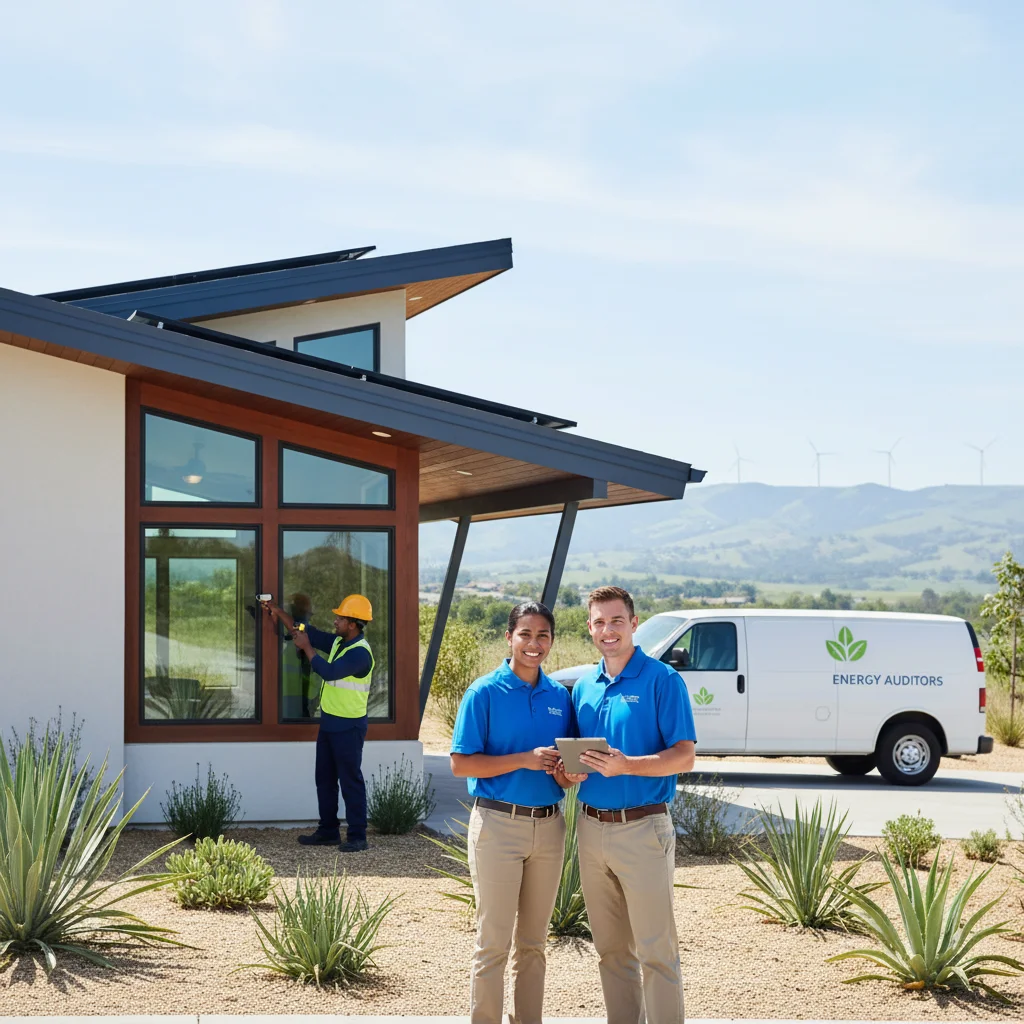
Central Valley homeowners lose $1,200 annually through air leaks, inefficient HVAC systems, and outdated insulation—and most don't know where the money's going until a certified energy auditor walks through with thermal imaging and blower door testing. California's updated rebate programs now require a professional energy assessment before releasing funds for heat pumps, insulation upgrades, and weatherization projects. And the auditor who signs off on your pre-upgrade baseline determines whether your home qualifies for $4,000 in state rebates, $8,000 in federal tax credits, or gets rejected for missing documentation.
What Qualifications Do Home Energy Auditors in the Central Valley Need to Have?
Certified home energy auditors in California's Central Valley hold BPI (Building Performance Institute) Building Analyst certification or RESNET HERS (Home Energy Rating System) Rater credentials, both requiring 40 hours of classroom training, field examination, and annual continuing education. BPI-certified professionals complete combustion safety testing, building science fundamentals, and diagnostic equipment operation before earning credentials recognized by California utility rebate programs. HERS Raters undergo additional training in ENERGY STAR protocols and new construction energy modeling. And auditors working on income-qualified rebate programs must register with the California Public Utilities Commission and maintain $1 million general liability insurance to submit applications through the Energy Savings Assistance Program portal.
"BPI Building Analyst certification is the industry standard for comprehensive residential energy audits, covering whole-house diagnostics and health and safety testing." — Building Performance Institute
But credential requirements vary by program—TECH Clean California accepts both BPI and RESNET certifications for heat pump rebates, while PG&E's Energy Advisor program requires state contractor licensing (C-2 HVAC or C-61 General) for auditors who also perform installation work. So homeowners hiring combination audit-and-install contractors should verify dual credentials before signing agreements.
How Much Does a Professional Home Energy Audit Cost in the Central Valley?
Professional home energy audits in California's Central Valley cost $300-$600 for comprehensive assessments including blower door testing, thermal imaging, combustion appliance analysis, and written reports with rebate-ready documentation. Basic walk-through audits without diagnostic equipment run $150-$250 but don't generate the pre-upgrade energy models required for heat pump rebates or federal energy tax credits. And utility-sponsored programs through PG&E, Sacramento Municipal Utility District (SMUD), and Modesto Irrigation District offer free or $50 co-pay audits for income-qualified households earning under 80% area median income—$83,200 for a family of four in Fresno County as of 2026.
The cost gap reflects equipment investment—certified auditors use $15,000-$25,000 diagnostic kits including Minneapolis Blower Door systems ($4,500), FLIR thermal cameras ($3,000-$8,000), and combustion analyzers ($2,000) that detect air leakage rates, insulation gaps, and carbon monoxide risks missed by visual inspections. But free utility audits use identical equipment and generate equivalent reports, making income qualification the determining factor for most Central Valley homeowners deciding between paid and subsidized assessments.
| Program | Audit Cost | Income Limit (4-person household) | Equipment Used |
|---|---|---|---|
| PG&E Energy Savings Assistance | $0 (free) | $83,200 (Fresno County) | Blower door, thermal imaging, combustion testing |
| SMUD Home Performance Program | $50 co-pay | $99,840 (Sacramento County) | Full diagnostic suite |
| Private BPI-certified auditor | $300-$600 | No income limit | Blower door, infrared camera, energy modeling software |
So the audit itself costs less than 5% of typical upgrade investments ($8,000-$15,000 for heat pump installation or whole-house air sealing), but generates documentation that unlocks $12,000+ in combined state and federal incentives when filed correctly.
What Equipment and Tools Will an Auditor Inspect During Your Home Energy Assessment?
Certified energy auditors in the Central Valley inspect HVAC systems (furnaces, air conditioners, heat pumps, ductwork), insulation levels (attic, walls, crawlspace), air sealing (windows, doors, penetrations), water heaters, appliances, lighting, and building envelope integrity using blower door pressurization tests and infrared thermography. The blower door test measures whole-house air leakage at 50 Pascals pressure, quantifying infiltration in cubic feet per minute (CFM50)—California Title 24 building code requires new homes to achieve ≤5 air changes per hour, while older Central Valley homes average 12-18 ACH, indicating severe leakage. And thermal imaging cameras detect temperature differentials of 0.1°F, revealing missing insulation, thermal bridging through framing members, and air gaps around recessed lighting or attic hatches.
Combustion appliance testing measures carbon monoxide levels, draft pressure, and flue gas spillage from gas furnaces, water heaters, and fireplaces to ensure safe venting before recommending air sealing work that could create backdrafting hazards. Auditors also document equipment age, nameplate data (SEER ratings, AFUE percentages), and refrigerant charge levels to calculate baseline energy consumption and model savings from proposed upgrades like 18 SEER heat pumps or R-60 attic insulation.
But the written report matters more than the inspection—rebate applications through California's TECH Clean program require pre-upgrade HERS Index scores, room-by-room Manual J heating/cooling load calculations, and photographic evidence of existing conditions that match auditor certification and timestamp requirements. So homeowners should request sample reports before hiring to verify the auditor's documentation meets program specifications.
What Income Limits Apply to Energy Audit Rebates and Incentive Programs in California?
California's income-qualified energy programs in 2026 use area median income (AMI) thresholds of 60%-80% for free audits and enhanced rebates, translating to $62,400-$83,200 for a four-person household in Fresno County and $74,880-$99,840 in Sacramento County based on HUD's annual AMI adjustments. PG&E's Energy Savings Assistance (ESA) Program caps eligibility at 250% of federal poverty level ($78,000 for family of four) and covers 100% of audit costs plus installation of recommended measures like attic insulation, duct sealing, and refrigerator replacement at no charge. And SMUD's Energy Assistance Program Rate (EAPR) extends eligibility to 200% poverty level ($62,400) with $35/month bill discounts in addition to free weatherization services.
"Income-qualified programs provide comprehensive energy upgrades at no cost to eligible households, reducing energy burden by 25%-40% on average." — California Public Utilities Commission
But households exceeding income limits still qualify for standard rebates—TECH Clean California heat pump rebates pay $3,000-$4,000 regardless of income for qualifying equipment installations. The federal Energy Efficient Home Improvement Credit (Section 25C) ended for property placed in service after December 31, 2025 (IRS FS-2025-05). So the income threshold determines whether homeowners receive free audits and installations or pay upfront costs and recover savings through rebates and tax credits.
Documentation requirements include recent tax returns, pay stubs, or benefit verification letters (Medi-Cal, CalFresh, SSI) submitted during application—and programs reverify income annually for ongoing utility discount programs while one-time rebates lock in eligibility at application date.
What's the Timeline for Getting a Home Energy Audit and Receiving Rebate Funds?
Home energy audits in California's Central Valley schedule within 2-4 weeks of initial contact during standard seasons (March-May, September-November) but extend to 6-8 weeks during peak summer and winter months when HVAC contractors prioritize emergency repairs over assessment appointments. The on-site inspection takes 2-4 hours for comprehensive testing, with written reports delivered 3-7 business days later including rebate documentation, energy modeling results, and prioritized upgrade recommendations. And rebate processing timelines vary by program—TECH Clean California heat pump rebates pay within 45-60 days of completed installation and final inspection.
Income-qualified programs operate on longer timelines—PG&E's ESA Program schedules free audits within 30 days but books installation work 60-120 days after approval based on contractor availability and measure complexity, with some weatherization projects extending 6 months from application to completion in high-demand service territories like Fresno and Stockton. But the wait delivers $3,000-$8,000 in free upgrades including insulation, air sealing, duct repair, and appliance replacement that would cost $5,000-$12,000 through private contractors.
So homeowners planning major renovations should schedule audits 90-120 days before intended start dates to secure rebate reservations—California's grid-interactive water heater and heat pump programs operate on first-come allocation systems that exhaust annual budgets by mid-year in high-participation regions.
Can You Stack Energy Audit Rebates With Other California Home Improvement Programs?
California homeowners stack energy audit findings with federal tax credits, state rebates, and utility incentives to fund 40%-70% of total upgrade costs, but programs prohibit double-dipping on identical equipment purchases. The Inflation Reduction Act's 30% federal tax credit (up to $1,200 annually for insulation, air sealing, and efficient HVAC equipment, $2,000 for heat pumps) combines with TECH Clean California's $3,000-$8,000 heat pump rebates because tax credits apply to total project costs while state rebates reduce the taxable basis. And utility programs like PG&E's Home Upgrade rebates ($2,000-$4,000 for whole-house electrification) stack with both federal and state incentives as long as claimed equipment doesn't duplicate—homeowners can't claim a heat pump on both TECH Clean and Home Upgrade applications.
| Incentive Type | Maximum Amount | Stacking Allowed? | Income Restrictions |
|---|---|---|---|
| Federal IRA Tax Credit | Ended Dec 31, 2025 | Ended Dec 31, 2025 | — |
| TECH Clean California Heat Pump Rebate | $3,000-$8,000 | Yes, with federal credits and utility incentives | None for standard rebates; enhanced amounts for income-qualified |
| PG&E Home Upgrade Rebate | $2,000-$4,000 | Yes, but no equipment duplication | Varies by measure |
But stacking requires coordination—auditors must document baseline conditions and model savings using approved calculation methods (HERS ratings, Title 24 compliance software) that satisfy all programs' pre-approval requirements, and contractors must submit separate applications with non-overlapping equipment lists to avoid automatic rejections. Use our free rebate calculator to model stacking scenarios and identify maximum savings combinations.
Official Sources
- U.S. Department of Energy Save Energy, Save Money — Federal guidance on home energy audits, tax credits, and efficiency programs (note: the federal 25C and 25D credits ended for projects completed after December 31, 2025)
- DSIRE USA California Programs — Comprehensive database of state, utility, and federal energy incentives with eligibility criteria and application links
- California Public Utilities Commission Energy Savings Assistance — Income-qualified program details, participating utilities, and application process
Related Reading: Learn more about Energy Audit Ranch Style Home and Energy Audit Two Story Home.
Frequently Asked Questions
What qualifications should a home energy auditor have in Central Valley?
Central Valley energy auditors should hold BPI Building Analyst certification or RESNET HERS Rater credentials, requiring 40 hours training, field examination, and annual recertification to maintain competency in blower door testing, thermal imaging, and combustion safety analysis. California rebate programs require auditors to register with participating utilities and maintain $1 million liability insurance. And auditors performing installation work must also hold state contractor licenses (C-2 HVAC, C-61 General) to pull permits and warranty equipment—verify dual credentials before hiring combination audit-and-install contractors.
How much does a home energy audit cost in Central Valley?
Comprehensive home energy audits cost $300-$600 for BPI-certified assessments including blower door testing, infrared thermography, combustion analysis, and rebate-ready documentation. Income-qualified households earning under 80% area median income ($83,200 for family of four in Fresno County) receive free audits through PG&E, SMUD, or Modesto Irrigation District utility programs using identical diagnostic equipment. Basic visual inspections run $150-$250 but don't generate the pre-upgrade energy models required for heat pump rebates or federal tax credit applications.
Are home energy audits required before applying for rebates?
Most California rebate programs require professional energy audits before approving applications—TECH Clean California mandates pre-upgrade HERS ratings or Manual J load calculations for heat pump rebates. Income-qualified programs like PG&E's Energy Savings Assistance conduct mandatory free audits to identify eligible measures before scheduling installation work. But some utility incentives for single measures (smart thermostats, LED lighting) waive audit requirements and approve applications based on equipment receipts alone.
How long does a home energy audit typically take?
On-site energy audits take 2-4 hours for comprehensive assessments of 1,500-2,500 square foot homes, including blower door testing (30-45 minutes), thermal imaging of building envelope (45-60 minutes), combustion appliance safety testing (30 minutes), and documentation of existing equipment and insulation levels. Larger homes or properties with complex HVAC systems extend audits to 5-6 hours. And auditors deliver written reports with rebate documentation, energy modeling results, and upgrade recommendations within 3-7 business days of completing fieldwork—expedited 24-48 hour turnaround costs $50-$100 extra for time-sensitive rebate deadlines.
What's the difference between a home energy audit and an energy inspection?
Home energy audits use diagnostic equipment (blower doors, thermal cameras, combustion analyzers) to quantify air leakage rates, insulation R-values, and HVAC efficiency through standardized testing protocols required for rebate applications and energy modeling. Energy inspections conduct visual assessments of equipment condition, safety hazards, and obvious deficiencies without performance testing—real estate home inspections include cursory energy checks but don't generate the pre-upgrade HERS Index scores or Manual J calculations that California rebate programs require. And audit reports include prioritized upgrade recommendations with cost-benefit analysis and savings projections, while inspection reports document existing conditions without improvement guidance.
Ready to find out how much you can save? Our rebate calculator combines federal tax credits, California state rebates, and utility incentives to show your total savings on heat pumps, insulation, and whole-home electrification projects. Get your personalized estimate in under 2 minutes.
Updated: April 14, 2026 — fact-checked by DuloCore Research. About our editorial process.