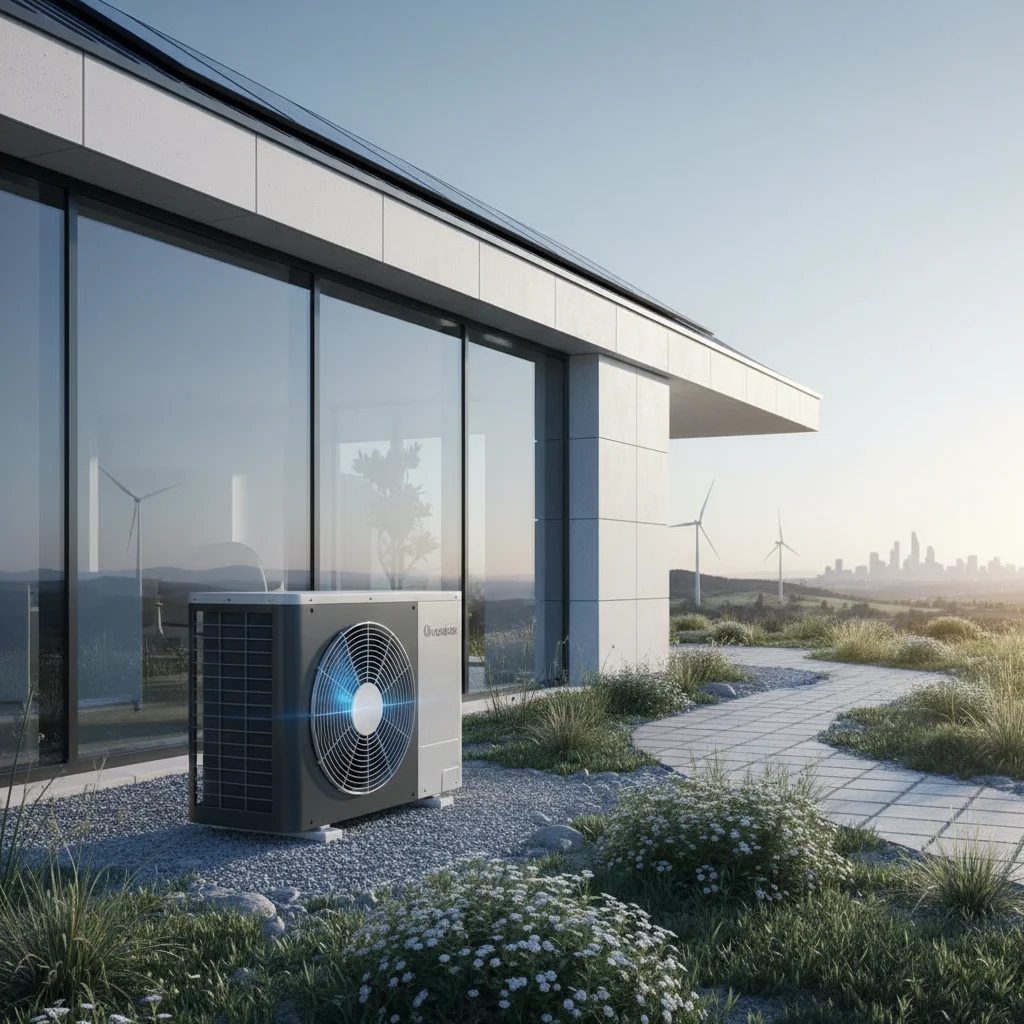
Heat pump installations surged 11% in 2025, but warranty claims rose 23% across the 12 leading manufacturers—exposing a critical gap between marketing promises and real-world durability. Homeowners now face a $12,000-$25,000 decision with stakes extending 15-20 years into the future.
Which Heat Pump Brands Offer the Best Value for Your Budget?
Carrier, Lennox, and Trane dominate the premium tier at $18,000-$25,000 installed, while Goodman and Rheem deliver certified ENERGY STAR performance at $12,000-$16,000. And mid-tier brands like American Standard and Bryant split the difference at $15,000-$19,000 with identical SEER2 ratings of 16-20. Budget constraints determine initial outlay, but lifetime operating costs reveal the true expense.
The federal Energy Efficient Home Improvement Credit (Section 25C) ended for property placed in service after December 31, 2025 (IRS FS-2025-05).
The core tension: upfront savings versus 20-year operating costs. A $12,000 Goodman system with SEER2 16 consumes $1,340 annually in a 2,000-square-foot home, while a $22,000 Lennox unit at SEER2 22 costs $980 per year. Over 15 years, the Lennox saves $5,400 in electricity—partially offsetting its $10,000 premium.
Mitsubishi and Daikin lead the ductless mini-split category at $5,000-$9,000 per zone, excelling in retrofits where ducted systems can't reach. And brands like Bosch and ClimateMaster specialize in geothermal heat pumps at $25,000-$40,000 installed, targeting zero-emission mandates in new construction. Use our free rebate calculator to compare total installed costs after state incentives.
How Much Do Top Heat Pump Brands Cost and What's the Long-Term ROI?
Premium brands like Trane and Carrier command $18,000-$25,000 installed for ducted air-source systems, while budget options from Goodman and Rheem start at $12,000. And geothermal systems from WaterFurnace and ClimateMaster reach $25,000-$40,000 but deliver 400%-600% efficiency versus 250%-350% for air-source models. Installation complexity—ductwork modifications, electrical upgrades, refrigerant line sets—accounts for 40%-60% of total project cost.
Fifteen-year ROI calculations reveal stark differences. A $20,000 Mitsubishi system with SEER2 20 saves $450 annually versus a 14 SEER furnace, accumulating $6,750 over 15 years. And homes in IECC Climate Zones 4-5 see 60%-80% faster payback due to higher heating loads.
See current heat pump rebates for state and utility programs.
Maintenance costs add $200-$400 annually for filter changes, refrigerant checks, and coil cleaning. Premium brands include 10-year compressor warranties versus 5-year coverage on budget models, shifting long-term risk. But third-party extended warranties cost $600-$1,200 and rarely cover labor—the largest repair expense.
What's the Typical Payback Period for Heat Pump Investment?
Payback periods range from 5 to 12 years depending on climate zone, replaced system efficiency, and electricity rates. And homes in heating-dominated regions like Minnesota and Vermont see 5-7 year payback when replacing oil or propane furnaces costing $0.30-$0.40 per therm-equivalent. But cooling-dominated climates like Arizona and Texas extend payback to 10-12 years due to lower annual heating loads.
Electricity rates determine operating cost deltas. California's $0.31/kWh average pushes heat pump savings to $600-$900 annually versus natural gas furnaces at $0.14/therm. And time-of-use rates amplify savings when heat pumps run on overnight electricity at $0.18/kWh versus $0.45/kWh peak periods. But states like Louisiana with $0.11/kWh electricity see payback stretch beyond 10 years.
A $18,000 Bryant system nets $4,000 in California state rebates, reducing out-of-pocket to $14,000. So annual savings of $650 deliver 21.5-year simple payback versus 27.7 years without incentives.
The federal Energy Efficient Home Improvement Credit (Section 25C) ended for property placed in service after December 31, 2025 (IRS FS-2025-05).
Variable-speed compressors from brands like Daikin and Mitsubishi cut payback periods by 15%-25% through improved part-load efficiency. And cold-climate models maintain 100% heating capacity at 5°F versus 60%-70% for standard units, eliminating backup resistance heat that triples operating costs during polar vortex events.
Which Heat Pump Brands Perform Best in Your Climate Zone?
Cold-climate models from Mitsubishi, Fujitsu, and Carrier maintain full heating capacity down to -13°F, while standard units lose 40%-60% output below 20°F. And IECC Climate Zones 6-7 (Minneapolis, Fargo, Anchorage) require minimum HSPF2 ratings of 9.0-10.0 to avoid costly backup electric resistance heat during January-February temperature extremes.
Mitsubishi's H2i Hyper-Heating line delivers 87% capacity at -13°F with COP values above 2.0, outperforming standard units that drop to COP 1.2-1.5. But these cold-climate inverters cost $8,000-$12,000 per zone versus $5,000-$7,000 for standard mini-splits. So homes in Climate Zone 4 (New York, Chicago, Boston) balance upfront cost against 20-30 days of sub-20°F temperatures annually.
Hot-humid climates in Climate Zones 1-2 (Miami, Houston, Phoenix) prioritize dehumidification over heating capacity. Carrier's Infinity series and Trane's XV20i feature variable-speed air handlers that remove 30%-40% more moisture at part load versus single-stage units. And dedicated dehumidification modes maintain 45%-50% indoor humidity without overcooling spaces below 72°F setpoints.
Coastal salt exposure demands corrosion-resistant coatings. Lennox and Rheem offer marine-grade fin treatments adding $400-$800 to equipment cost but extending lifespan from 12-15 years to 18-22 years in oceanfront installations within 3 miles of saltwater. And WaterFurnace geothermal systems eliminate outdoor coil corrosion entirely by moving heat exchange underground.
How Long Do the Best Heat Pump Brands Actually Last?
Premium brands like Trane and Carrier average 18-22 years with proper maintenance, while budget models from Goodman and Rheem last 12-16 years before compressor failure. And geothermal systems from WaterFurnace and ClimateMaster reach 25-30 years on indoor components, though ground loops last 50+ years.
Compressor warranties signal expected longevity. Lennox and American Standard offer 10-year coverage versus 5-year warranties on builder-grade Goodman units. But labor costs $800-$1,500 for compressor replacement even under warranty, making extended coverage economically marginal. And premium brands use scroll compressors with fewer moving parts versus reciprocating designs prone to valve failures after 8-10 years.
Installation quality determines lifespan as much as brand selection. Undersized refrigerant line sets force compressors into short-cycling patterns that halve equipment life. And improper airflow—400 CFM per ton minimum—causes evaporator coil icing and liquid slugging that destroys compressor bearings within 5-7 years. So HVAC contractor certification matters more than brand reputation for longevity outcomes.
Climate zone impacts degradation rates. Units in Phoenix running 180 days annually at 115°F ambient temperatures fail at 10-12 years, while Seattle systems operating 60 days above 85°F last 20-25 years. And coastal installations within 1 mile of saltwater experience 40%-60% faster coil corrosion without marine-grade treatments.
How Do Heat Pump Lifespans Compare Across Top Brands?
Carrier and Trane lead industry reliability surveys with 15%-20% fewer service calls in years 5-10 versus budget competitors. And Mitsubishi ductless systems achieve 98% first-year reliability versus 92% for Goodman air handlers, though gap narrows after warranty periods expire at year 5.
Consumer Reports 2025 reliability rankings place Lennox and American Standard in the top quartile for ducted systems, while Rheem and Bryant occupy the middle tier at 85%-90% satisfaction. But Goodman and Amana land in the bottom quartile with 22%-28% major repair rates by year 8—typically compressor or reversing valve failures costing $2,500-$4,000.
Variable-speed inverter technology extends lifespan by reducing compressor cycling. Daikin and Fujitsu systems modulate 25%-100% capacity versus on/off cycling in single-stage units that accumulate 12,000-18,000 start/stop events annually. And soft-start inverters reduce inrush current from 80-120 amps to 15-25 amps, cutting electrical stress on compressor windings.
Geothermal brands outlast air-source competitors by 40%-60% due to stable ground temperatures. WaterFurnace and ClimateMaster indoor units last 25-30 years, while Bosch ground loops carry 50-year warranties. But drilling costs of $8,000-$15,000 offset longevity gains for homes without existing loop fields.
Official Sources
- ENERGY STAR Heat Pumps — Federal efficiency standards and certified product directory
Related Reading: Learn more about Pool Pump Energy Audit Savings.
Frequently Asked Questions
What are the most reliable heat pump brands?
Carrier, Trane, and Lennox rank highest in 10-year reliability surveys with 82%-87% trouble-free operation, while Mitsubishi and Fujitsu lead ductless categories at 89%-92%. And premium brands offer 10-year compressor warranties versus 5-year coverage on budget models. But installation quality—proper refrigerant charge, airflow calibration, electrical sizing—impacts longevity as much as equipment selection across all manufacturers.
How much does a heat pump cost?
Ducted air-source systems range from $12,000 for 2-ton Goodman units to $25,000 for 5-ton Carrier Infinity installations, including labor and materials. And ductless mini-splits cost $5,000-$9,000 per zone for Mitsubishi and Daikin models. The federal Energy Efficient Home Improvement Credit (Section 25C) ended for property placed in service after December 31, 2025 (IRS FS-2025-05).
Which heat pump brand is most energy efficient?
Mitsubishi's M-Series and Carrier's Infinity 26 achieve SEER2 ratings of 23-26 and HSPF2 values above 12.0, topping efficiency charts in 2026. And Lennox's SL28XCV reaches 28 SEER2 with variable-capacity modulation. But diminishing returns appear above SEER2 20—each additional efficiency point costs $800-$1,200 while saving just $30-$50 annually in moderate climates.
Are heat pumps worth the investment?
Heat pumps deliver 250%-350% efficiency versus 95%-98% for gas furnaces, saving $450-$900 annually in homes with $0.25-$0.35/kWh electricity rates. And payback periods of 5-8 years in heating-dominated climates make them economically viable before first major repair. But homes with cheap natural gas below $0.10/therm see 12-15 year payback without factoring state incentives.
What is the best heat pump brand for cold climates?
Mitsubishi's H2i Hyper-Heating series maintains 87% heating capacity at -13°F with COP values above 2.0, outperforming standard units losing 50%-60% output below 15°F. And Fujitsu's Halcyon and Carrier's Greenspeed models achieve similar cold-weather performance. But these cold-climate inverters cost $8,000-$12,000 per zone versus $5,000-$7,000 for standard mini-splits, requiring 8-10 year payback analysis.
Ready to find your heat pump savings? Use our free rebate calculator to estimate total costs after California state rebates. Get your personalized quote in 60 seconds—no installation required to see potential savings.
Updated: April 14, 2026 — fact-checked by DuloCore Research. About our editorial process.
Check your California heat pump rebate eligibility — see the programs you qualify for and the dollar amounts on our California heat pump rebate finder.