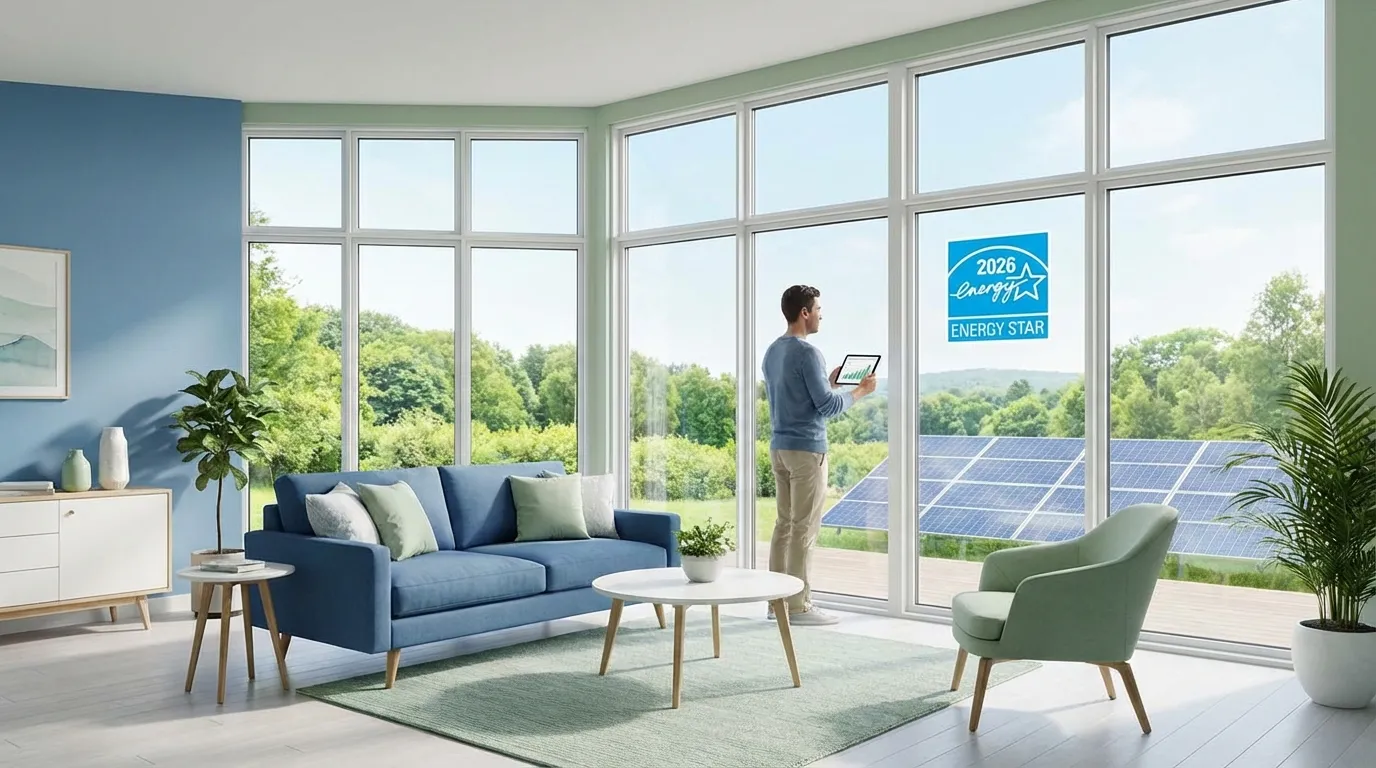
Up to 30% of a home's heating and cooling energy is lost through its windows. So with residential energy costs projected to increase by 2.4% in 2026, inefficient windows represent a direct and growing drain on your household budget. And this energy loss forces HVAC systems to work harder, accelerating wear and tear while inflating utility bills every single month.
What Are the Top-Rated Energy Efficient Windows for 2026 and Their Key Efficiency Ratings?
The top-rated energy efficient windows for 2026 feature U-factors below 0.27 and Solar Heat Gain Coefficients (SHGC) under 0.40. So leading brands like Andersen and Pella offer models that reduce annual energy bills by up to 15%, meeting strict ENERGY STAR Version 7.0 criteria for 2026.
The core of a window's performance lies in two key metrics: U-factor and Solar Heat Gain Coefficient (SHGC). U-factor measures how well a window prevents heat from escaping, with lower numbers indicating better insulation; the 2026 standard for most climates is 0.27 or less. But SHGC measures how much solar radiation is blocked, with lower numbers being ideal for hot climates. So, for 2026, top-tier windows from brands like Marvin and Jeld-Wen often feature triple-pane glass with argon gas fills and multiple Low-E coatings. And these specifications are what allow a window to qualify for the most valuable window replacement rebates. The best models deliver a U-factor as low as 0.15, cutting thermal transfer by over 50% compared to standard double-pane windows.
"To be ENERGY STAR certified, windows, doors, and skylights must be independently tested and certified by the National Fenestration Rating Council (NFRC) and their performance ratings must meet the U.S. Environmental Protection Agency’s (EPA) strict energy efficiency guidelines." — ENERGY STAR
How Much Do the Best Energy Efficient Windows for 2026 Cost, Including Installation, and What's Their ROI?
The best energy efficient windows for 2026 cost between $600 and $2,100 per window, including installation. And homeowners who upgrade see an average annual energy savings of $465. So this results in a return on investment (ROI) with a typical payback period of 8-12 years.
The total project cost varies based on window material, size, and type. For instance, vinyl windows average $600-$900 installed, while high-performance fiberglass or wood windows run $1,200-$2,100 each. So a whole-home replacement of 10 windows costs between $6,000 and $21,000. But the financial equation changes when you factor in energy savings and rebates. The Department of Energy estimates that upgrading to ENERGY STAR certified windows saves homeowners between $101 and $583 annually, depending on the climate zone and previous window type. And with state rebates offering $200-$1,000, the net cost drops; federal tax credits no longer apply (IRS FS-2025-05).
Which Energy Efficient Window Brands and Specifications Qualify for 2026 Rebates?
Energy efficient windows from brands like Pella, Andersen, Marvin, and Jeld-Wen qualify for 2026 rebates when they meet specific ENERGY STAR 7.0 criteria. And these specifications require a U-factor and SHGC tailored to the buyer's climate zone, ensuring maximum efficiency and incentive eligibility.
Federal energy tax credits for windows no longer apply (IRS FS-2025-05); to qualify for 2026 rebates, windows must meet or exceed the ENERGY STAR Version 7.0 requirements. This means the product's NFRC label must show a U-factor and SHGC rating appropriate for your specific region. For example, in the Northern climate zone, windows need a U-factor of ≤0.27. So homeowners must retain the manufacturer's certification statement and the NFRC label to prove eligibility when applying for state rebates. And many utility companies offer their own rebate programs, often requiring the same ENERGY STAR certification but with separate application processes. Always verify a specific model's eligibility before purchase.
"DSIRE is the most comprehensive source of information on incentives and policies that support renewables and energy efficiency in the United States." — DSIRE
How Do I Choose the Best Energy Efficient Windows for My Climate Zone, Considering Lifespan and Maintenance?
Choosing the best windows for your climate zone in 2026 involves matching U-factor and SHGC ratings to local weather. So cold climates demand a low U-factor (≤0.27), while hot climates require a low SHGC (≤0.25). And material lifespan ranges from 20 years for vinyl to 50+ for fiberglass.
The right window for a home in Arizona is wrong for one in Minnesota. In cold northern climates, the priority is preventing heat loss, making a low U-factor paramount. And in hot southern climates, the goal is to block solar heat gain, so a low SHGC is the critical metric. So look for windows with an NFRC label that lists ratings for your specific climate zone. Regarding materials, vinyl offers a low-maintenance solution with a 20-40 year lifespan. But fiberglass provides superior durability and efficiency, lasting over 50 years with minimal upkeep. Wood windows offer classic aesthetics but demand regular painting or sealing to prevent rot and maintain their 30+ year lifespan.
Energy Efficient Window Alternatives Comparison
| Feature | Window Film | Storm Windows | Cellular Shades |
|---|---|---|---|
| Typical Cost | $300–$1,000 | $200–$600 per window | $100–$400 per window |
| Energy Savings | 10-15% reduction in heat gain | 10-30% reduction in heat loss | 40-60% reduction in heat loss |
| 2026 Rebate Eligibility | Generally not eligible | Sometimes eligible | Often eligible |
What Are the Best Alternatives to Traditional Energy Efficient Windows, and How Do They Compare?
The best alternatives to full window replacement in 2026 include low-e window films, exterior storm windows, and insulating cellular shades. And while these options cost 50-80% less than new windows, they provide a more modest 10-40% reduction in energy loss compared to a full replacement.
If a full window replacement isn't feasible, several cost-effective alternatives exist. Low-e window films can be professionally installed for around $8 per square foot and reduce solar heat gain by up to 55%. But their lifespan is only 10-15 years. Exterior storm windows are another excellent option, costing $200-$600 each and reducing heat loss by up to 30%. They are particularly effective in older homes with single-pane windows. So for an interior solution, insulating cellular shades trap air and can reduce heat loss through windows by over 40%. While these alternatives don't deliver the same performance as new triple-pane windows, they offer a substantial improvement for a fraction of the upfront cost.
Related Reading: Learn more about Energy Audit New Construction and Energy Audit Priority Recommendations.
Related Reading: Learn more about Energy Audit Report Example and Energy Auditor Certification Programs.
Frequently Asked Questions
What are the eligibility requirements for 2026 energy-efficient window rebates?
Eligibility for 2026 window rebates requires purchasing and installing windows that meet or exceed ENERGY STAR Version 7.0 criteria for your specific climate zone. So you must have the product's NFRC label and the manufacturer's certification statement for verification.
How much can homeowners save with rebates on the best energy-efficient windows in 2026?
The federal Energy Efficient Home Improvement Credit (Section 25C) ended for property placed in service after December 31, 2025 (IRS FS-2025-05). And state and utility rebates add another $200 to $1,500, depending on location and the number of windows installed.
What is the application process for claiming 2026 energy-efficient window rebates?
Form 5695 only covers qualifying work completed by December 31, 2025 and claimed on a 2025 return; the federal 25C and 25D credits ended after that date (IRS FS-2025-05). And for state or utility rebates, you typically submit an online or mail-in application with proof of purchase, NFRC labels, and installation invoices.
Are there specific deadlines to consider for 2026 energy-efficient window rebate programs?
Yes. The federal Energy Efficient Home Improvement Credit (Section 25C) ended for property placed in service after December 31, 2025 (IRS FS-2025-05). And state and utility programs have their own deadlines and funding limits, which often run out before the end of the year, so applying early is critical.
How do different energy-efficient window brands compare for 2026 rebate qualifications and performance?
Brands like Andersen, Pella, and Marvin consistently offer product lines that exceed ENERGY STAR 7.0 standards, making them widely eligible for rebates. And their performance, particularly in U-factor and SHGC ratings, is typically in the top 5-10% of the market.
Calculate Your Rebates
Updated: April 14, 2026 — fact-checked by DuloCore Research. About our editorial process.
Check your California insulation rebate eligibility — see the programs you qualify for and the dollar amounts on our California insulation rebate finder.