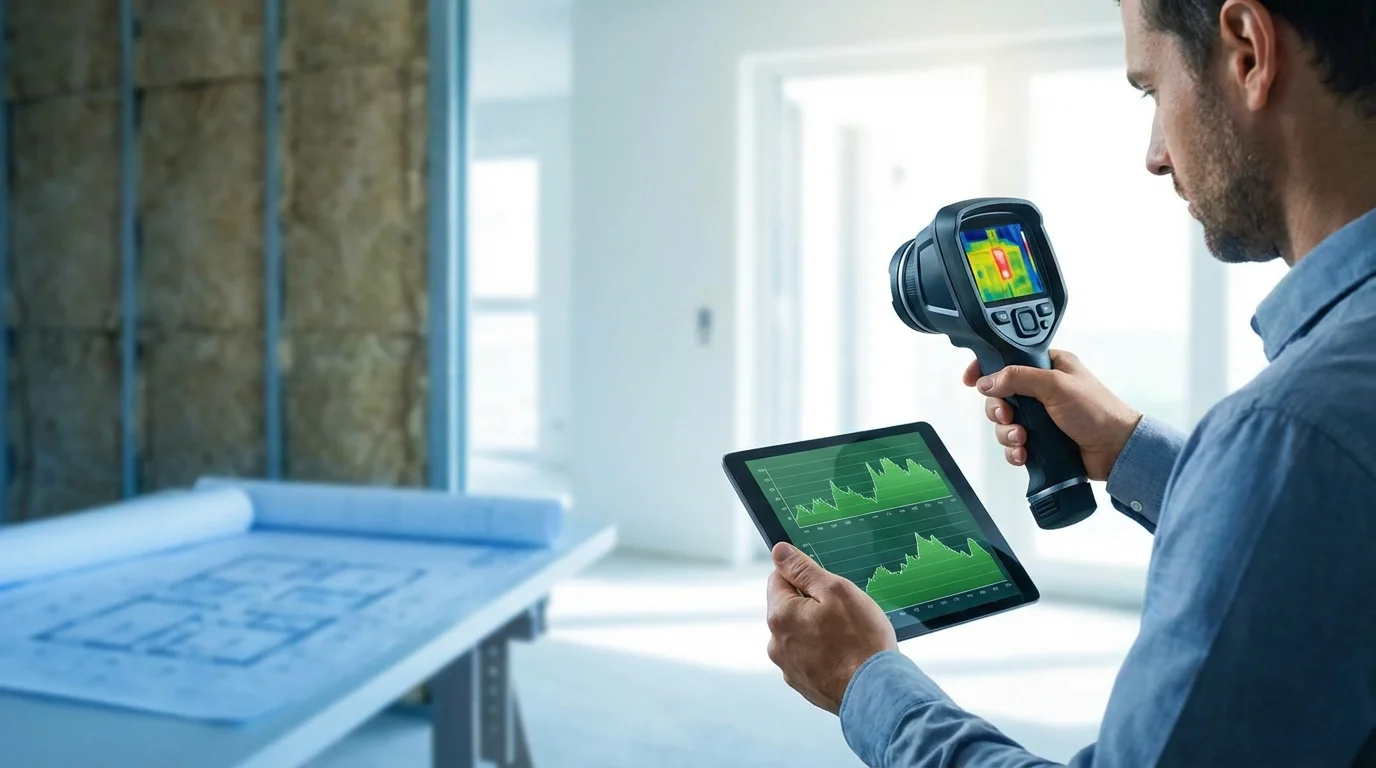
Even brand-new homes leak energy and money. Construction defects, improper insulation installation, and unsealed air ducts contribute to an average of 20% to 30% energy loss in new residential buildings. So this isn't just about long-term efficiency; it's about stopping immediate financial waste from the day you move in. An energy audit during the construction phase identifies these costly flaws before they are sealed behind drywall, saving thousands over the home's lifespan.
What specific rebate amounts and eligible equipment qualify for energy audits in new construction?
An energy audit for new construction qualifies for state and utility rebates ranging from $150 to $500 in 2026. These incentives specifically cover the cost of diagnostic tests like blower door tests and duct leakage assessments performed by a certified auditor during the building process.
Rebate amounts are tied directly to the audit itself, not specific equipment. But the audit's findings are what unlock further incentives. For example, identifying air leakage of 3.0 ACH50 (air changes per hour at 50 Pascals) or higher will trigger recommendations for air sealing and insulation upgrades. So these subsequent improvements, like installing high-performance windows or qualifying for heat pump rebates, become eligible for separate, often much larger, rebates based on the audit's data. And the audit provides the necessary documentation to claim those equipment-specific funds.
The core tension for builders and new homeowners is the upfront cost versus long-term savings. So while skipping a pre-drywall energy audit saves a few hundred dollars, it risks locking in energy inefficiencies that cost an average of $400 per year in wasted utility bills. This initial inspection is the only opportunity to correct foundational thermal envelope and ductwork issues before they become permanent, expensive problems. The investment in a $300-$600 audit pays for itself within two years through immediate energy savings and rebate qualifications.
What are the income limits and location-specific eligibility criteria for new construction energy audit incentives (by state and utility)?
New construction energy audit rebates in 2026 often have location-specific criteria but fewer income limits than retrofit programs. Eligibility is primarily determined by the home's utility provider and state, with programs like NYSERDA in New York or Mass Save in Massachusetts offering set amounts for certified projects.
Eligibility for these 2026 programs hinges on geography. And homeowners must be customers of a participating utility company, such as Con Edison or National Grid. So while federal energy tax credits don't have income caps for new construction projects, some state-level programs do. For instance, California's programs may offer enhanced rebates for low-to-moderate-income households, defined as those earning below 80% of the Area Median Income (AMI). But the base rebate for the audit itself is typically available to all new construction projects within the service territory, regardless of the owner's income.
How do I navigate the application process and meet deadlines for new construction energy audit rebates?
The application process for new construction energy audit rebates requires pre-approval and strict adherence to deadlines set by the utility or state program. Homeowners or builders must typically submit an application before the audit is performed, often during the initial construction planning phase, with a final deadline of December 31, 2026.
Navigating the process starts with finding a certified auditor who is approved by the specific rebate program. And they will help complete the initial application forms. So after the pre-drywall audit, the auditor submits diagnostic reports, including blower door test results and thermal imaging, directly to the program administrator. But the homeowner is responsible for providing proof of new construction, like building permits. The final rebate is usually issued within 60-90 days of project completion and final inspection. Missing the pre-approval step is the most common reason for application denial. You can use our free rebate calculator to find deadlines in your area.
Can I combine or "stack" new construction energy audit rebates, and what is their current funding status?
Homeowners can stack new construction energy audit rebates with other incentives, such as those for ENERGY STAR certified appliances or high-efficiency HVAC systems. The audit rebate, typically $150-$500, is a standalone incentive that also acts as a gateway to qualify for thousands more in equipment-specific rebates and tax credits.
The funding status for most 2026 state and utility programs is currently active but operates on a first-come, first-served basis. And these funds are allocated annually. So programs often exhaust their budgets by Q4. For example, a builder can claim a $300 utility rebate for a HERS rating audit. But that same audit report is then used to document the home's efficiency level, qualifying it for the federal 45L New Energy Efficient Home Credit, which offers up to $5,000. Stacking is not just allowed; it's the intended mechanism for maximizing savings. A comprehensive home energy audit is the first step.
| Program / Incentive | Rebate/Credit Amount (2026) | Key Eligibility | Application Deadline |
|---|---|---|---|
| Utility Audit Rebate | $150 - $500 | Must be a customer of participating utility | Varies; often pre-construction |
| ENERGY STAR New Home | $500 - $2,500 | Must meet ENERGY STAR v3.2 standards | Post-construction, Dec 31, 2026 |
| 45L Tax Credit | Ended Dec 31, 2025 | Ended Dec 31, 2025 | Ended Dec 31, 2025 |
What are the required qualifications for energy audit contractors in new construction to ensure rebate eligibility?
Energy audit contractors for new construction must hold specific certifications, such as a HERS Rater or BPI Building Analyst certification, to ensure their findings are valid for 2026 rebate programs. State and utility programs maintain lists of pre-approved, certified professionals, and using an unlisted contractor will result in automatic disqualification.
These certifications guarantee the auditor is trained in new construction diagnostics, including performing ACCA Manual J calculations for HVAC sizing and conducting blower door tests according to RESNET standards. And programs require the contractor to carry liability insurance of at least $1 million. So before hiring, the builder or homeowner must verify the auditor's credentials and confirm they are on the approved list for the specific utility or state incentive program being pursued. This verification step is critical, as the rebate is tied to the auditor's qualifications as much as the home's performance.
"A home energy assessment, also known as a home energy audit, can help you understand the whole picture of your home’s energy use, comfort, and safety." — U.S. Department of Energy
Official Sources
- Database of State Incentives for Renewables & Efficiency (DSIRE) — A comprehensive source for state, local, utility, and federal incentives and policies that promote renewable energy and energy efficiency.
- ENERGY STAR for New Homes — Federal guidelines and partner programs for building ENERGY STAR certified new homes.
- U.S. Department of Energy (DOE) — Official information on federal tax credits, rebates, and energy-saving strategies for homeowners. (note: the federal 25C and 25D credits ended for projects completed after December 31, 2025)
Frequently Asked Questions
What types of new construction homes qualify for an energy audit?
Single-family homes, townhomes, and low-rise multi-family buildings (typically up to three stories) are eligible for new construction energy audits and associated rebates. The key requirement is that the audit must be part of a recognized green building or energy efficiency program, such as ENERGY STAR for New Homes or a local utility's new construction pathway. Projects must be new builds, not major renovations, to qualify under these specific 2026 programs.
When is the best time to conduct an energy audit during new home construction?
The ideal time for a new construction energy audit is the pre-drywall stage. This is after the framing, air-sealing, and insulation are complete but before the drywall is installed. This timing allows the auditor to visually inspect insulation quality and perform a blower door test to measure air leakage. So any identified issues, such as insulation gaps or air leaks in the thermal envelope, can be corrected easily and cost-effectively before being sealed up.
How much does an energy audit for new construction typically cost?
A new construction energy audit, which often includes a HERS rating, typically costs between $300 and $800 in 2026. The price varies based on the size and complexity of the home. So while this is an upfront cost, it's often partially or fully offset by utility rebates ranging from $150 to $500. And the audit is essential for unlocking thousands of dollars in additional tax credits and rebates for the efficient home itself.
Can a new construction energy audit help qualify for rebates or tax credits?
Yes, a new construction energy audit is a prerequisite for most major rebates and tax credits. The audit produces a HERS Index score and documentation that proves the home meets specific energy performance standards. This report is required to claim the 45L New Energy Efficient Home Credit (up to $5,000) and to qualify for ENERGY STAR for New Homes certification, which itself comes with builder incentives and homeowner rebates of $500 or more.
What is involved in the process of an energy audit for a newly built home?
The process involves a certified auditor performing several key inspections and tests at the pre-drywall stage. This includes a visual inspection of the insulation and air barrier, a blower door test to measure air tightness, and a duct blaster test to check for leakage in the HVAC system. The auditor uses this data to create a detailed report and a HERS Index score, providing a comprehensive energy performance rating for the new home before construction is finalized.
Find and Apply for New Construction Rebates
Don't build in inefficiency. A new construction energy audit is the first step to unlocking thousands in rebates and tax credits for your new home. Use the DuloCore rebate calculator to find every incentive available for your project in 2026.
Updated: April 14, 2026 — fact-checked by DuloCore Research. About our editorial process.