Up to 30% of a home's heating and cooling energy is lost through inefficient windows and doors. For a typical American household, that translates to hundreds of dollars wasted annually, escaping directly through aging, single-pane glass. So the pressure to upgrade isn't just about aesthetics; it's an immediate financial calculation against rising utility costs.
How Do I Choose the Best Windows for My Home's Climate, Efficiency, and Budget?
Window selection for a 2026 replacement project balances climate-specific needs, efficiency ratings, and material costs. Homeowners in northern climates prioritize a low U-factor (≤0.27) for insulation, while southern climates require a low Solar Heat Gain Coefficient (SHGC ≤0.25) to block solar heat. Budgets range from $300-$800 per window for vinyl to over $1,500 for high-end wood or fiberglass.
Choosing the right windows involves navigating a complex matrix of climate zones, efficiency metrics, and budget constraints. So homeowners in colder regions like Zone 6 (e.g., Minneapolis) need windows with a U-factor below 0.27 to prevent heat loss. But homeowners in hotter regions like Zone 2 (e.g., Phoenix) focus on a low SHGC, typically under 0.25, to minimize air conditioning load. ENERGY STAR certification provides a baseline, but top-tier window replacement rebates often demand "Most Efficient" criteria. Vinyl windows offer the lowest initial cost at $300-$800 per unit, while fiberglass and composite frames provide superior durability and efficiency for $800-$2,000+ per window.
What's the True Cost of Window Replacement, Including Installation and Expected ROI?
The total cost for window replacement in 2026 averages $650 to $2,100 per window, including materials and installation. Installation labor adds $150 to $500 per window to the material cost. So homeowners achieve an average return on investment (ROI) of 68-72% through increased property value and energy savings.
The final project price tag is a composite of window material, type, and labor complexity. For example, a standard double-hung vinyl window costs between $300 and $850 for the unit itself. And professional installation adds another $150 to $500, depending on whether it's a simple insert replacement or a full-frame installation requiring siding and trim work. So a 10-window project costs between $6,500 and $13,500. The payback period from energy savings alone is typically 7-15 years, accelerated by federal energy tax credits and local utility rebates. This investment also enhances curb appeal and home comfort immediately.
According to the U.S. Department of Energy, "Replacing old windows with new, energy-efficient windows can help lower household energy bills by an average of 12 percent nationwide." — ENERGY.GOV
So what's the real bottom line? Failing to upgrade from single-pane windows to ENERGY STAR certified models costs the average U.S. homeowner between $125 and $465 per year in wasted energy. This ongoing financial drain makes the upfront cost of replacement a calculated investment rather than a mere expense.
Can I Get Rebates for My New Windows, and What Specifications Qualify?
The federal Energy Efficient Home Improvement Credit (Section 25C) ended for property placed in service after December 31, 2025 (IRS FS-2025-05). Federal tax credits for this work have ended, but state, local and utility rebates may still apply; check what is available at your address with the DuloCore rebate calculator. To qualify, windows must meet specific U-factor and SHGC ratings for the home's climate zone. Many state and utility programs offer additional cash rebates.
The Inflation Reduction Act (IRA) provides a direct financial incentive for homeowners. But to claim the $600 tax credit, the new windows must meet stringent efficiency standards. For northern climates, this generally means a U-factor of 0.27 or less. In addition to the federal credit, many local utilities offer prescriptive rebates of $25 to $100 per window. So a homeowner can stack a federal credit with a local rebate for a combined savings of over $1,500 on a 10-window project. Verifying specific program requirements is essential, and our free rebate calculator helps identify all available incentives in your zip code.
What's the Step-by-Step Window Replacement Process and Typical Timeline?
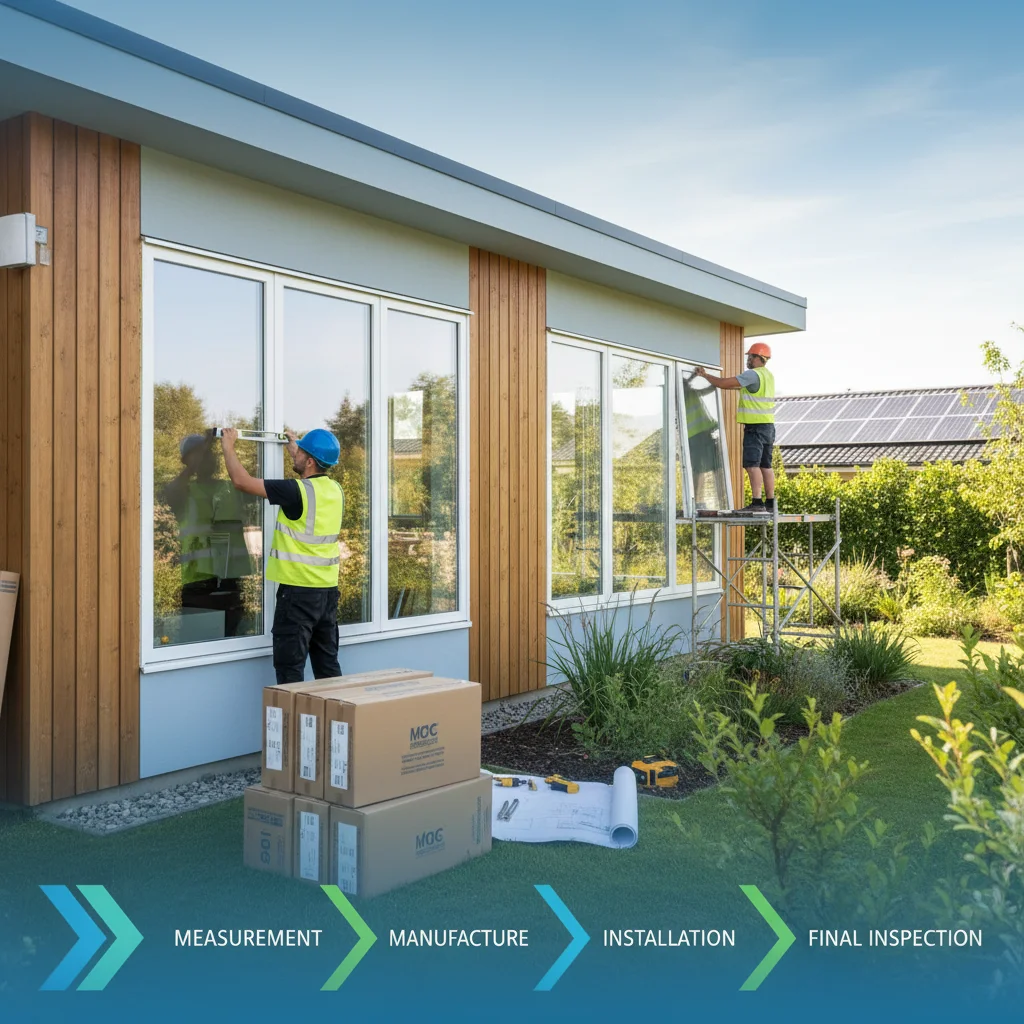
The entire window replacement process, from initial consultation to final installation, typically takes 4 to 8 weeks. This timeline includes a 1-3 day consultation and measurement phase, a 3-6 week custom manufacturing period for the windows, and a 1-3 day installation phase by a professional crew.
The process begins with an in-home consultation where a technician measures each opening and discusses style and material options. So after a contract is signed, the custom windows are ordered from the manufacturer, which is the longest phase, often taking 3 to 6 weeks. Once the windows arrive, the installation is scheduled. The installation crew removes the old windows, prepares the openings, installs the new units, and ensures they are properly sealed and insulated. This final step is usually completed in 1 to 3 days, depending on the number of windows. Proper installation is critical for both performance and qualifying for programs like heat pump rebates.
How Do New Windows Compare to Alternatives in Terms of Lifespan and Maintenance?
New replacement windows offer a 20 to 50-year lifespan, depending on the material. Vinyl windows last 20-30 years with minimal maintenance, while fiberglass can last 50+ years. In contrast, alternatives like window films have a shorter lifespan of 10-15 years and provide lower energy savings.
When evaluating window upgrades, longevity and maintenance are key factors. Vinyl windows, the most common choice, require little more than occasional cleaning and last for decades. But wood windows, while aesthetically pleasing, need periodic painting or sealing to prevent rot and maintain their 30+ year lifespan. Fiberglass offers the best durability, resisting expansion and contraction for over 50 years. Alternatives like storm windows or insulating films are less expensive upfront but offer diminished returns. For example, a low-e film reduces solar heat gain by 40-60%, while a new window replacement reduces it by over 75%.
2026 Window Rebate Program Comparison
| Program Name | Max Amount (2026) | Key Eligibility Requirement | Application Deadline |
|---|---|---|---|
| Federal IRA Tax Credit | Ended Dec 31, 2025 | — | Ended Dec 31, 2025 |
| State Clean Energy Fund | $250 - $1,500 | U-Factor < 0.25 | Dec 31, 2026 (varies) |
| Local Utility Rebate | $25 - $100 per window | Must be utility customer | Annual; often Dec 31 |
Official Sources
- ENERGY STAR Windows Program — Official criteria and certified product lists for federal tax credit eligibility. (note: the federal 25C and 25D credits ended for projects completed after December 31, 2025)
- DSIRE Database — A comprehensive database of state and local renewable energy and efficiency incentives.
Related Reading: Learn more about Green Home Certification Process and Window Replacement Energy Savings Calculator.
Related Reading: Learn more about Green Home Certification Process.
Frequently Asked Questions
How long does a typical window replacement project take from start to finish?
A standard window replacement project takes between 4 and 8 weeks from the initial consultation to the completion of installation. The manufacturing of custom-sized windows accounts for the majority of this time, typically 3 to 6 weeks. The on-site installation itself is usually completed in just 1 to 3 days.
What is the deadline for completing window replacement to qualify for available rebates?
The federal Energy Efficient Home Improvement Credit (Section 25C) ended for property placed in service after December 31, 2025 (IRS FS-2025-05). State and local utility rebates typically have an annual deadline, often December 31, 2026, but these programs can change or run out of funding, so early application is advised.
What is the step-by-step process for applying for a window replacement rebate?
The process involves 4 key steps. First, purchase and have a professional install qualifying ENERGY STAR windows. Second, save all documentation, including the final invoice and the NFRC labels from each window. Third, complete the application form from the utility or state agency, often online. Finally, submit the form with your documents before the program deadline.
Does the window replacement installation process affect my rebate application timeframe?
Yes, the installation date is critical. Most rebate programs require the installation to be fully completed before you can submit your application. The date on your final installation invoice determines your eligibility year. So a project completed on January 2, 2027, would qualify for 2027 programs, not 2026 programs, even if ordered months earlier.
How long should I expect to wait for a window replacement rebate after my application is submitted?
After submitting a complete and accurate application for a state or utility rebate, the processing time is typically 8 to 12 weeks before you receive a check or bill credit. For the federal tax credit, the benefit is realized when you file your annual taxes for the year the windows were installed, reducing your tax liability.
Unlock Your Window Replacement Savings
Don't leave money on the table. New windows can save you up to $465 annually on energy bills, and government incentives can cover a portion of the cost. Use our free tool to see every rebate you qualify for in under 2 minutes.
Calculate Your Savings NowUpdated on April 14, 2026. Fact-checked by DuloCore Editors. About our research team.
Check your California insulation rebate eligibility — see the programs you qualify for and the dollar amounts on our California insulation rebate finder.