Update (2026): The federal Energy Efficient Home Improvement Credit (Section 25C) expired December 31, 2025, following the passage of the OBBBA. Check state and local programs for current incentives.
Up to 30% of a home's heating and cooling energy is lost through inefficient windows. This energy loss directly translates to hundreds of dollars added to utility bills each year, a cost that compounds with rising energy prices. So for homeowners facing drafty, outdated windows, the question isn't whether to replace them, but how to quantify the financial return on such a project.
How Does a Window Replacement Energy Savings Calculator Estimate My Typical Costs and ROI?
A window replacement energy savings calculator is a digital tool that models annual energy cost reductions and project payback periods based on user-provided data. It processes inputs like home size, climate zone, current window type, and local utility rates to forecast financial outcomes for 2026 and beyond.
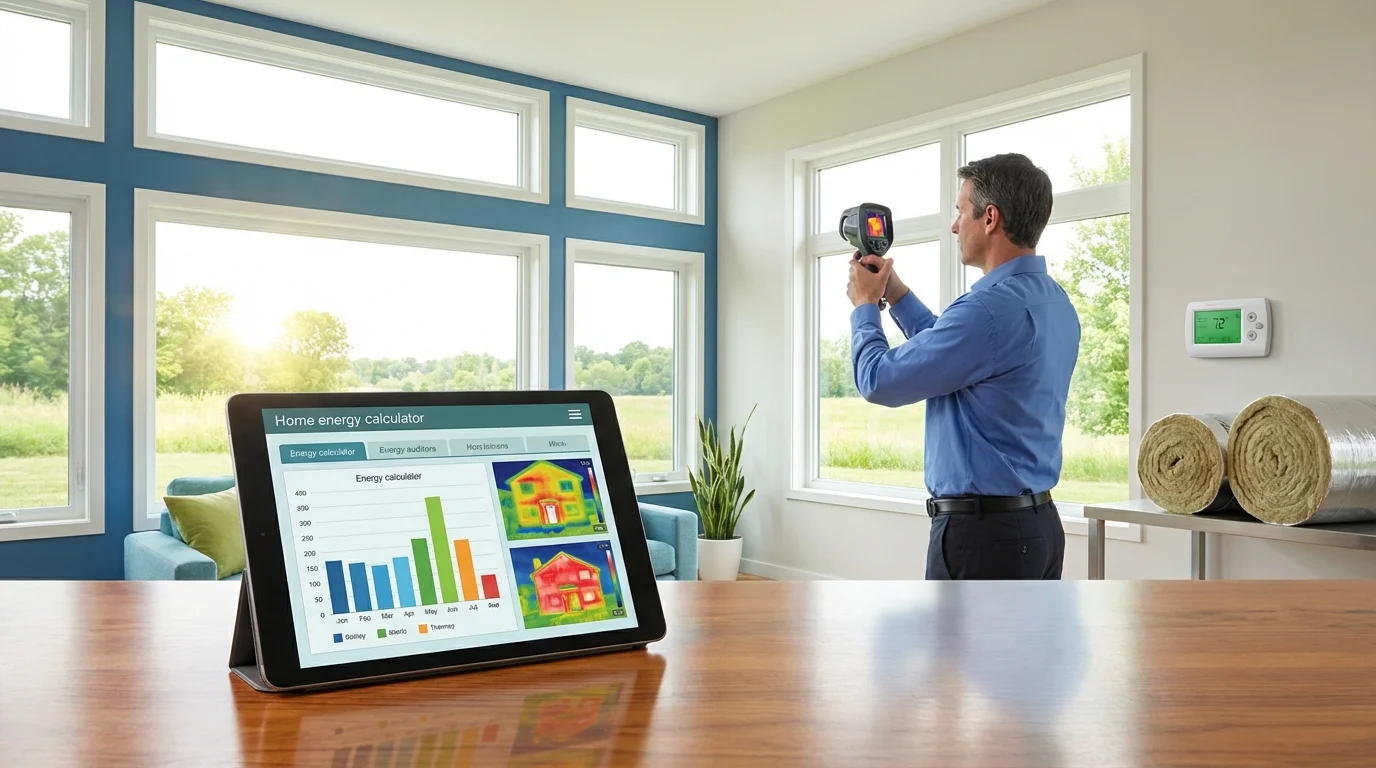
A calculator estimates your return on investment by contrasting your current energy loss with the projected efficiency of new windows. So you input data points like your home's square footage, the number of windows, your zip code for climate data, and your average monthly energy bill. The tool then uses established energy models to calculate potential annual savings, often between $150 and $550. And it considers typical installation costs, which range from $400 to $1,200 per window, to project a payback period of 8-12 years. But this timeline shortens when factoring in rebates. Use our free rebate calculator to find all available incentives for your project. The final output provides a clear financial picture, translating efficiency ratings into tangible dollar savings.
Which Window Efficiency Ratings and Brands Maximize My Rebate Eligibility?
Window efficiency ratings are the technical specifications that determine eligibility for 2026 federal tax credits and local utility rebates. Key metrics include a U-factor of 0.30 or lower and a Solar Heat Gain Coefficient (SHGC) tailored to the climate zone, with brands like Pella and Andersen meeting these standards.
To qualify for the maximum Inflation Reduction Act (IRA) tax credits, windows must meet specific ENERGY STAR® performance criteria. For most of the country, this means a U-factor at or below 0.30 and an SHGC at or below 0.40. And these values are verified on the National Fenestration Rating Council (NFRC) label affixed to every new window. Major brands like Marvin, Andersen, and Pella offer product lines specifically designed to meet or exceed these requirements, ensuring eligibility. So homeowners must confirm the NFRC ratings of their chosen windows before purchase to secure up to $600 in federal energy tax credits. But state and utility rebates often have separate or even stricter requirements, making verification essential.
How Do Climate Zones Impact My Window Selection for Optimal Energy Savings?
Climate zones directly dictate the ideal window specifications needed for maximum energy savings and rebate eligibility. The Department of Energy's ENERGY STAR program divides the U.S. into four distinct zones, each with different U-factor and SHGC requirements to optimize performance for local weather conditions in 2026.
In colder northern climates, the primary goal is preventing heat from escaping during winter. So homeowners in these zones select windows with a low U-factor (e.g., ≤0.27) to minimize heat loss. But in hot southern climates, the focus shifts to blocking solar heat to reduce cooling costs. And this requires a low Solar Heat Gain Coefficient (SHGC), often 0.25 or less. The ENERGY STAR program provides a map and detailed criteria for each zone.
"ENERGY STAR certified windows, doors, and skylights are independently tested and certified to meet strict energy-efficiency standards set by the U.S. Environmental Protection Agency." — ENERGY STAR A home energy audit will identify the specific needs of your property based on its location.
What's the Long-Term Value: Lifespan, Maintenance, and Alternatives to New Windows?
The long-term value of new windows is defined by a 20-30 year lifespan, minimal maintenance requirements, and an average home value increase of over $10,000. These benefits contrast sharply with temporary fixes like weatherstripping, which offer lower upfront costs but require frequent replacement and deliver only 5-10% in energy savings.
New vinyl or fiberglass windows are a durable investment with a typical lifespan of 20 to 30 years. And they require little more than occasional cleaning. So this longevity provides decades of consistent energy savings, improved home comfort, and enhanced curb appeal. But for those not ready for a full replacement, alternatives exist. Weatherstripping and caulking can seal air leaks for 1-3 years, reducing drafts for under $100. Storm windows offer a more robust solution, cutting energy loss by 25-50% for a cost of $200-$500 per window. So while these options provide immediate, low-cost relief, they don't match the comprehensive, long-term financial and performance benefits of a full replacement, which often complements other upgrades like heat pump rebates.
2026 Window Replacement Rebate & Credit Comparison
| Program Name | Incentive Amount | Key Eligibility | 2026 Deadline |
|---|---|---|---|
| Federal IRA Tax Credit | Ended Dec 31, 2025 | — | December 31, 2025 |
| State Clean Energy Grant (Sample) | Up to $1,500 | U-factor ≤ 0.28, SHGC ≤ 0.30 | Varies by state |
| Utility Rebate Program (Sample) | $50 per window | Must be NFRC-rated | Annual program, check locally |
Official Sources
- ENERGY STAR® Windows, Doors, and Skylights — Official U.S. government resource for energy-efficient window specifications and climate zone requirements.
- DSIRE - Database of State Incentives for Renewables & Efficiency — A comprehensive database of state and local energy efficiency rebates and incentives.
Related Reading: Learn more about Window U-Factor And Shgc Explained.
Frequently Asked Questions
How accurate are window replacement energy savings calculators?
Window replacement energy savings calculators provide reliable estimates based on established models from sources like the Department of Energy. So their accuracy depends on the quality of your input data. And providing precise information on your home's age, existing window type, and local utility rates (e.g., $0.17 per kWh) will yield a forecast with an accuracy of +/- 15%.
What information do I need to use a window replacement energy savings calculator?
To use a window replacement energy savings calculator effectively, you need several key pieces of information. This includes your zip code, the approximate age of your home, the type of your existing windows (e.g., single-pane, double-pane), your home's total square footage, and your average monthly heating and cooling costs.
Does a window energy savings calculator account for local rebates or incentives?
Most generic online calculators do not account for local rebates and incentives, as these programs vary by state, county, and utility provider. They typically estimate raw energy savings only. But specialized platforms like DuloCore's rebate calculator are specifically designed to find and apply all 2026 federal, state, and local incentives to calculate your true net cost and total savings.
Find Your Window Replacement Savings Now
Don't guess your potential savings. Our calculator instantly finds all federal, state, and utility rebates available for your new windows in 2026. Calculate your project's true cost and ROI in under 2 minutes.
Calculate Your SavingsLast updated: April 14, 2026. Reviewed by the DuloCore Editorial Team. About our authors.
Check your California insulation rebate eligibility — see the programs you qualify for and the dollar amounts on our California insulation rebate finder.