Update (2026): The federal Energy Efficient Home Improvement Credit (Section 25C) expired December 31, 2025, following the passage of the OBBBA. Check state and local programs for current incentives.
More than 70,000 wind turbines are currently operating across the United States, yet less than 1% of them are residential-scale systems. The untapped potential for homeowners to generate their own clean power is immense, but capitalizing on it begins with a single, critical step. So this step ensures a multi-thousand-dollar investment isn't wasted on an unsuitable property.
What Does a Wind Energy Home Assessment Involve, and Why Is It Crucial?
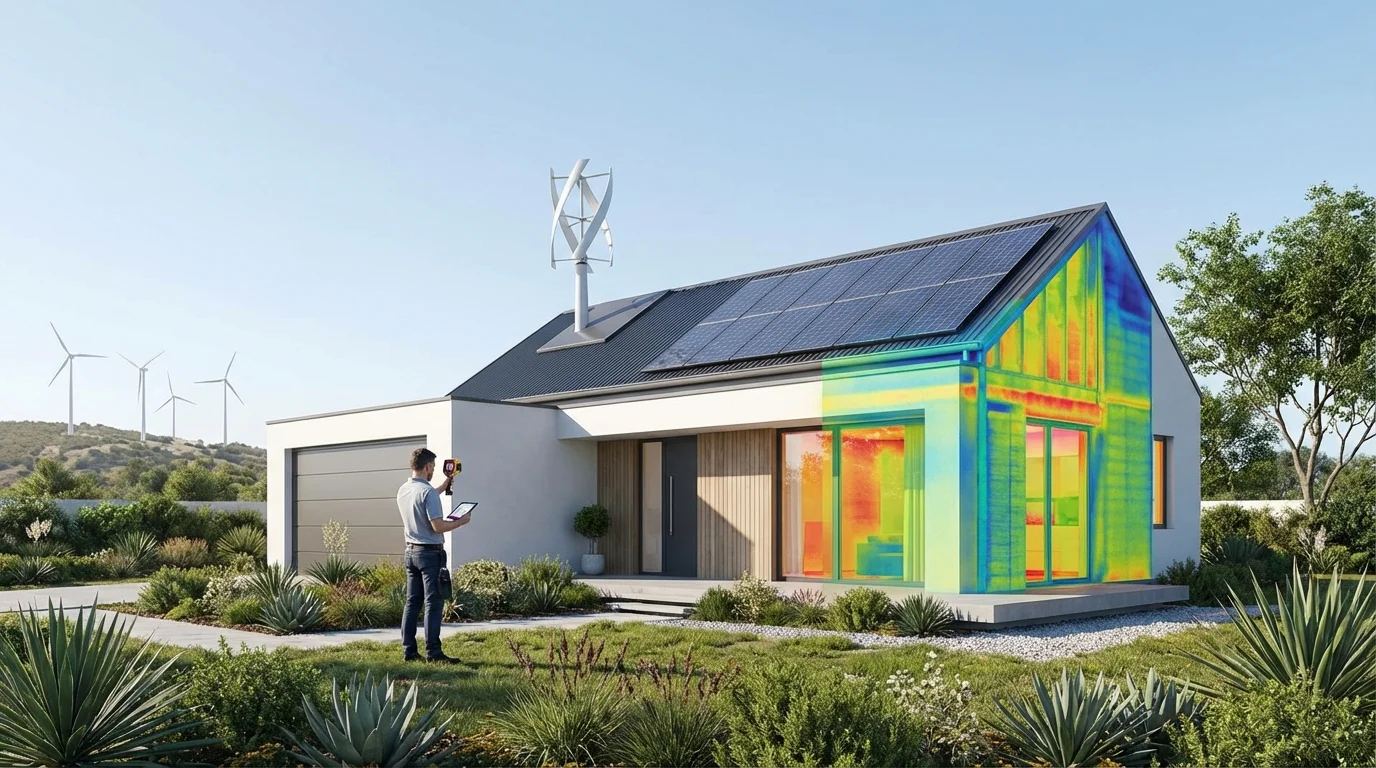
A wind energy home assessment is a professional site evaluation that determines a property's viability for a residential wind turbine. The assessment analyzes wind speed data, zoning laws, and physical obstructions to forecast energy production and ROI for 2026 installations, preventing costly system mismatches.
A professional assessment is the foundational step before investing $10,000 to $70,000 in a residential wind turbine system. This isn't just a simple check; it's a comprehensive analysis of your specific location's potential. So assessors use anemometers and meteorological data to confirm if your property meets the minimum average wind speed, typically 10-12 mph, required for efficient operation. But they also evaluate local zoning ordinances, which often dictate turbine height and setback from property lines, potentially halting a project before it starts. The assessment provides a detailed report on expected annual energy output, long-term savings, and the optimal turbine size for your needs. And without this data, homeowners risk installing a system that underperforms, fails to meet local codes, or never achieves a positive return on investment. This process is similar in scope to a full home energy audit, but focuses specifically on wind generation potential.
How Can I Find State and Utility Rebates for My Home Wind Energy System?
State and utility rebates for home wind energy systems are financial incentives designed to lower the upfront installation cost for homeowners. These 2026 programs offer cash-back rewards, often between $1,000 and $5,000, and are located through centralized databases like DSIRE or state energy office websites.
Identifying available incentives is a direct path to reducing the net cost of a wind turbine. The primary federal incentive is the Residential Clean Energy Credit under the IRA, which provides a 30% tax credit on total system costs through December 31, 2025. And state-level programs vary widely. For instance, some states offer performance-based incentives (PBIs) that pay you for the energy your system generates. But utility companies also offer their own rebates, often targeting specific service areas. Centralized, up-to-date databases are the most effective tools for navigating these options.
"The Database of State Incentives for Renewables & Efficiency (DSIRE) is the most comprehensive source of information on incentives and policies that support renewables and energy efficiency in the United States." — DSIRE
So using a specialized rebate calculator aggregates these federal, state, and local offers, providing a clear picture of your total potential savings in minutes.
What Are the Eligibility Requirements and Income Limits for Wind Energy Incentives?
Eligibility for 2026 wind energy incentives hinges on property ownership, system specifications, and sometimes household income. Federal tax credits have no income cap, but many state rebates are restricted to households earning below 150% of the area median income (AMI) to prioritize low-to-moderate income families.
Navigating eligibility is key to securing funding. The federal home energy tax credits (Sections 25C and 25D) ended for projects completed after December 31, 2025 (IRS FS-2025-05). Federal tax credits for this work have ended, but state, local and utility rebates may still apply; check what is available at your address with the DuloCore rebate calculator. But state and utility programs are more granular. Many require the property to be your primary residence and the turbine to be certified by the Small Wind Certification Council (SWCC). And income limits are a frequent qualifier for enhanced state-level rebates. For example, a state program may offer a base $2,000 rebate, with an additional $1,500 available for households under 80% AMI. So homeowners must check the specific requirements for each program, as a system that qualifies for a federal credit won't automatically qualify for a local one. These requirements are often detailed alongside other energy tax credits on state energy department websites.
Wind Energy Incentive Comparison (2026)
| Incentive Type | Typical Amount | Key Eligibility | Application Deadline |
|---|---|---|---|
| Federal Tax Credit | Ended Dec 31, 2025 | — | Ended Dec 31, 2025 |
| State Rebate (Ex.) | $1,000 - $4,000 | Varies by state, income limits | Often fiscal year-end (e.g., June 30) |
| Utility Grant (Ex.) | $500 - $2,500 | Must be a customer, pre-approval | Varies, often until funds are depleted |
What's the Application Process, Key Deadlines, and Current Funding Status for These Programs?
The application process for wind energy rebates involves a multi-step sequence of pre-approval, installation, and final submission. Homeowners typically apply before purchase, adhere to deadlines like December 31, 2026, for federal credits, and monitor program websites for funding status, as many operate on a first-come basis.
Securing rebates requires careful timeline management. The process generally starts with submitting an application to the state or utility program before installation begins. This pre-approval step reserves your funding. So after the system is installed by a certified professional, you submit a final application with invoices and proof of inspection. The federal home energy tax credits (Sections 25C and 25D) ended for projects completed after December 31, 2025 (IRS FS-2025-05). But state programs often have fiscal year deadlines or close once their annual budget is exhausted. For example, a popular state fund with $2 million in capital will close to new applicants once that amount is allocated. Homeowners must constantly check the program's official website for its current funding status to avoid missing out. This process mirrors applications for other clean energy upgrades like heat pump rebates.
Can I Combine Wind Energy Rebates, and What Are the Contractor Requirements for Installation?
Homeowners can combine or "stack" multiple wind energy rebates, such as the 30% federal tax credit with a state grant and a utility rebate. Most incentive programs mandate that installation be performed by a licensed and insured contractor, often one with specific certifications like NABCEP.
Stacking incentives is the most effective strategy for maximizing savings. The federal home energy tax credits (Sections 25C and 25D) ended for projects completed after December 31, 2025 (IRS FS-2025-05). And then, they can subtract a state rebate of $2,500 from the remaining balance. But some programs have anti-stacking rules, so verifying the terms of each incentive is critical. Contractor requirements are non-negotiable.
"To ensure safety and system performance, many state and utility incentive programs require that the system be installed by a qualified professional." — U.S. Department of Energy
Programs typically maintain a list of approved or "certified" installers. So using an uncertified contractor will void your eligibility for rebates, turning a discounted project into a full-price one. Always confirm your chosen installer is on the approved list before signing a contract for your geothermal tax credit or wind project.
Official Sources
- DSIRE - Database of State Incentives for Renewables & Efficiency — The most comprehensive national database for state and utility energy incentives.
- ENERGY STAR Rebate Finder — A federal tool from the EPA to find local rebates on certified energy-efficient products.
- DOE Energy Saver — U.S. Department of Energy guidance on clean energy technologies, tax credits, and savings. (note: the federal 25C and 25D credits ended for projects completed after December 31, 2025)
Related Reading: Learn more about Home Energy Scoring Tool and Home Performance With Energy Star.
Frequently Asked Questions
What are the eligibility requirements for a wind energy home assessment?
Eligibility for a professional wind energy assessment is generally open to any property owner. However, practical eligibility depends on having at least one-half to one acre of land, clear access to wind without obstruction from trees or buildings, and local zoning laws that permit structures of at least 30 feet tall.
How much does a wind energy home assessment typically cost?
A professional wind energy home assessment typically costs between $400 and $1,000 in 2026. The price varies based on the complexity of the site, the equipment used for wind speed measurement (such as an anemometer tower), and the level of detail in the final feasibility report provided by the assessor.
What information will I receive after a wind energy home assessment?
After an assessment, you will receive a detailed report containing projected annual energy production in kilowatt-hours (kWh), the recommended turbine size for your property, an analysis of local zoning and permitting requirements, and a financial forecast. This forecast includes estimated installation costs, available rebates, and the system's expected payback period, typically 15-20 years.
Unlock Your Home's Wind Energy Potential
Don't guess your savings. Use our free, up-to-date tool to see exactly which federal, state, and utility rebates you qualify for in 2026.
Calculate Your Savings NowUpdated on April 14, 2026. Fact-checked by DuloCore Editors. About our research team.